

Morocco, Day 2: A day exploring Fes With Noureddine & Youssef.
Labyrinthine alleys, majestic madrasas, and bustling souks—Fes reveals itself not all at once, but in layers. This is a city that doesn’t simply welcome you; it draws you inward, deeper and deeper, until time feels suspended somewhere between the medieval and the modern. With our licensed guide Noureddine leading the way, our day unfolded like a carefully composed photograph—each stop a new frame, rich with texture, light, and history.
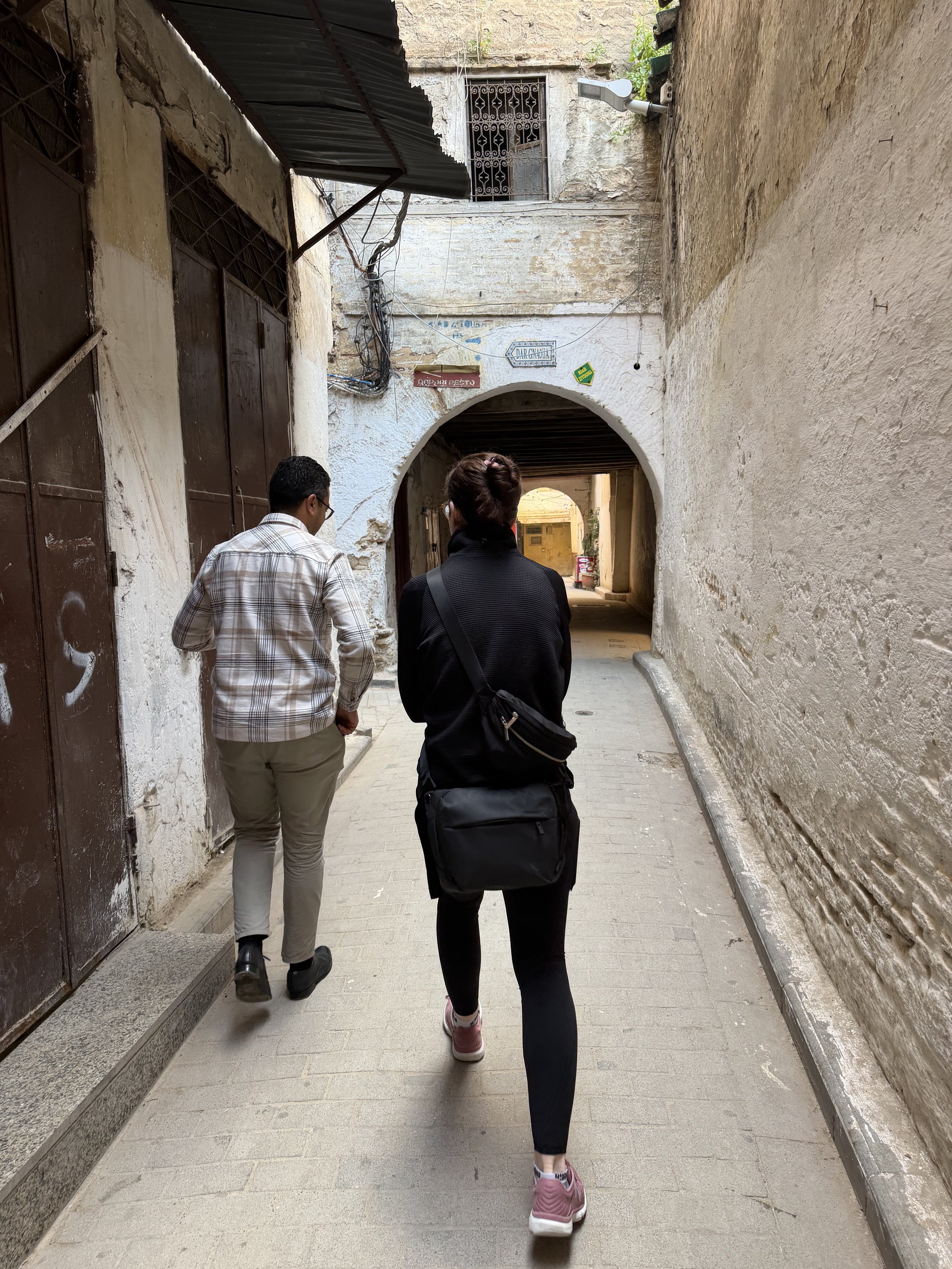
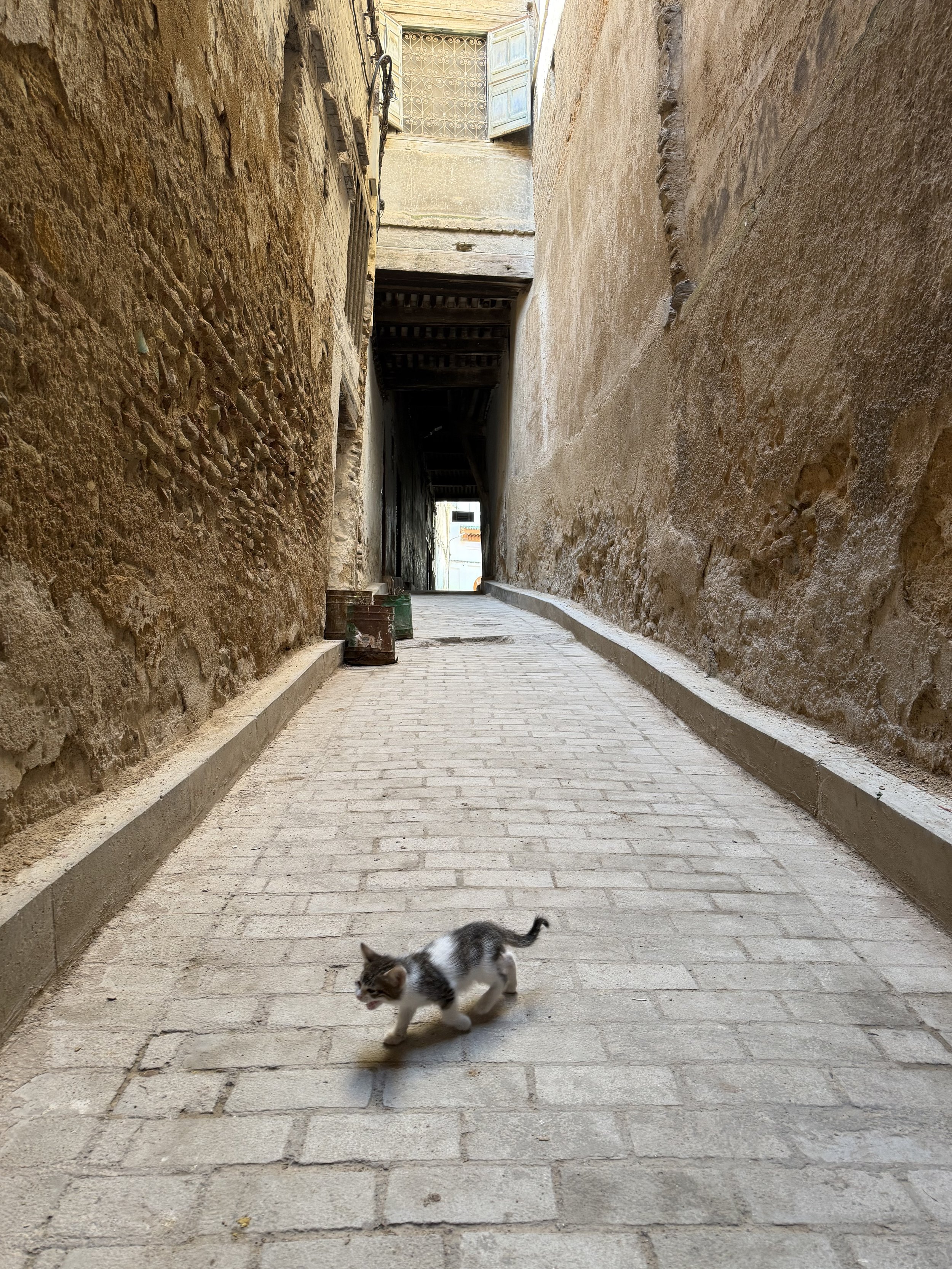
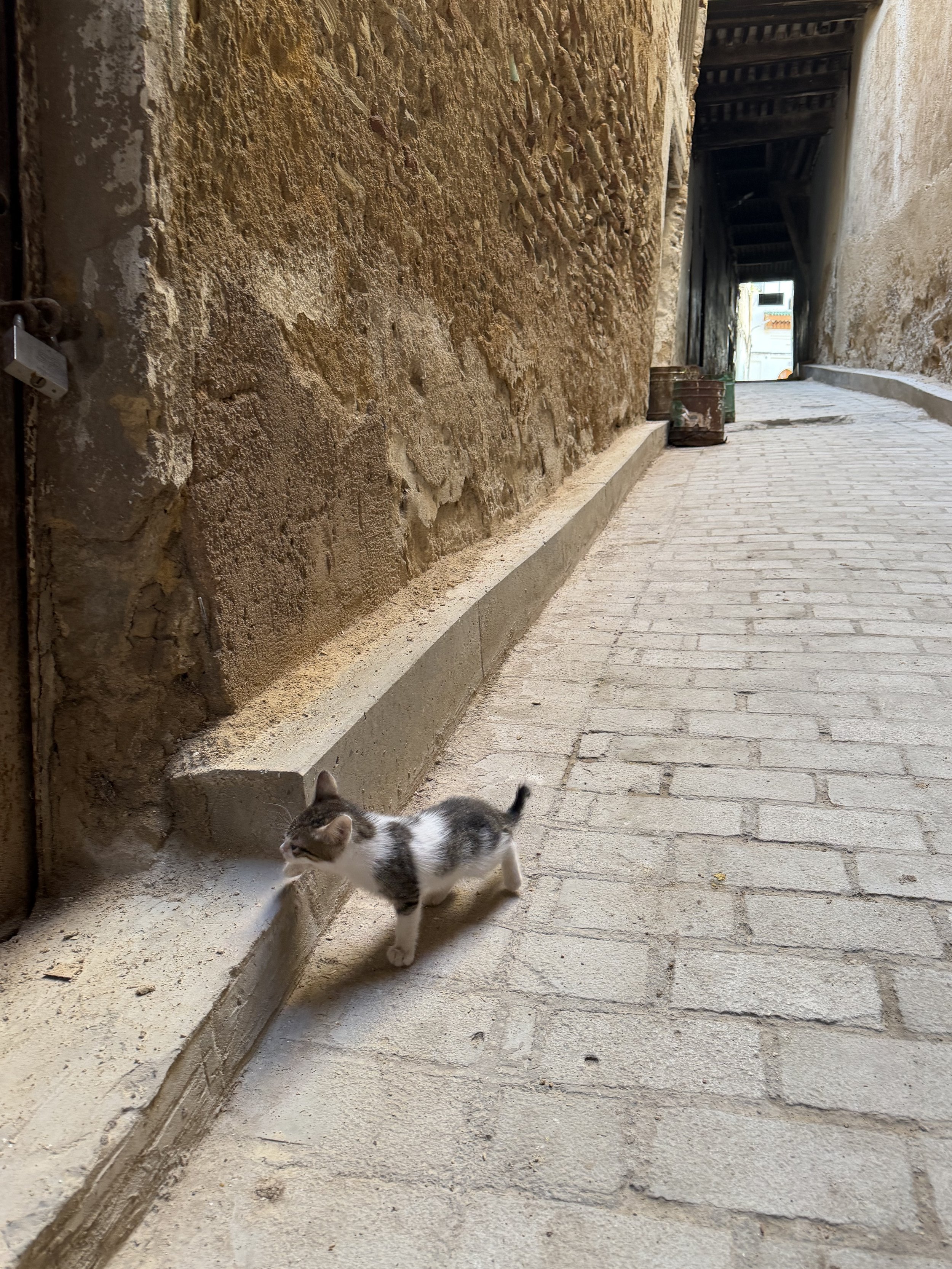
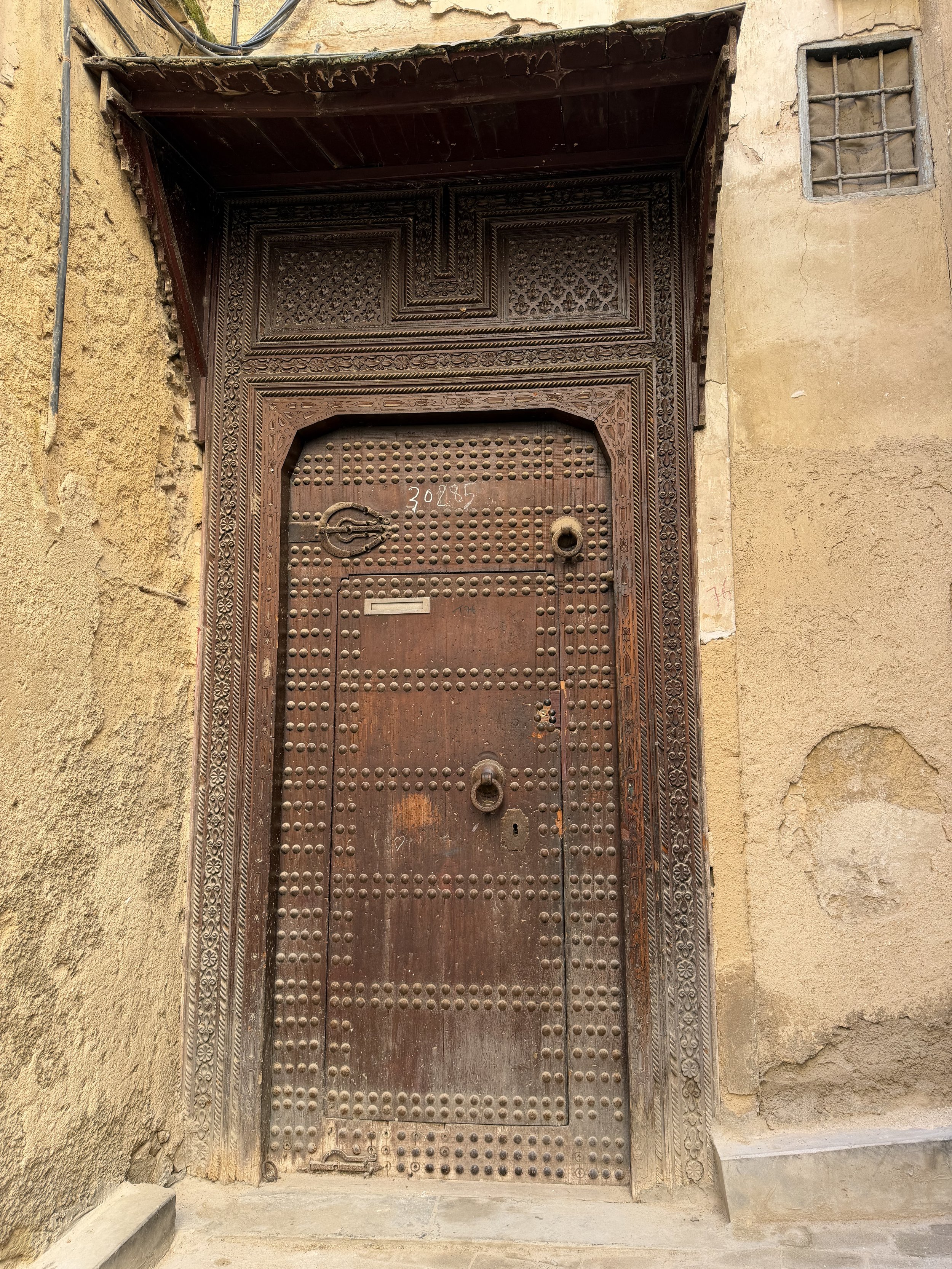
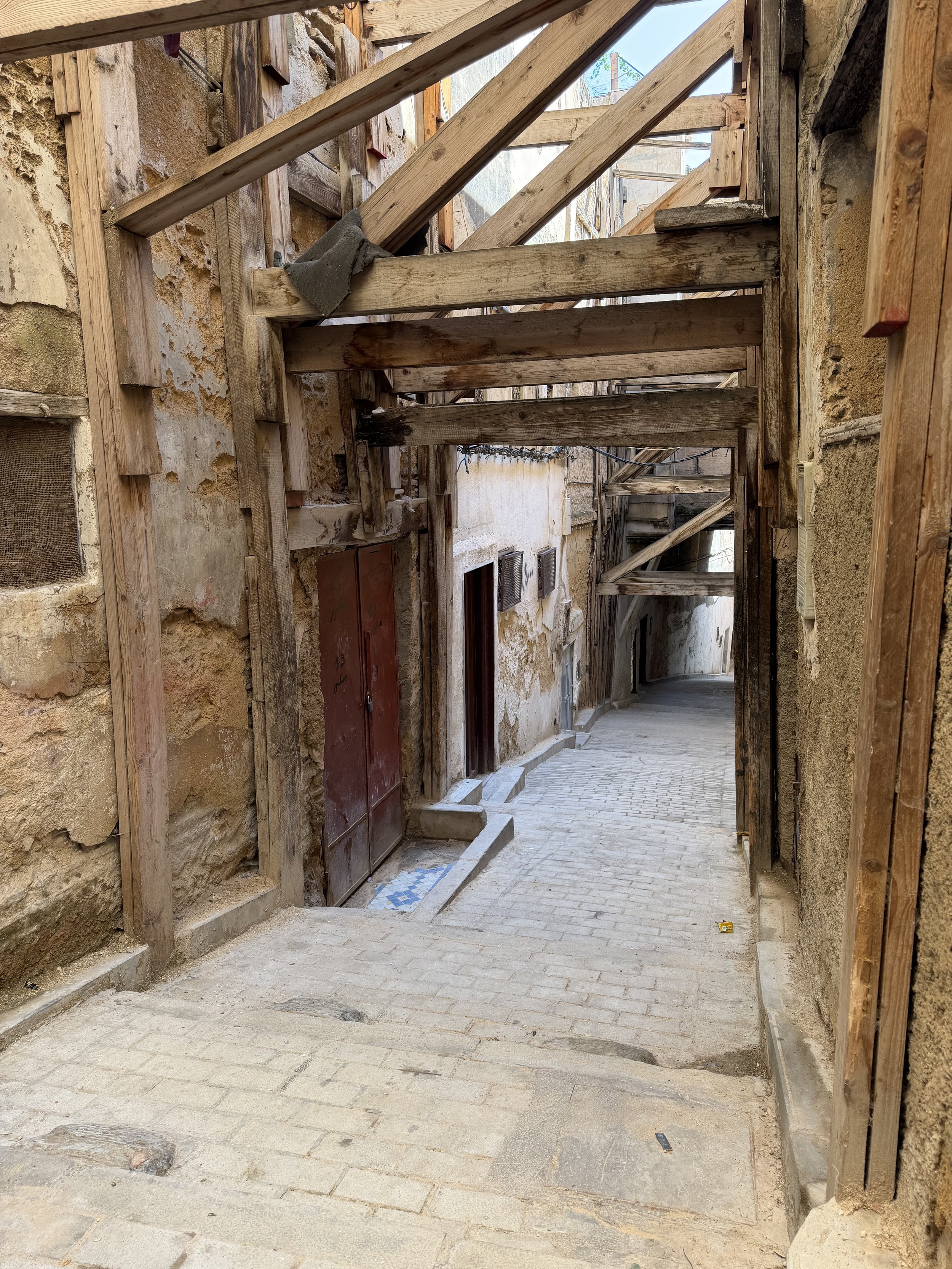
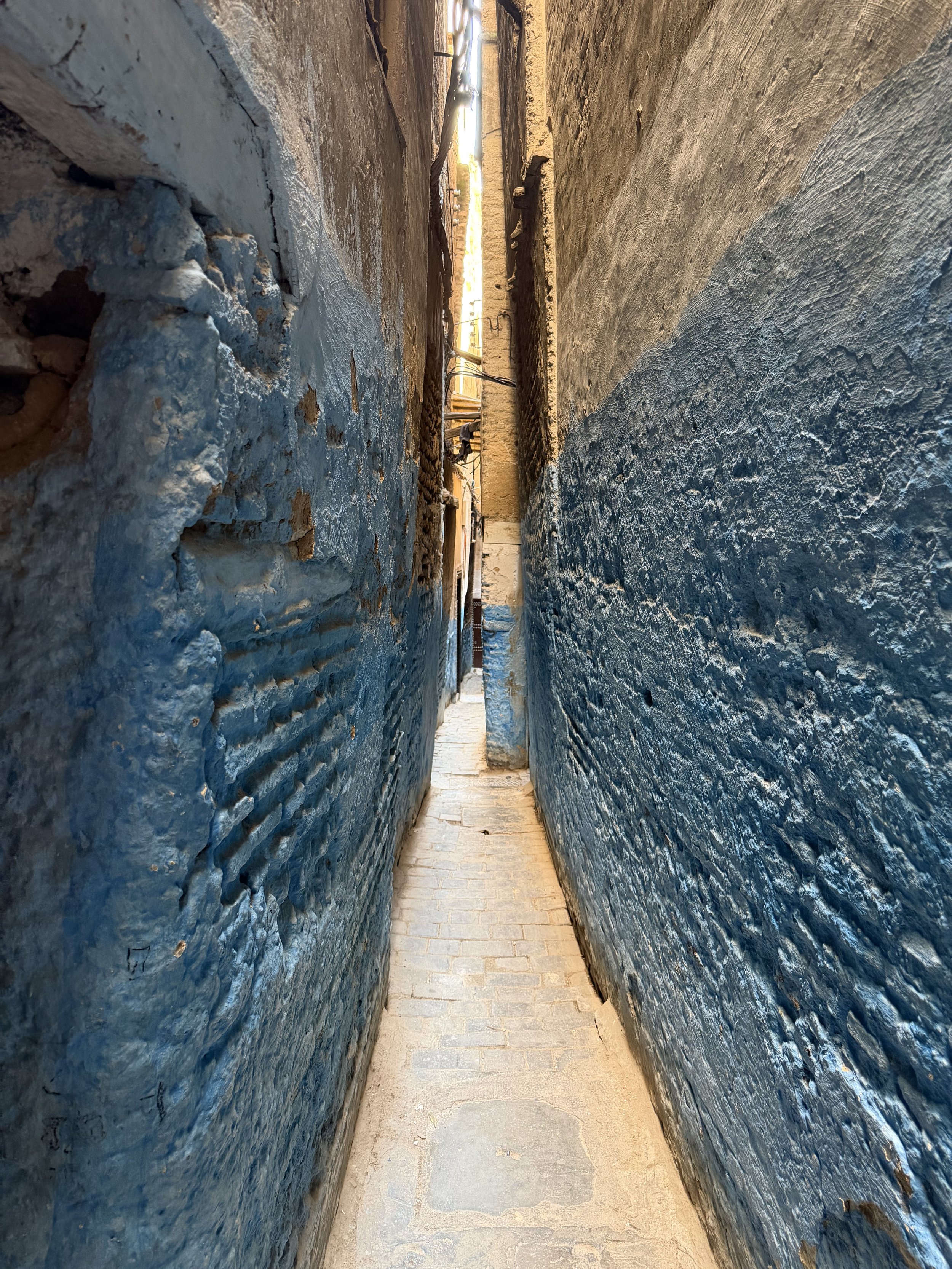
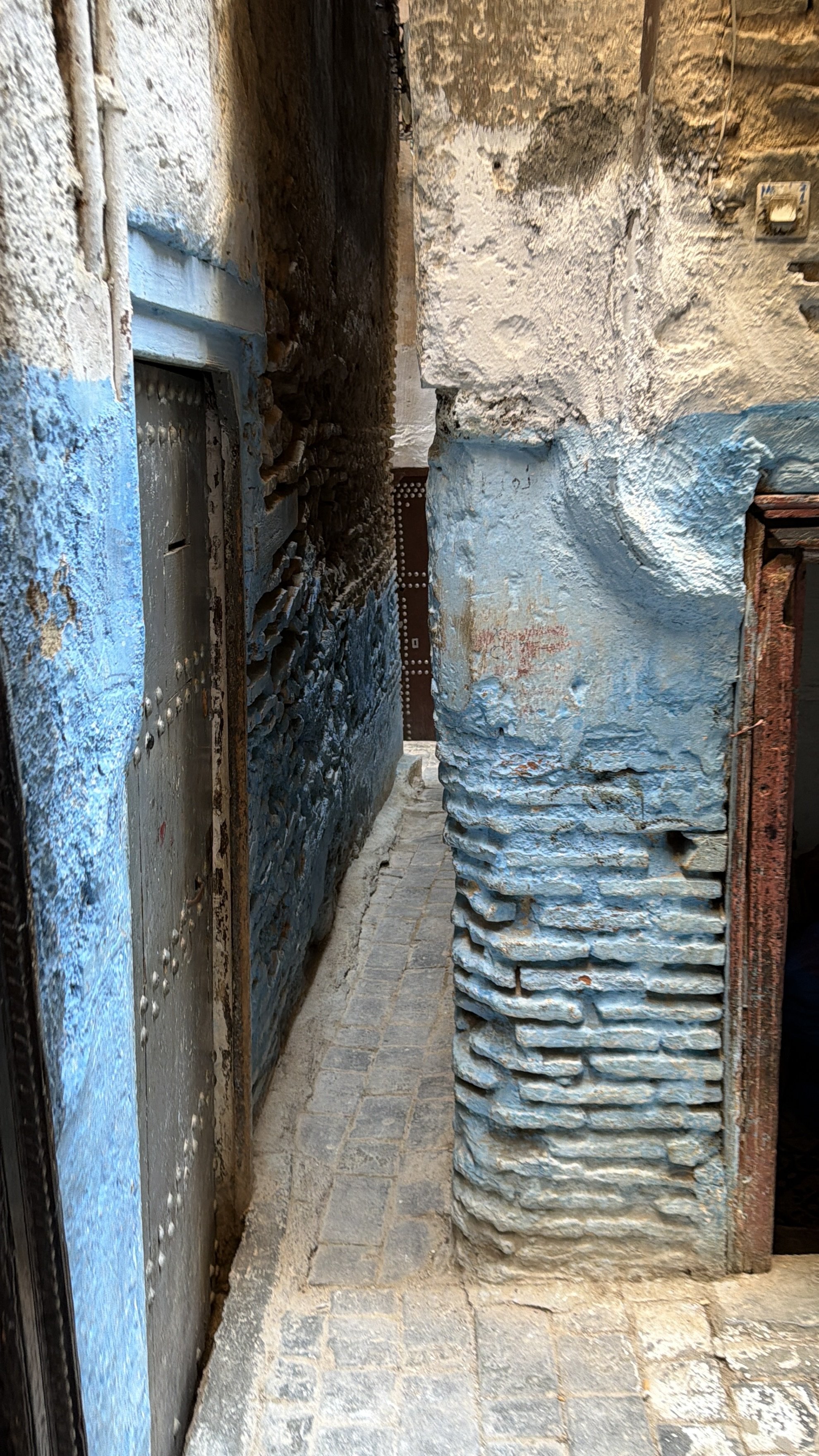
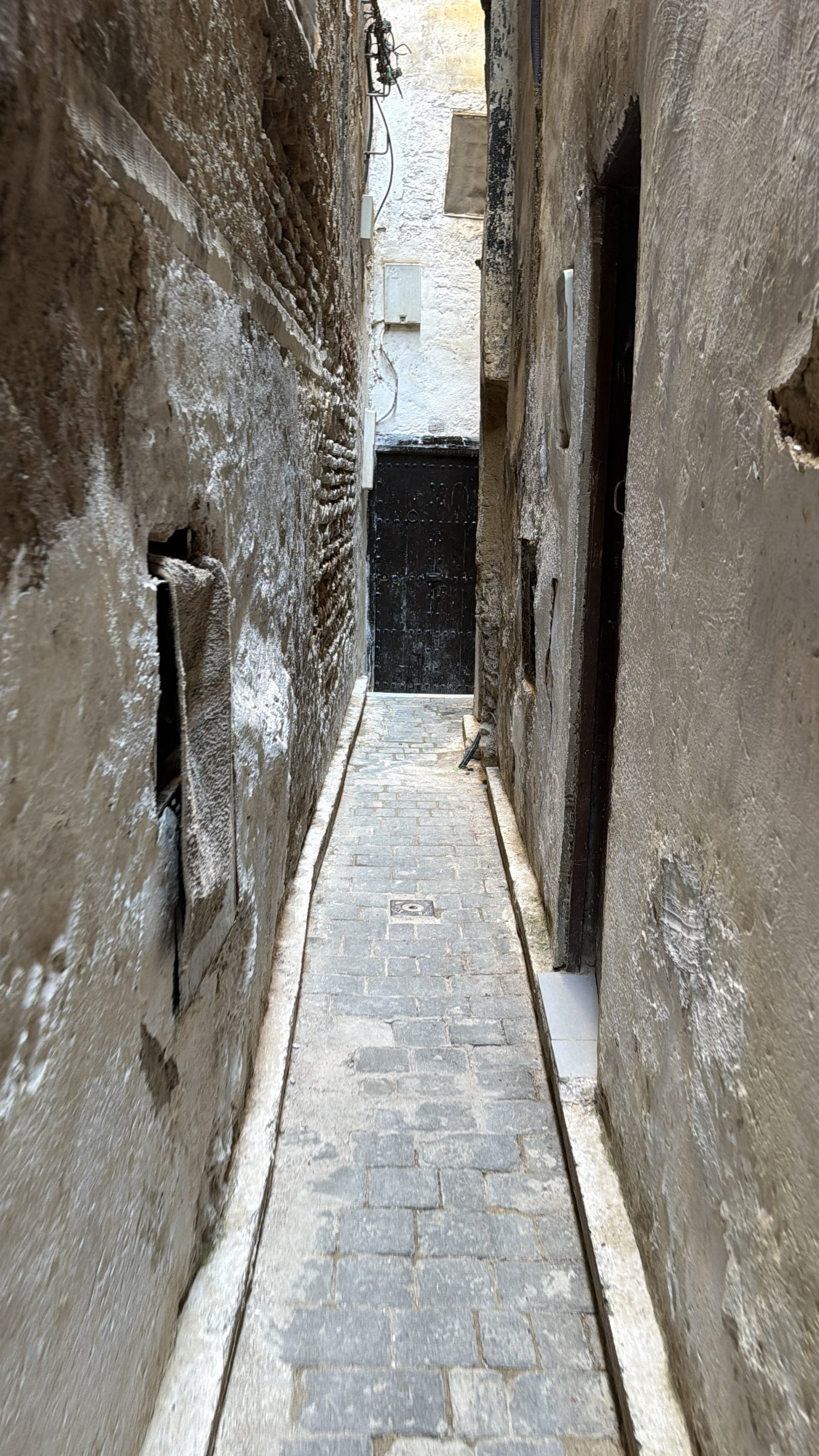
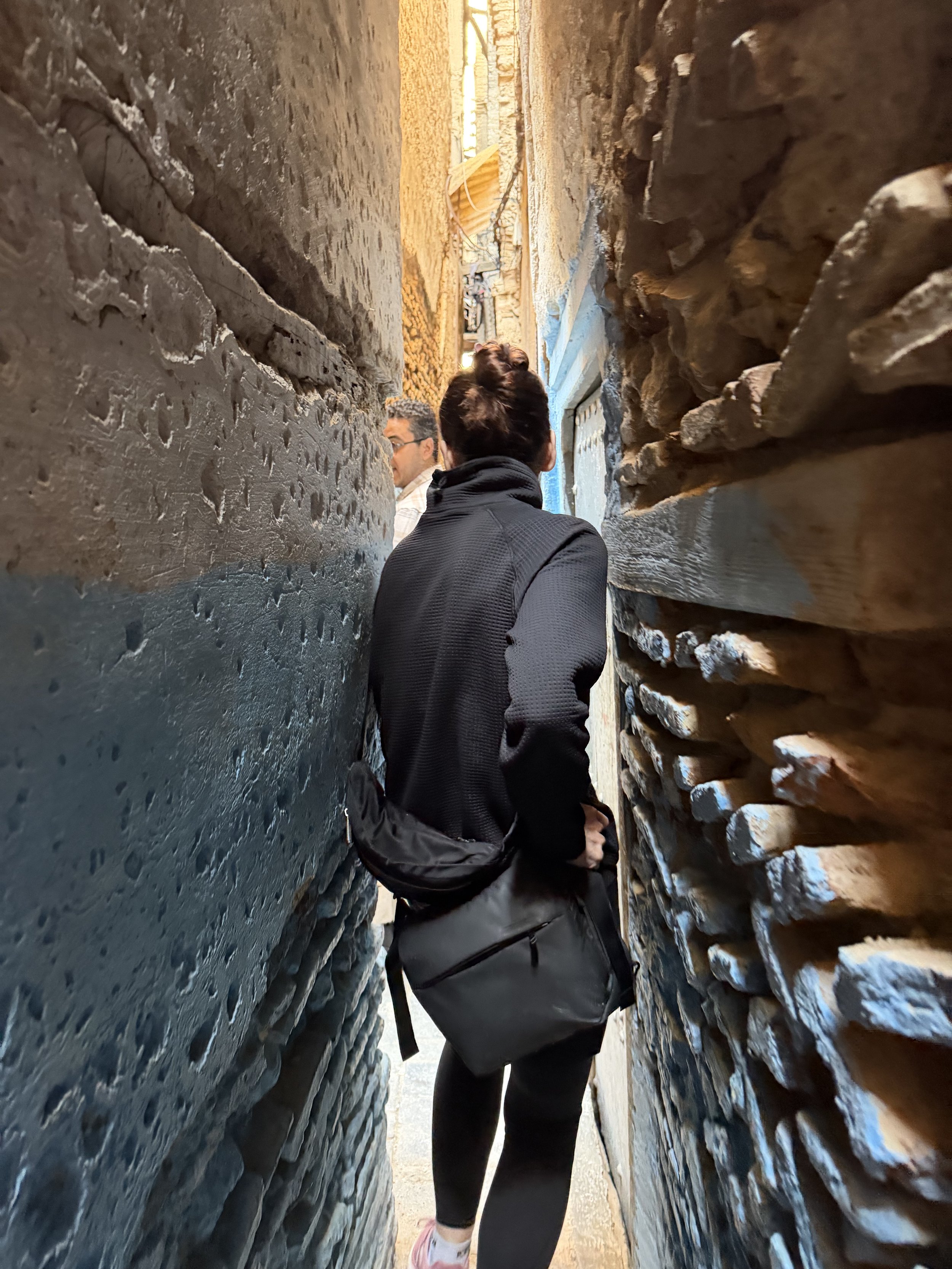
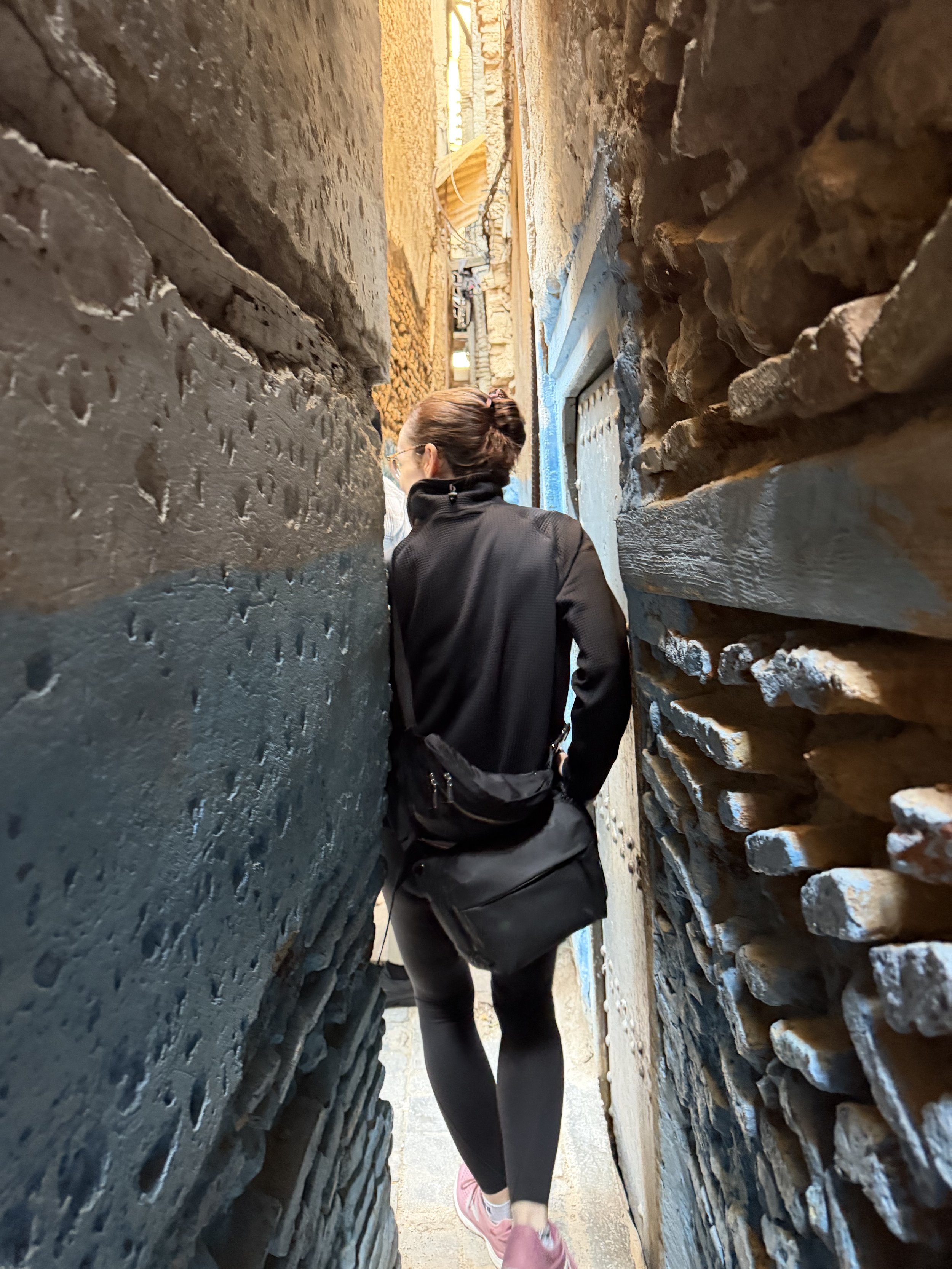
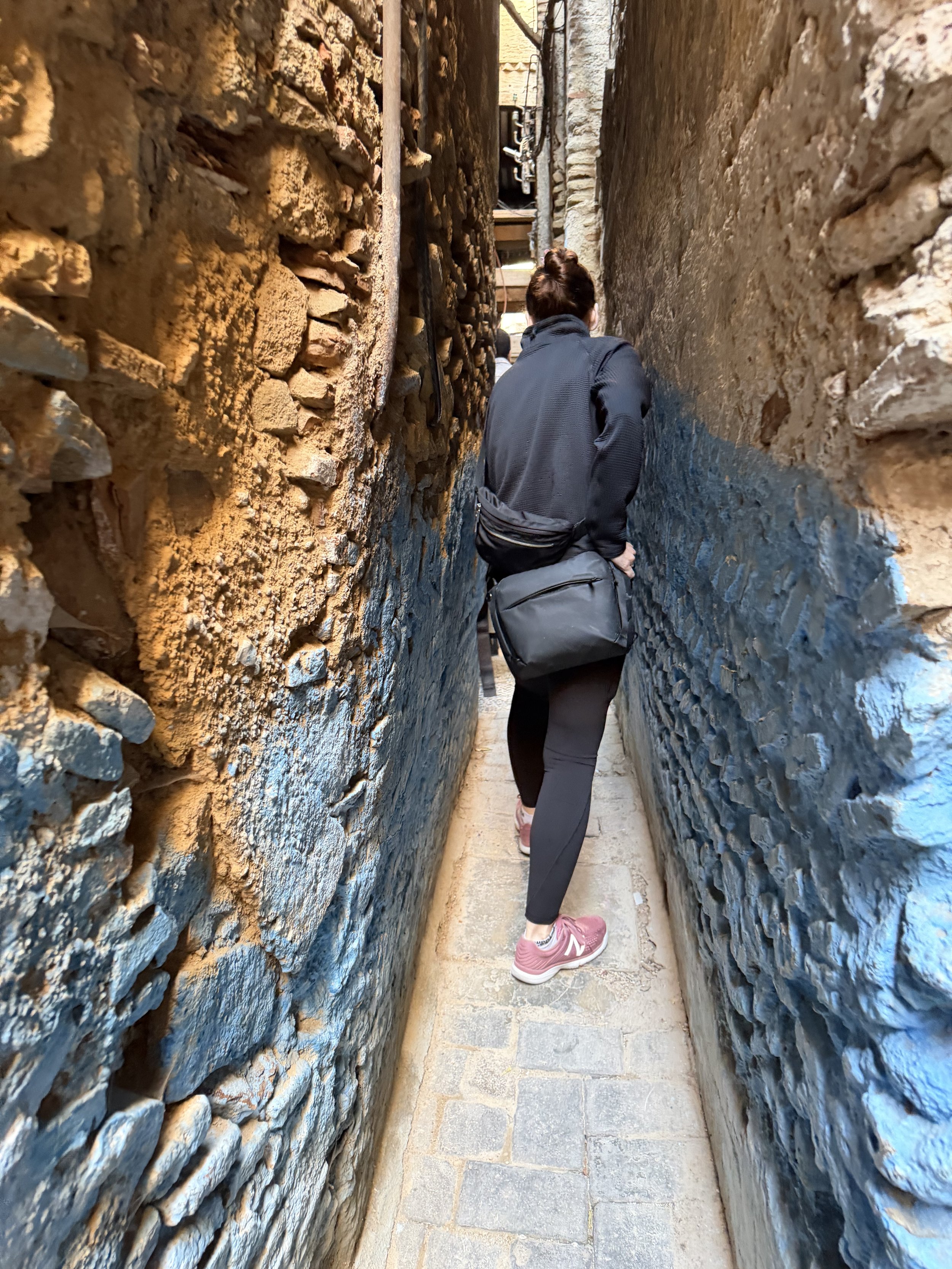
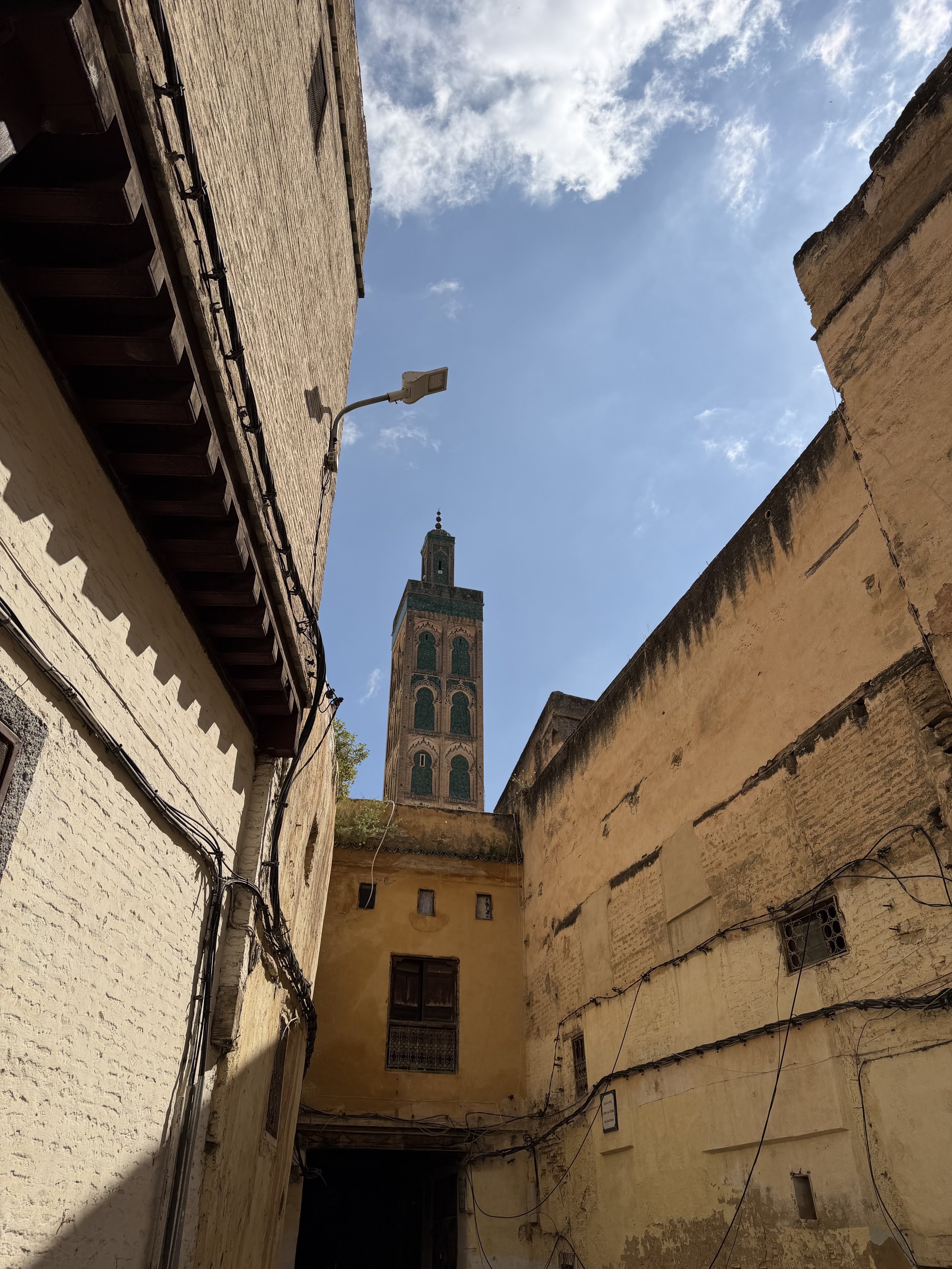
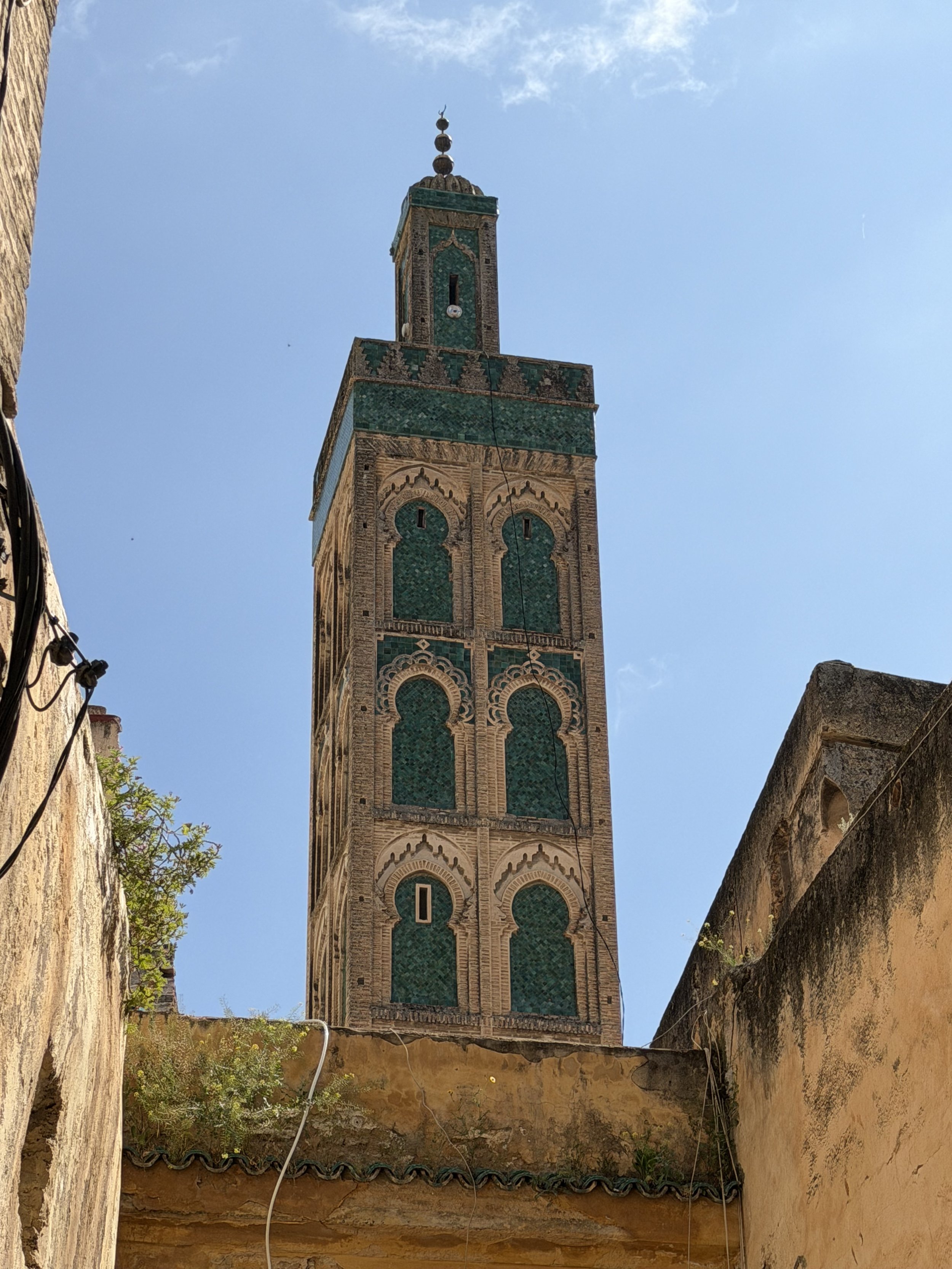
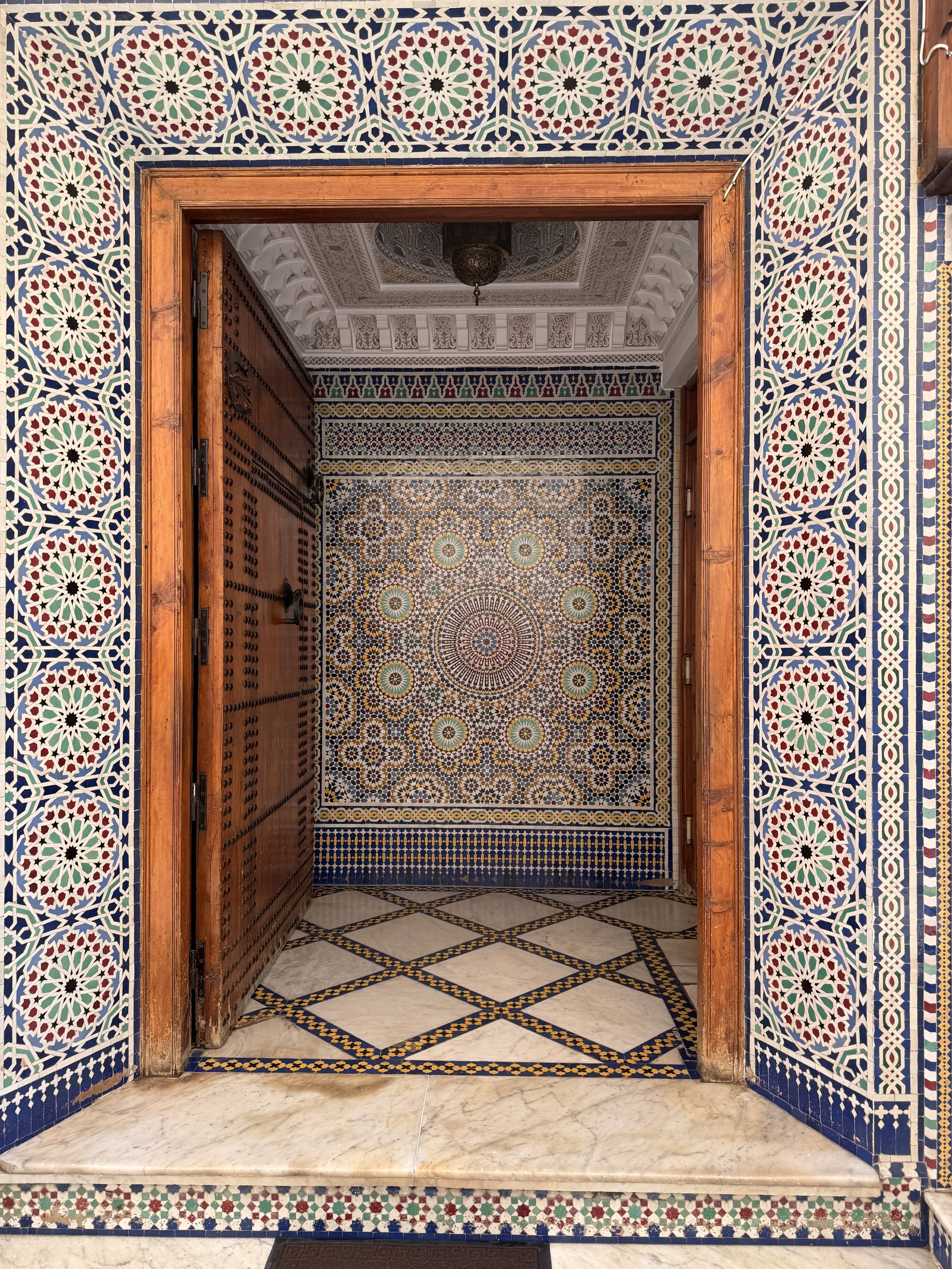
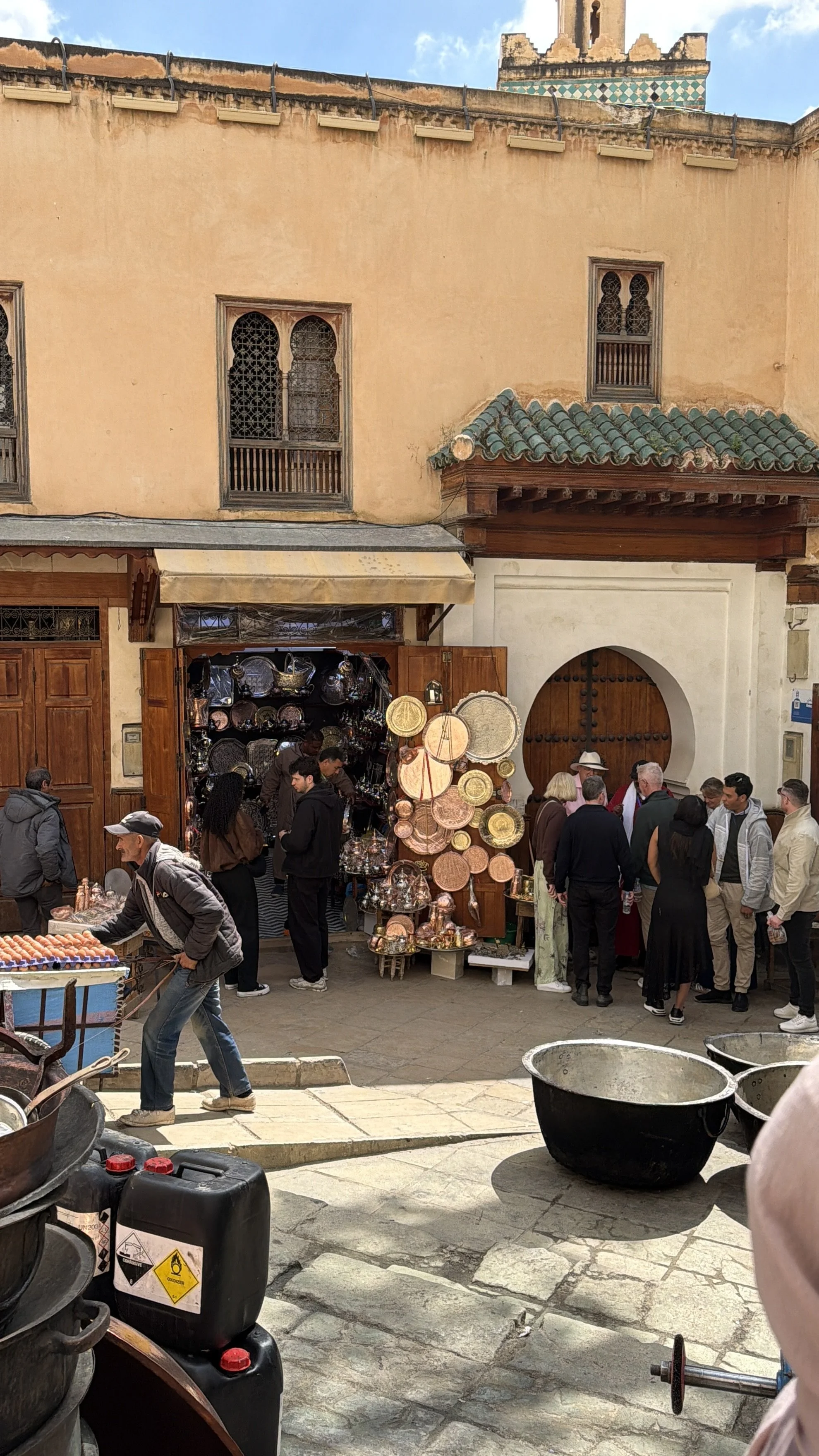
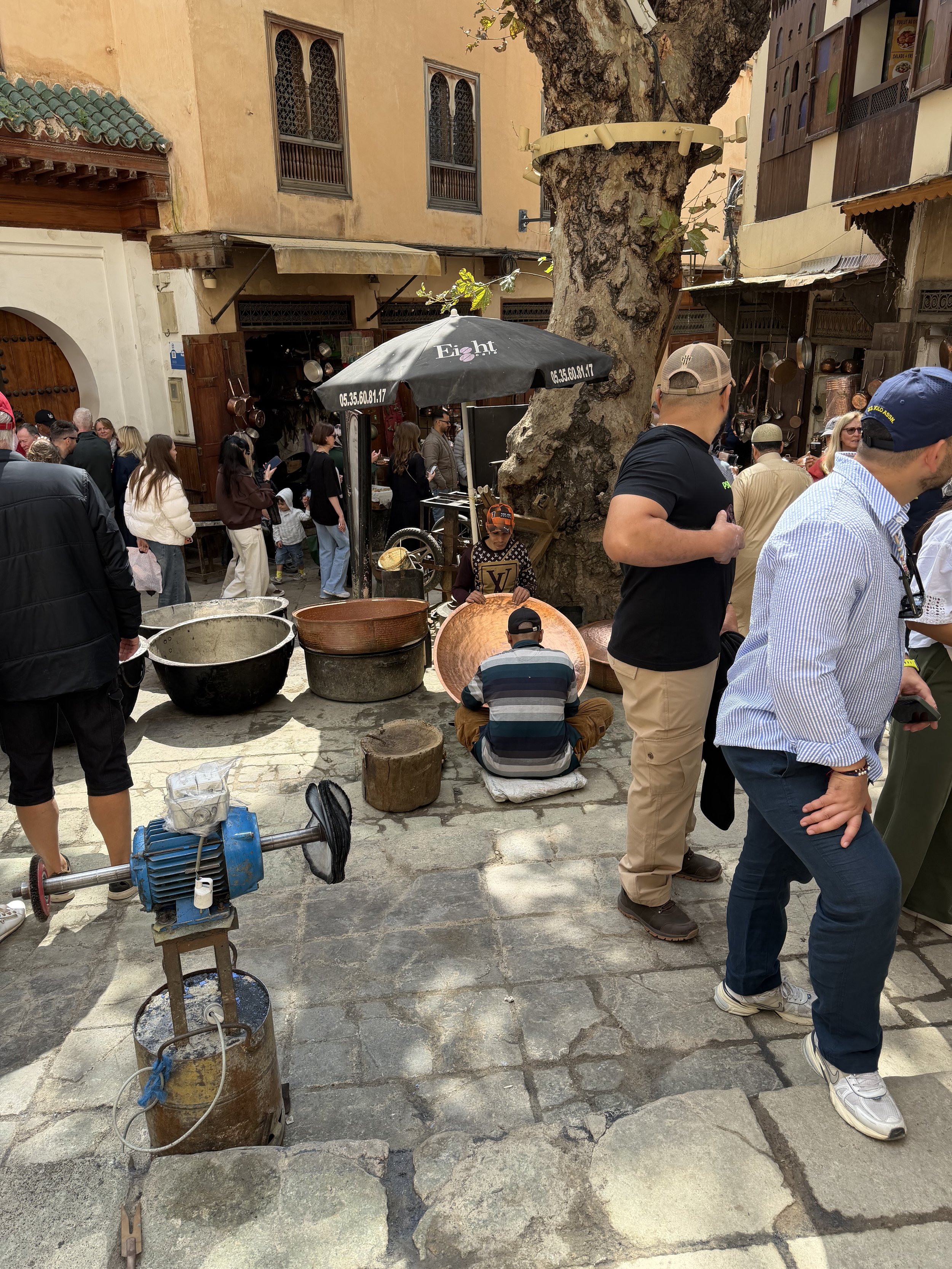
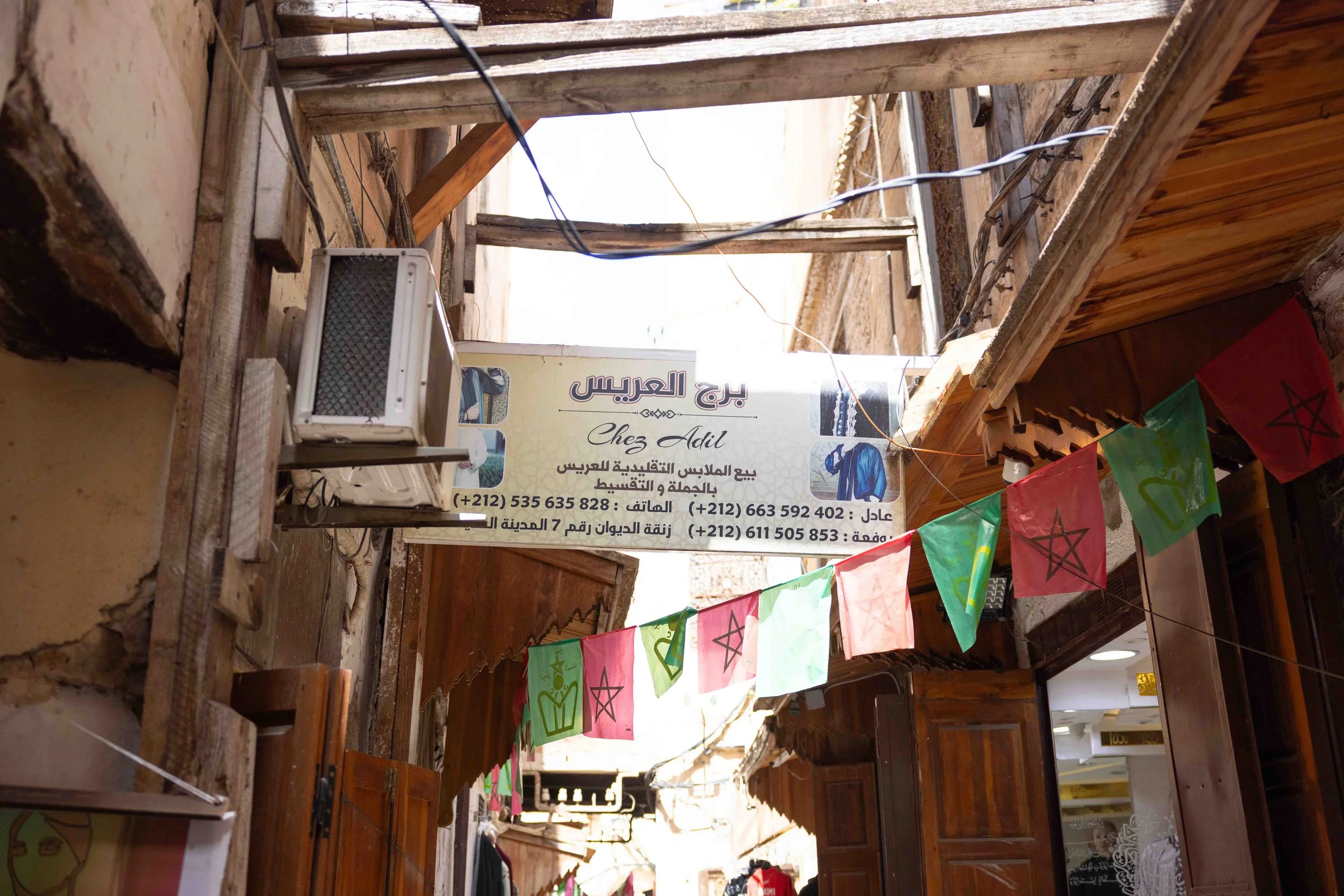
Inside the medina, we explored different narrow streets and learned about the architecture and lifestyle of those living within its walls. The modest doors give subtle hints about their inhabitants if you know what to look for, and we learned about their designs and meanings.
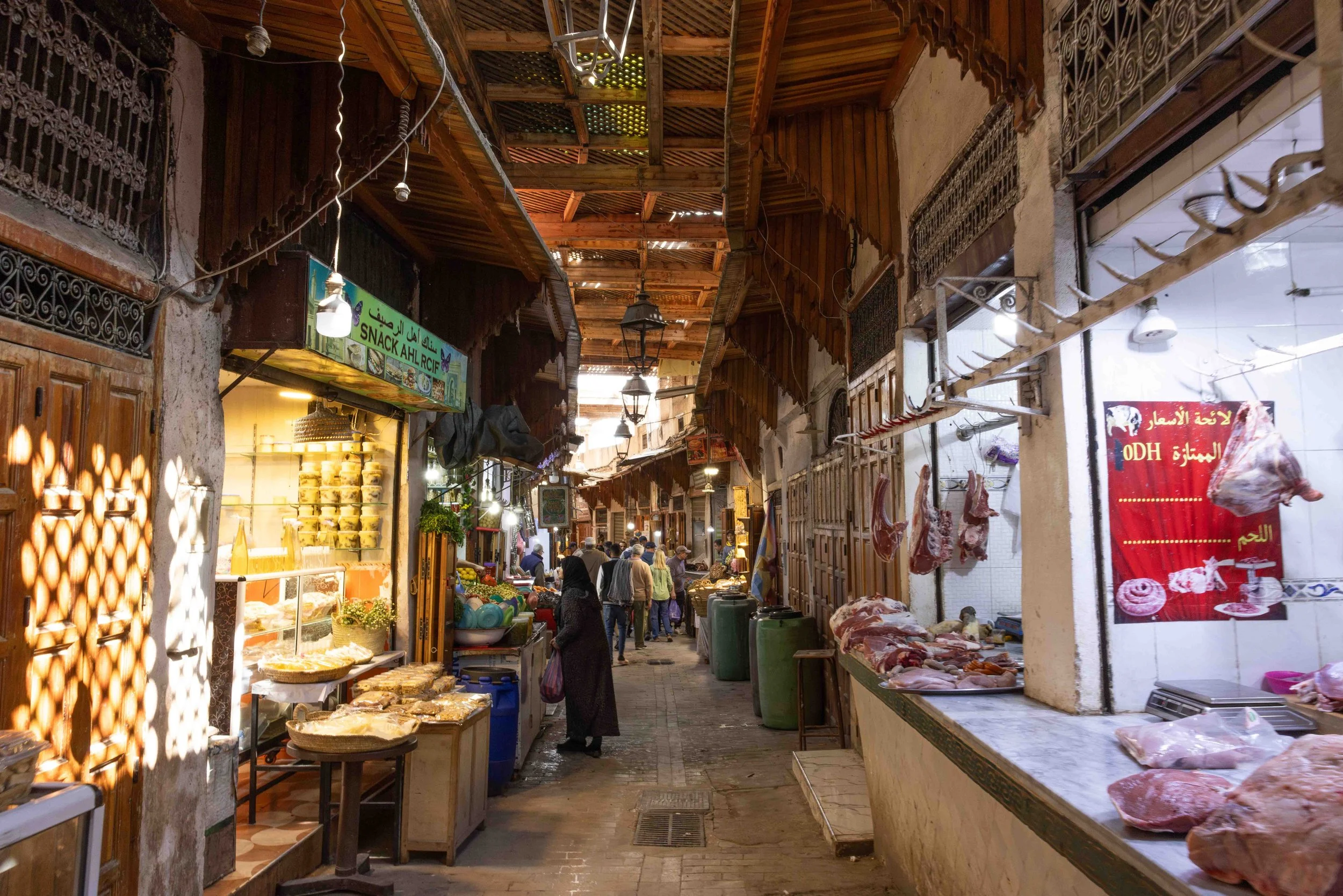
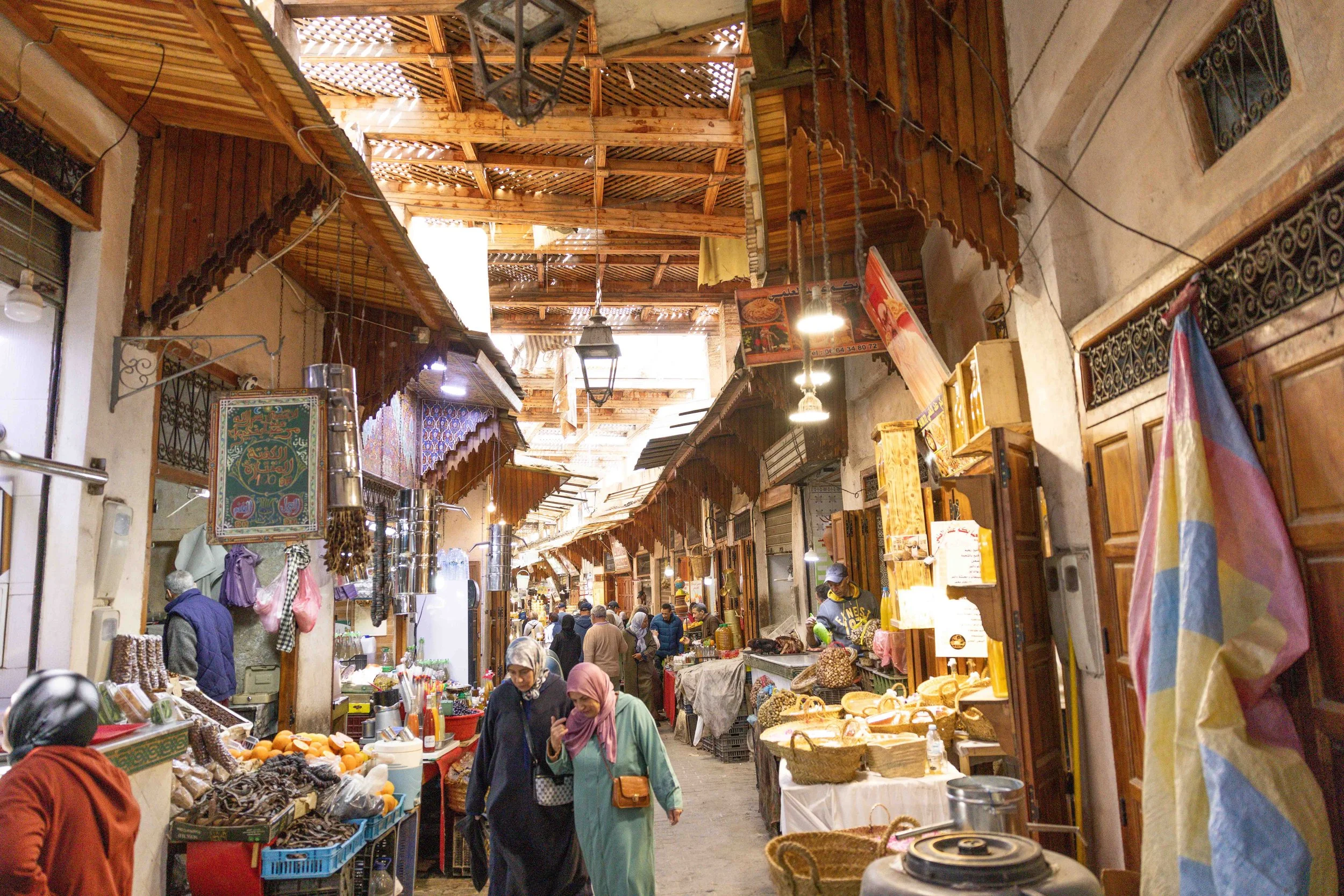
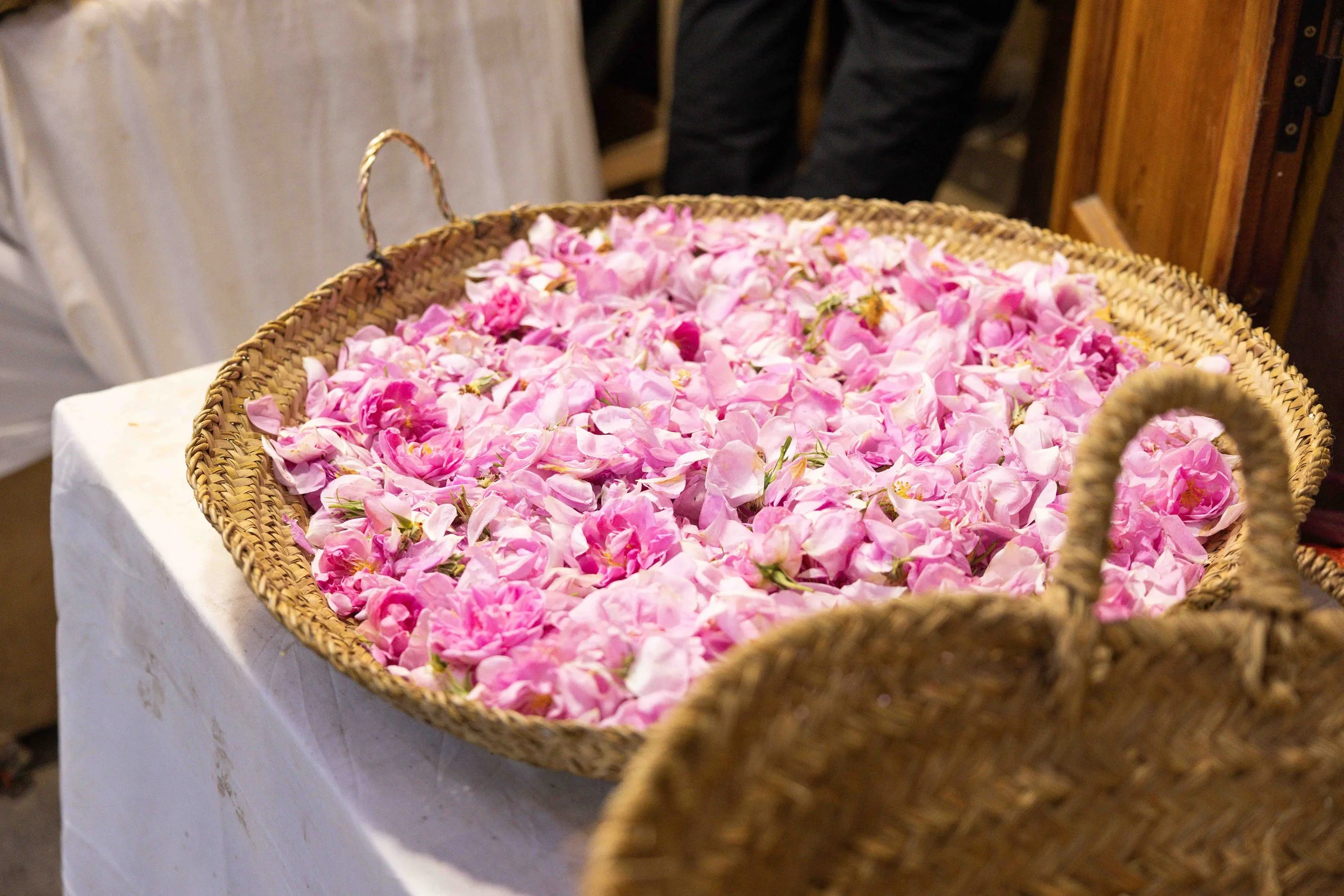
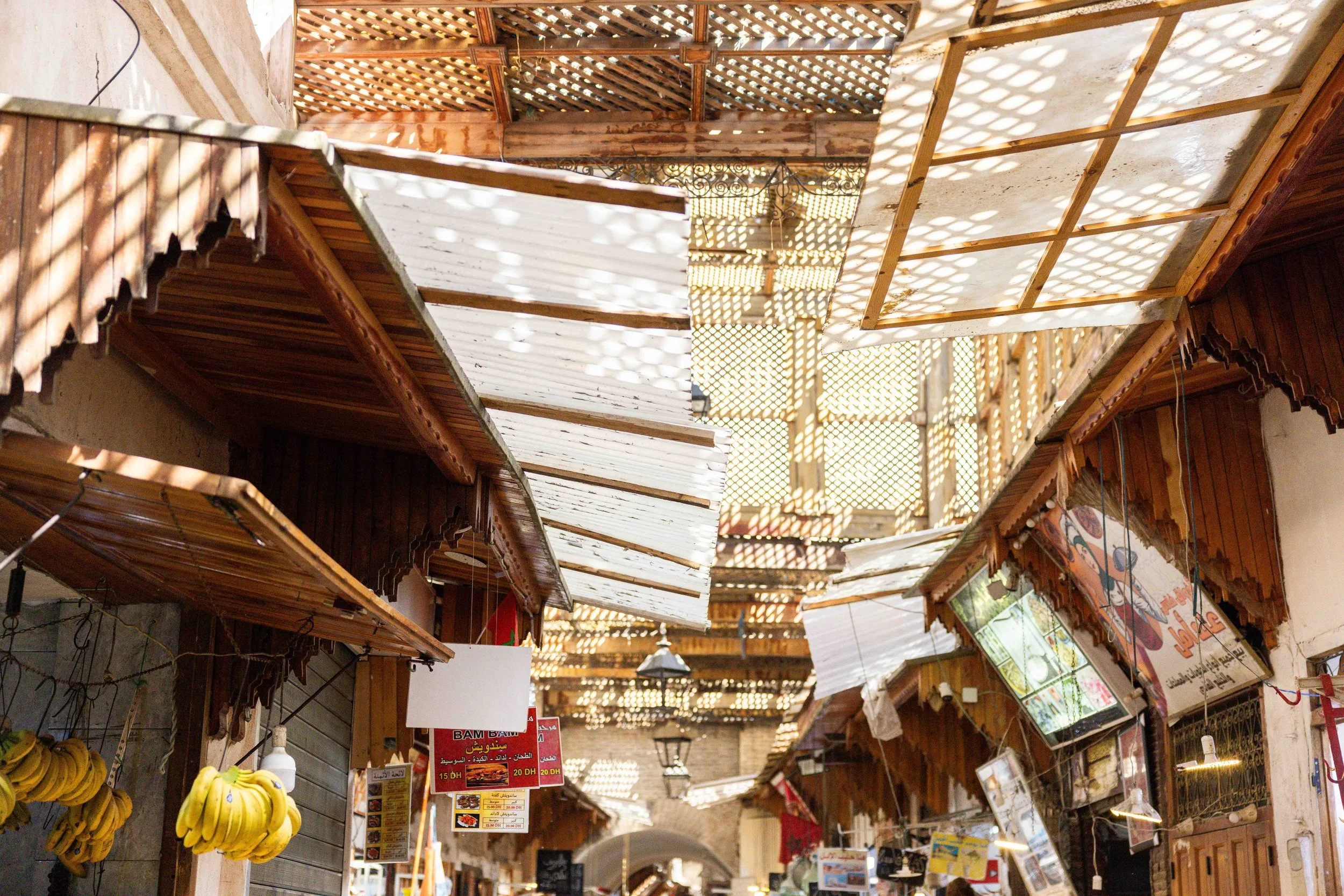
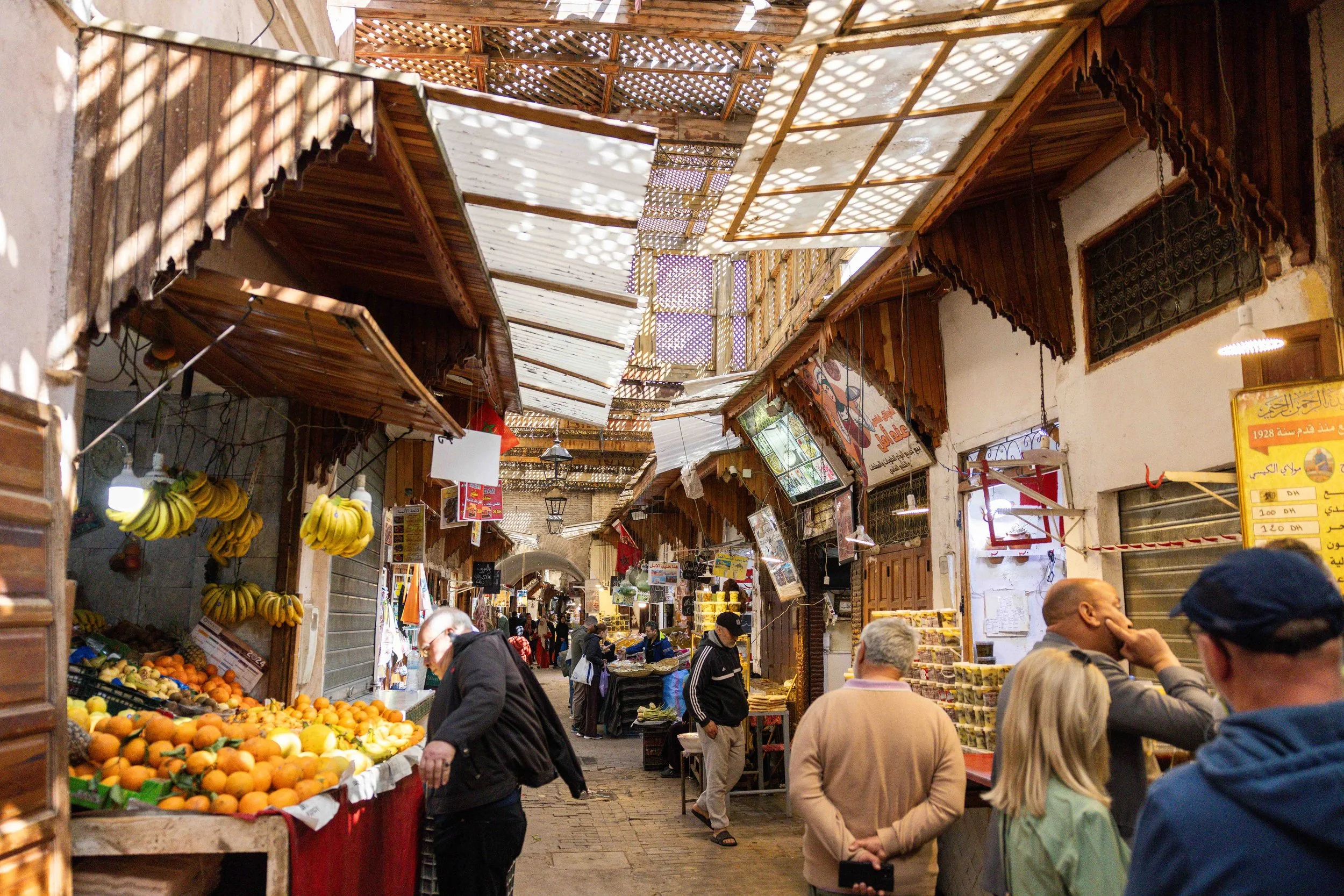
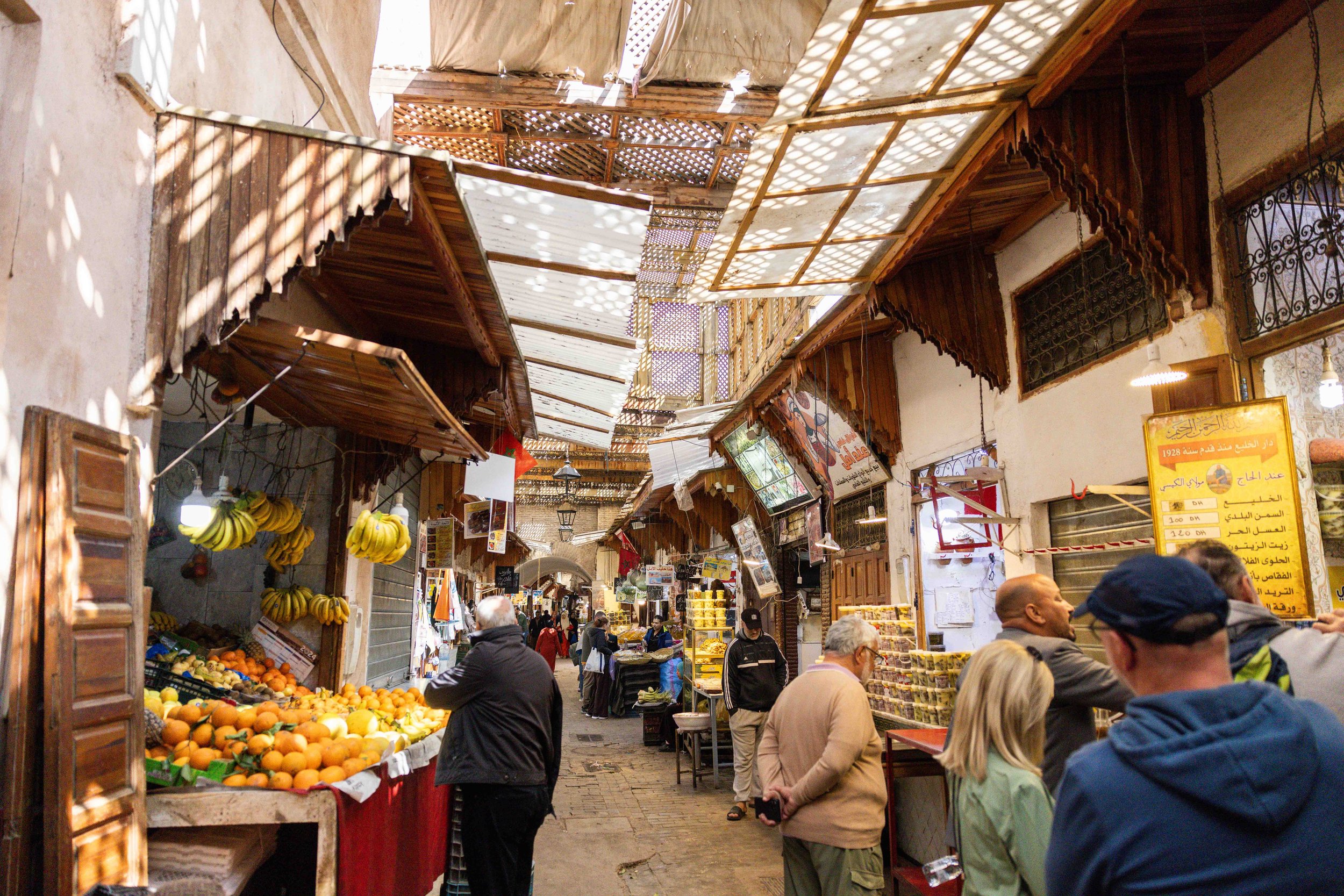
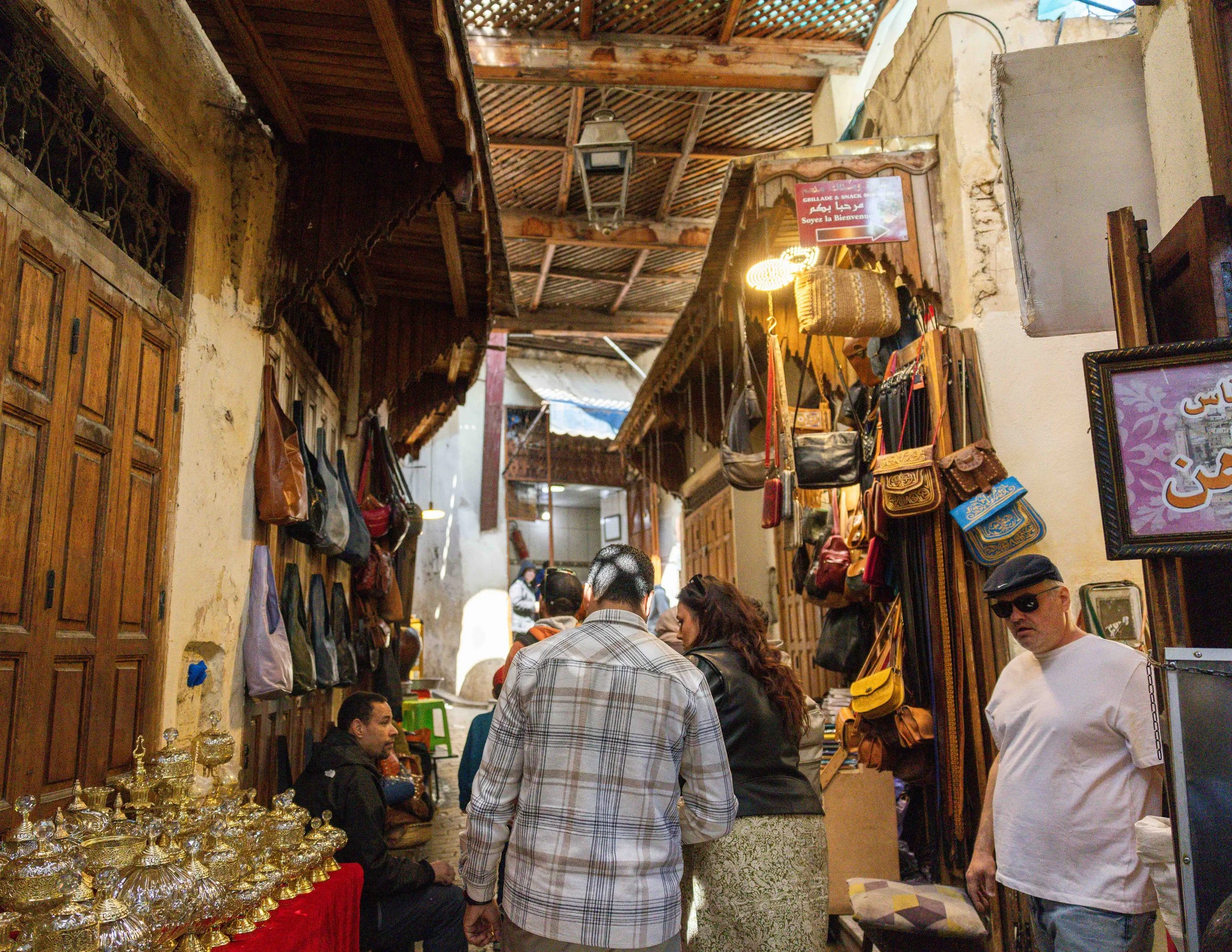
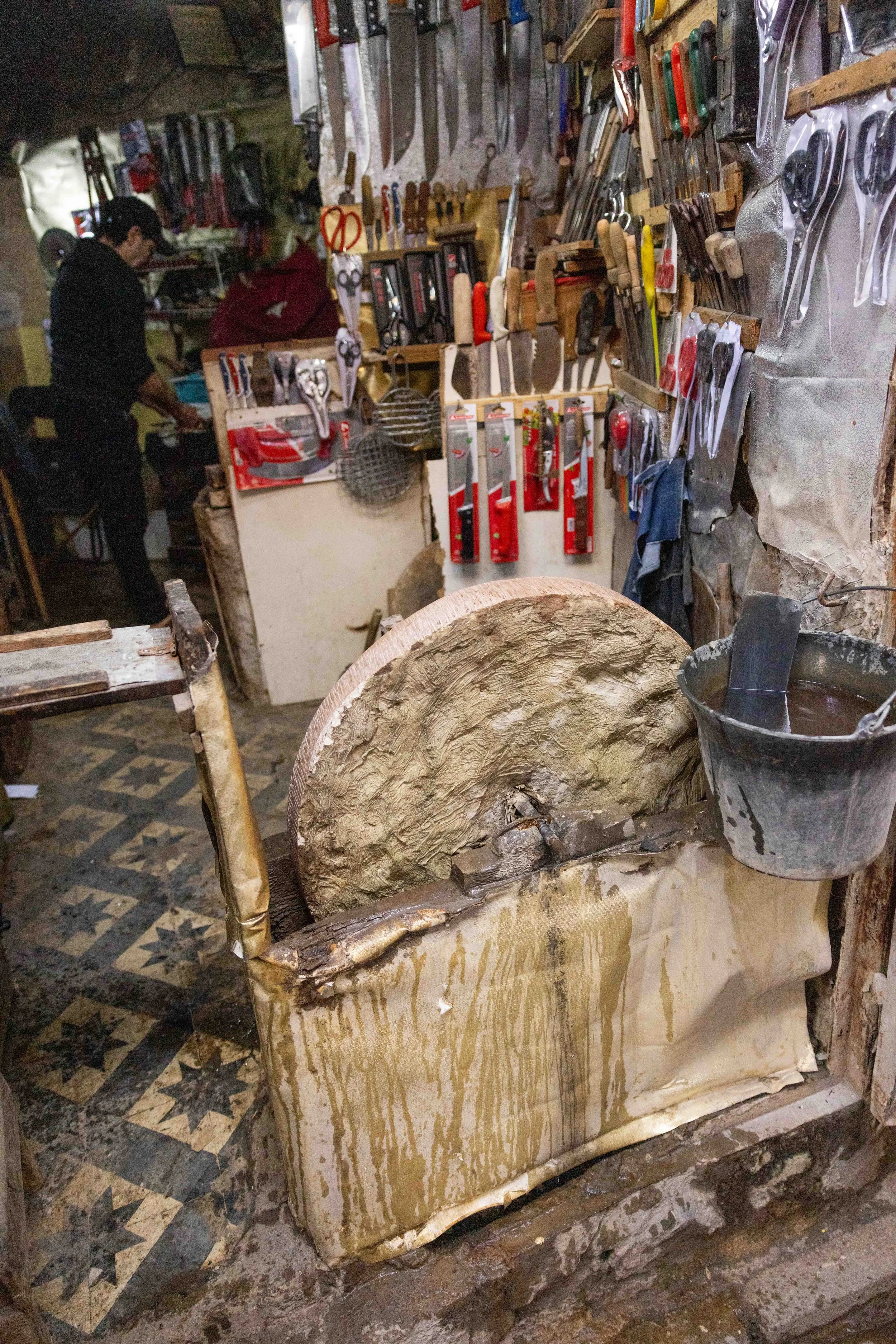
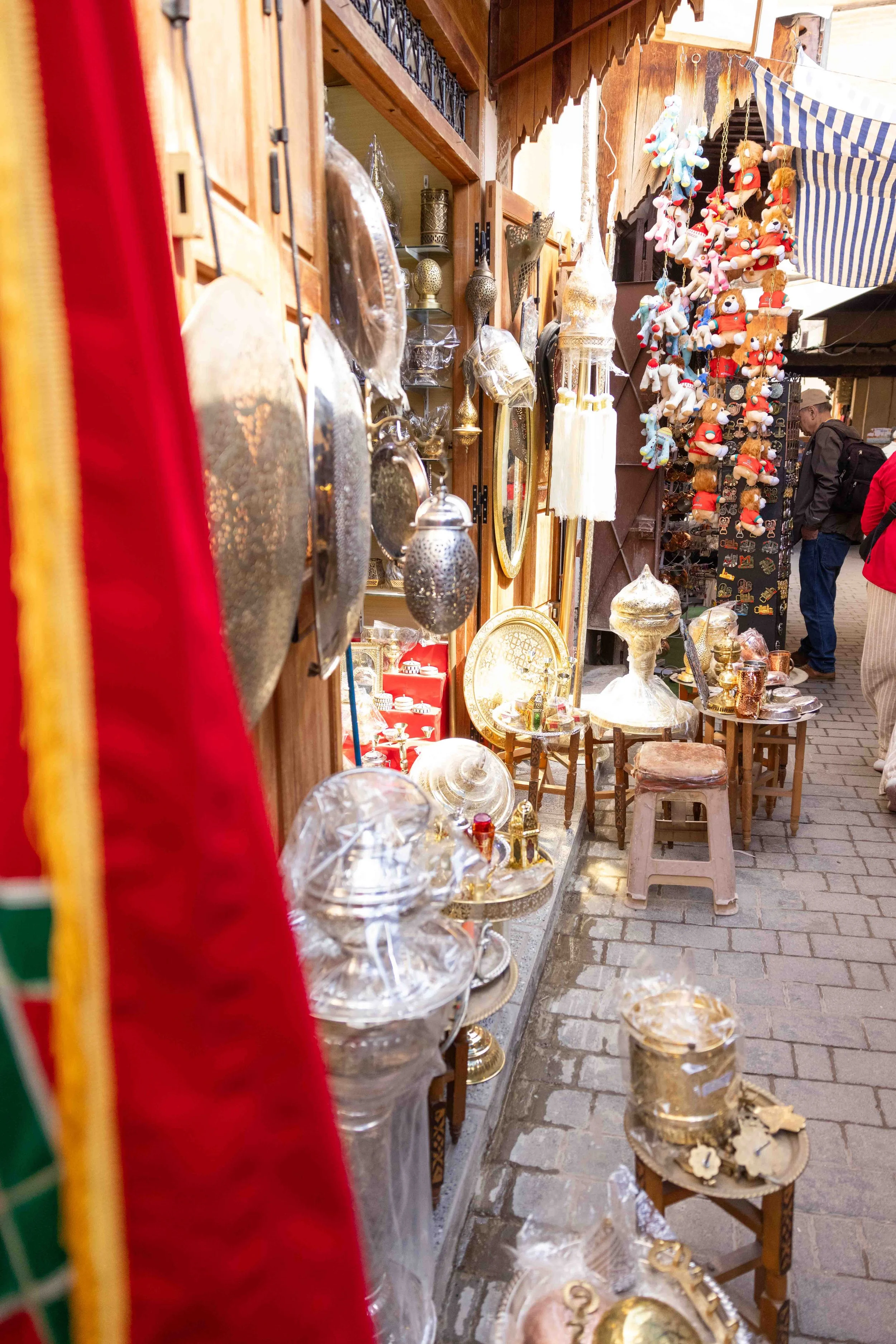
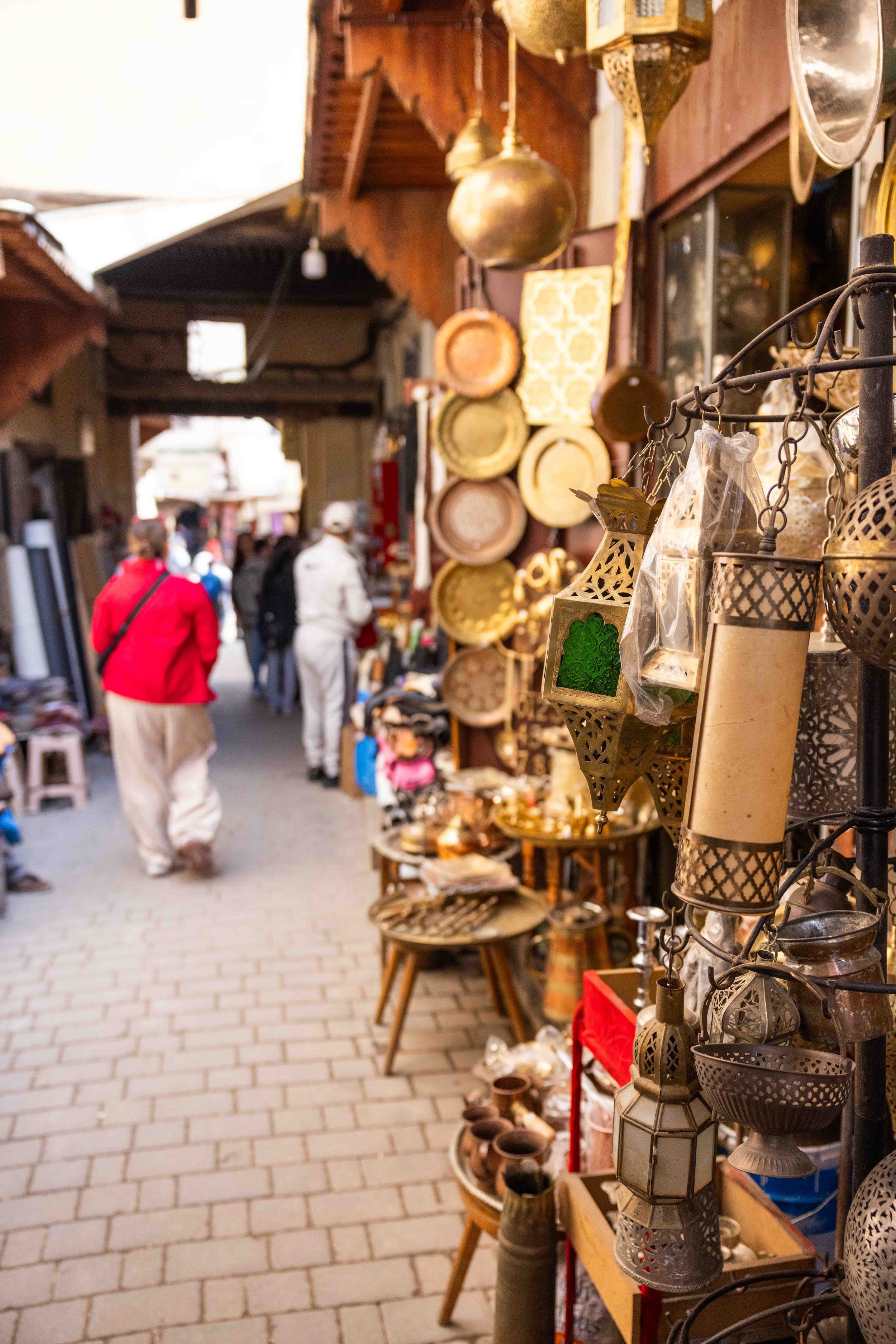
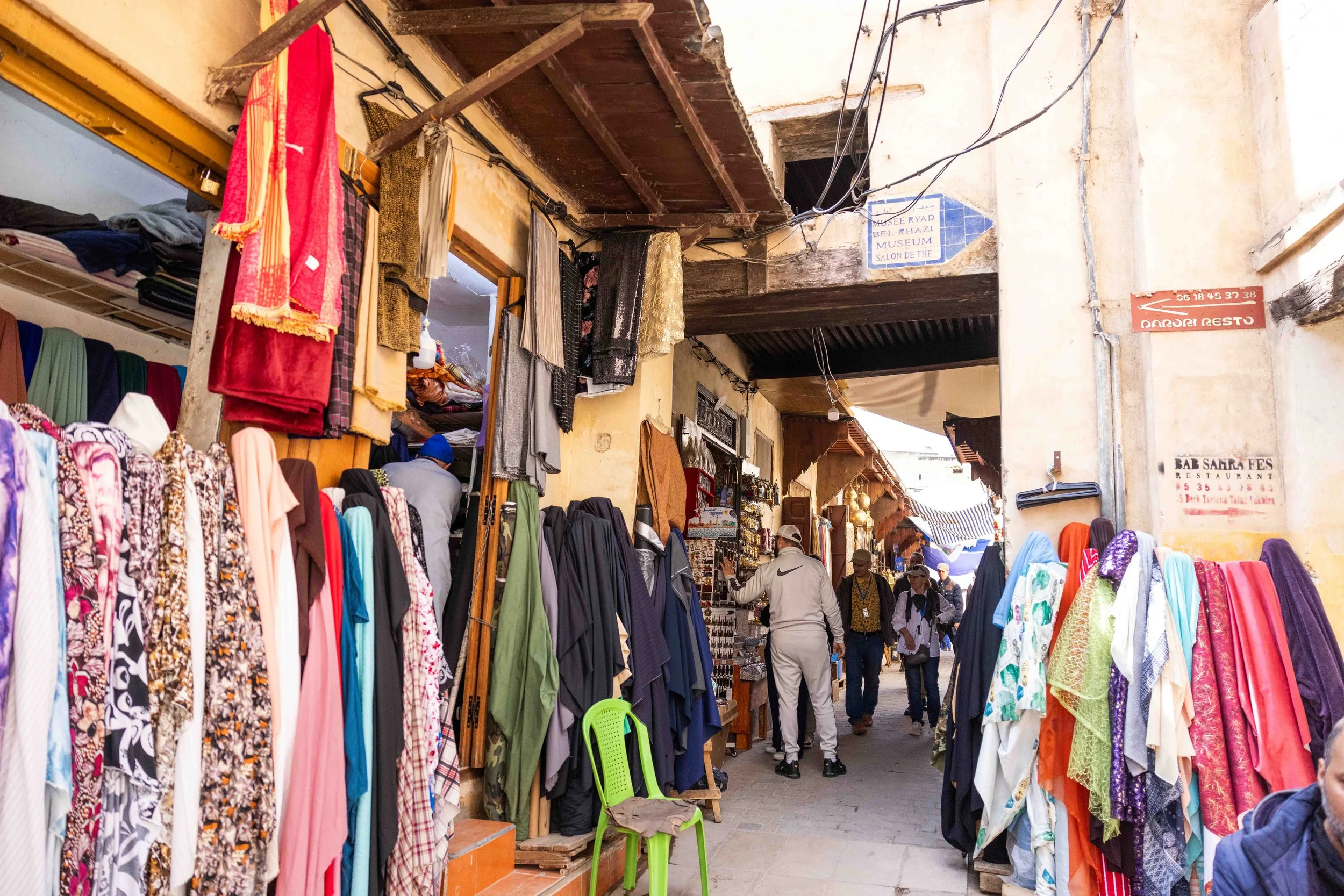
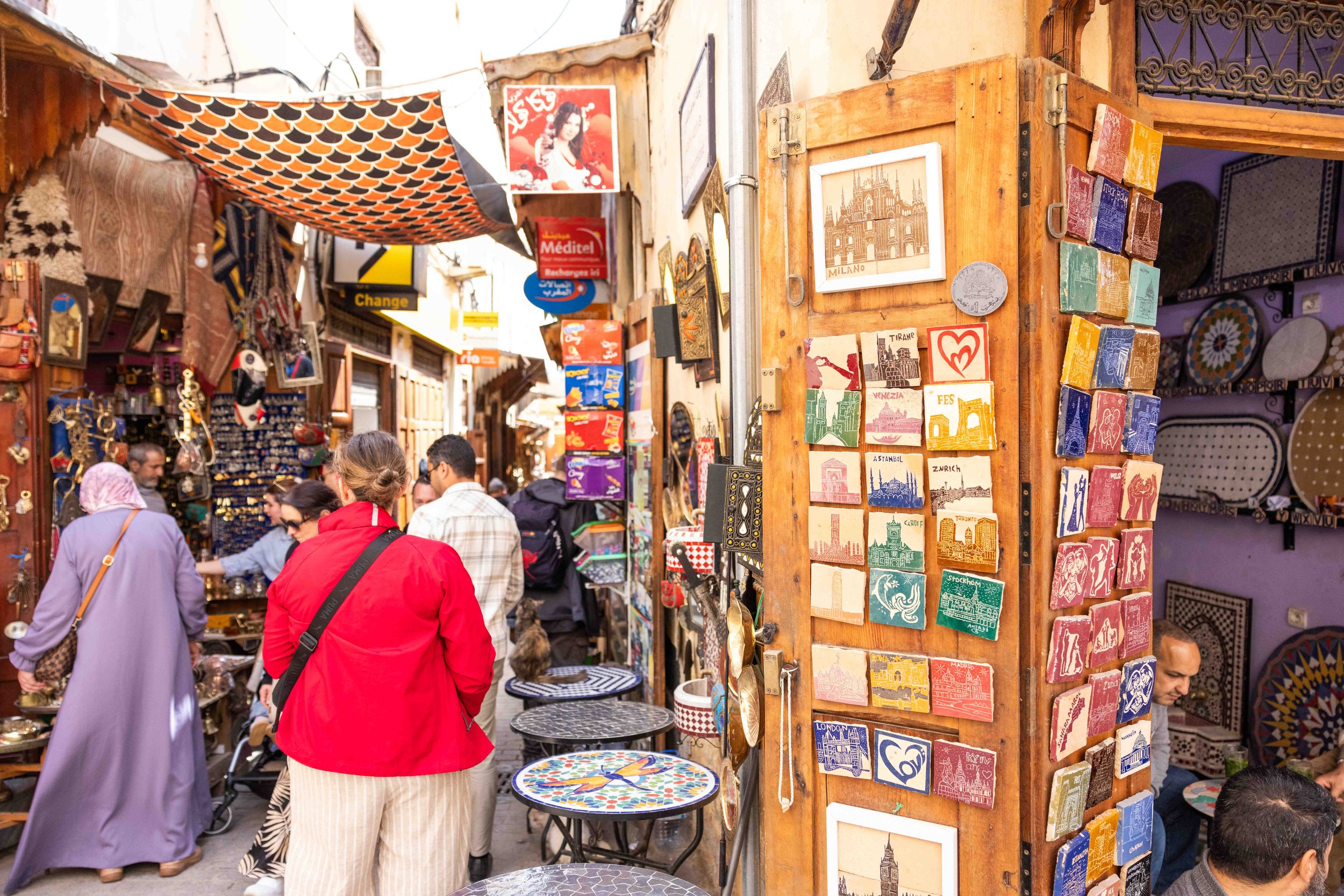
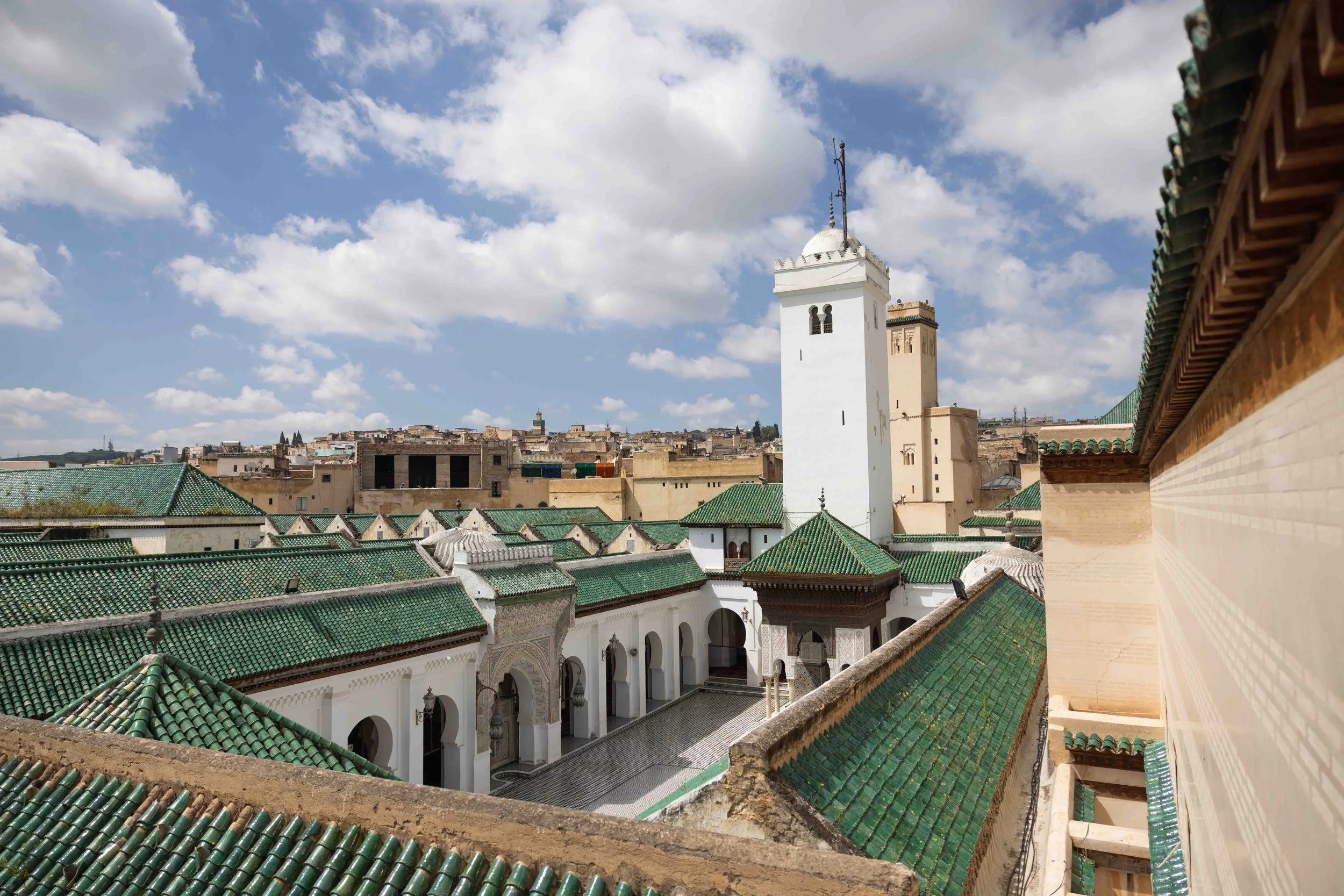
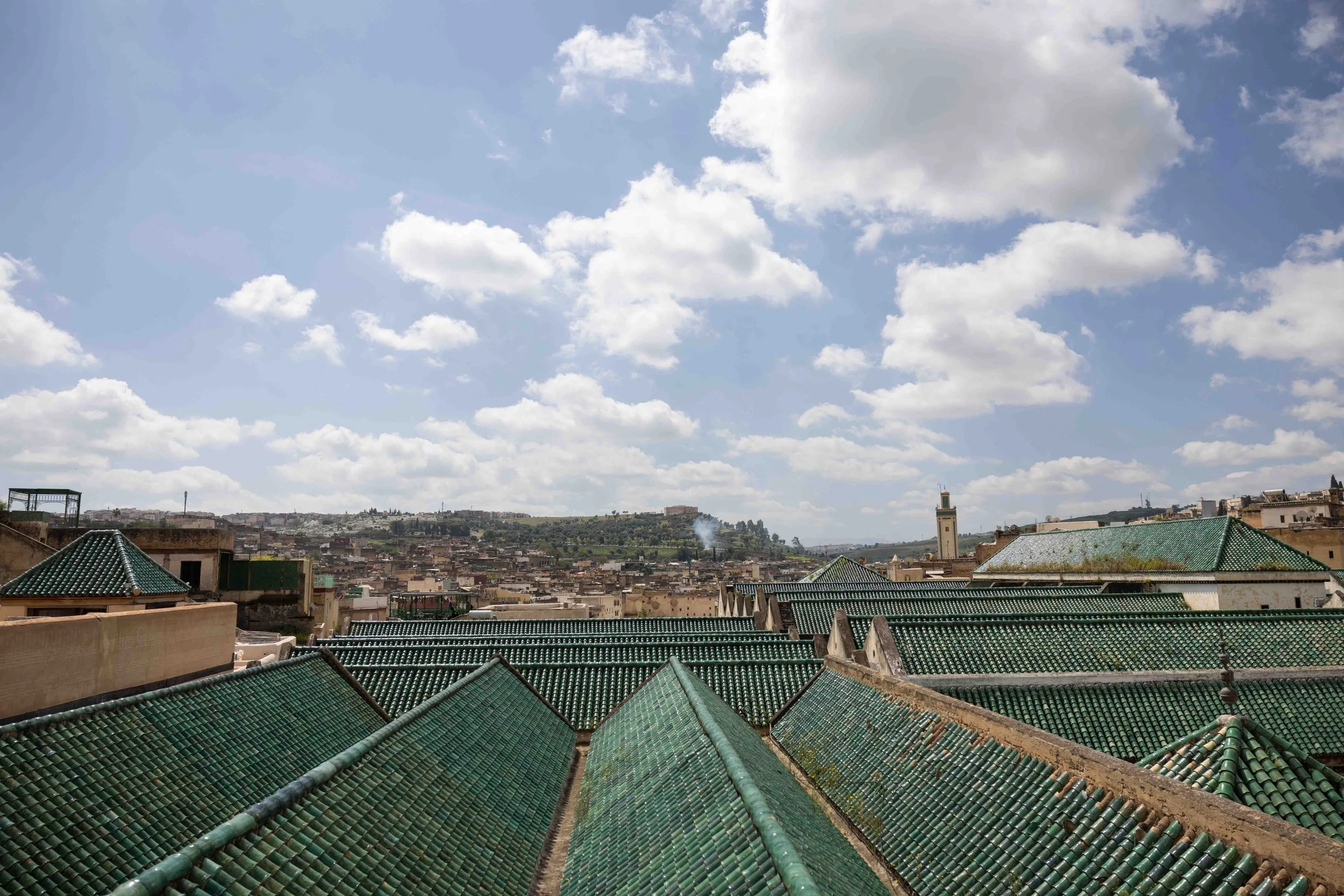
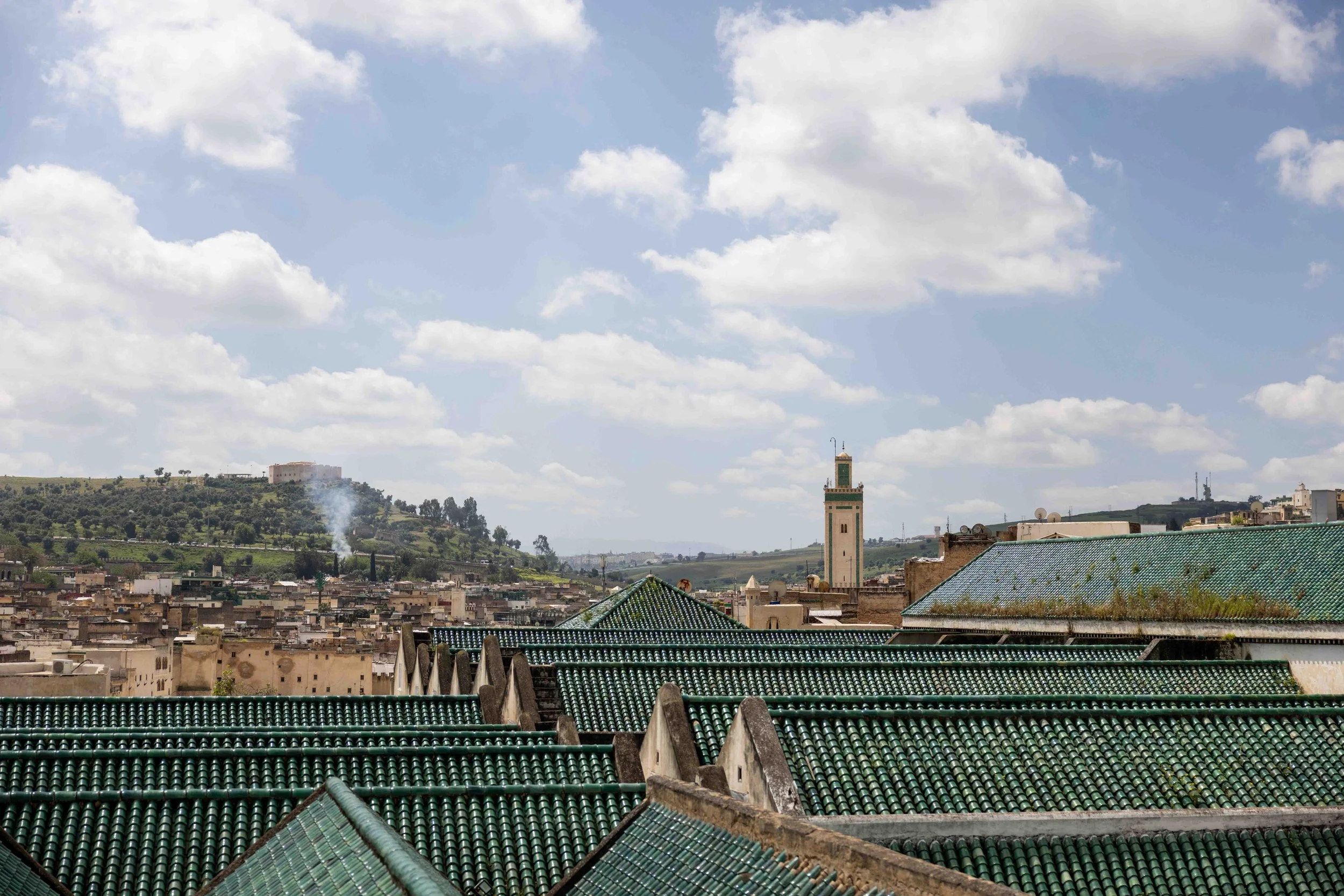
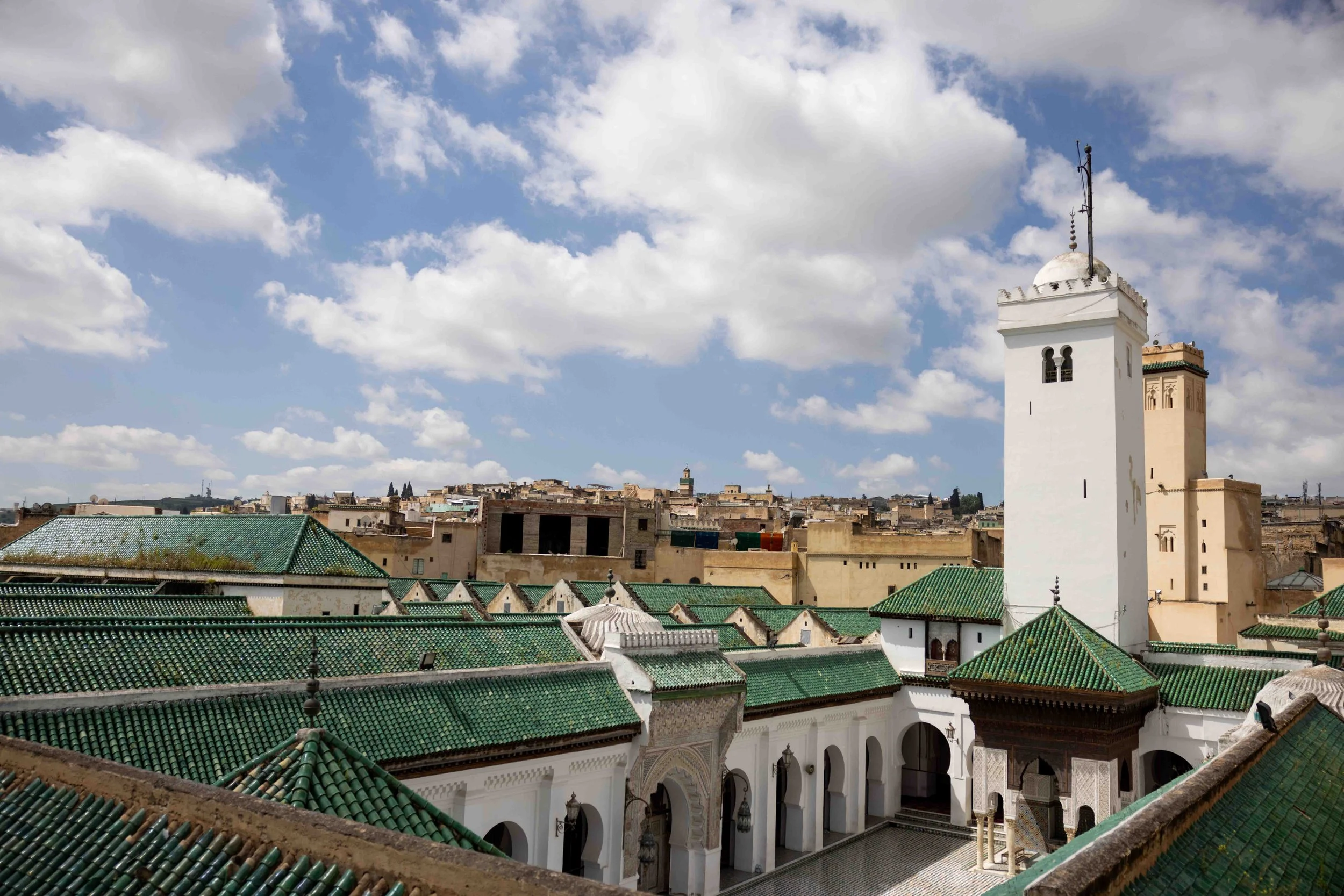
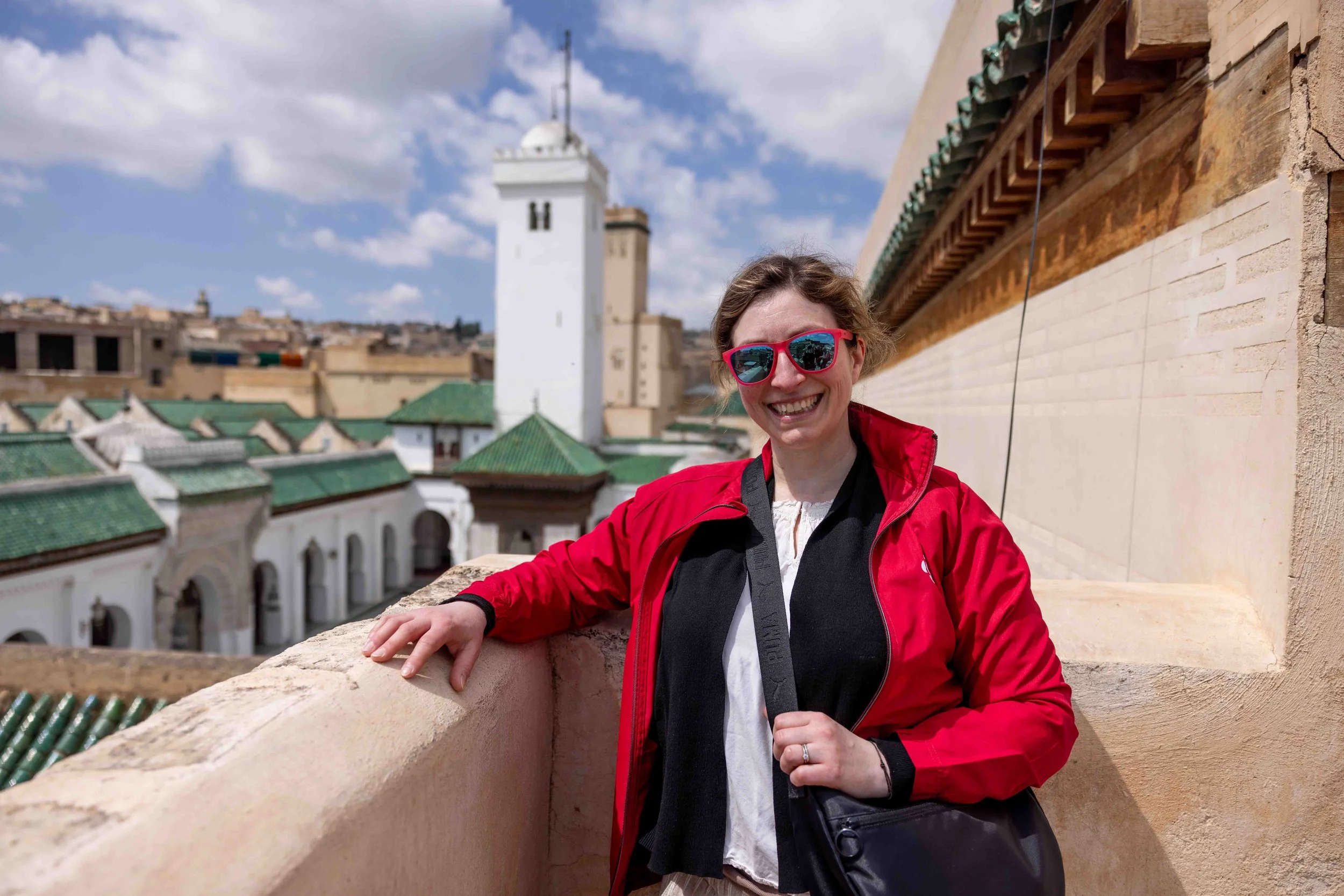
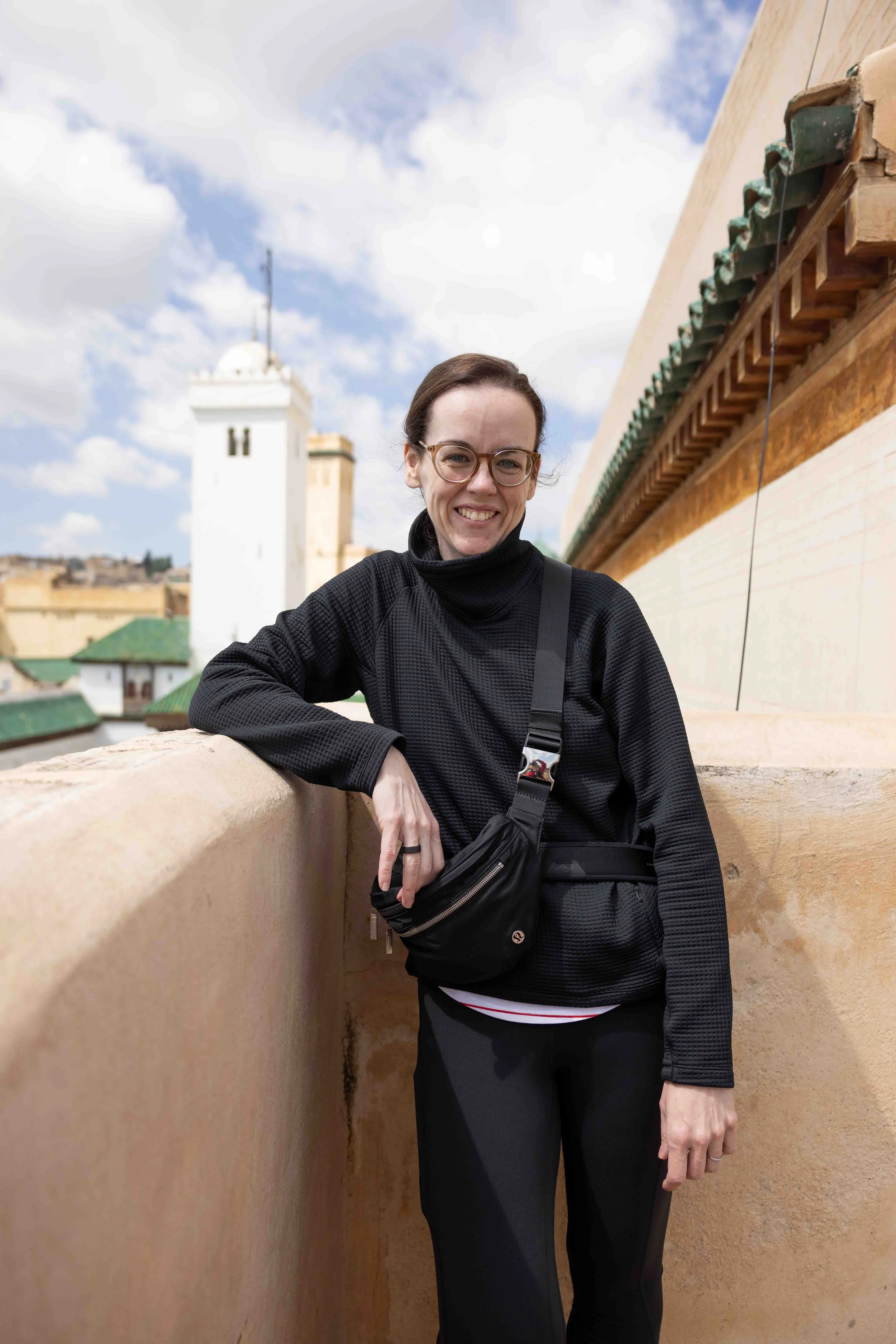
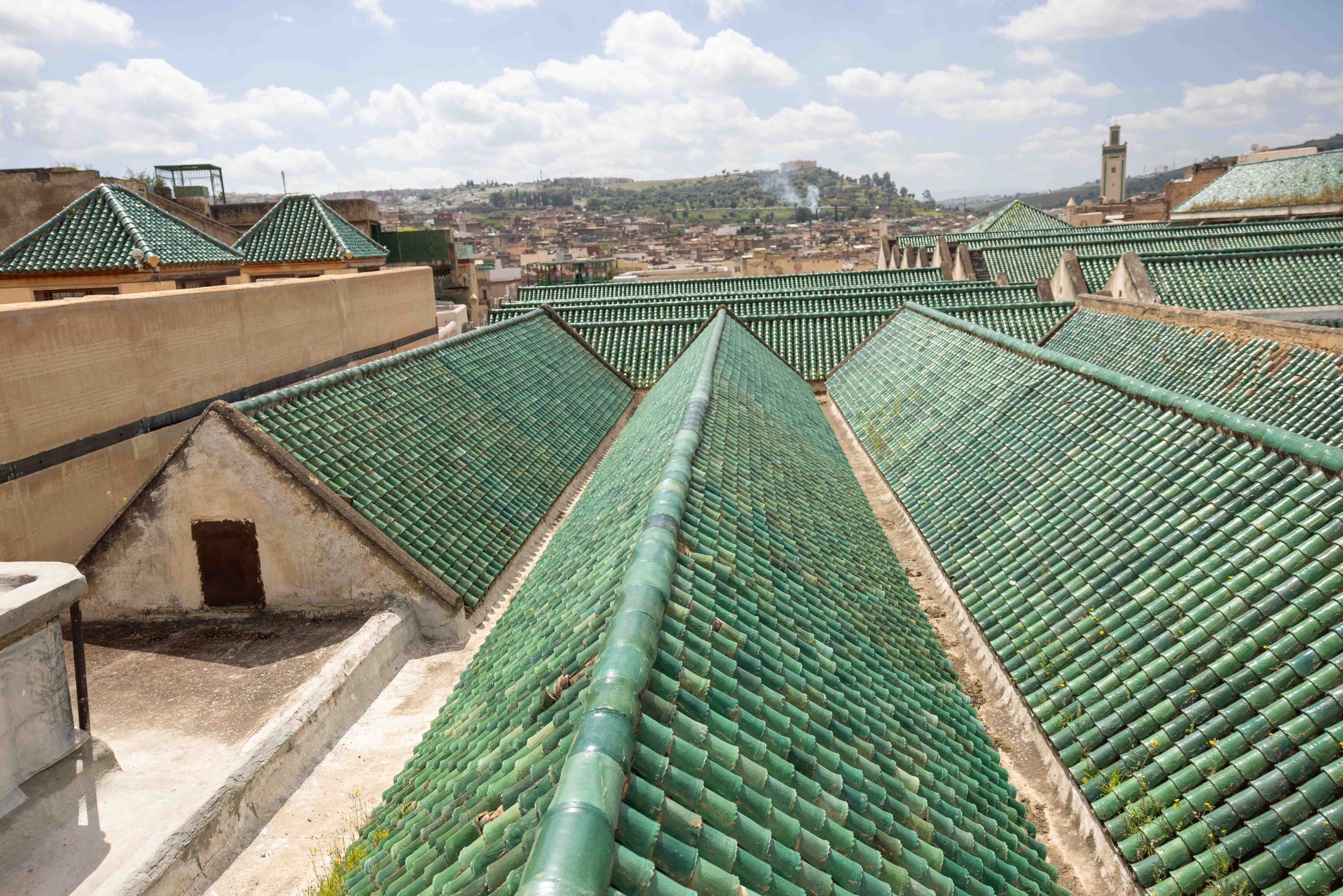
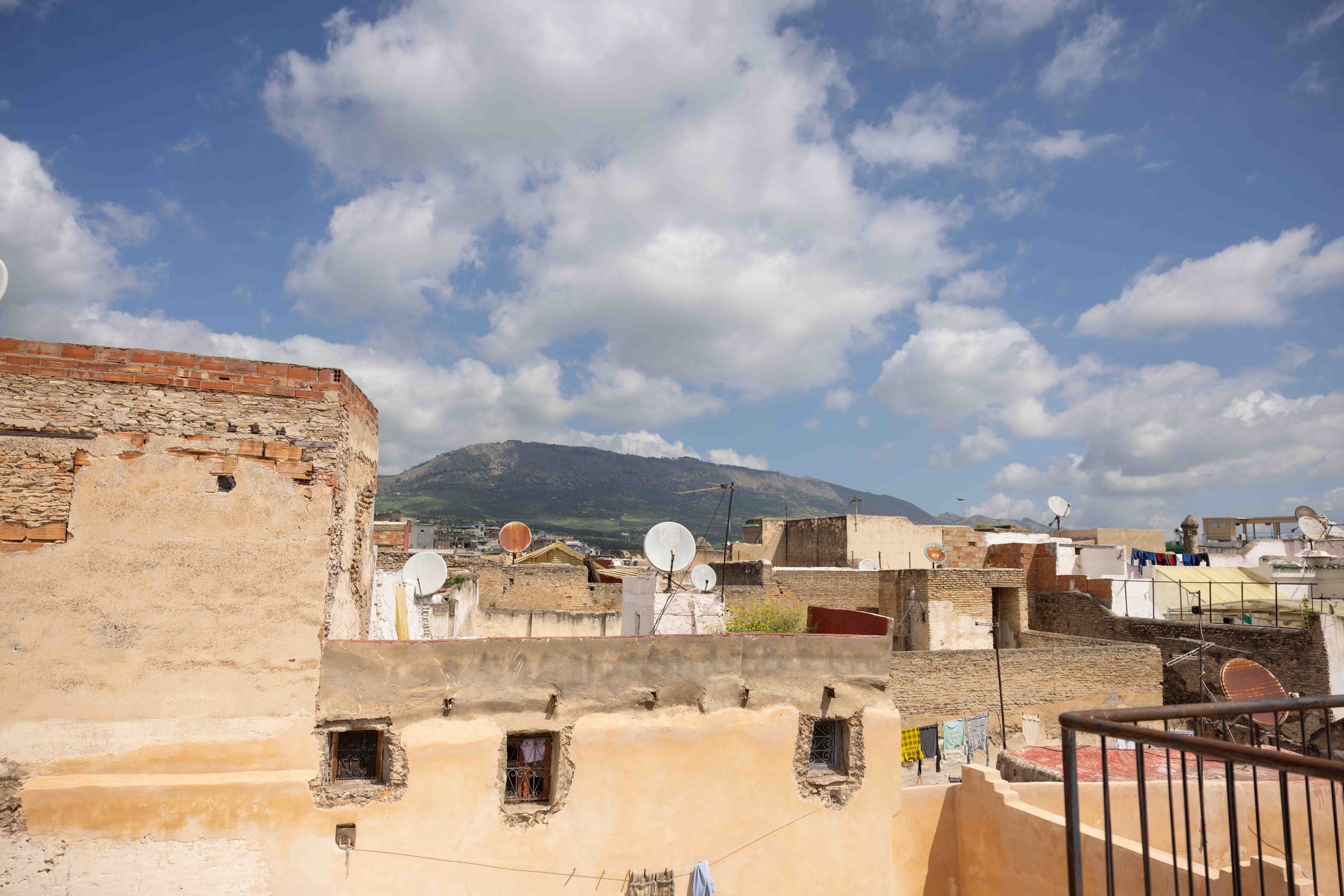
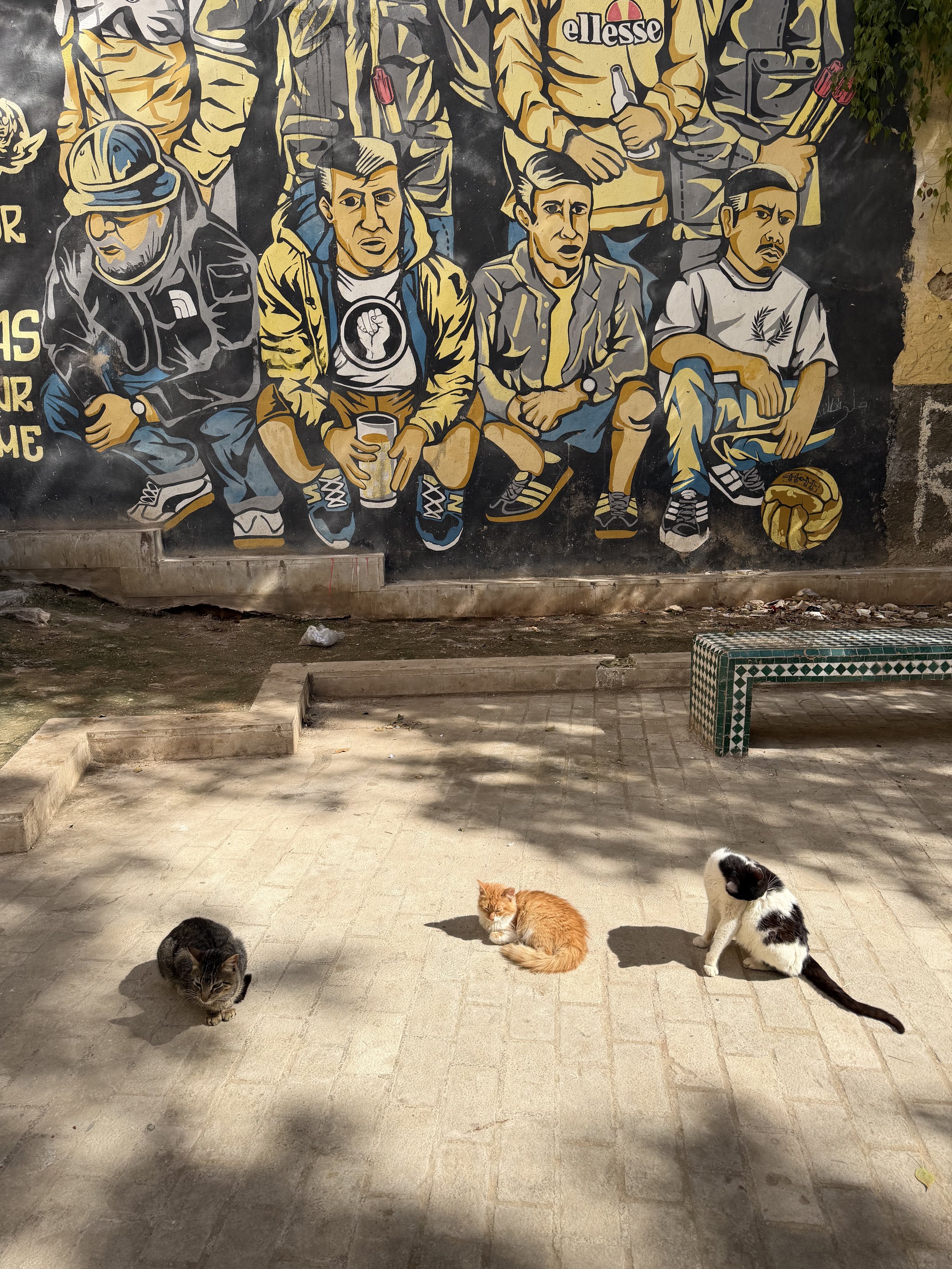
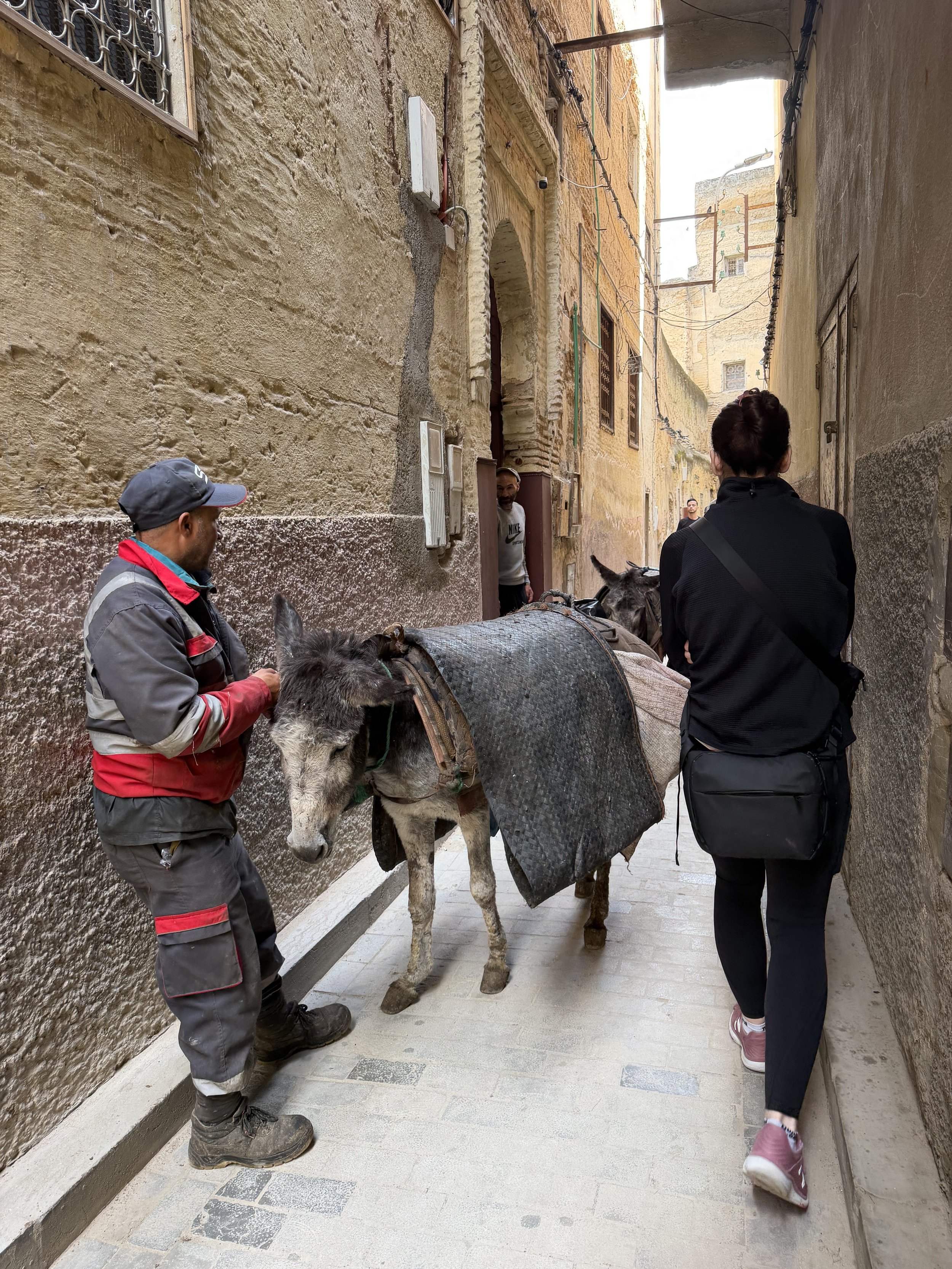
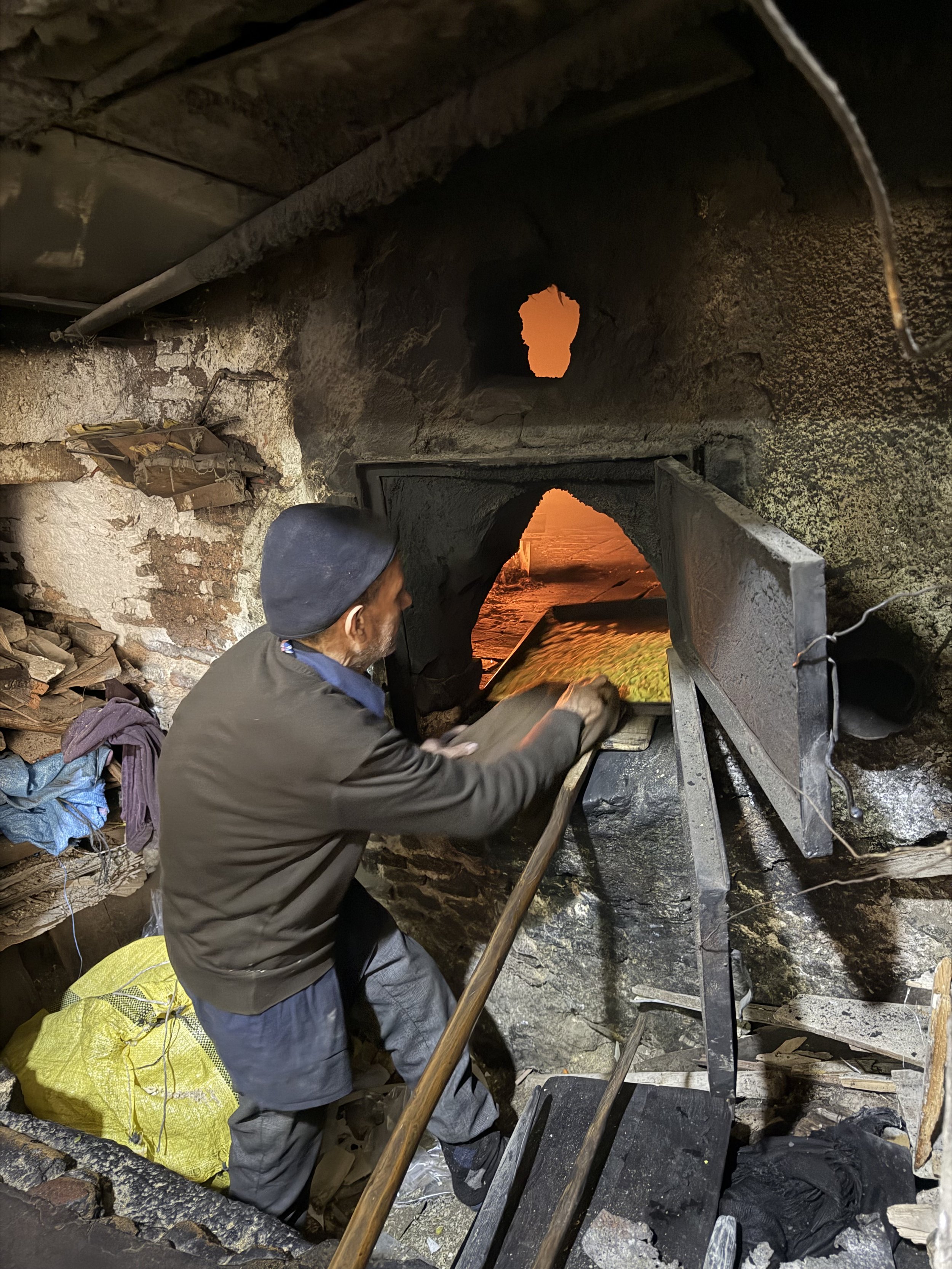
Initially I was so interested in our guide’s information, that I almost completely forgot to take photos of the winding alleys. Luckily, my travel friend had no such problem and captured a ton of photos on her phone that she’s letting me post here (thanks Jen!).
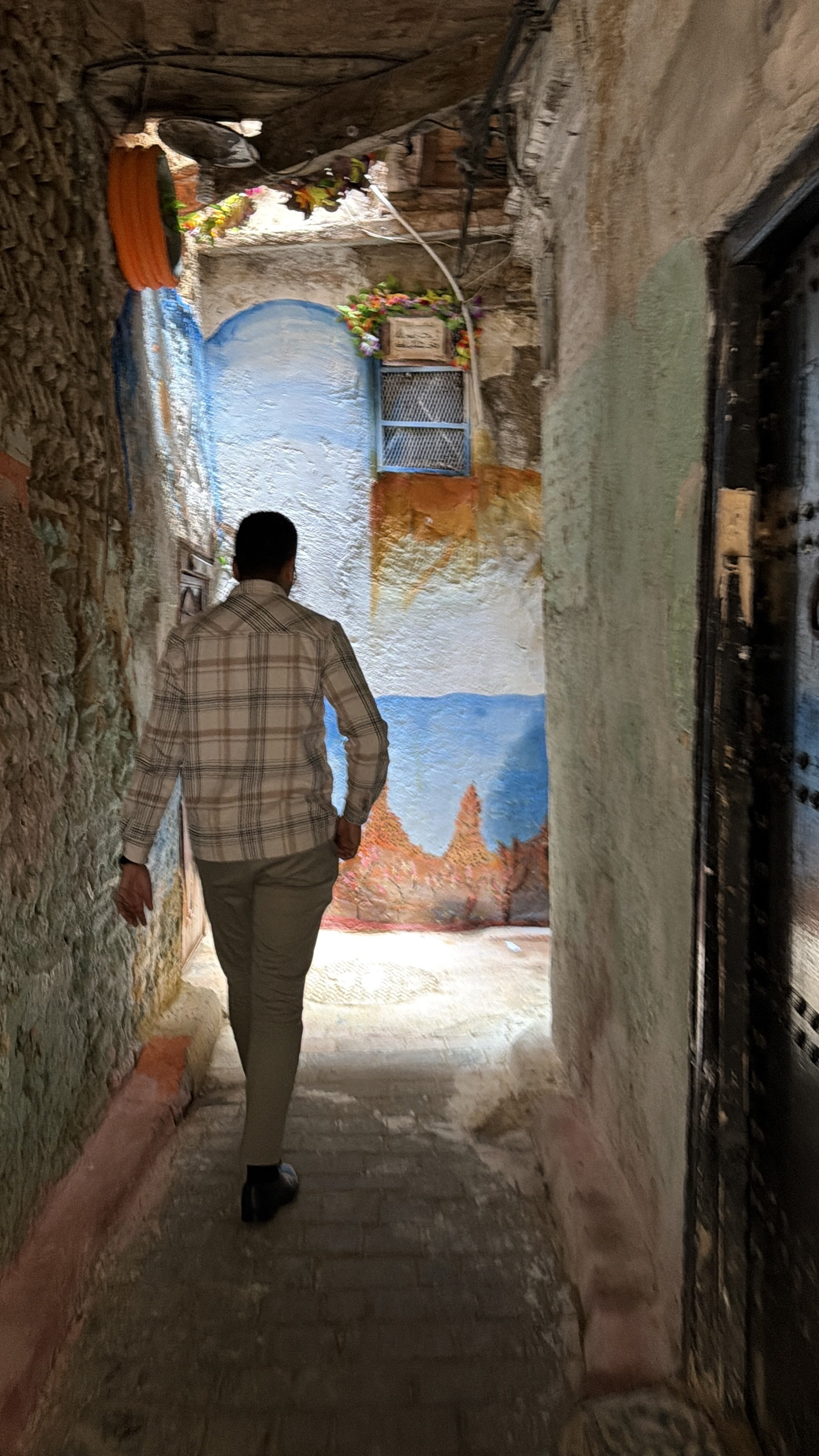
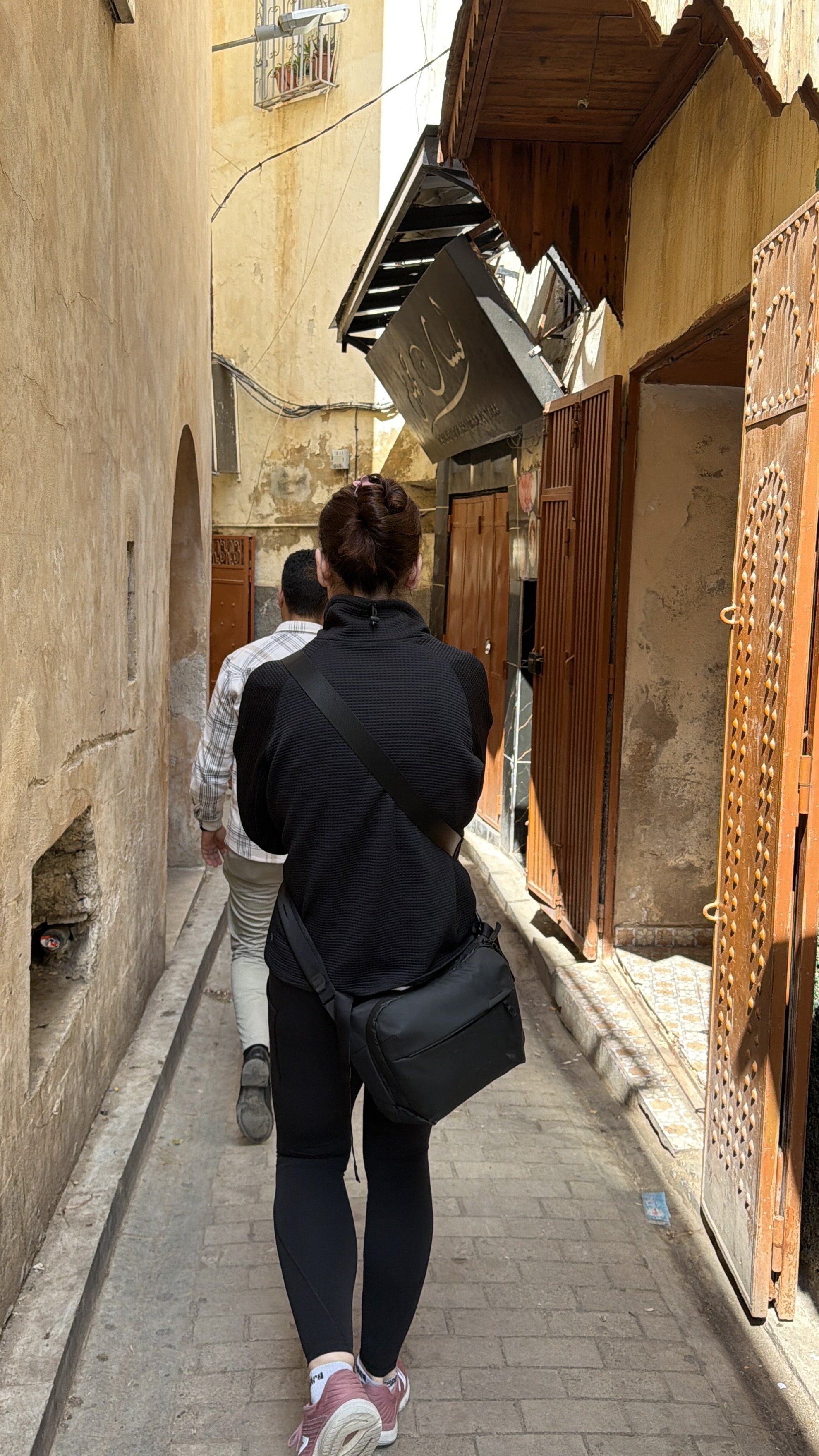
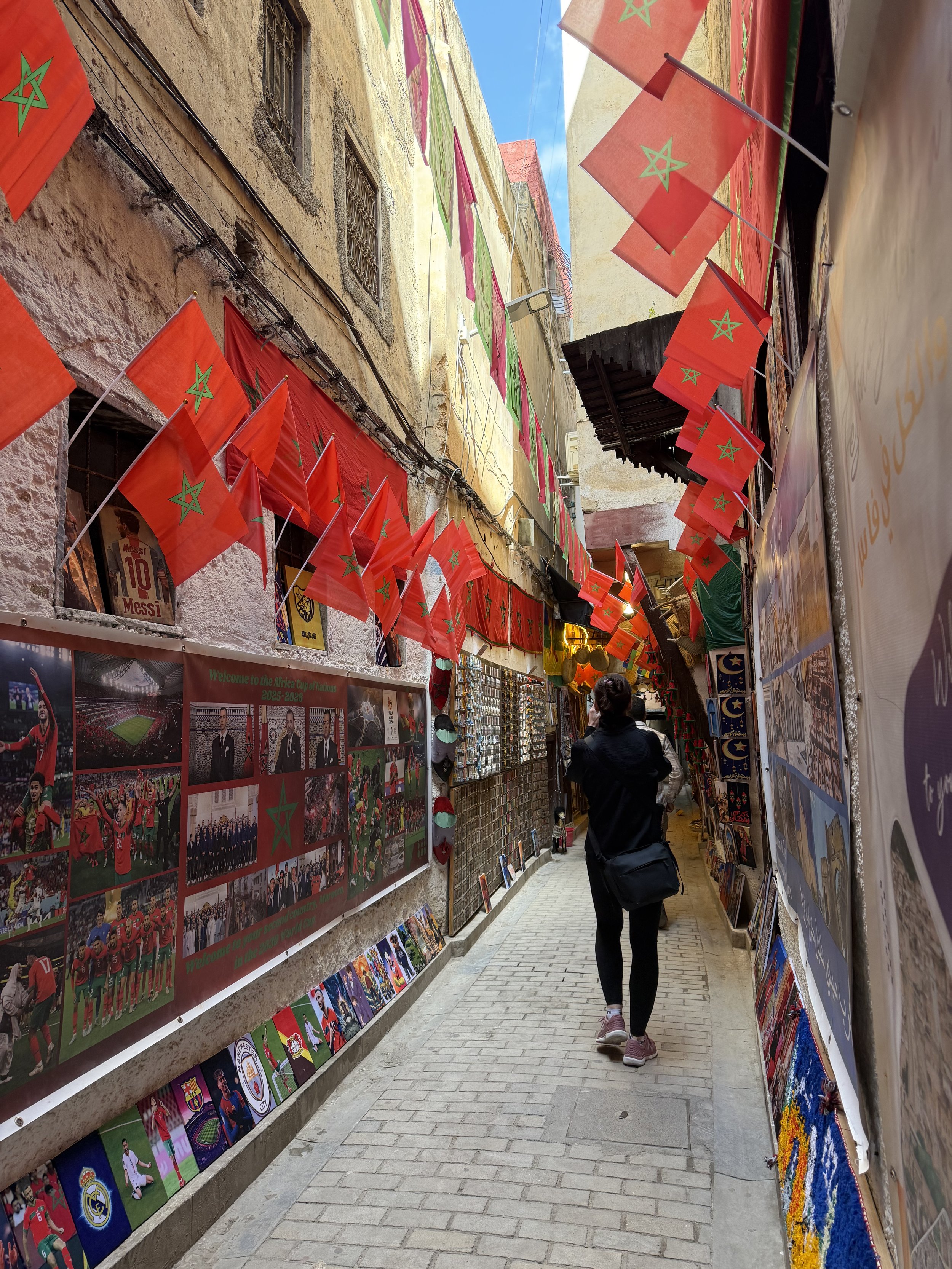
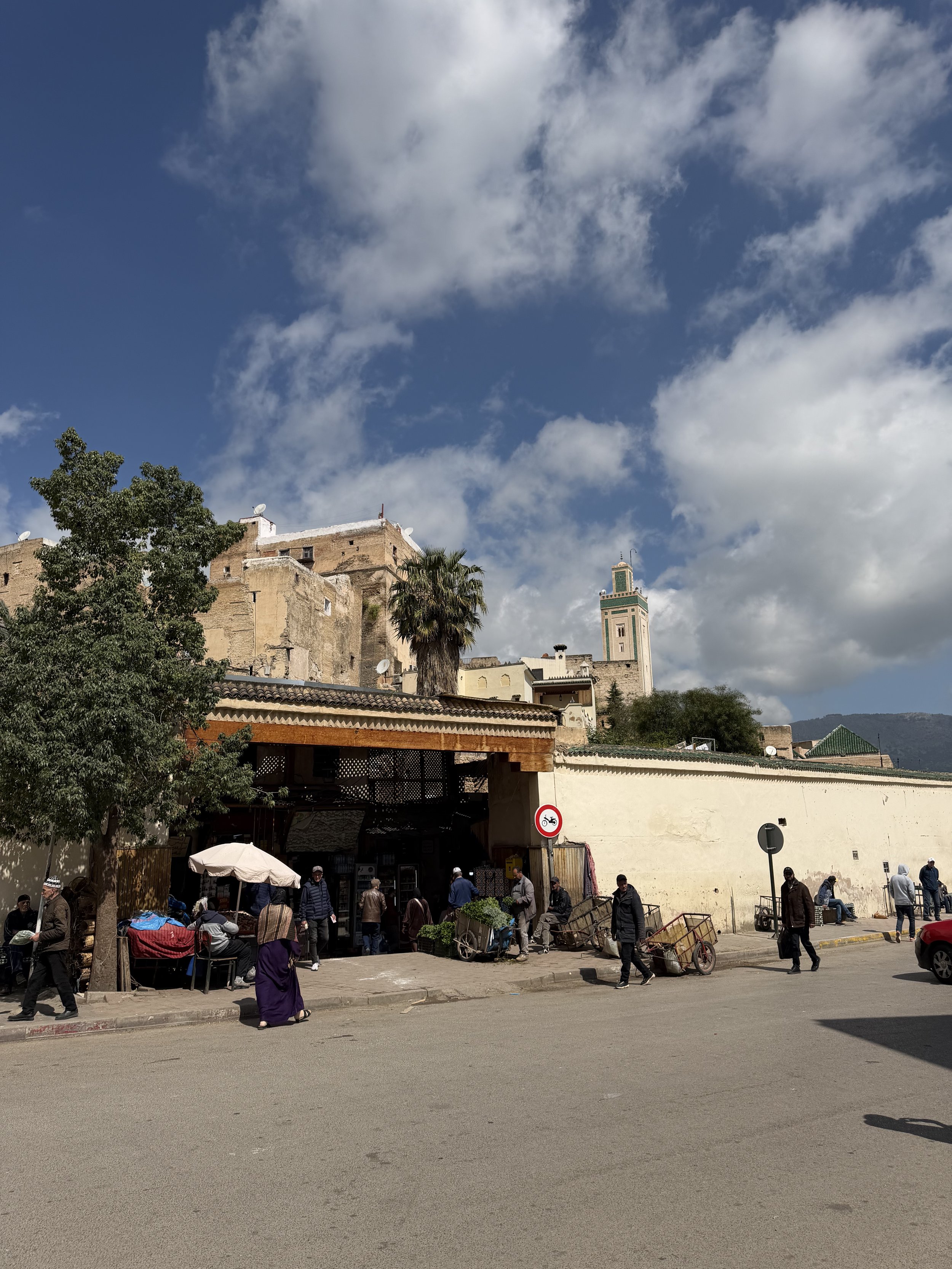
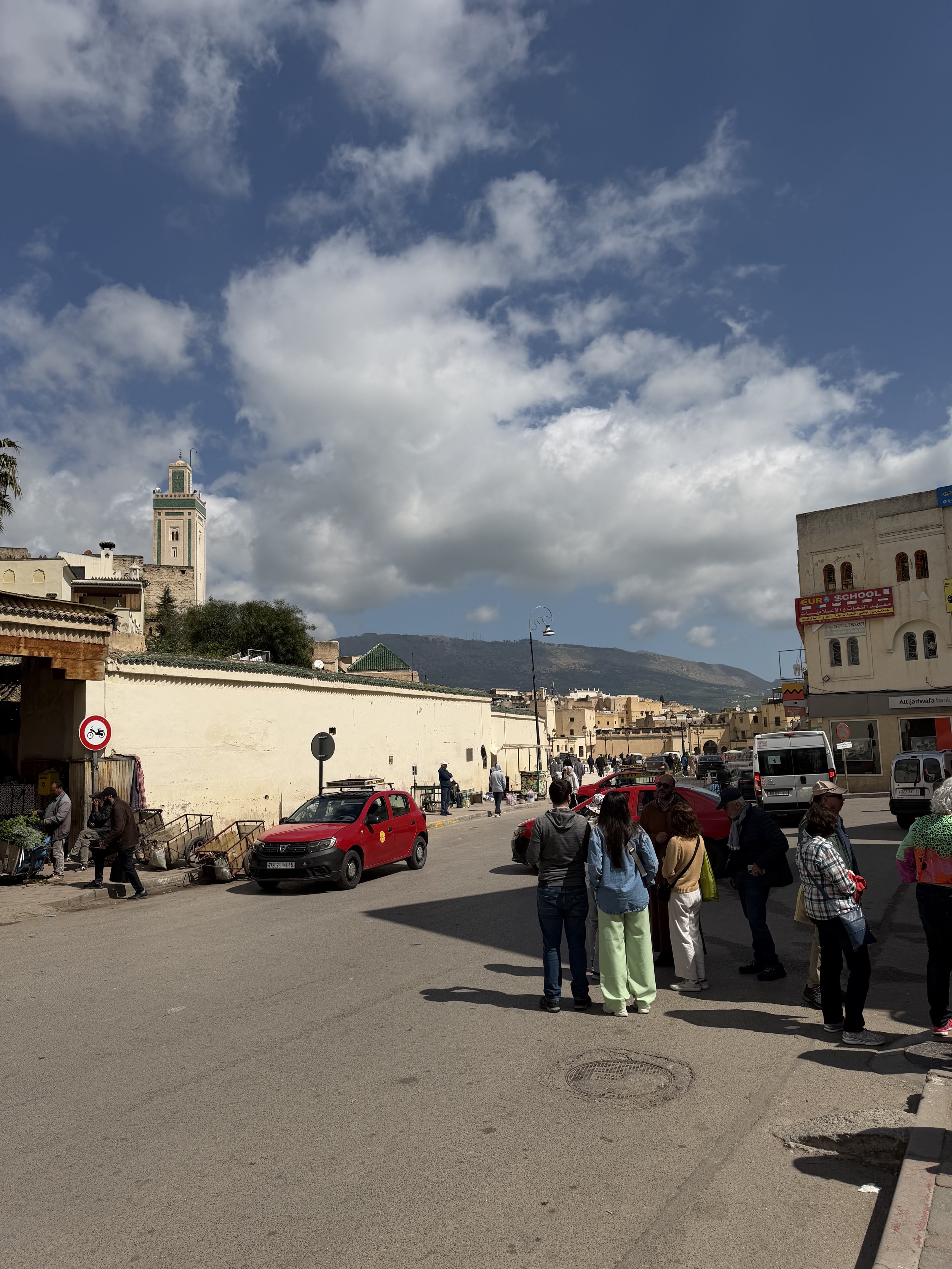
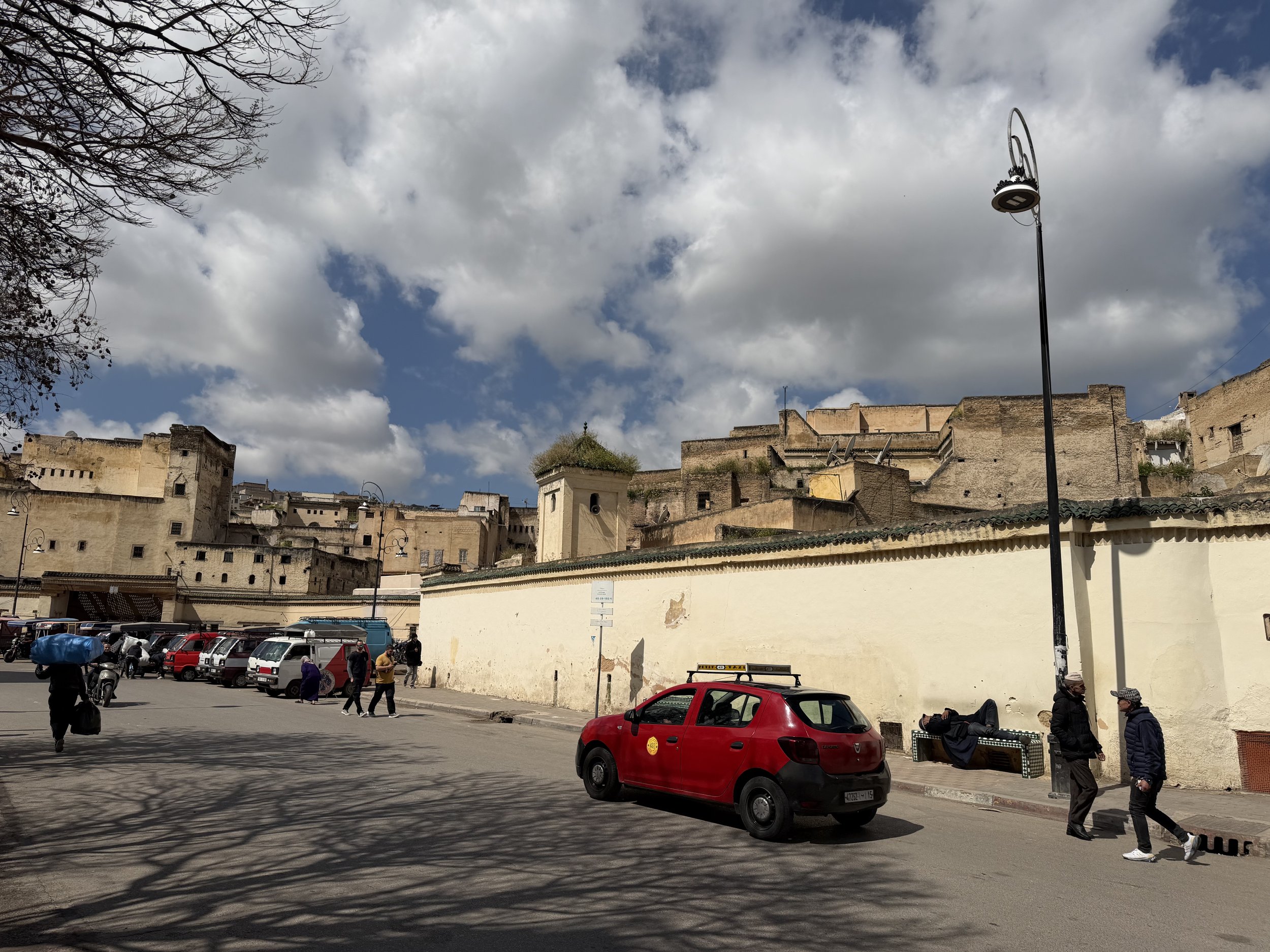
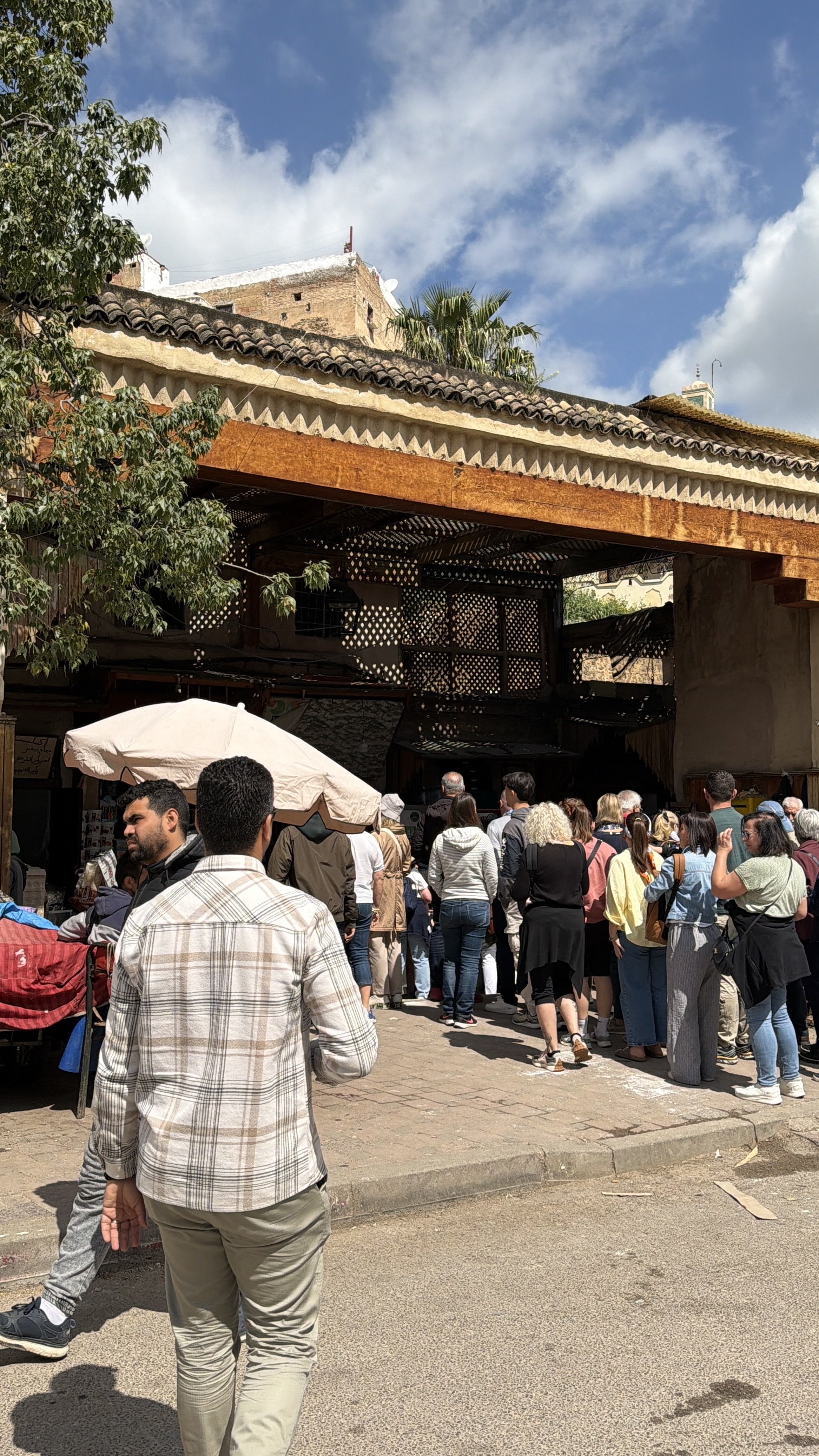
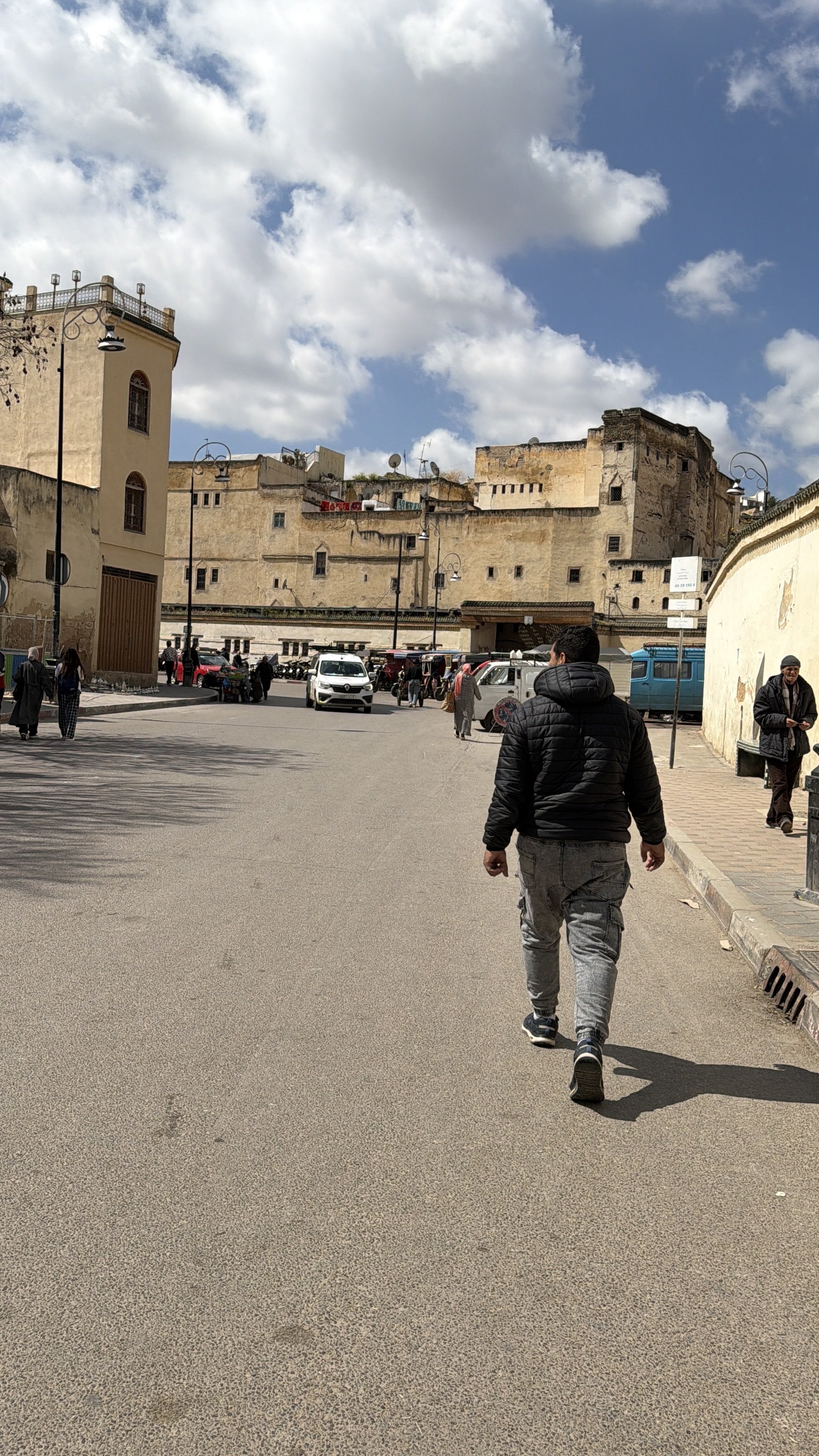
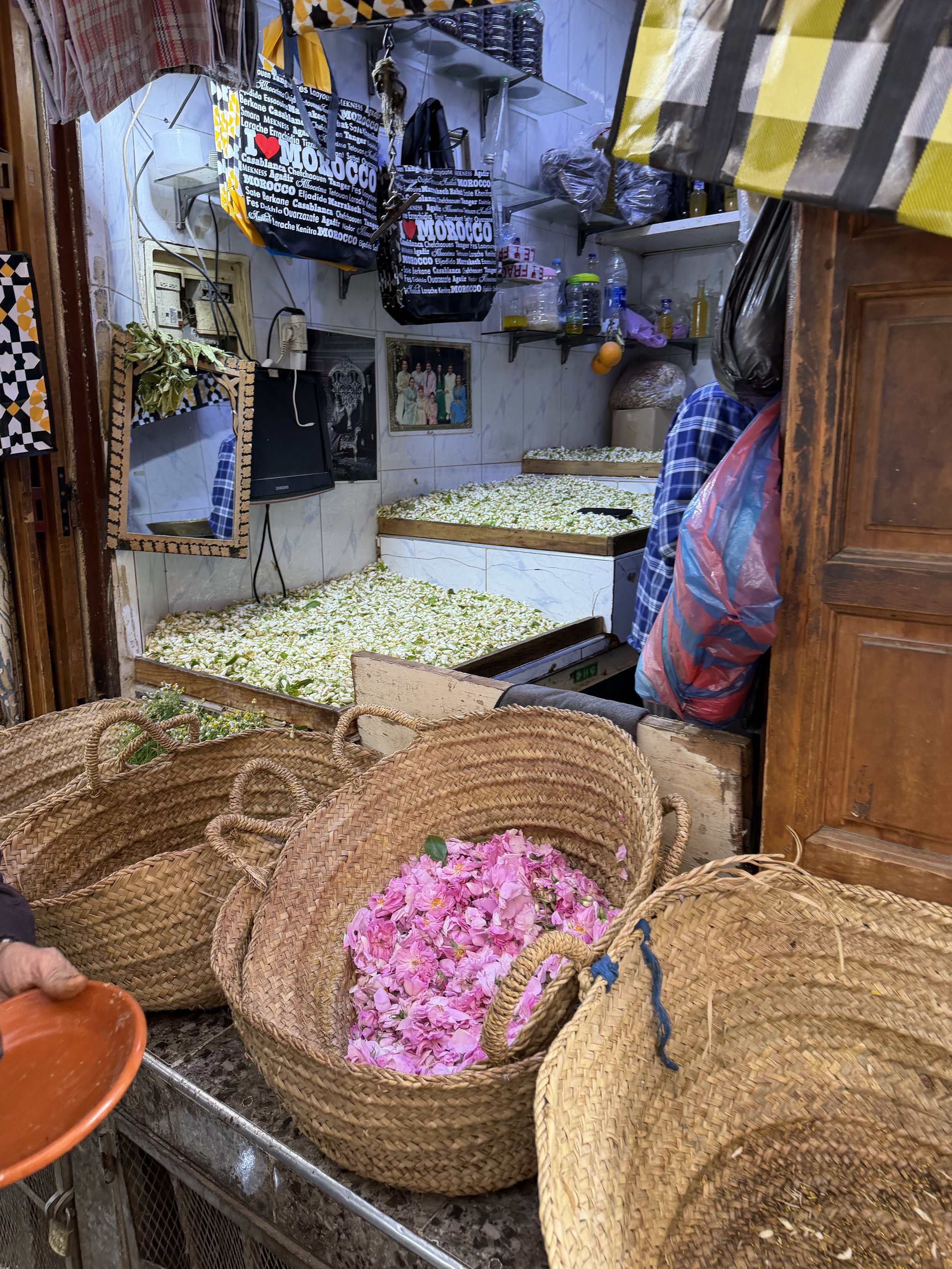
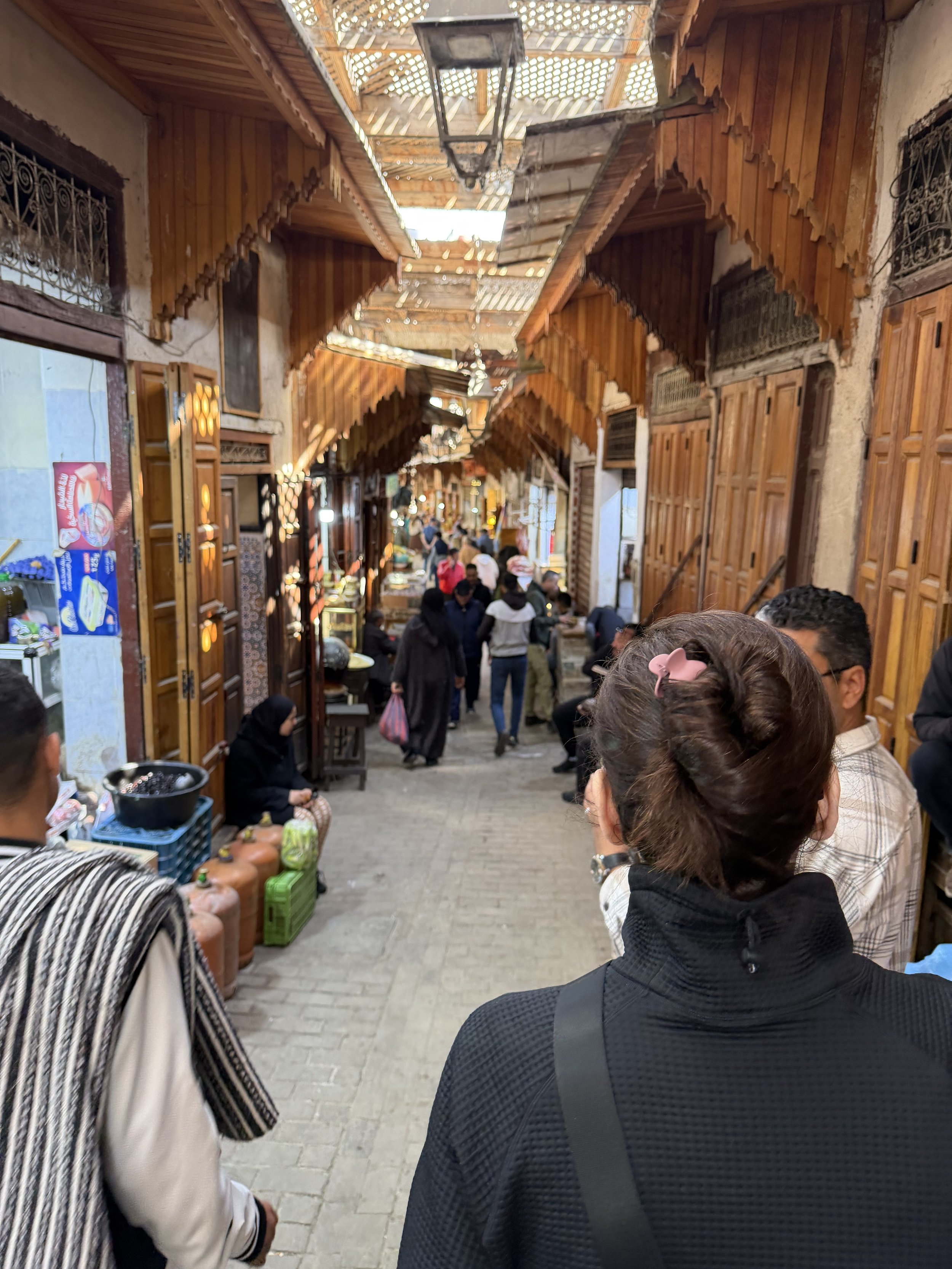
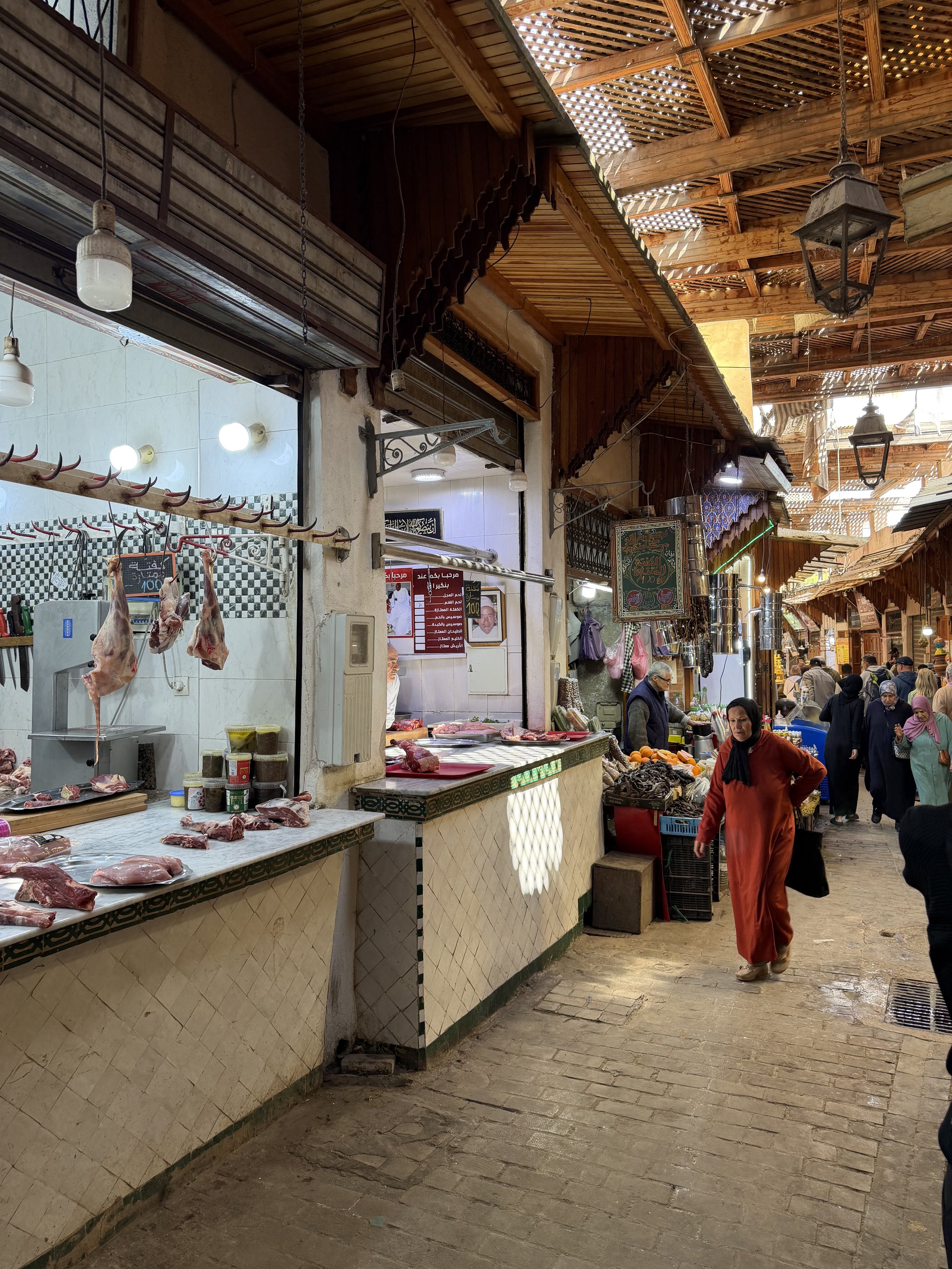
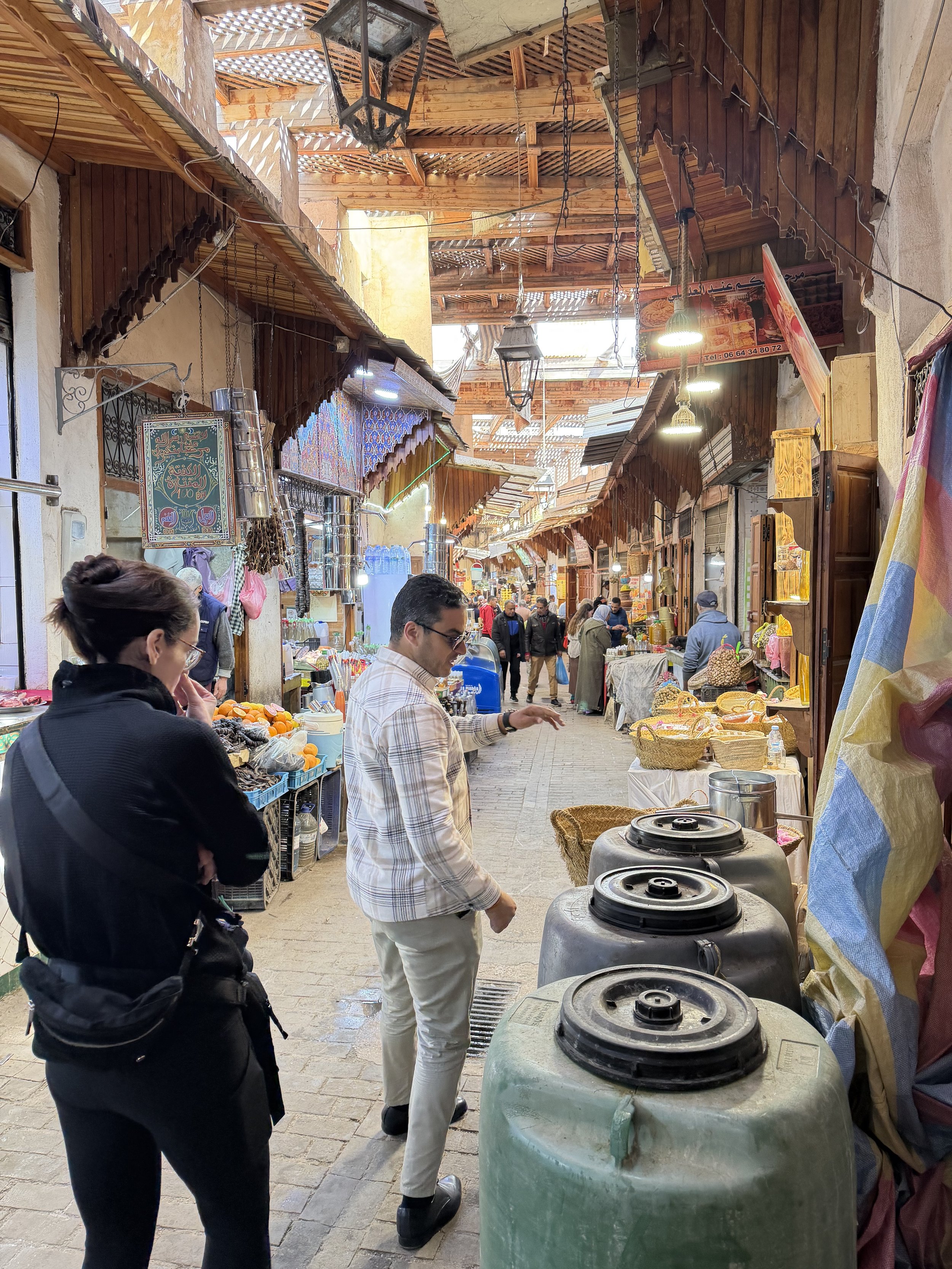
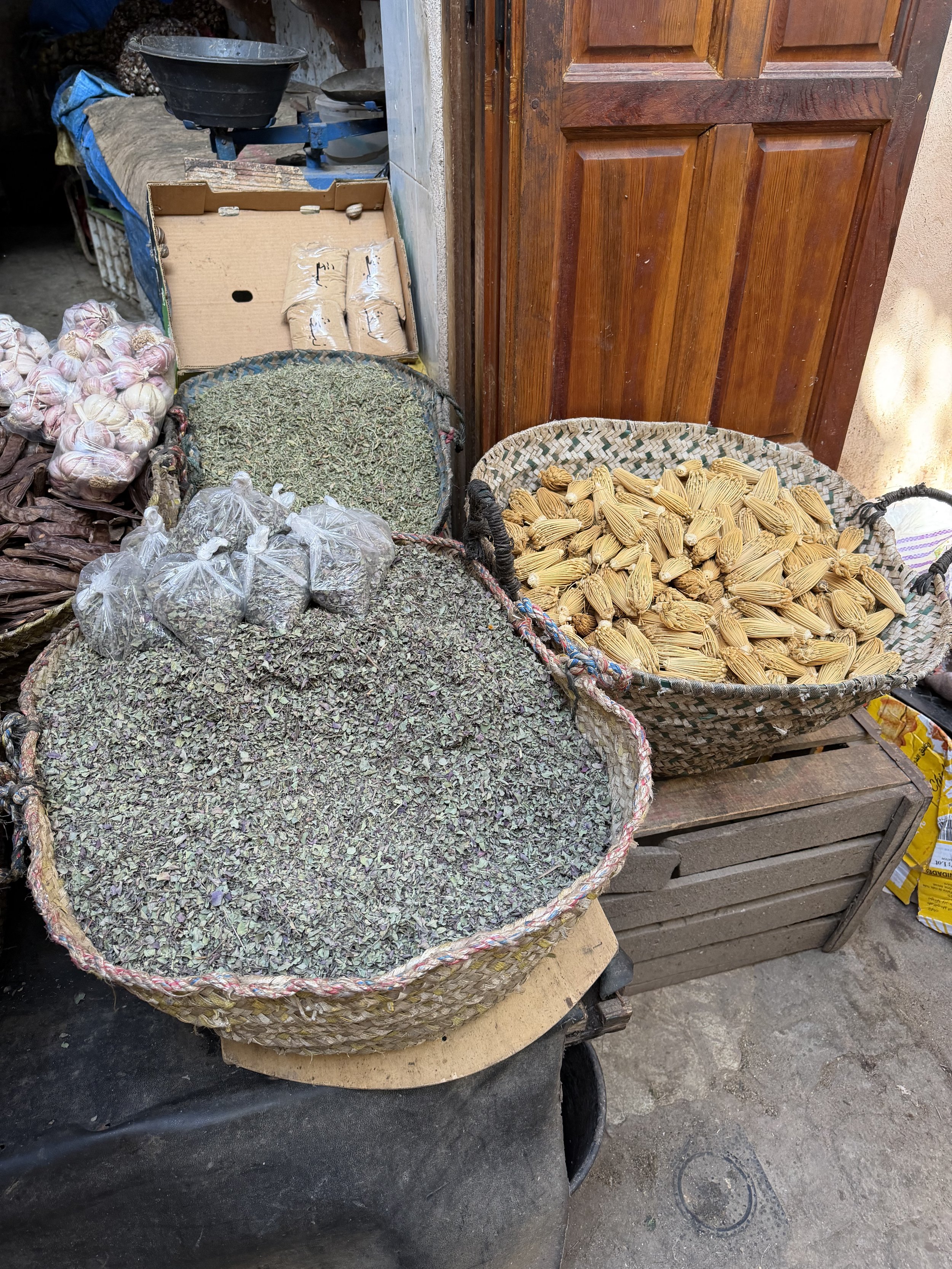
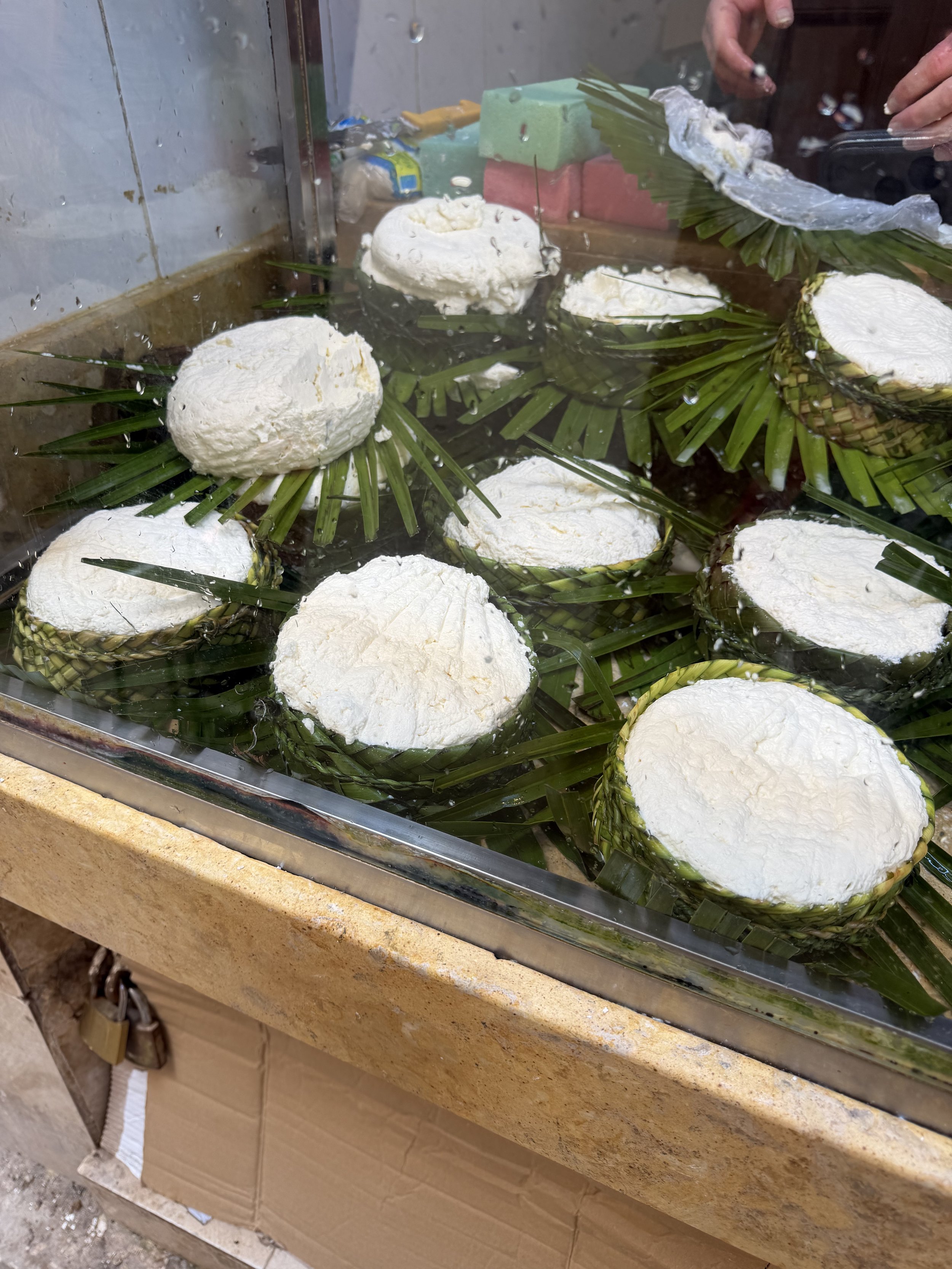
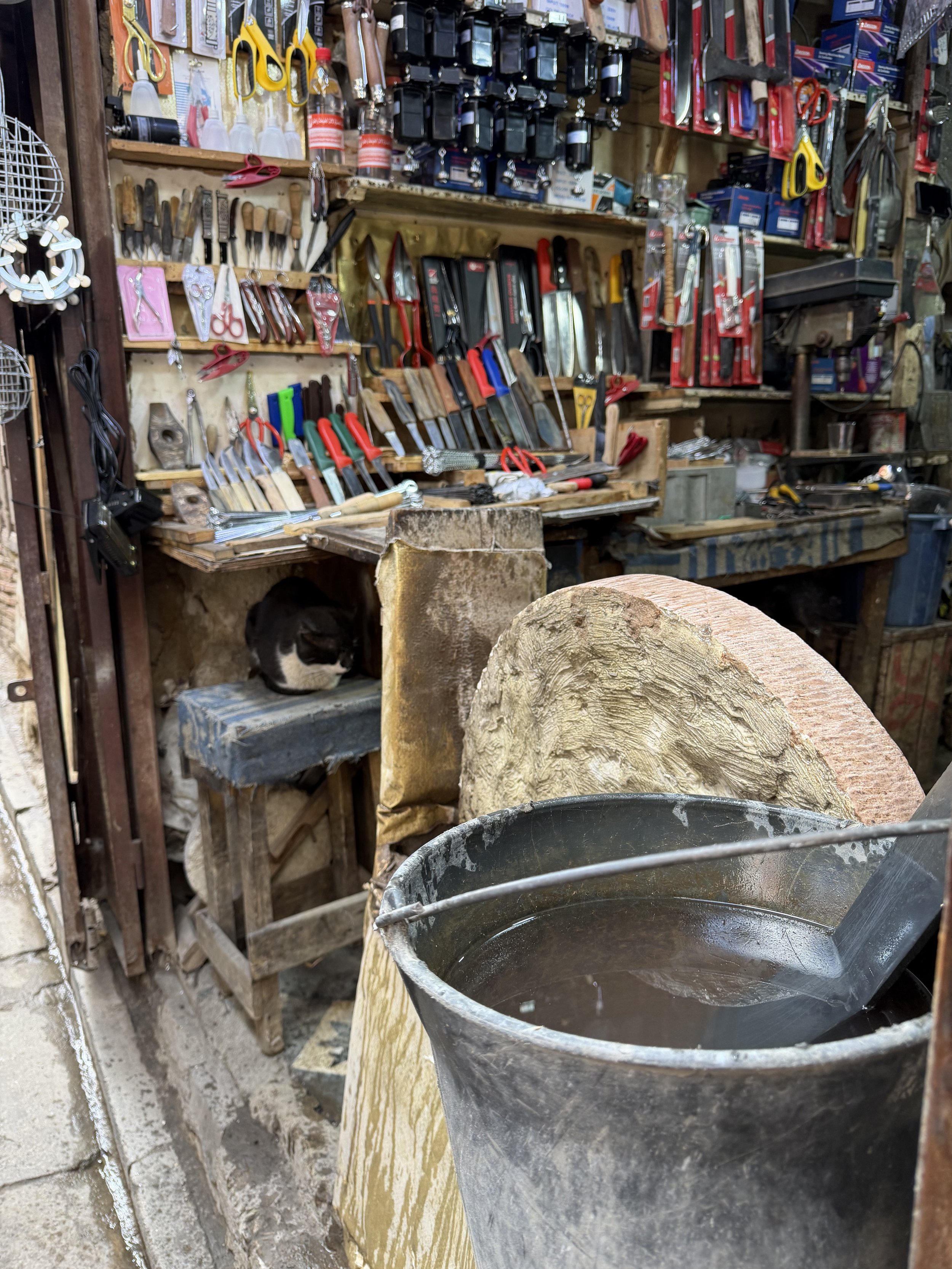
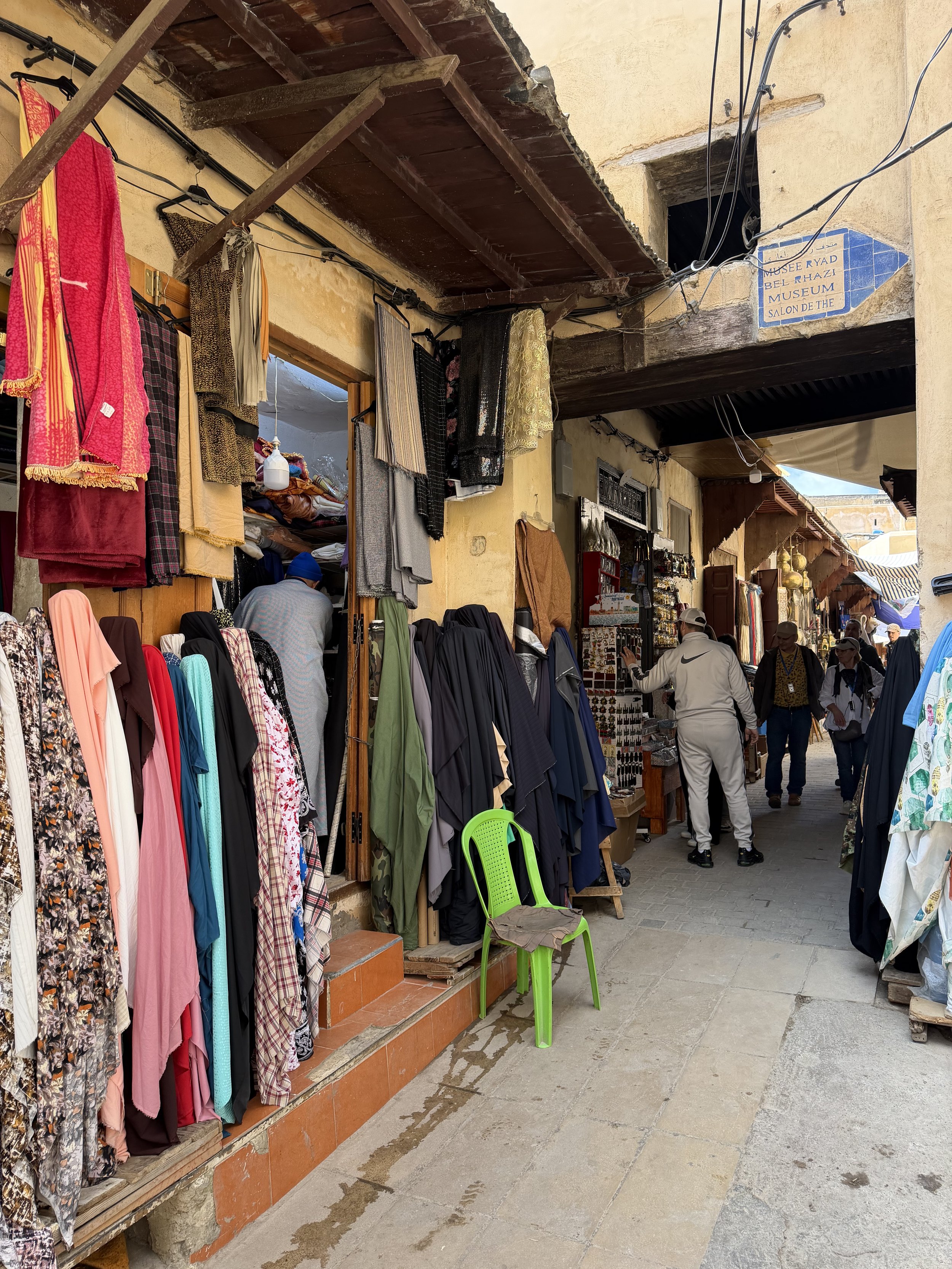
We first stopped at a weaver, where we learned how different fabrics are made. We learned how and why headscarves are worn and were shown how to twist a scarf to wear it properly for our trek to the desert in a few days to protect ourselves from the sun, sand and wind.
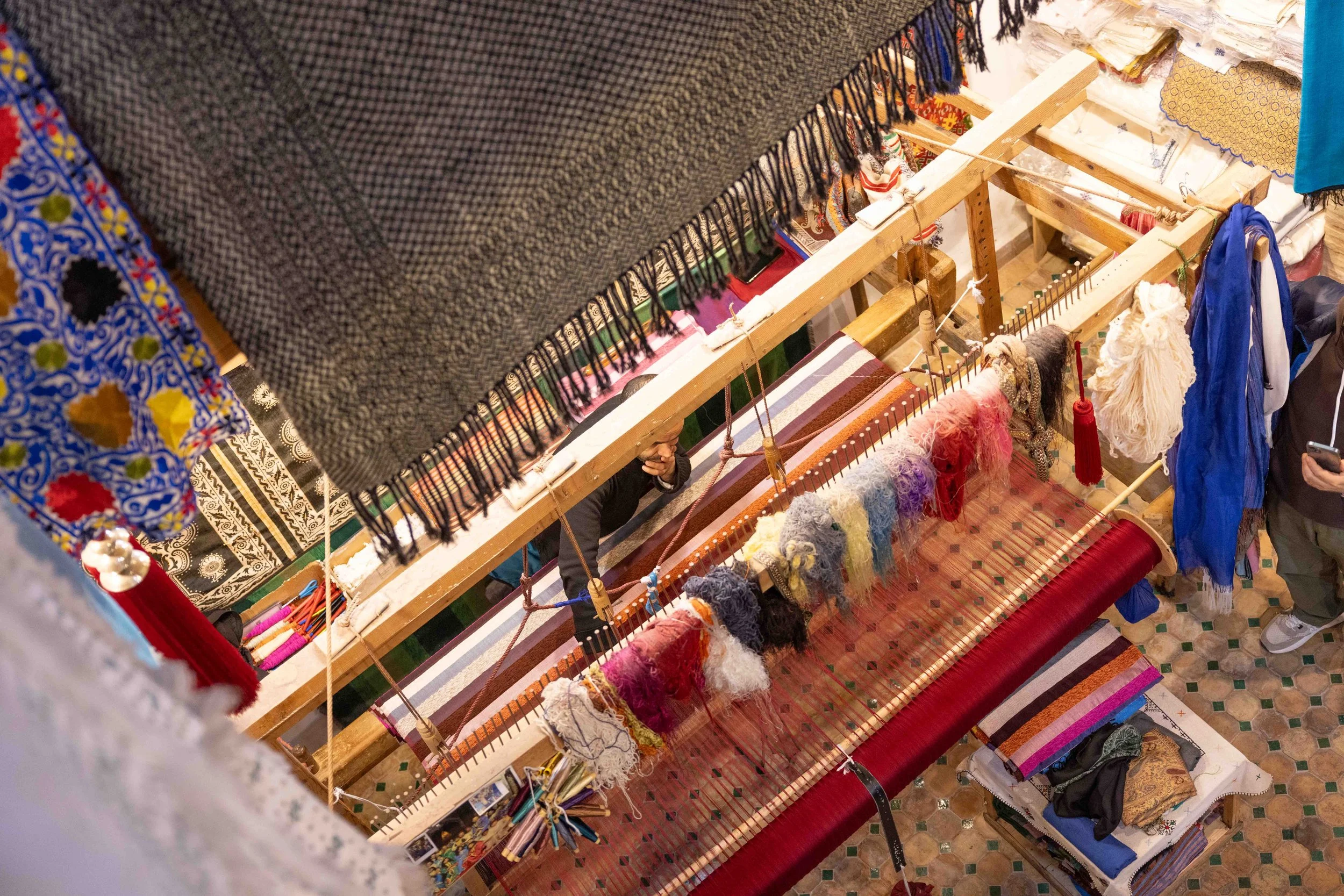
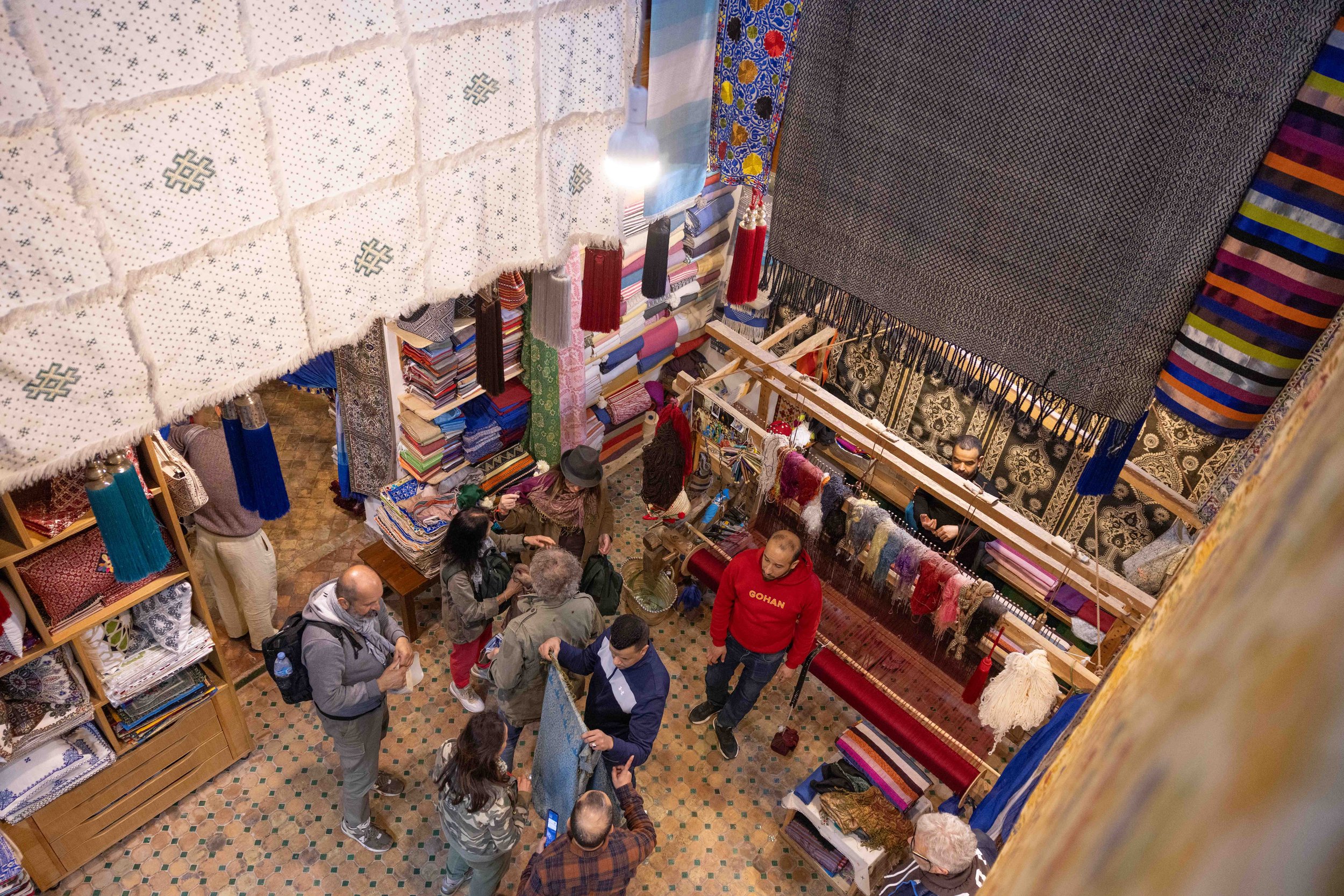
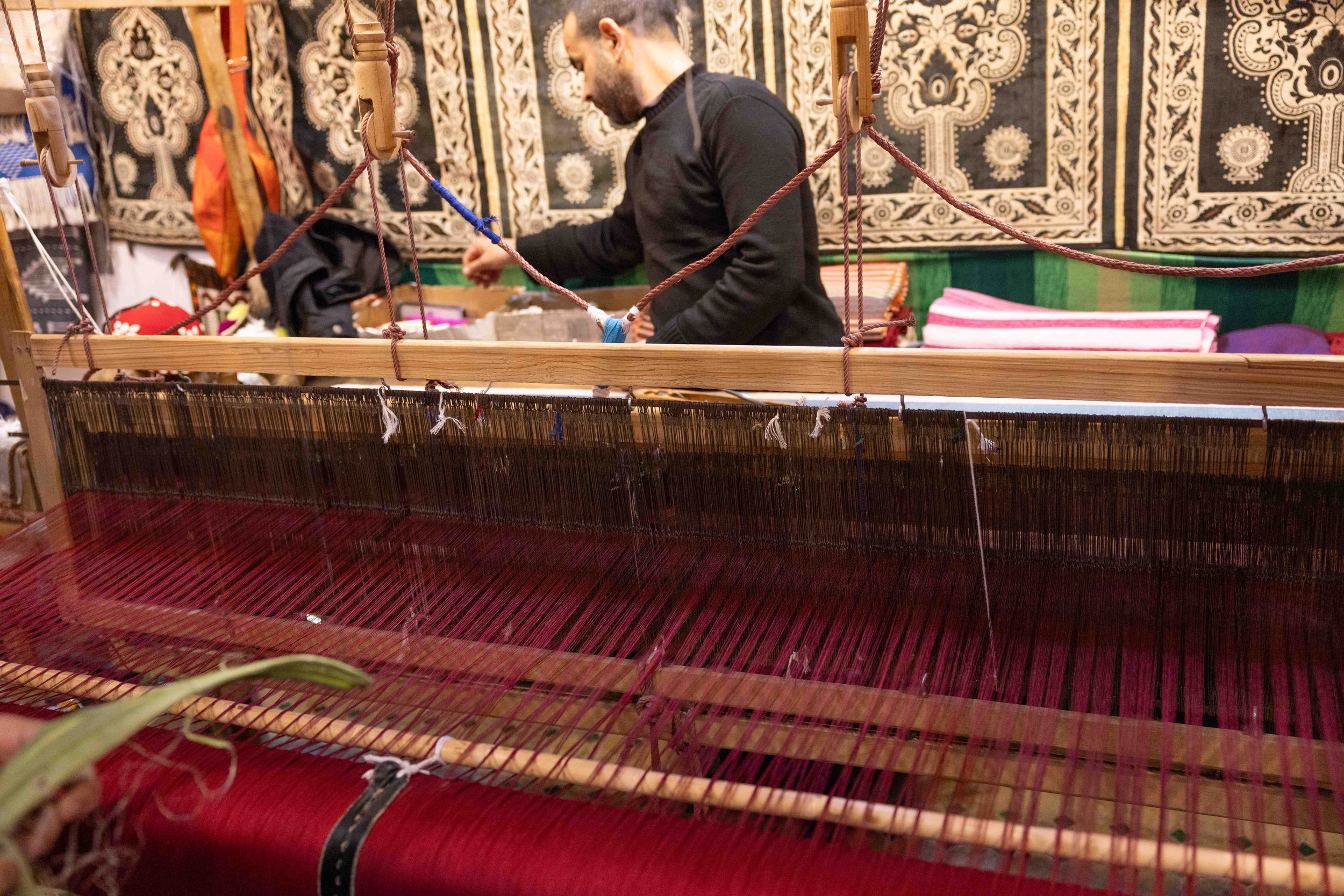
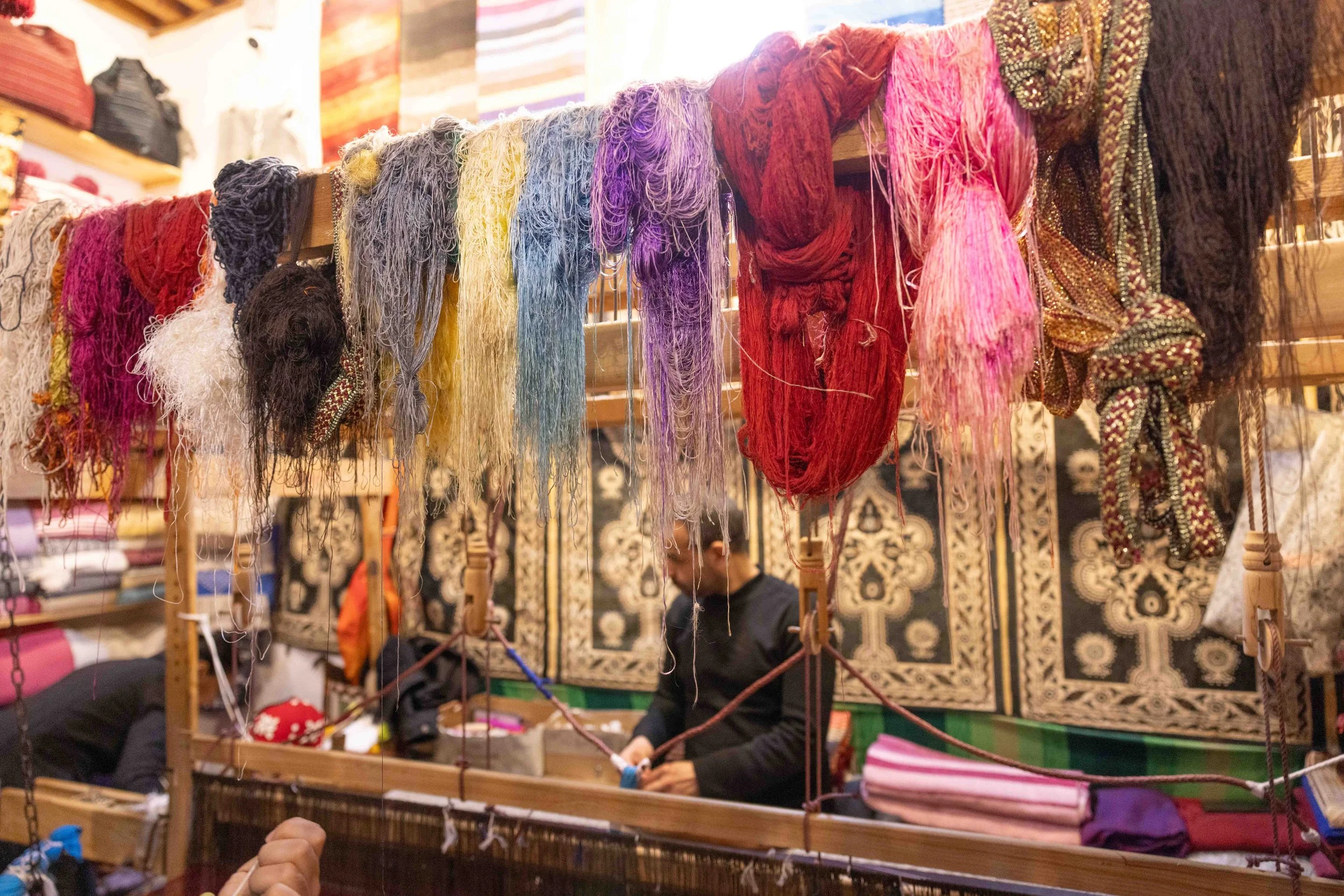
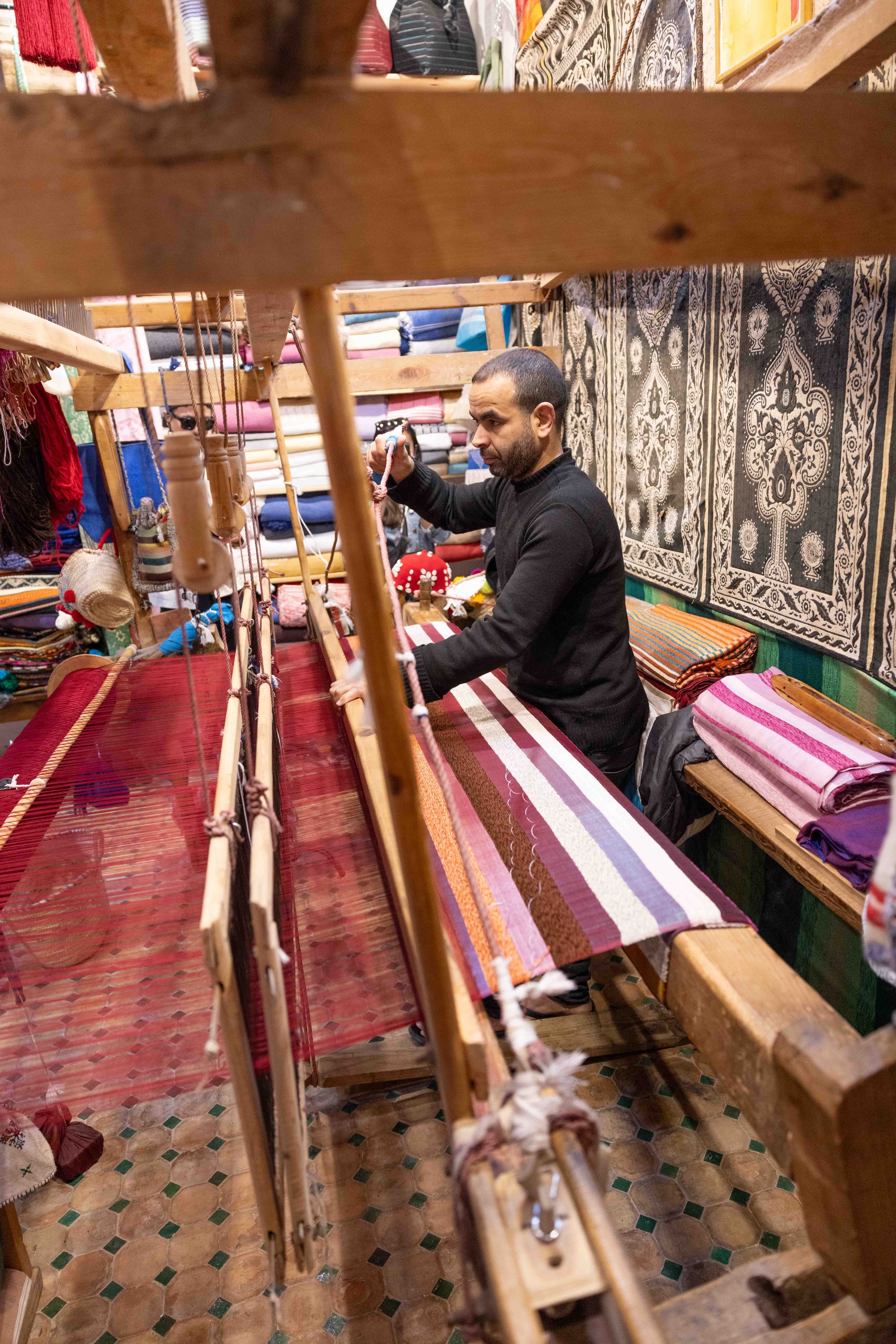
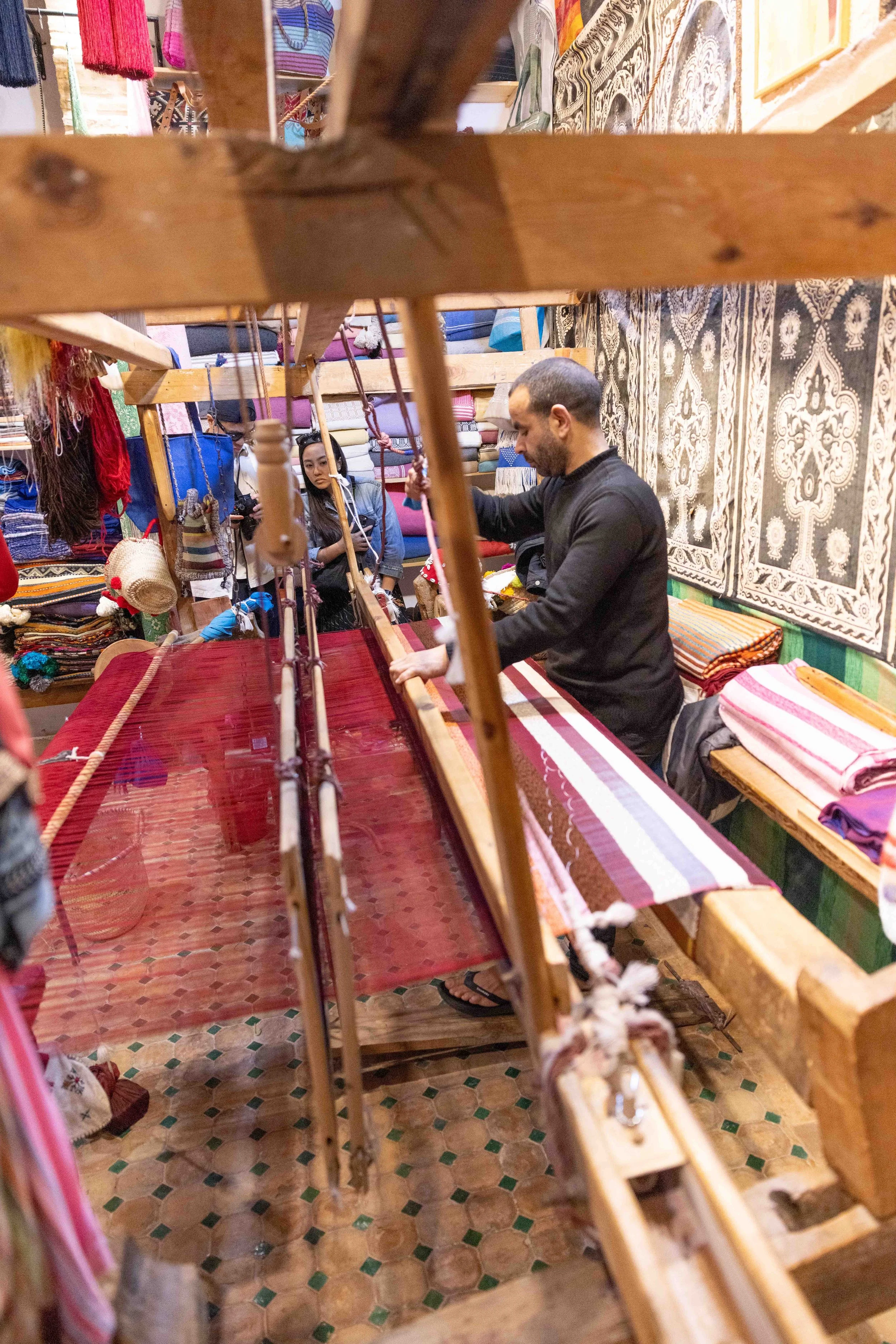
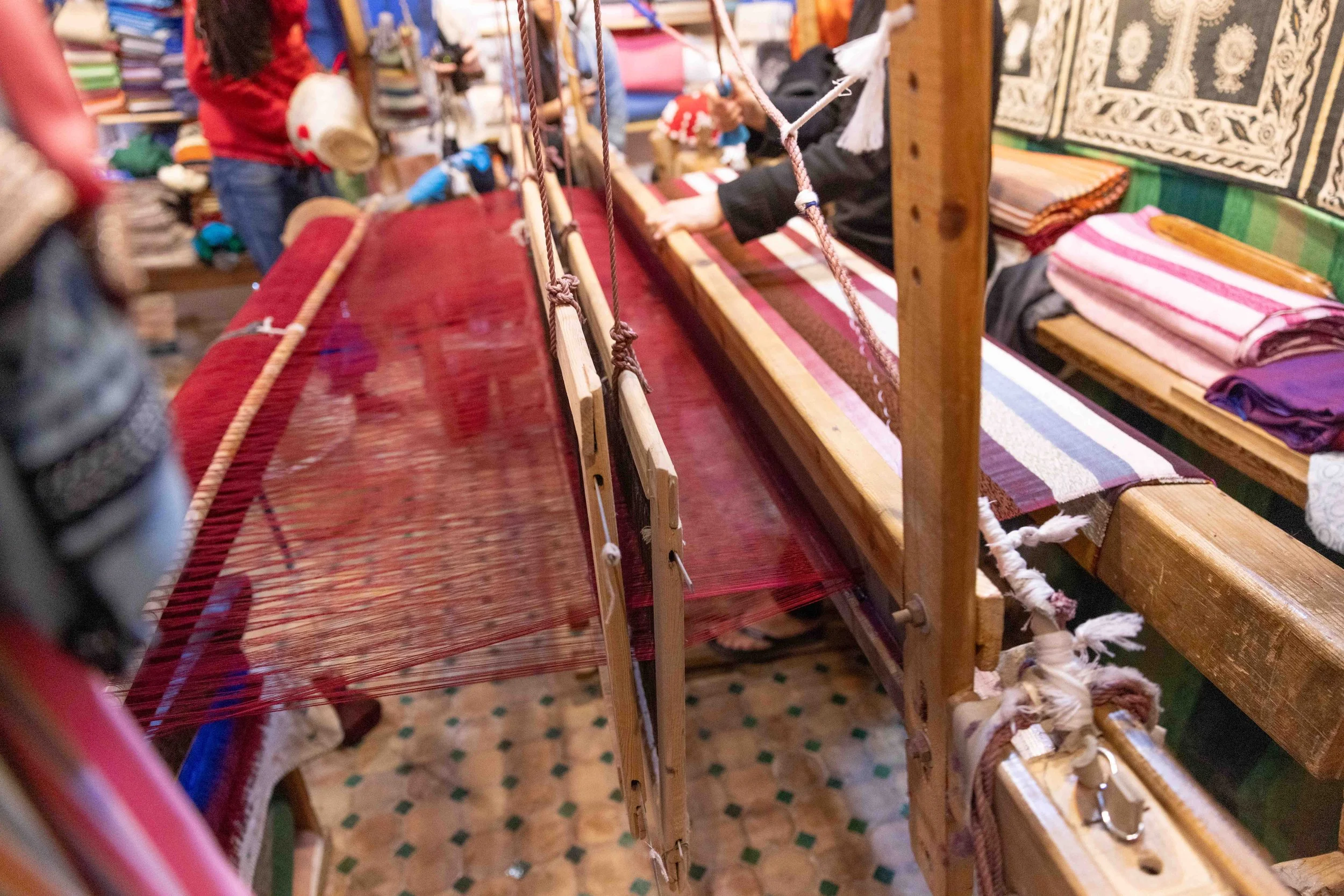
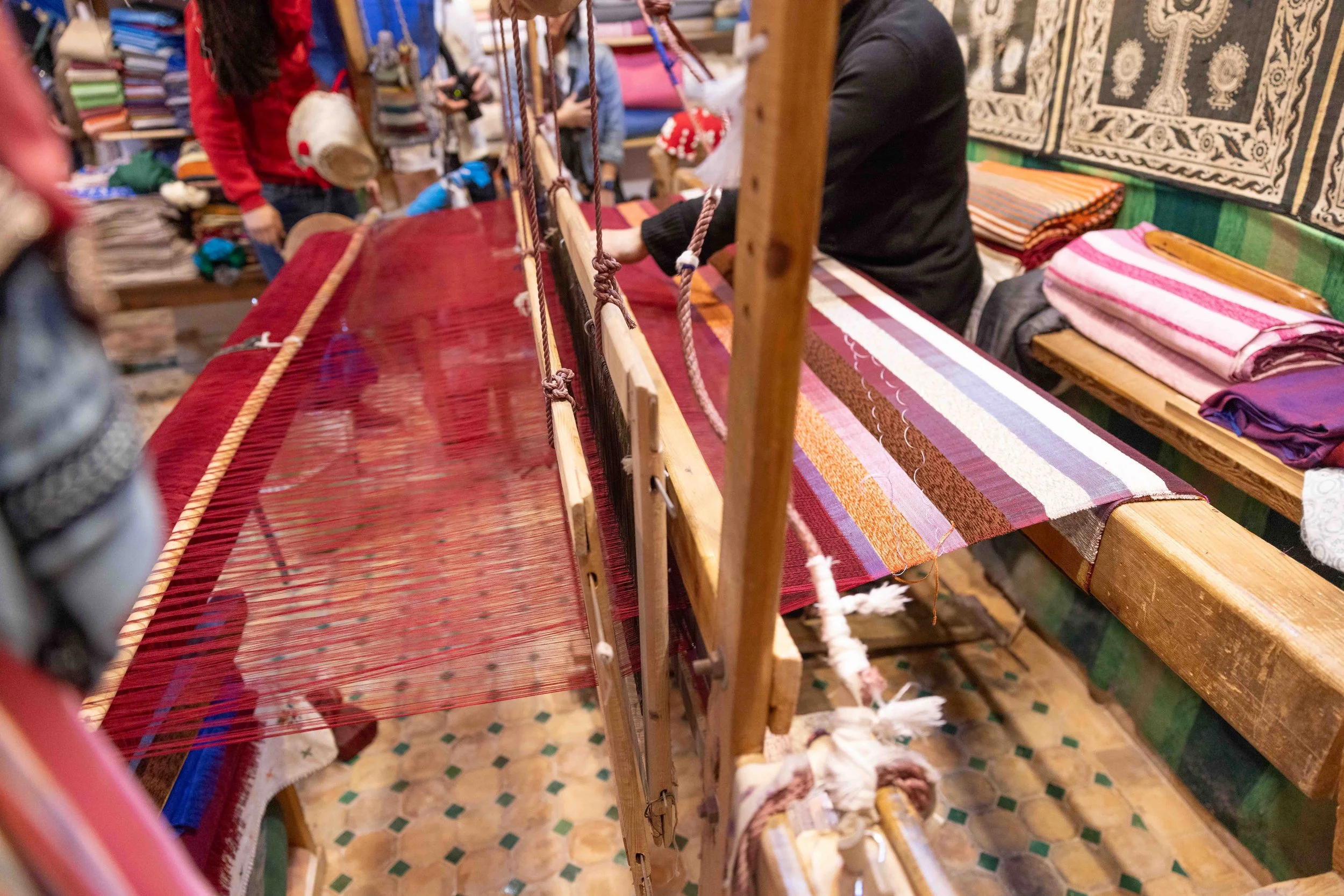
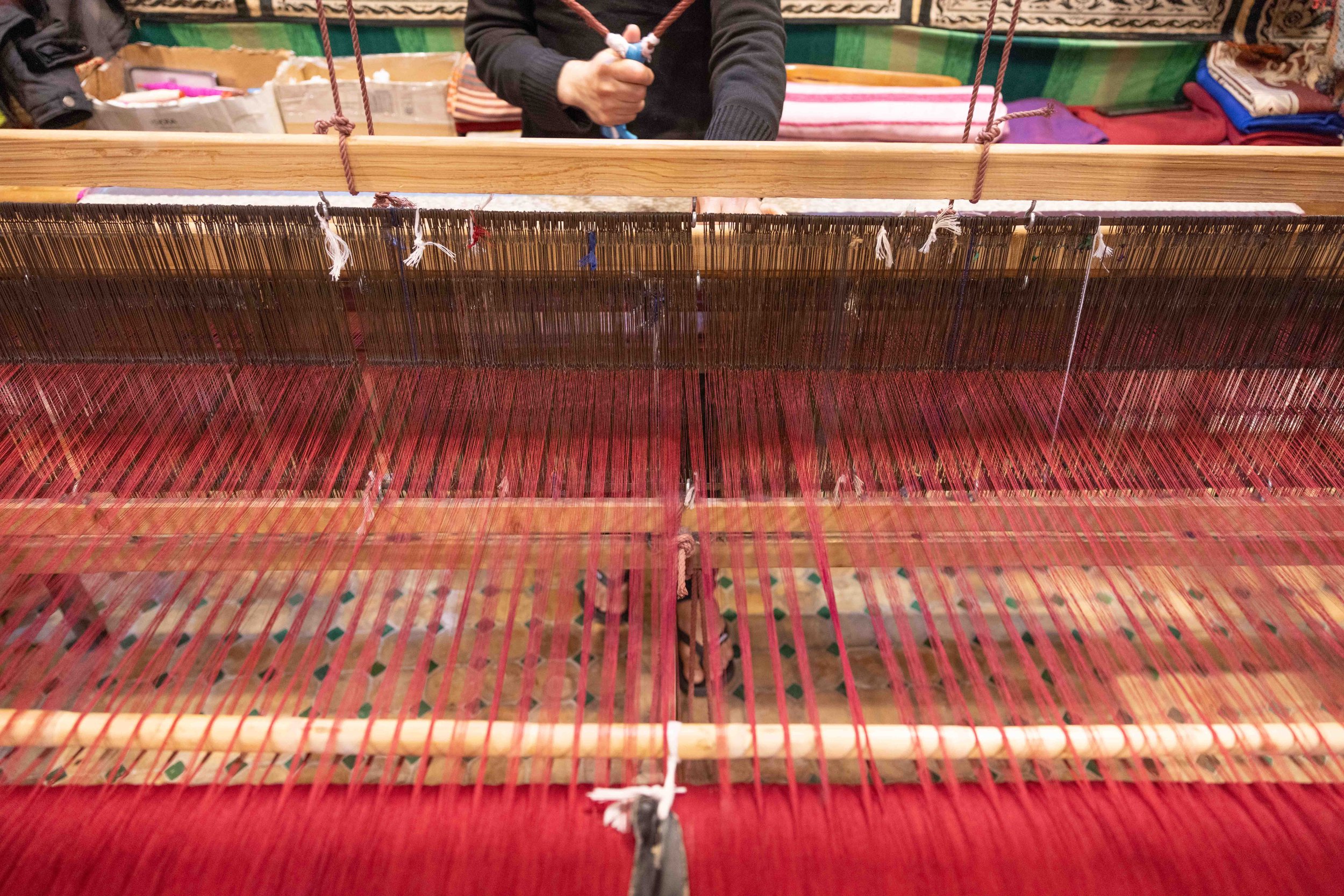
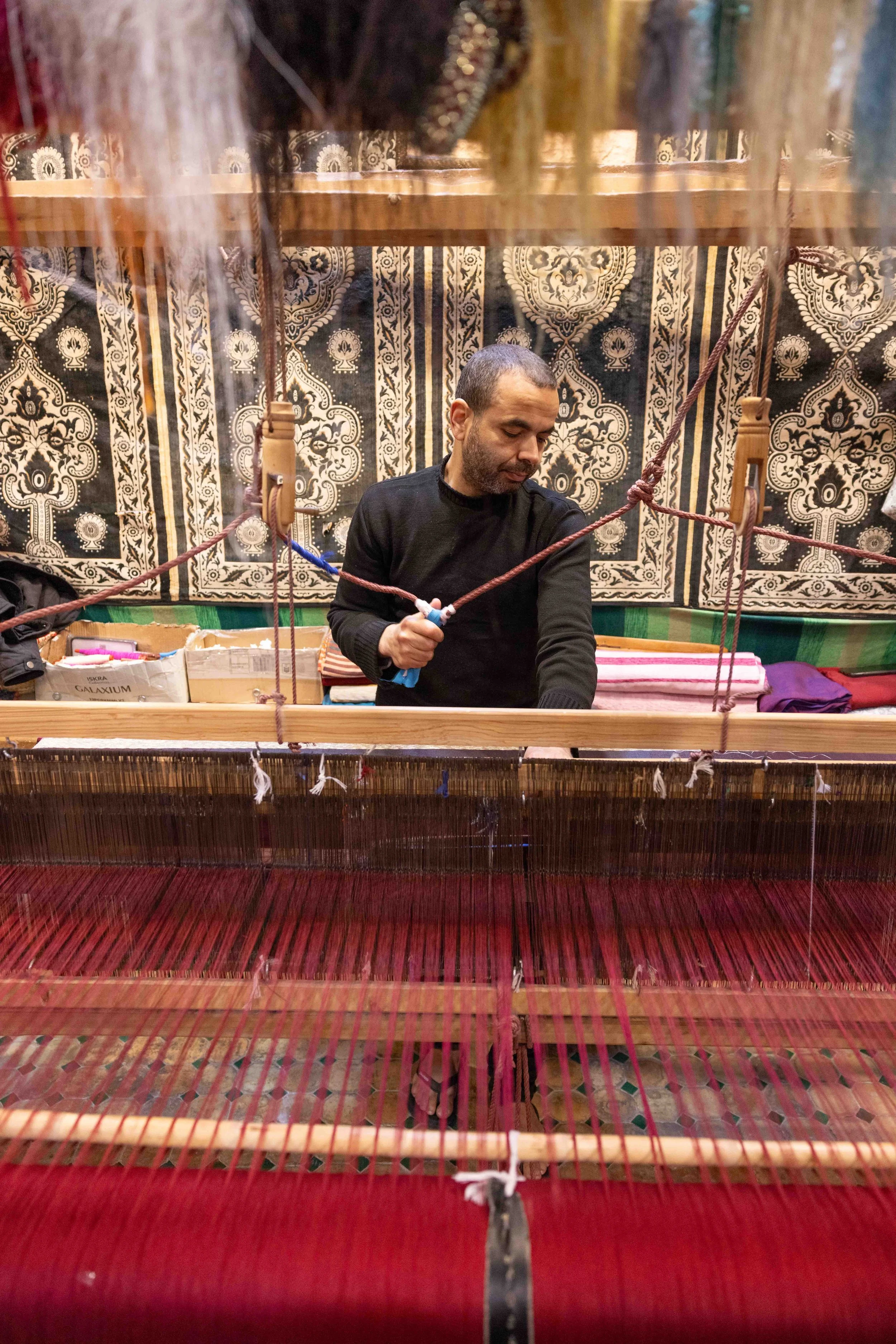
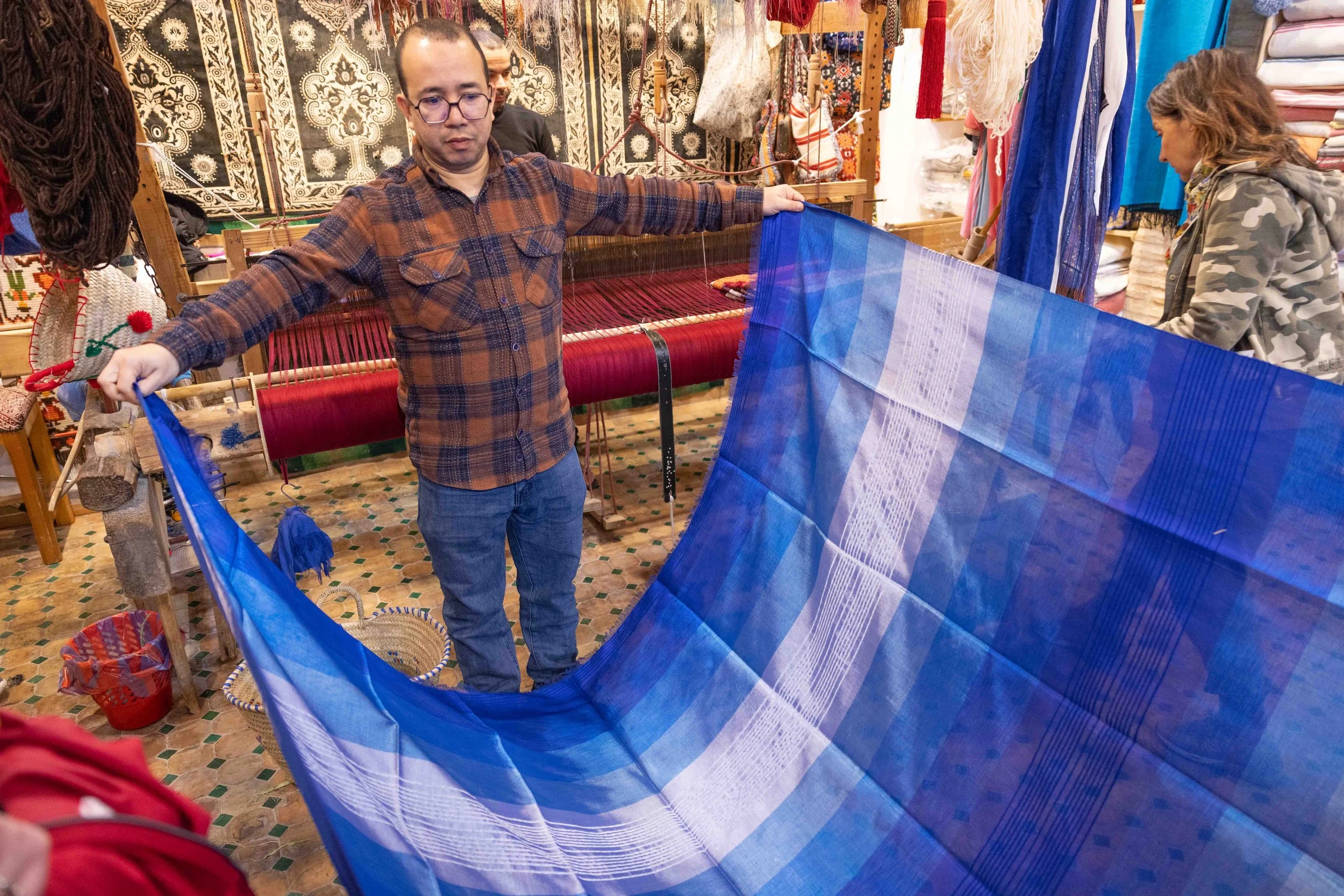
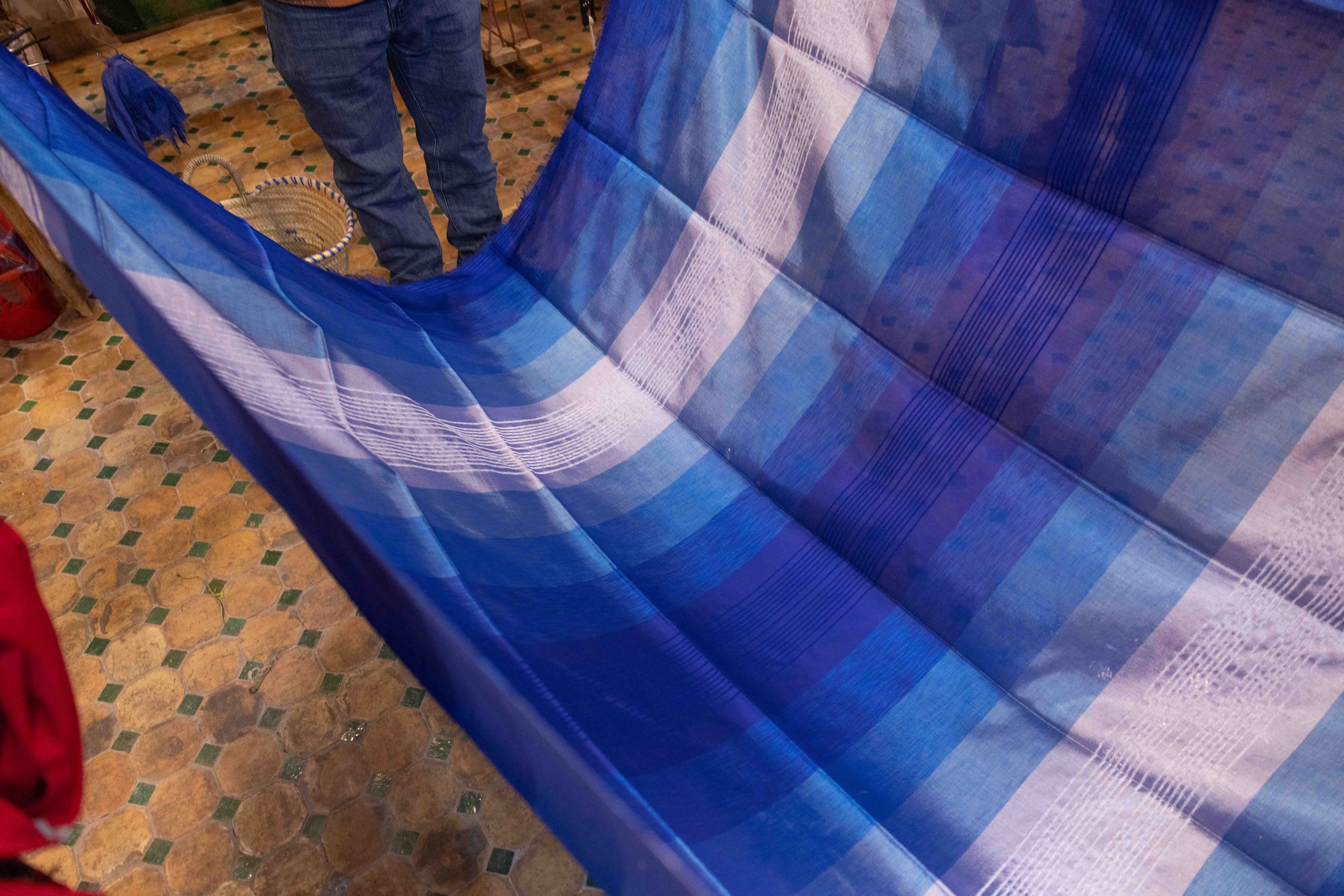
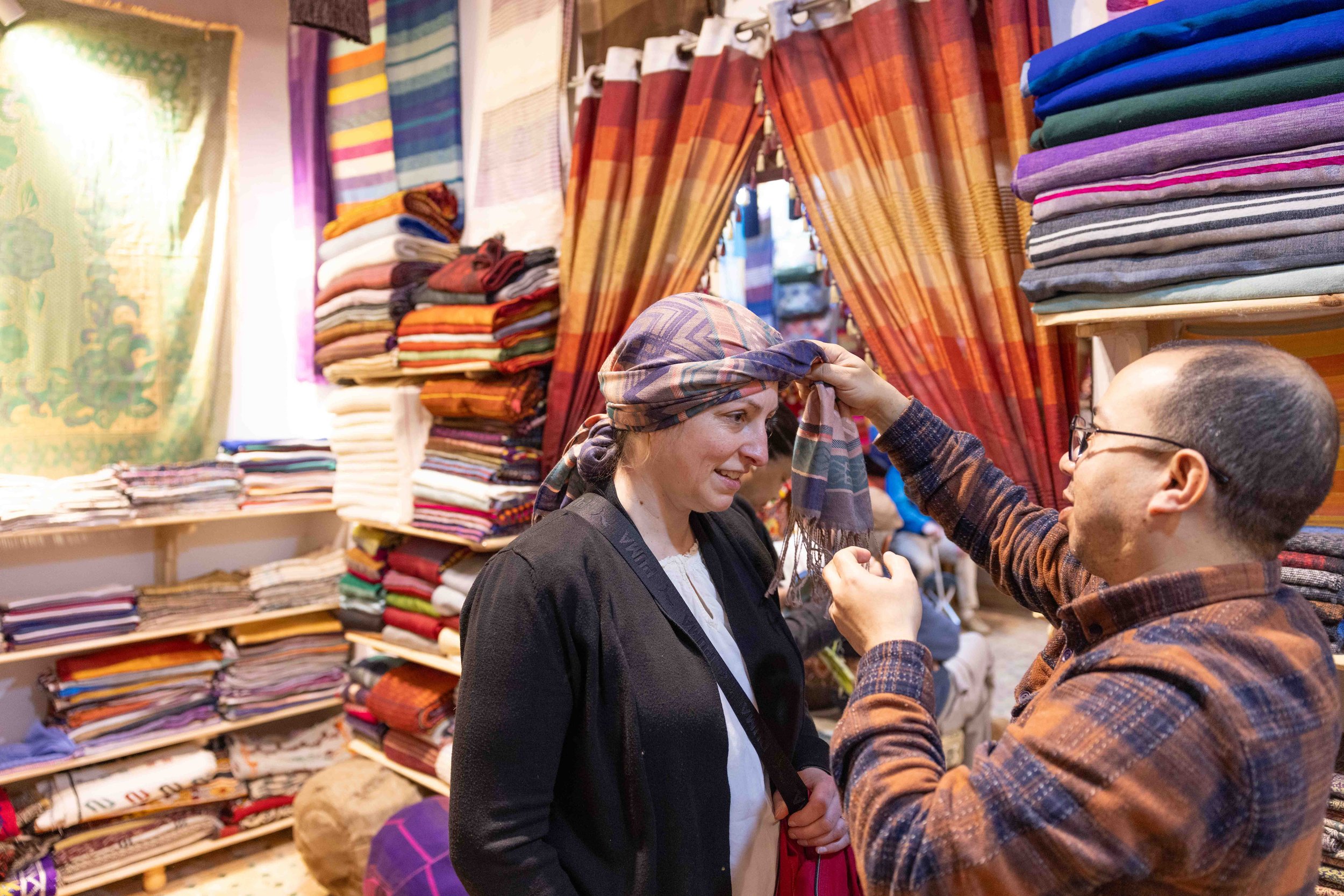
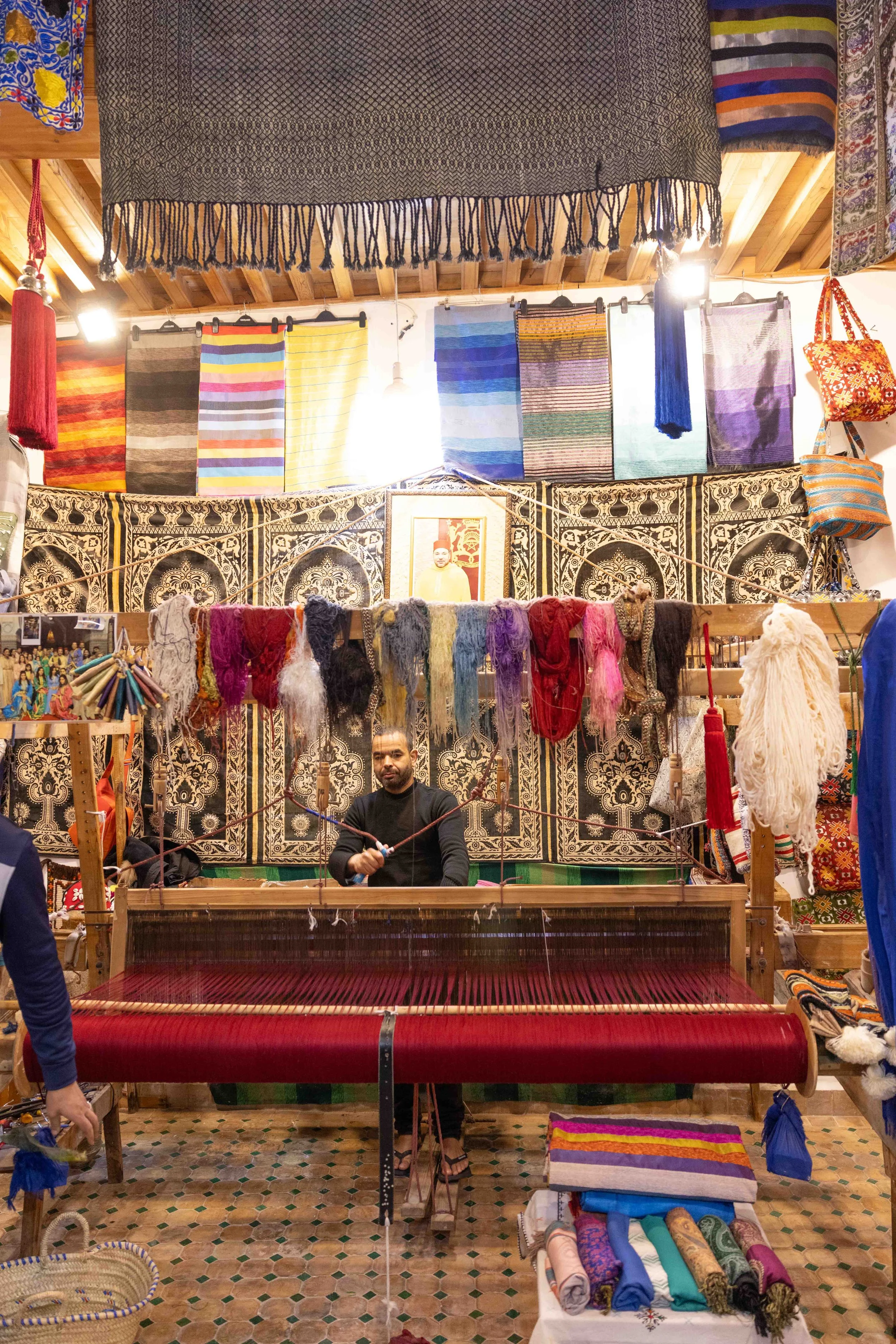
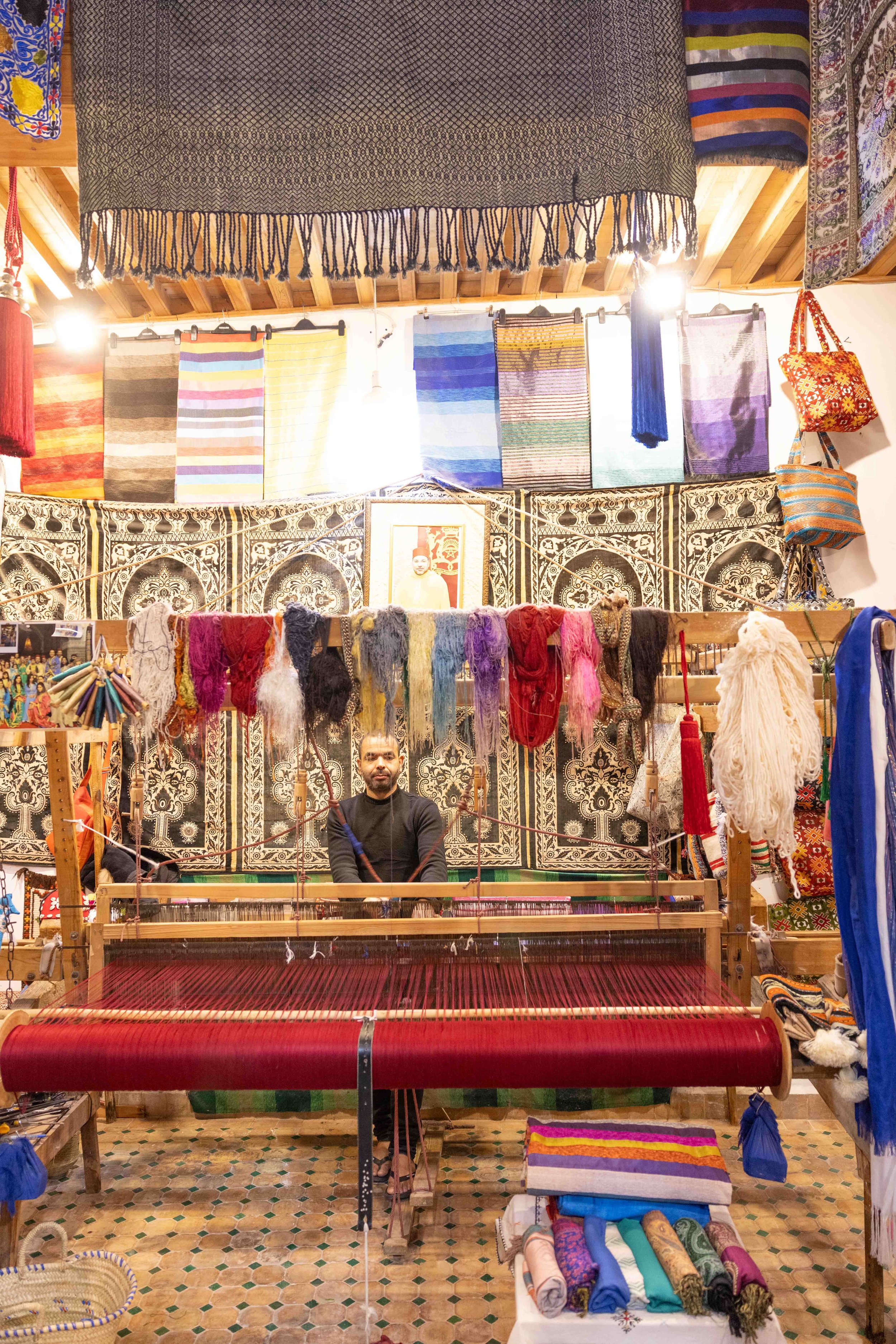
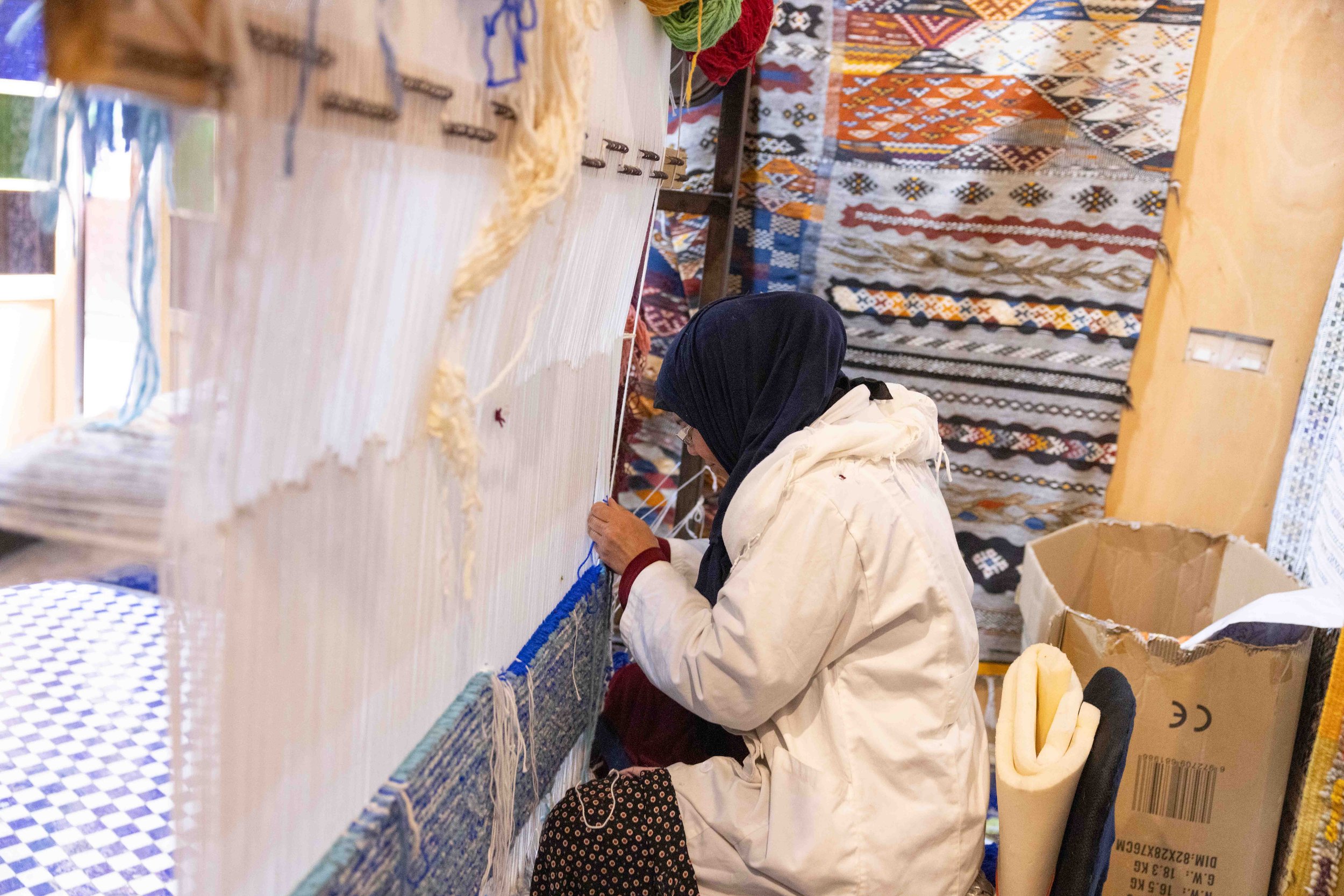
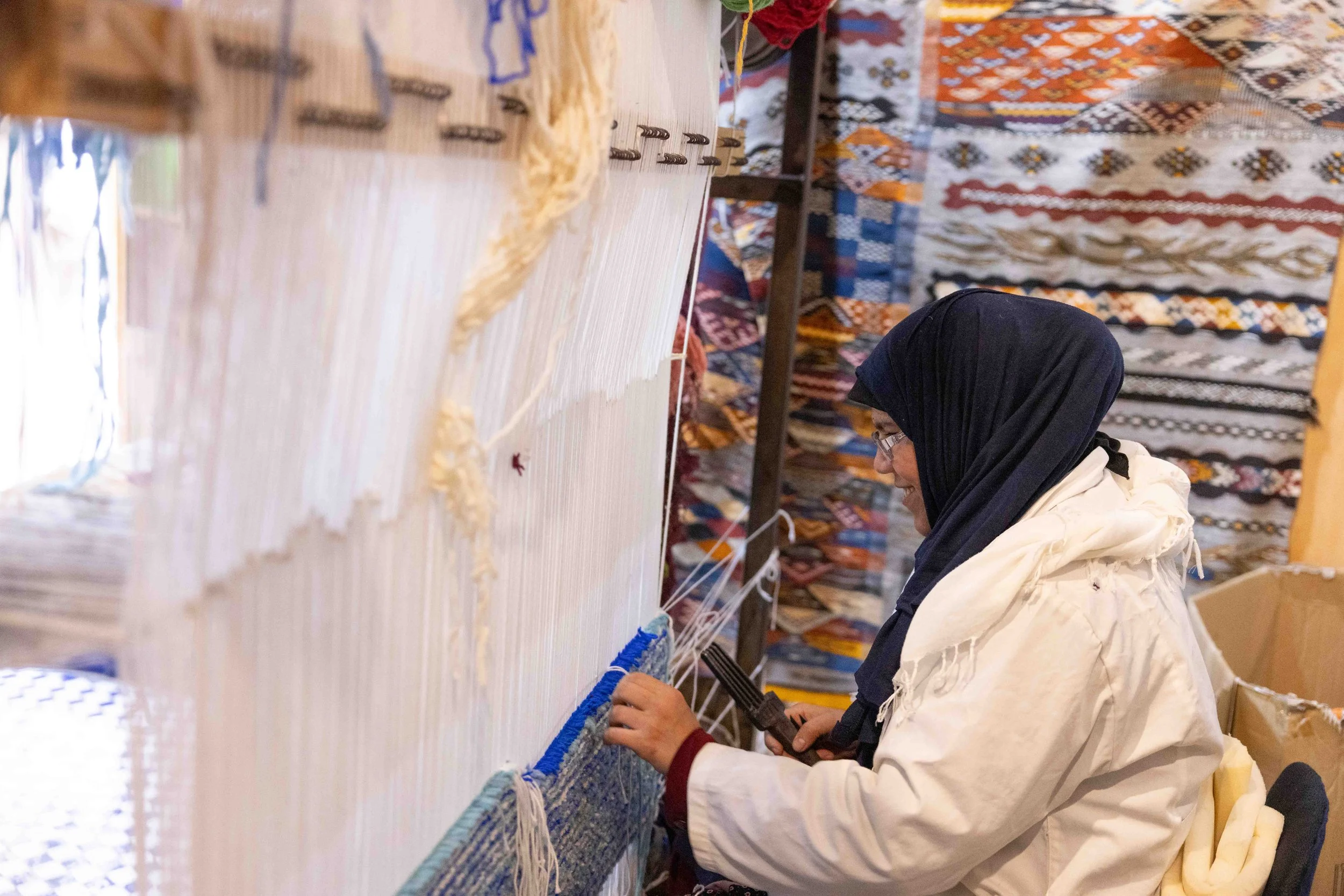
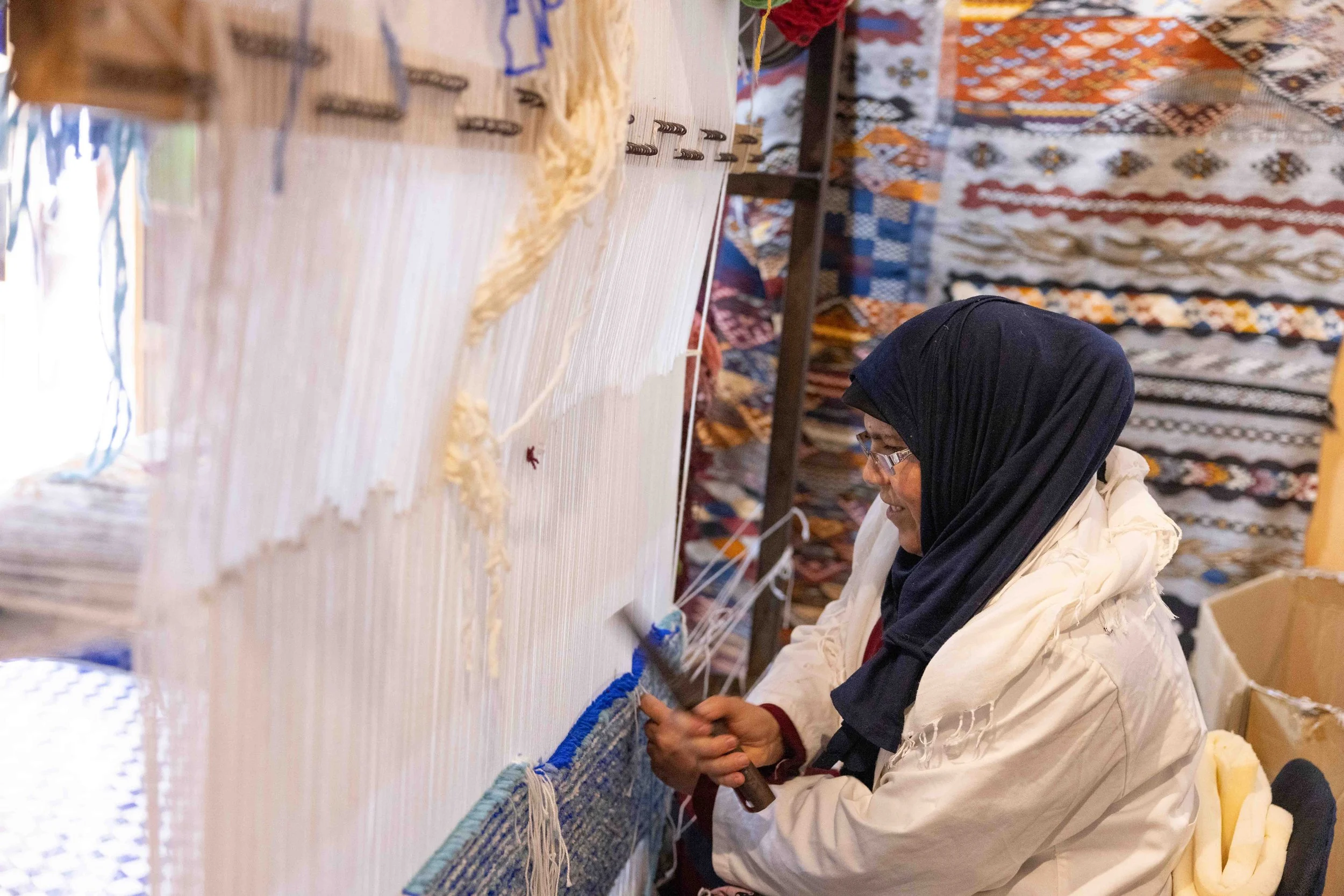
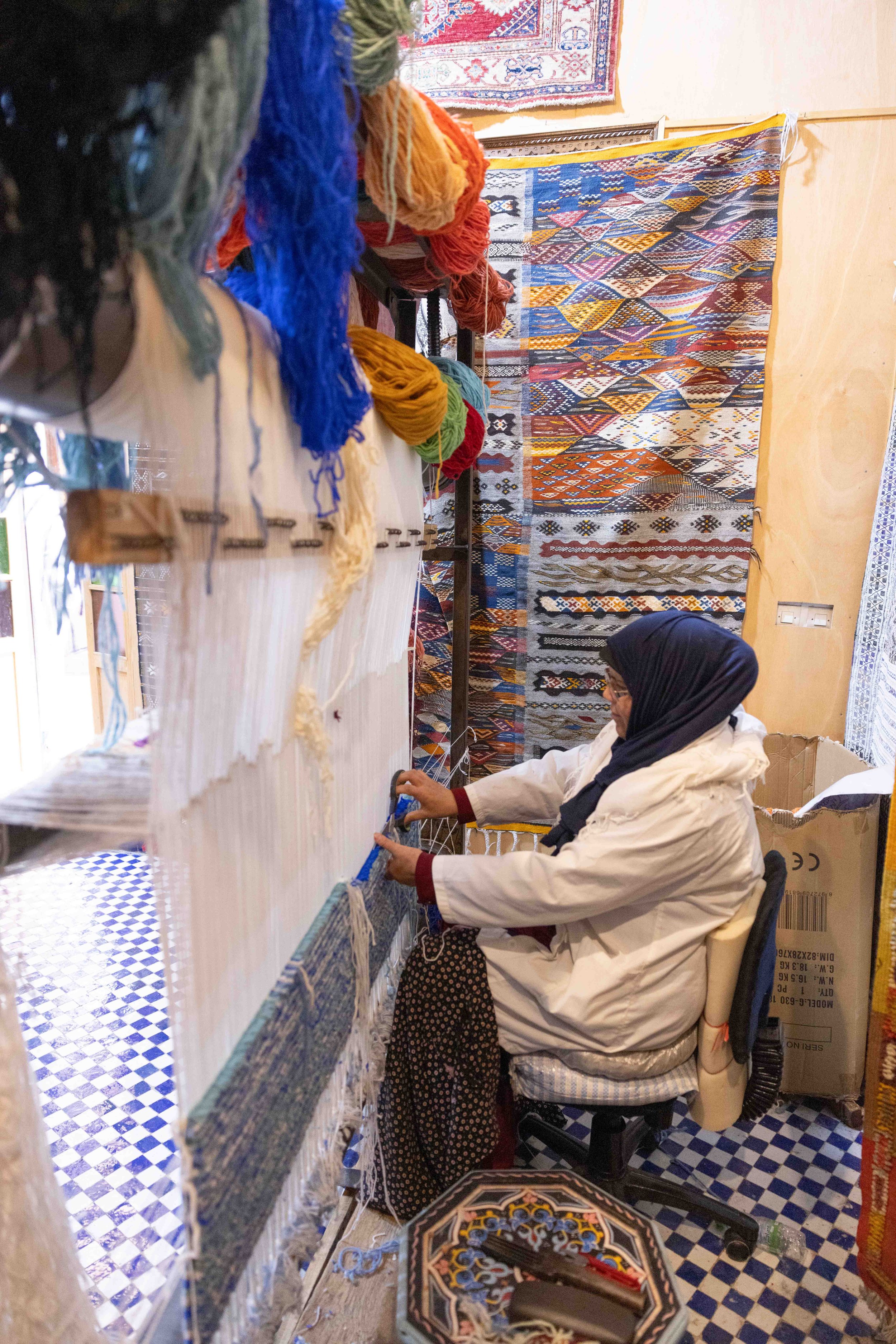
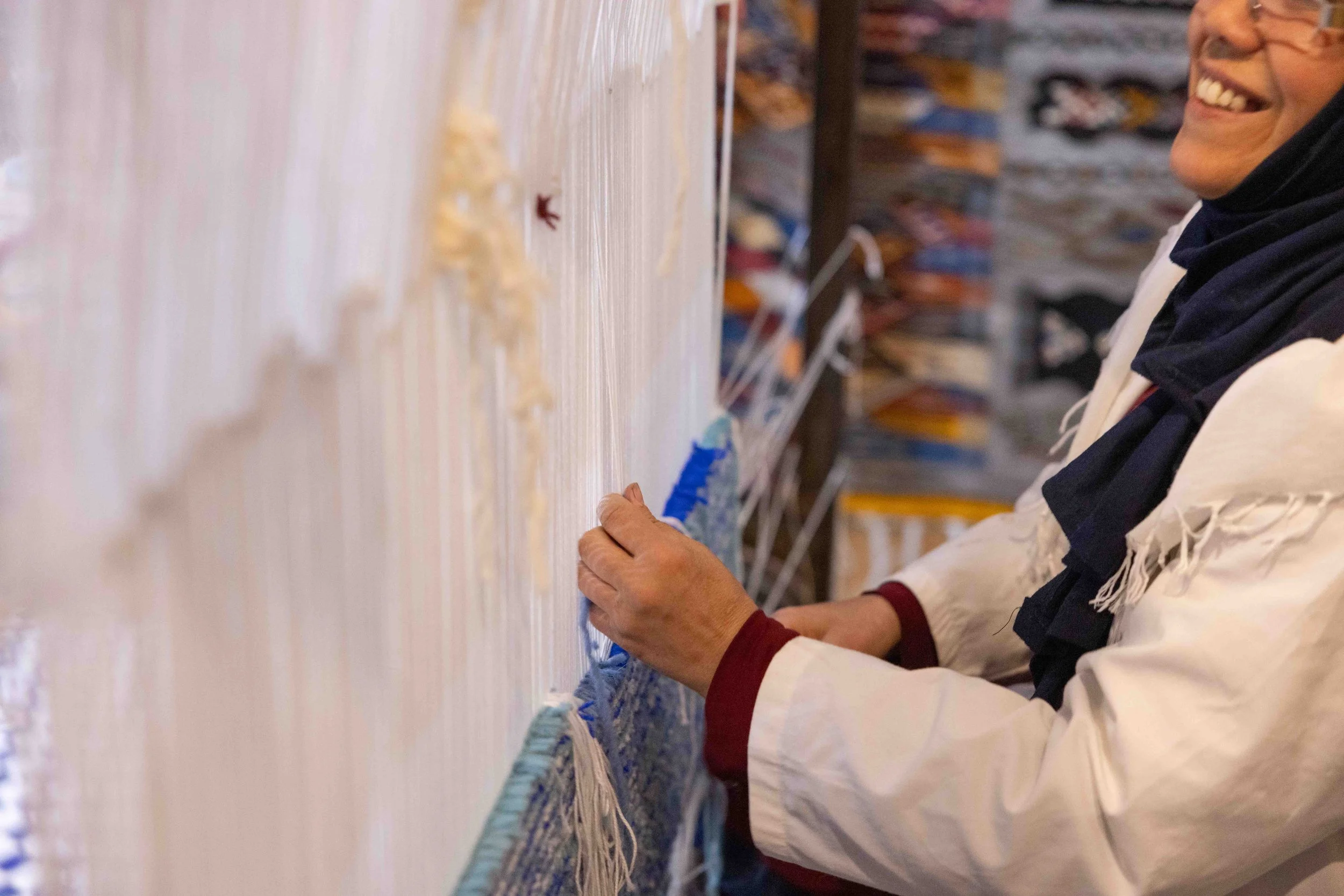
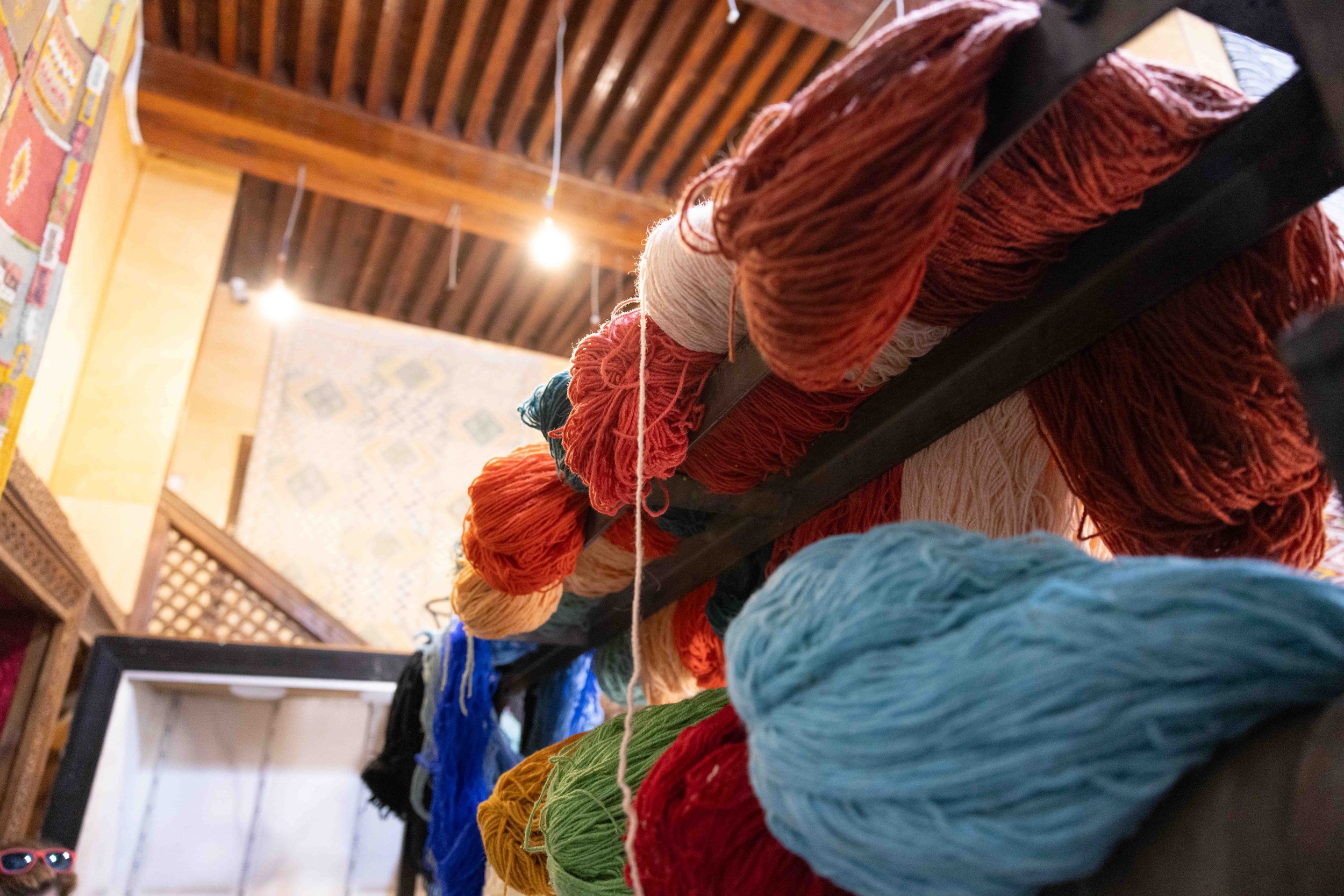
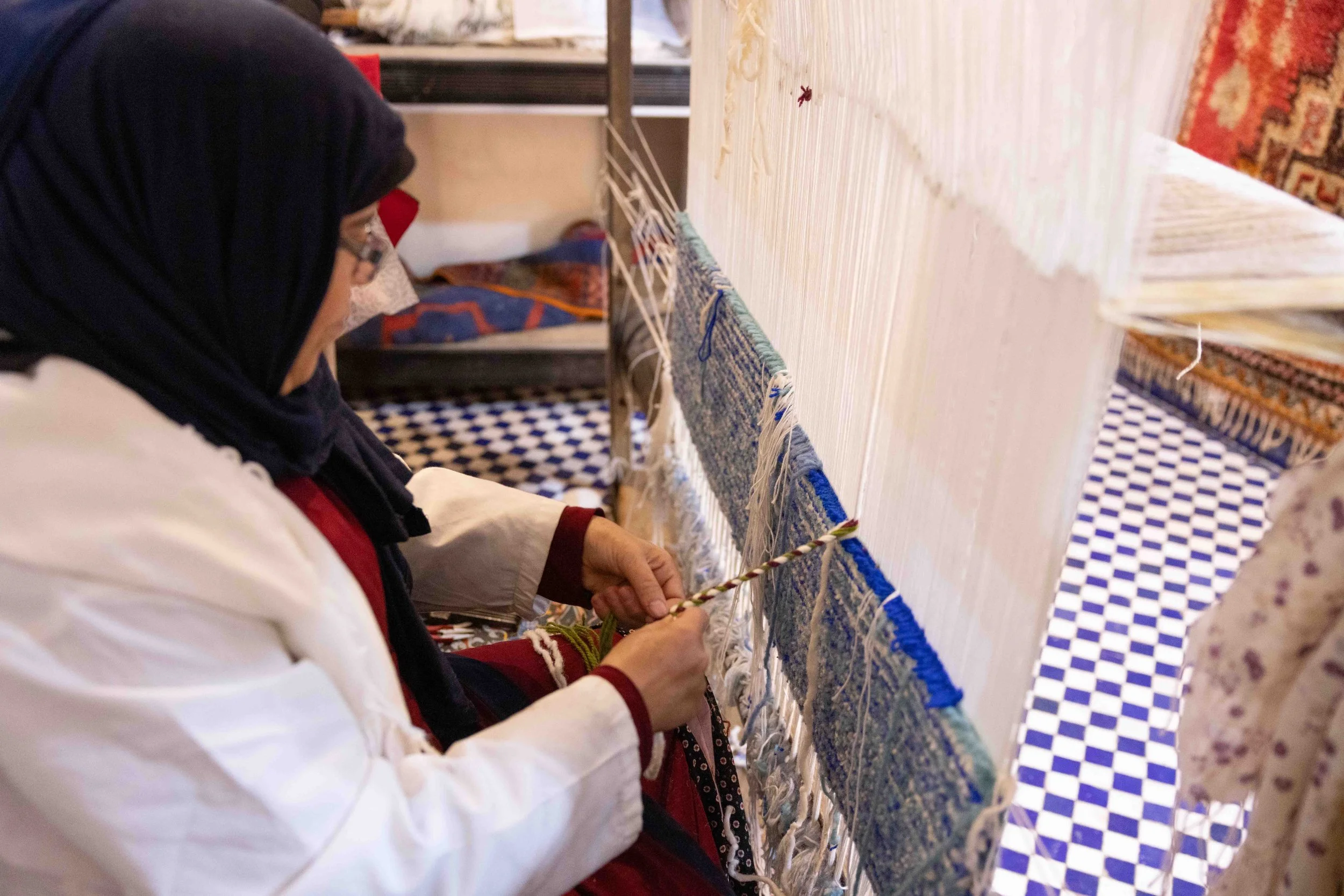
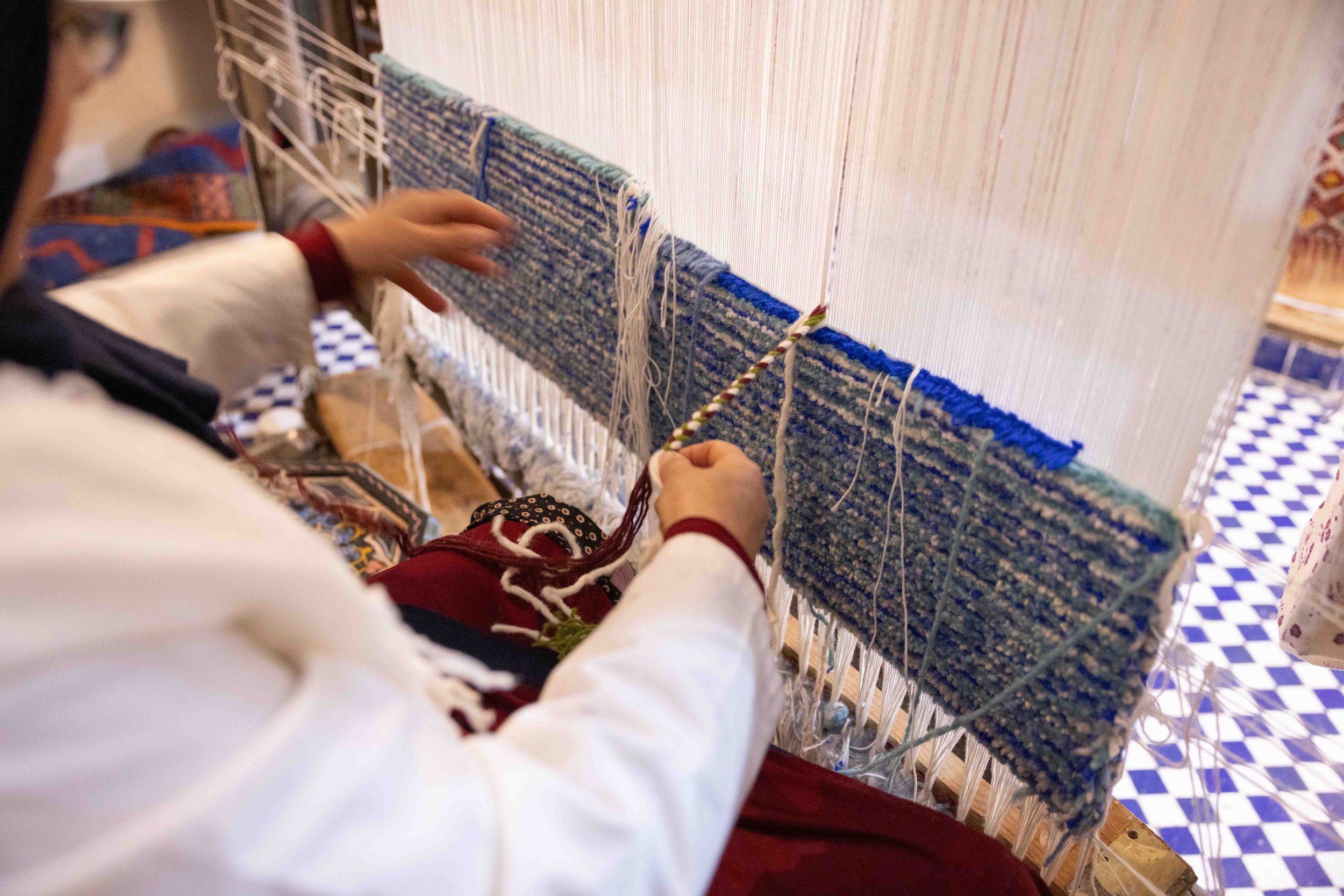
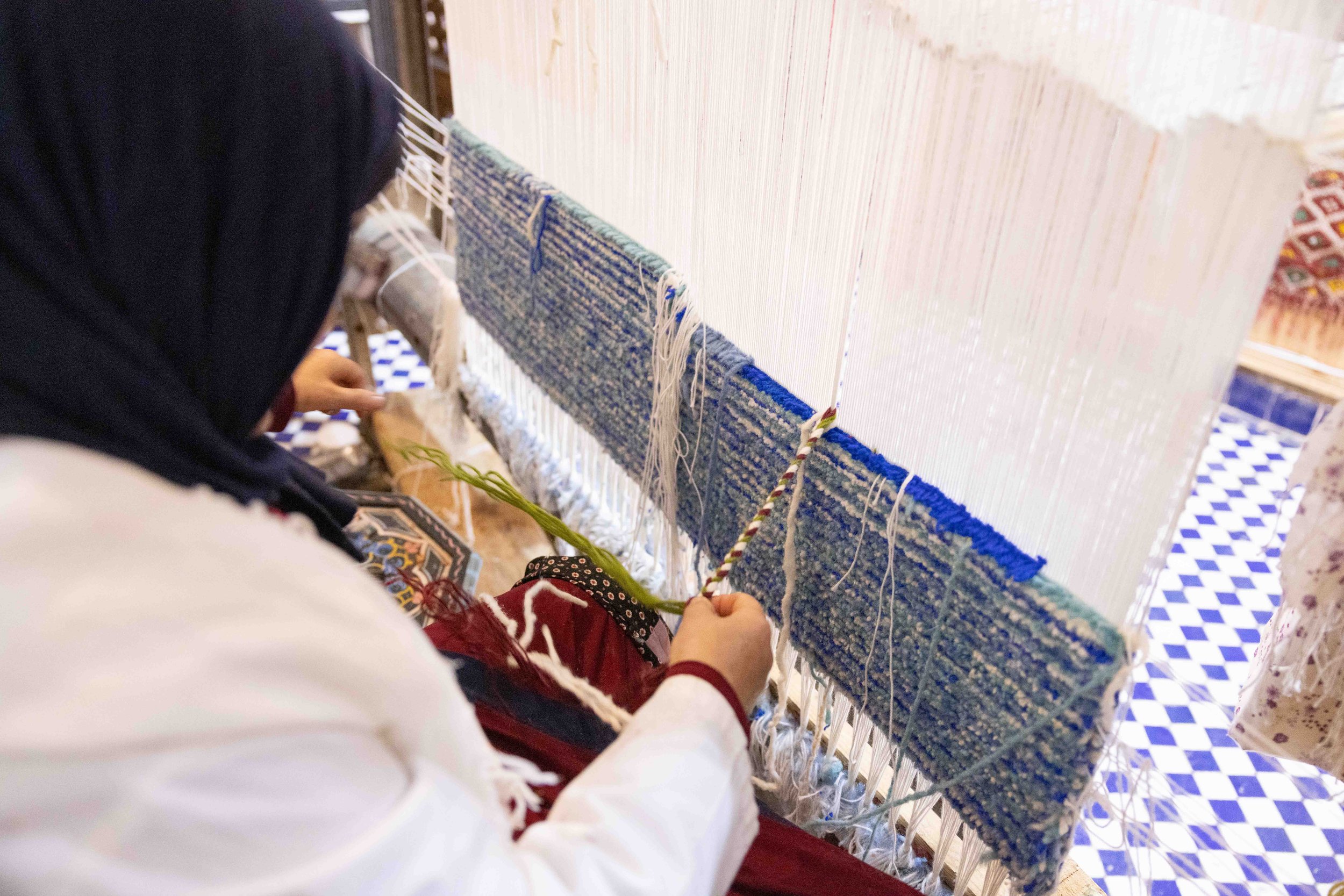
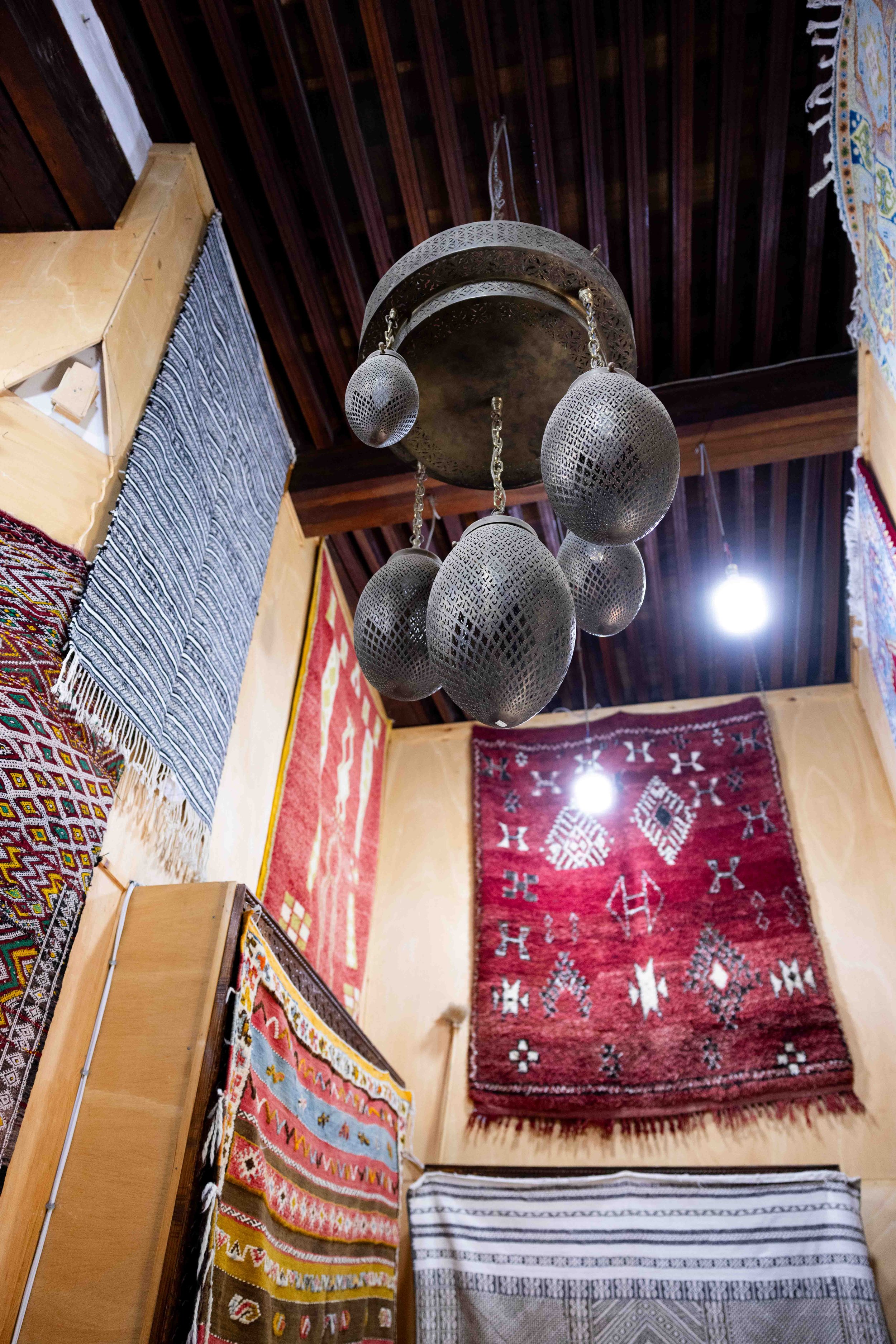
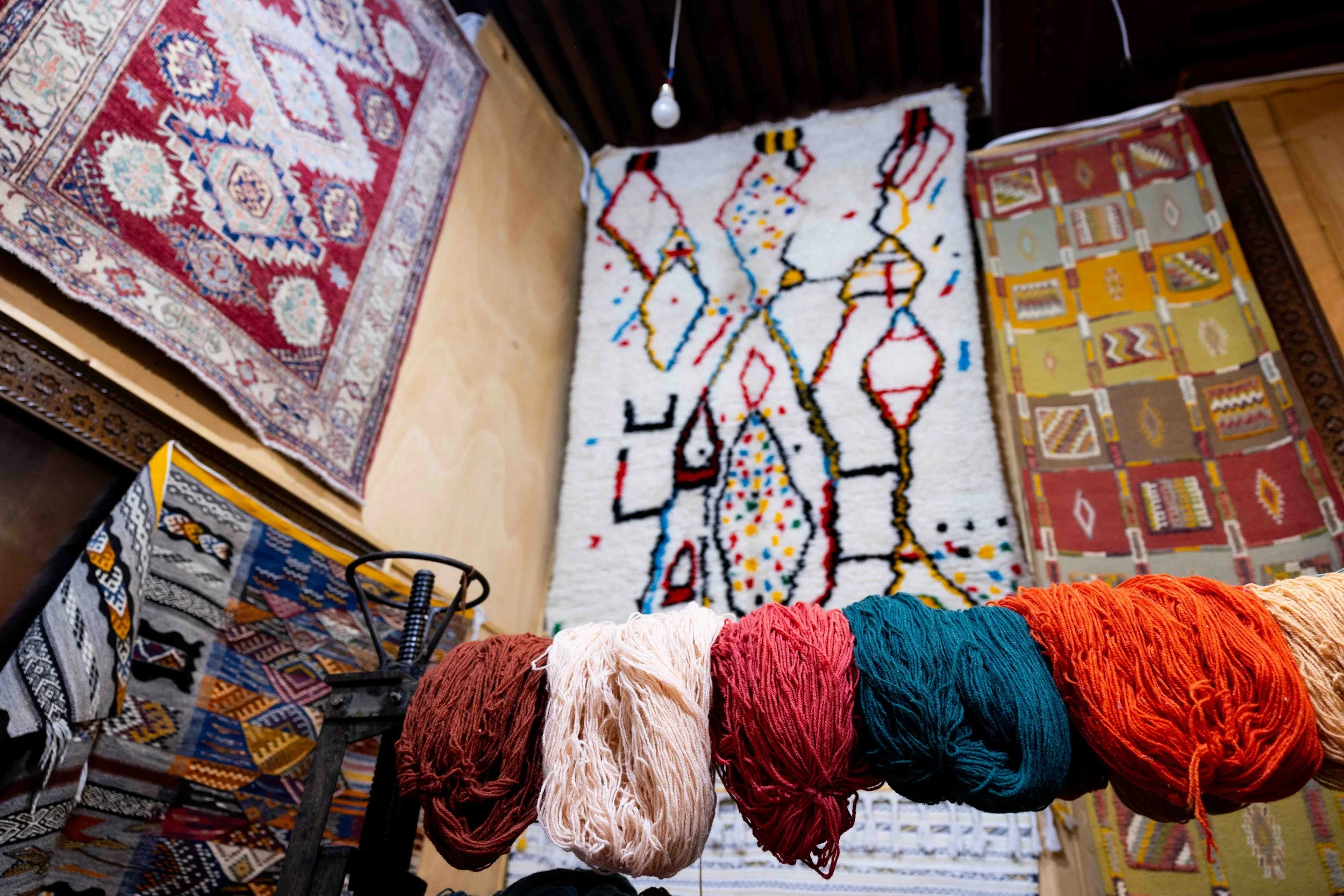
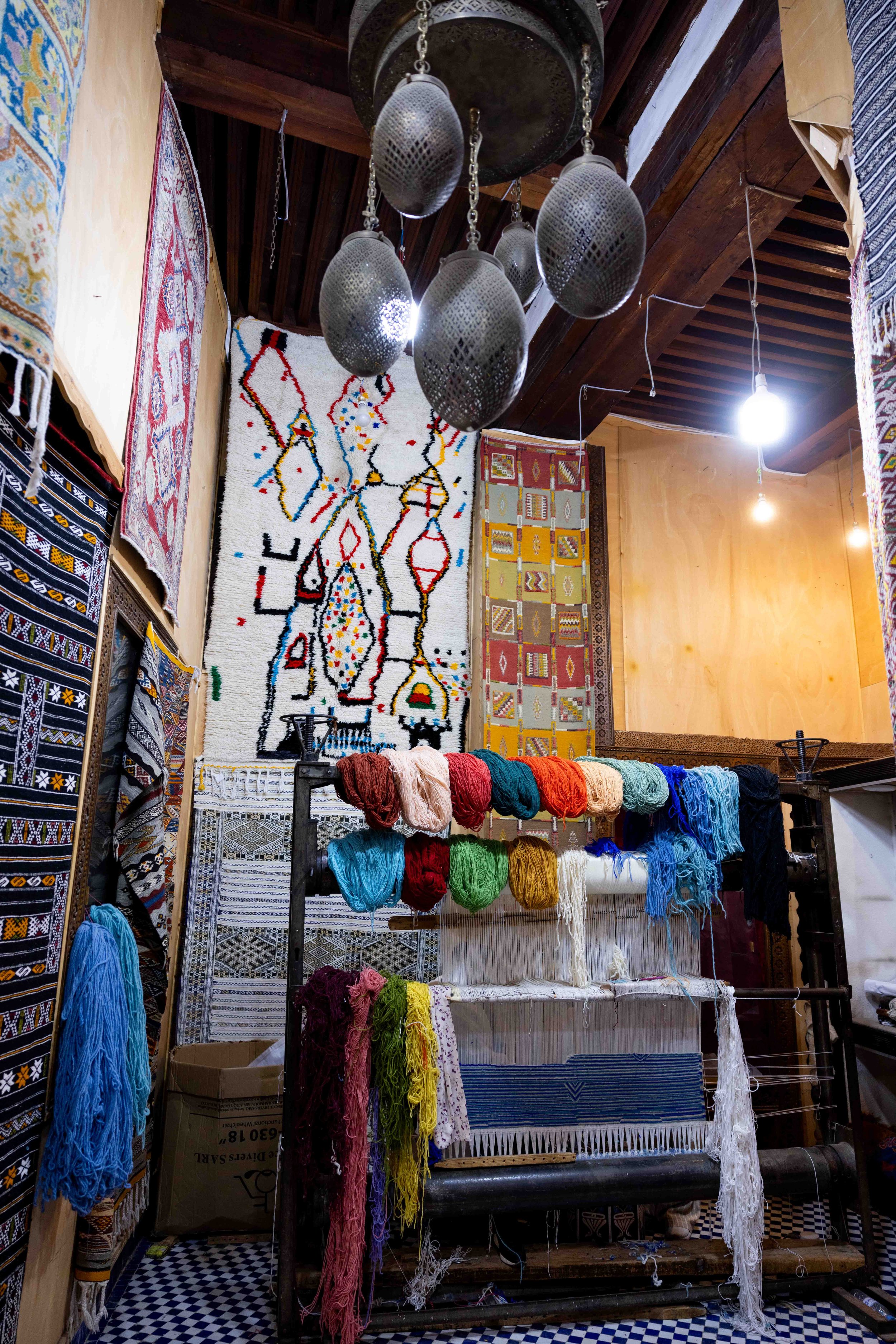
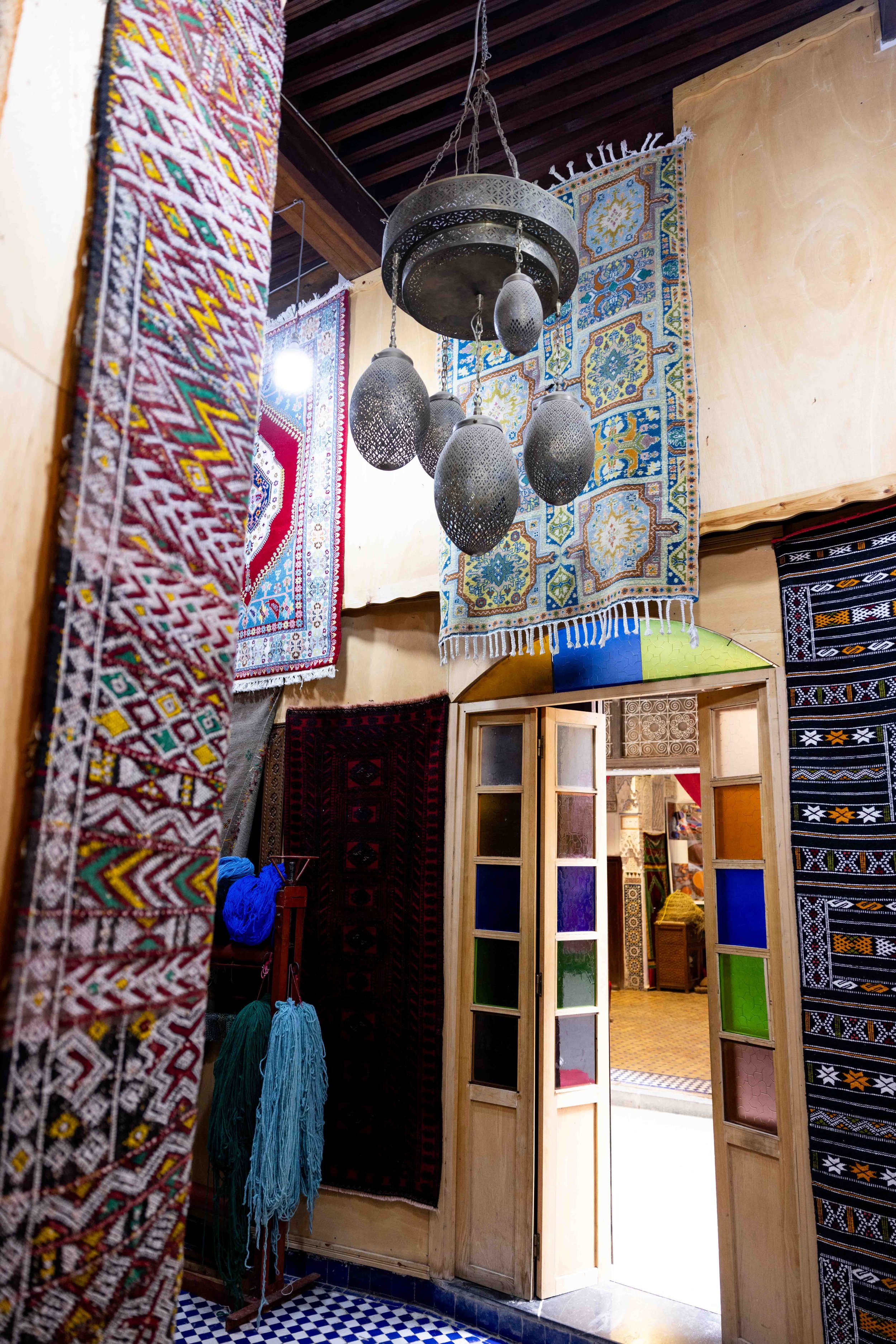
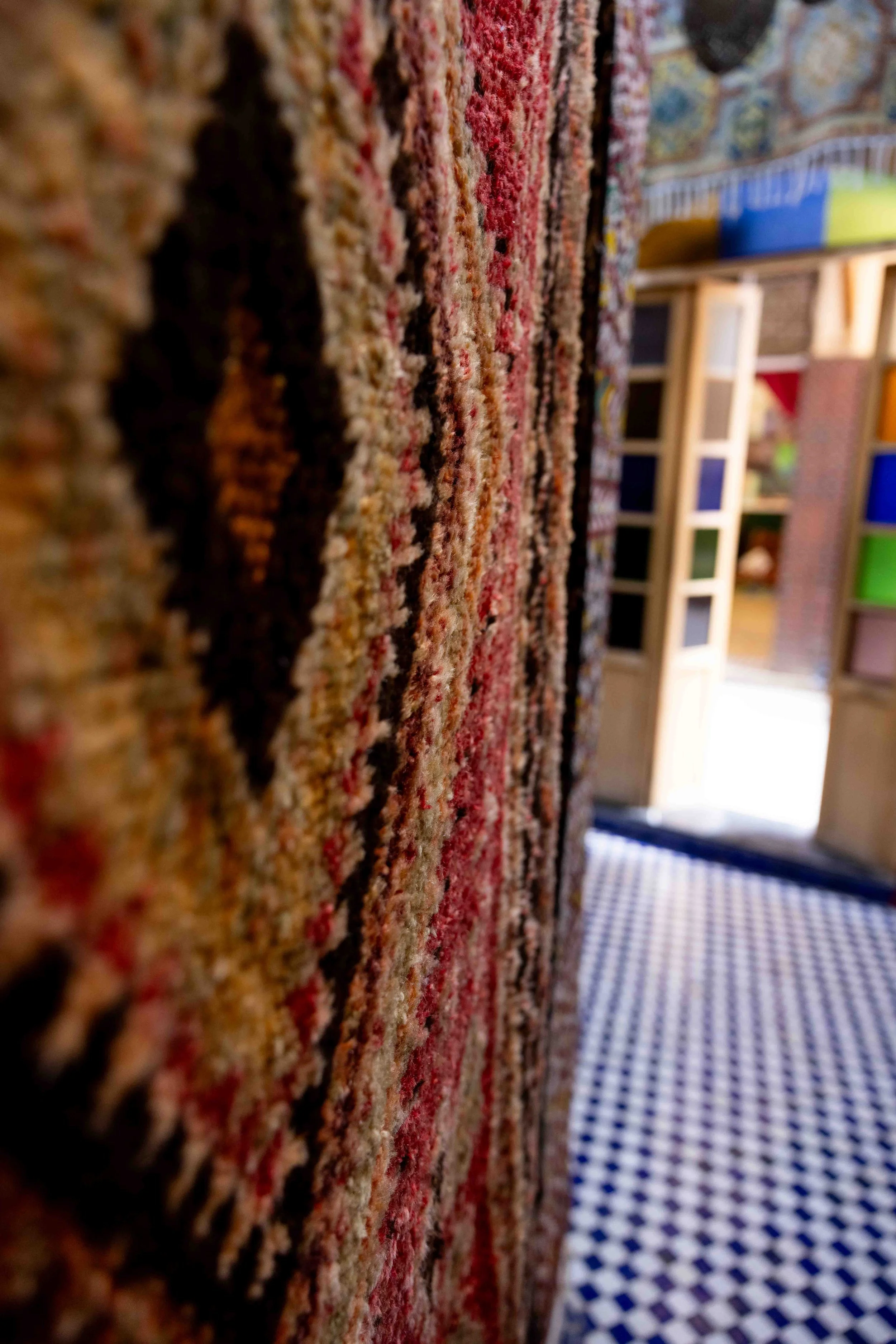
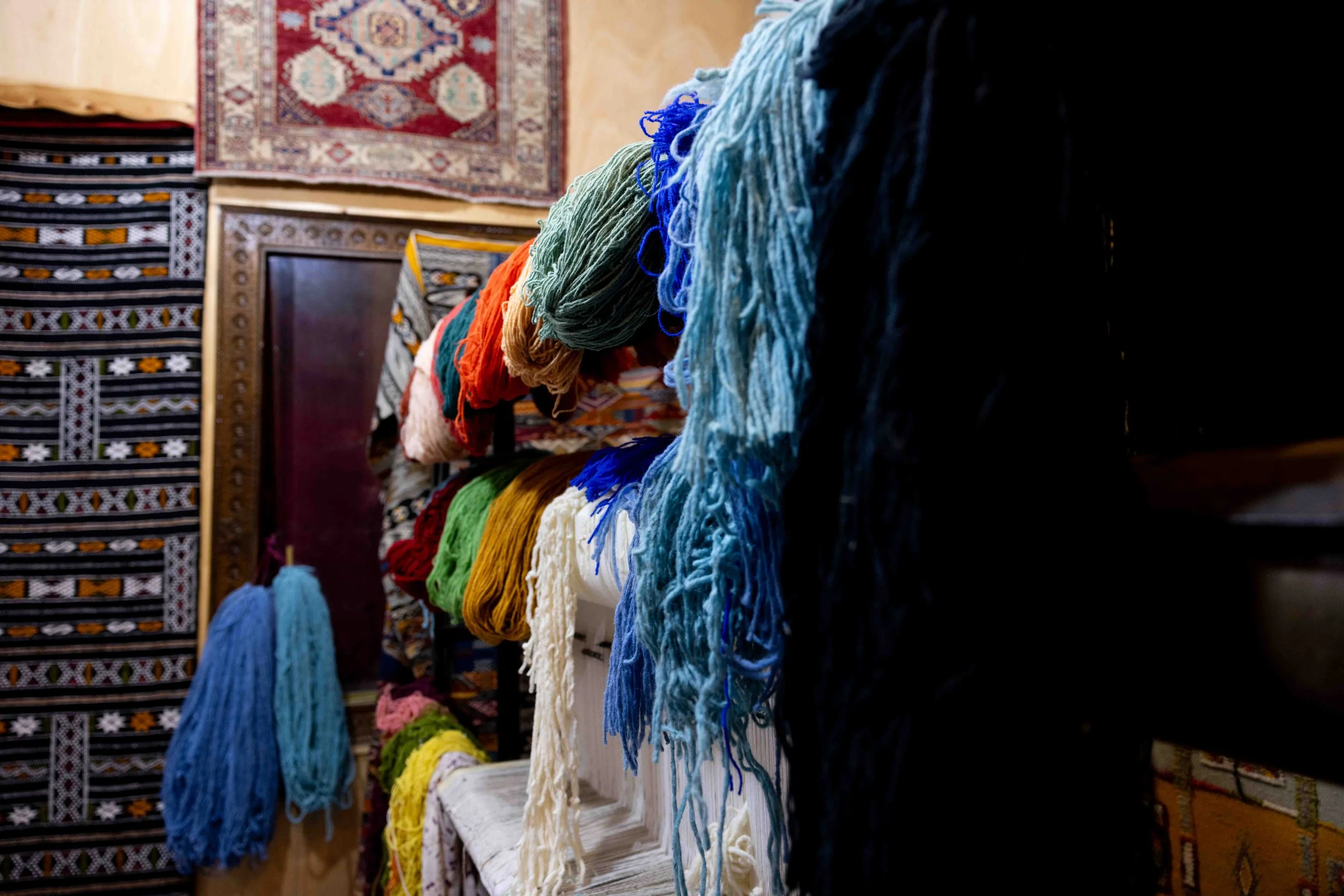
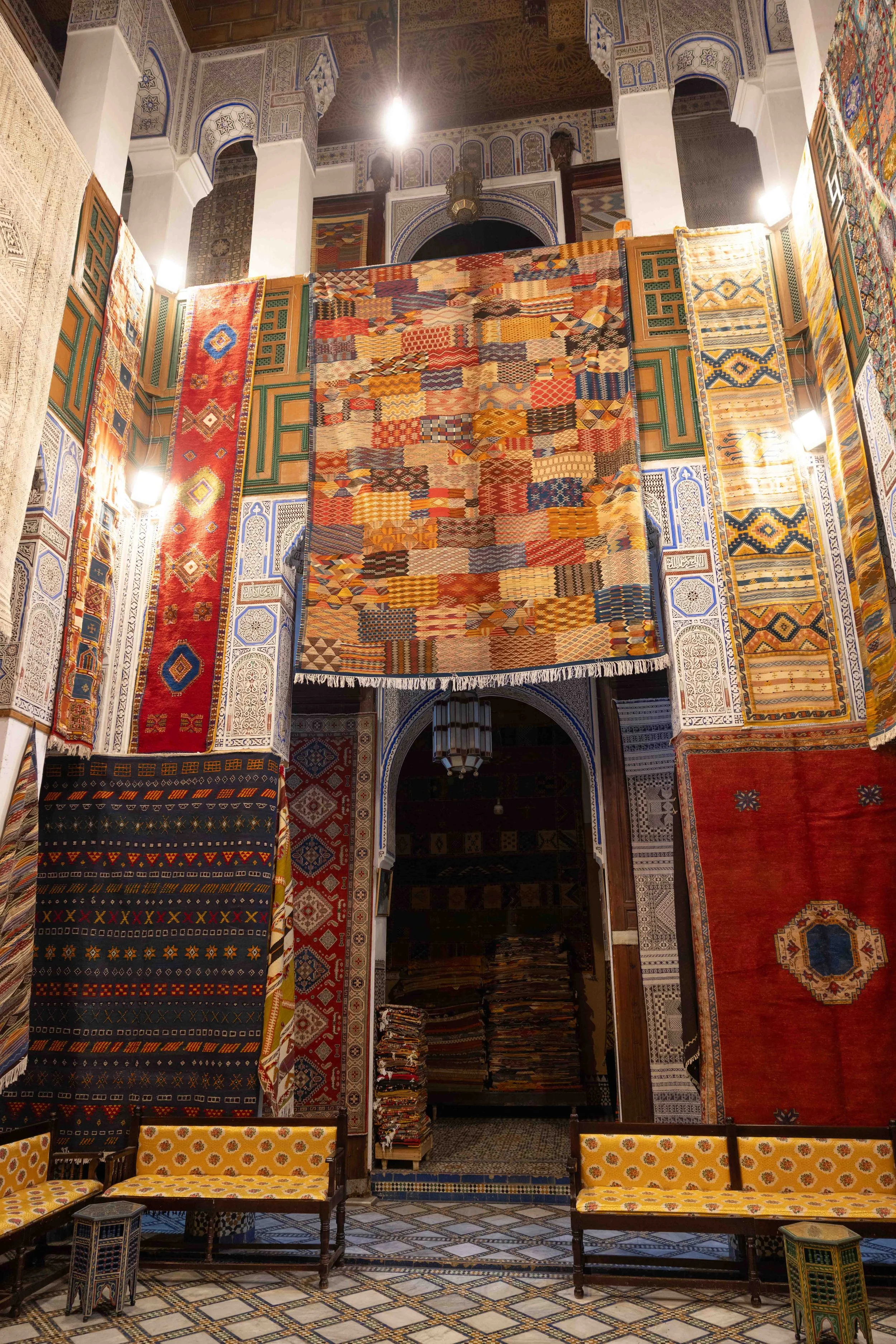
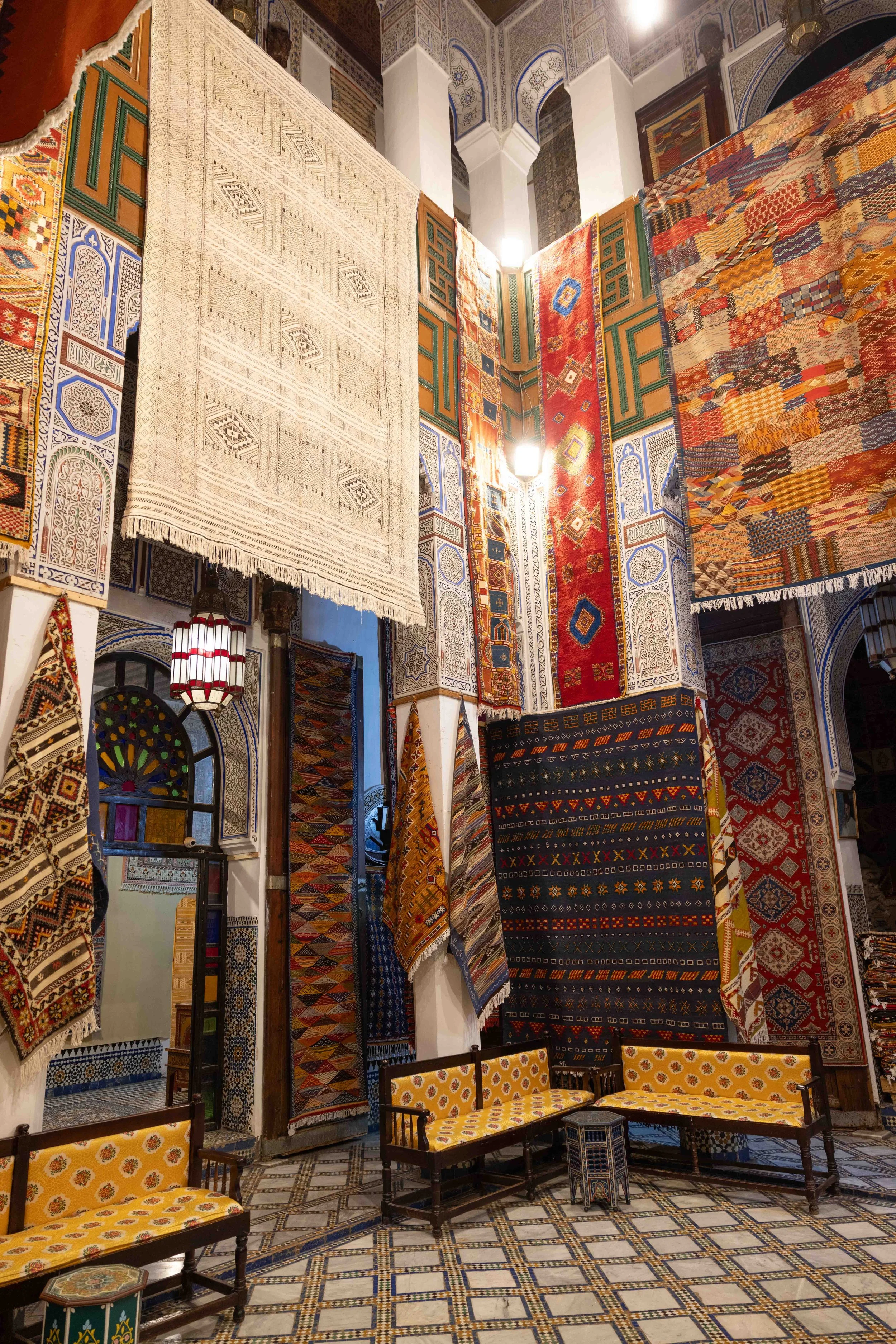
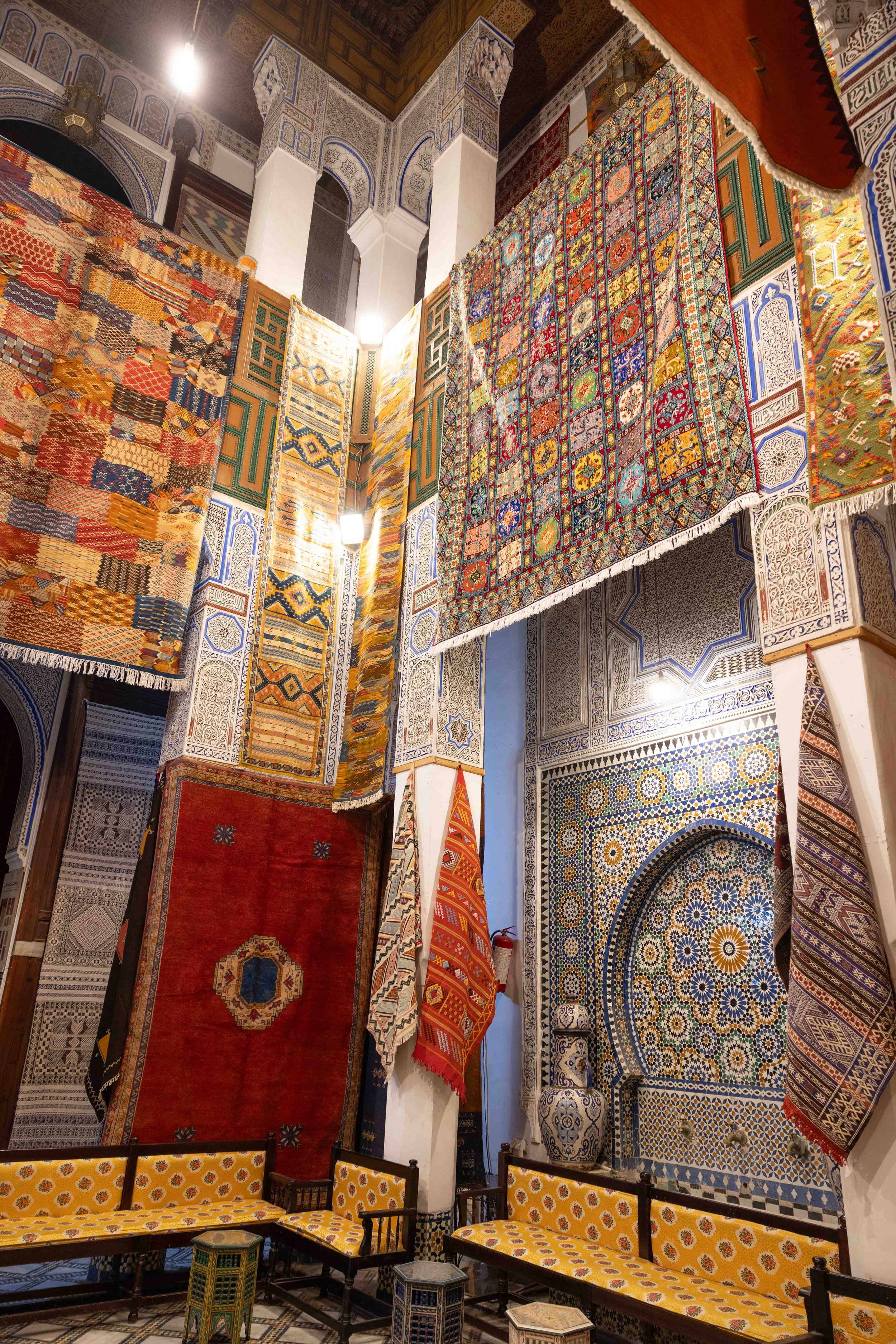
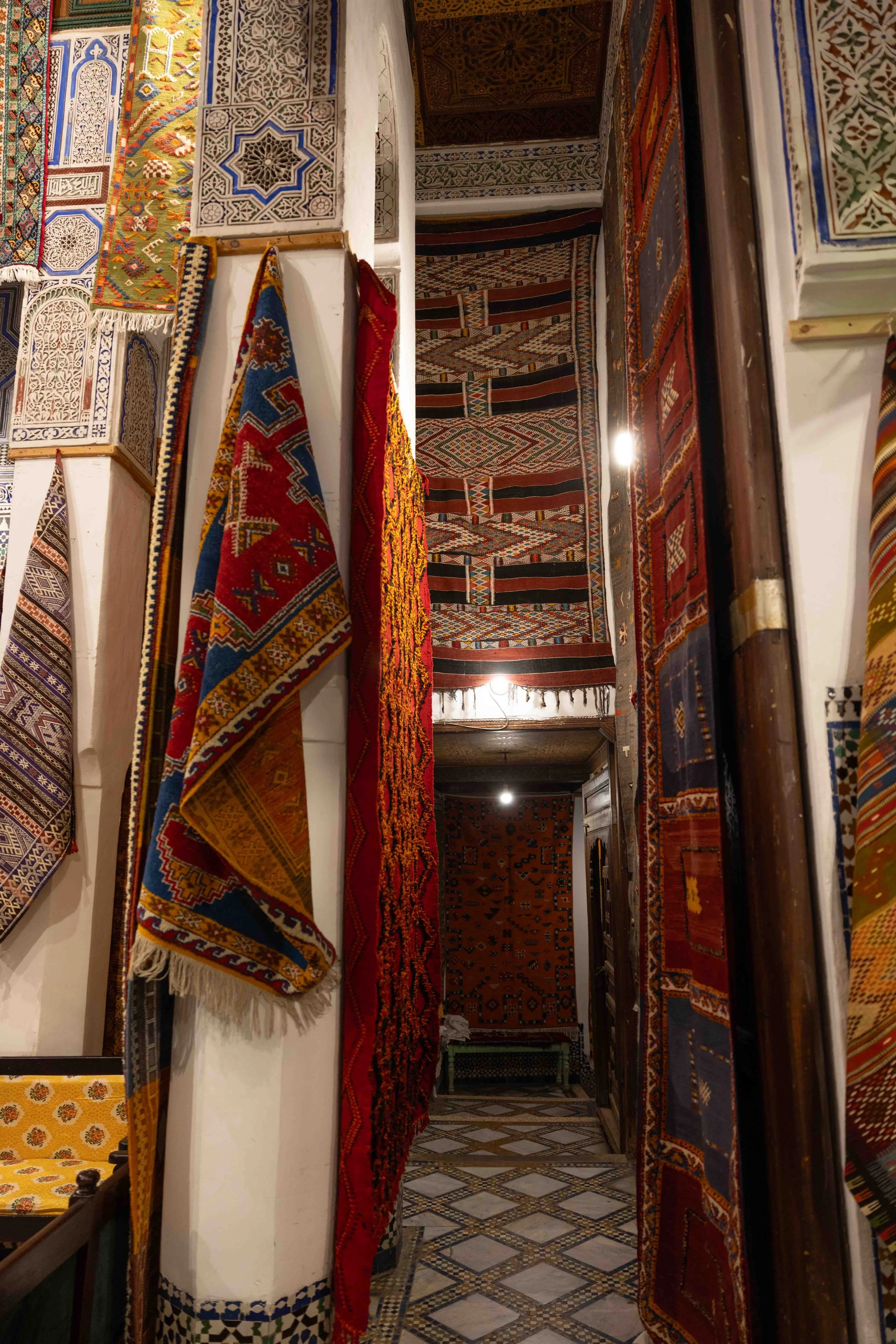
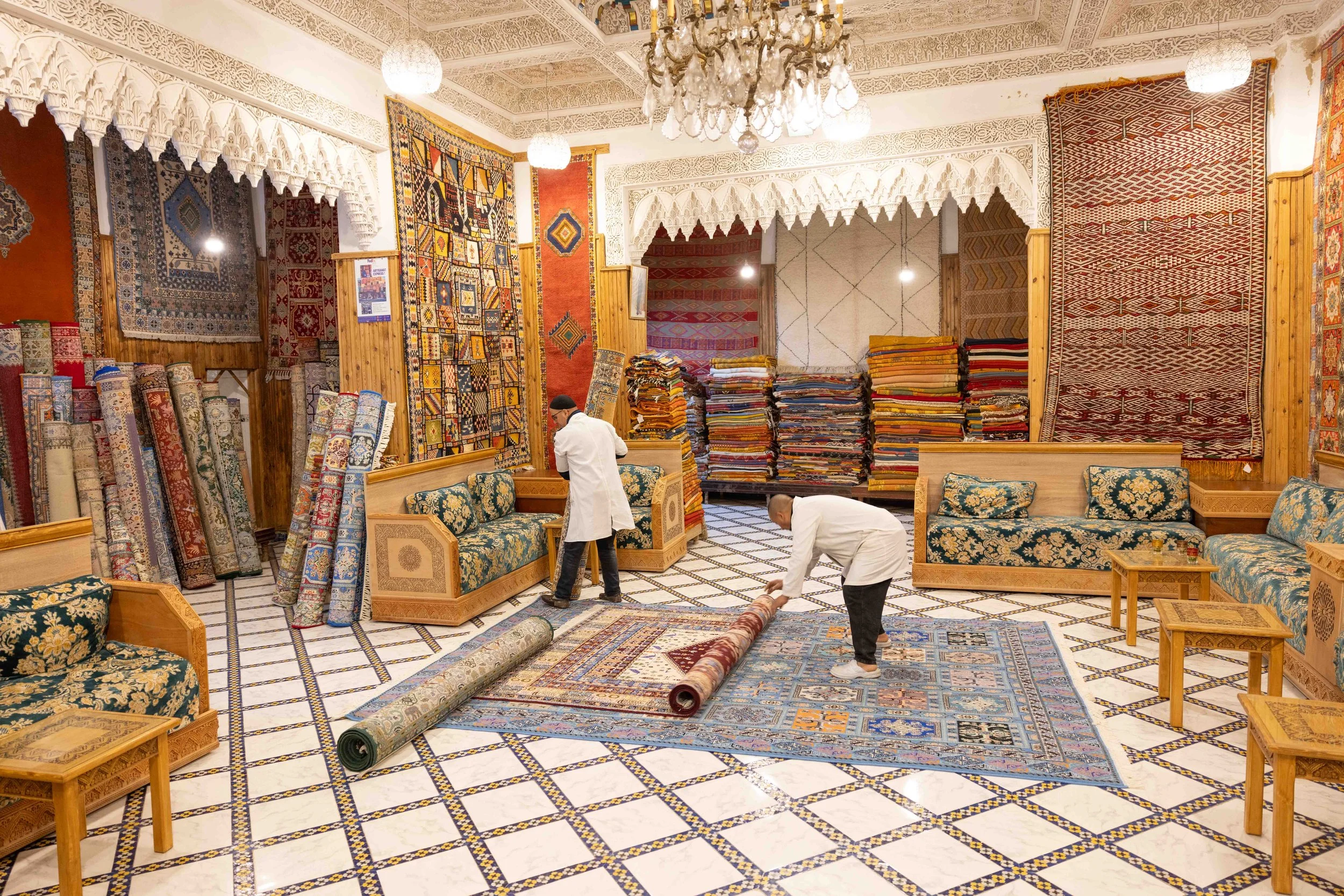
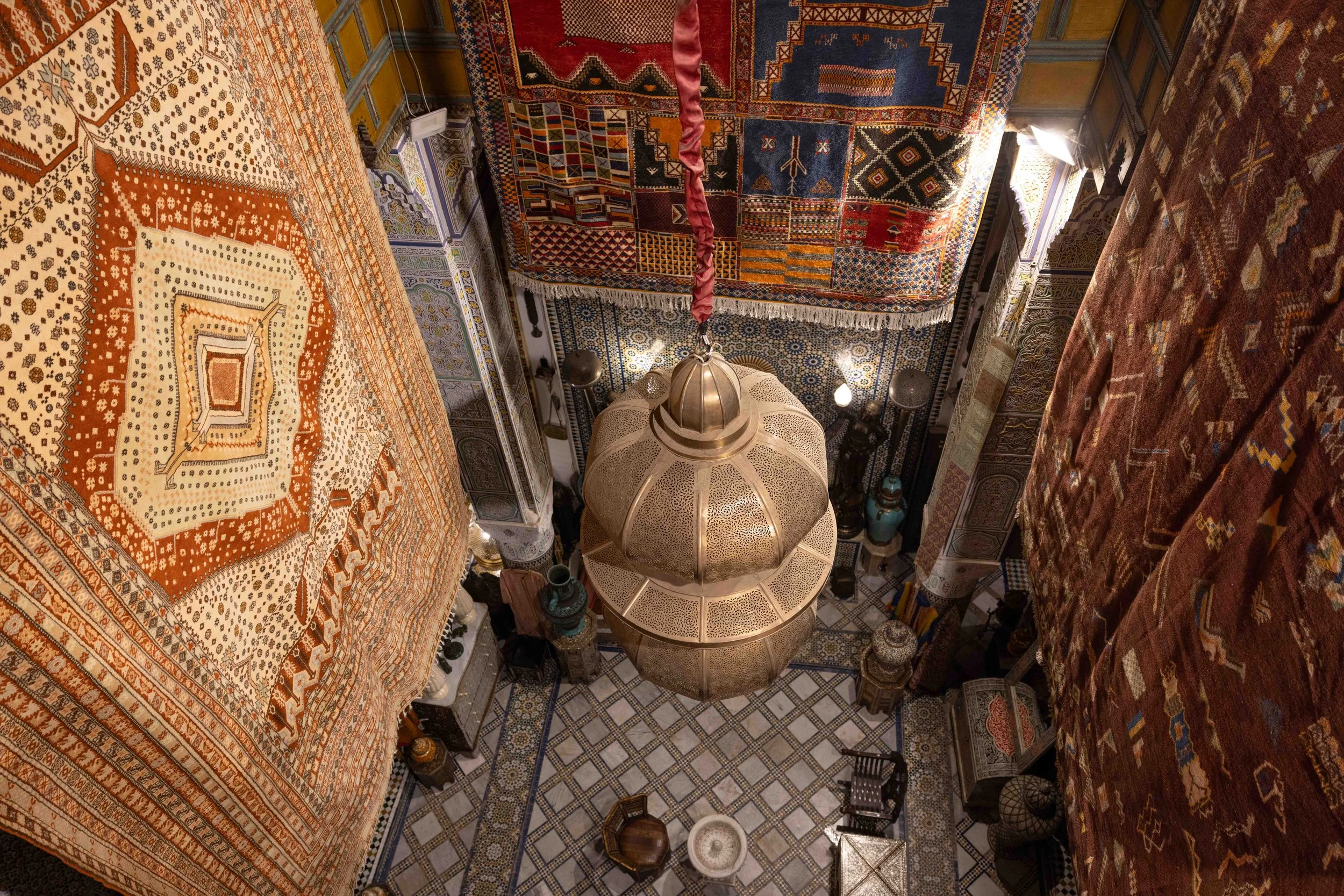
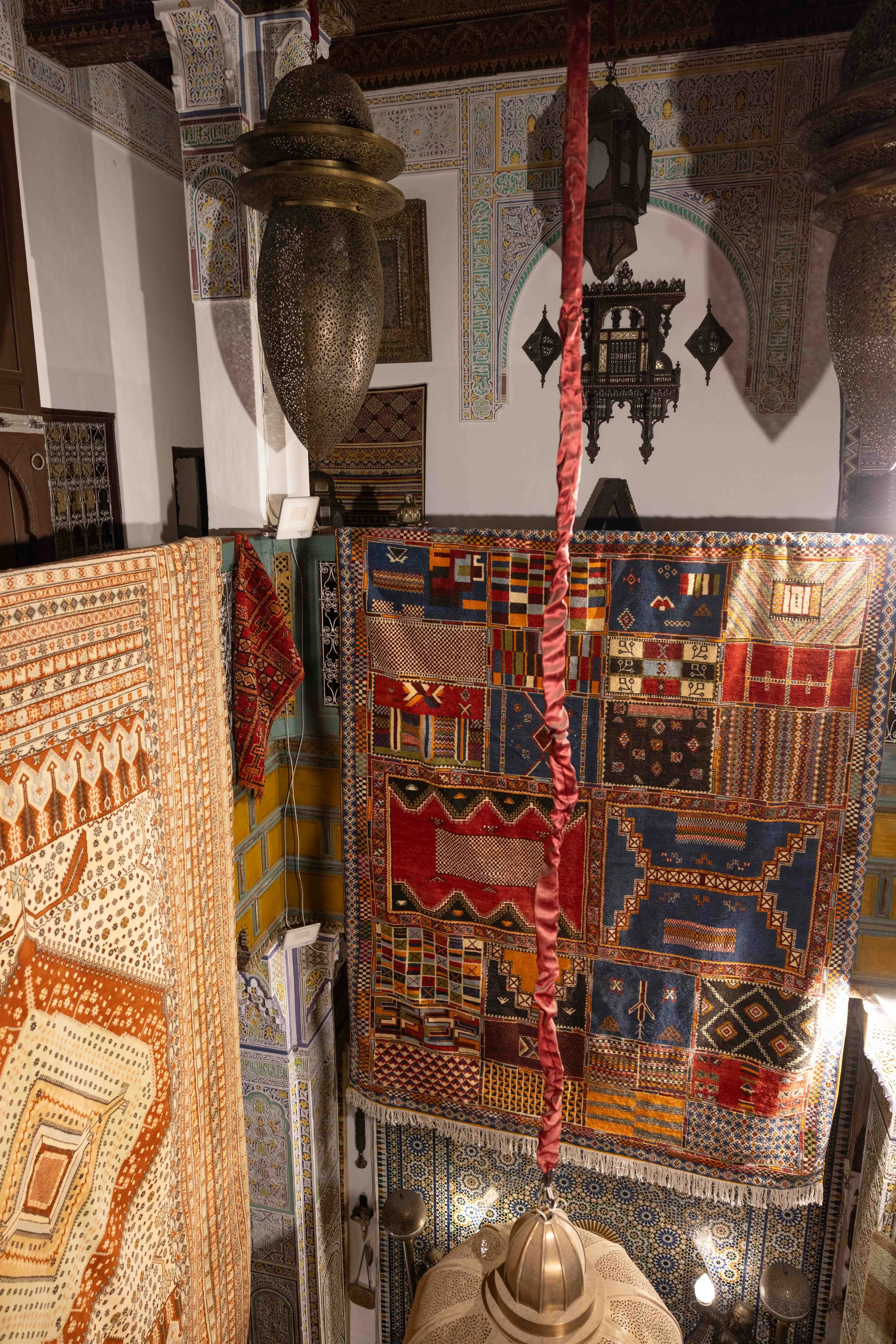
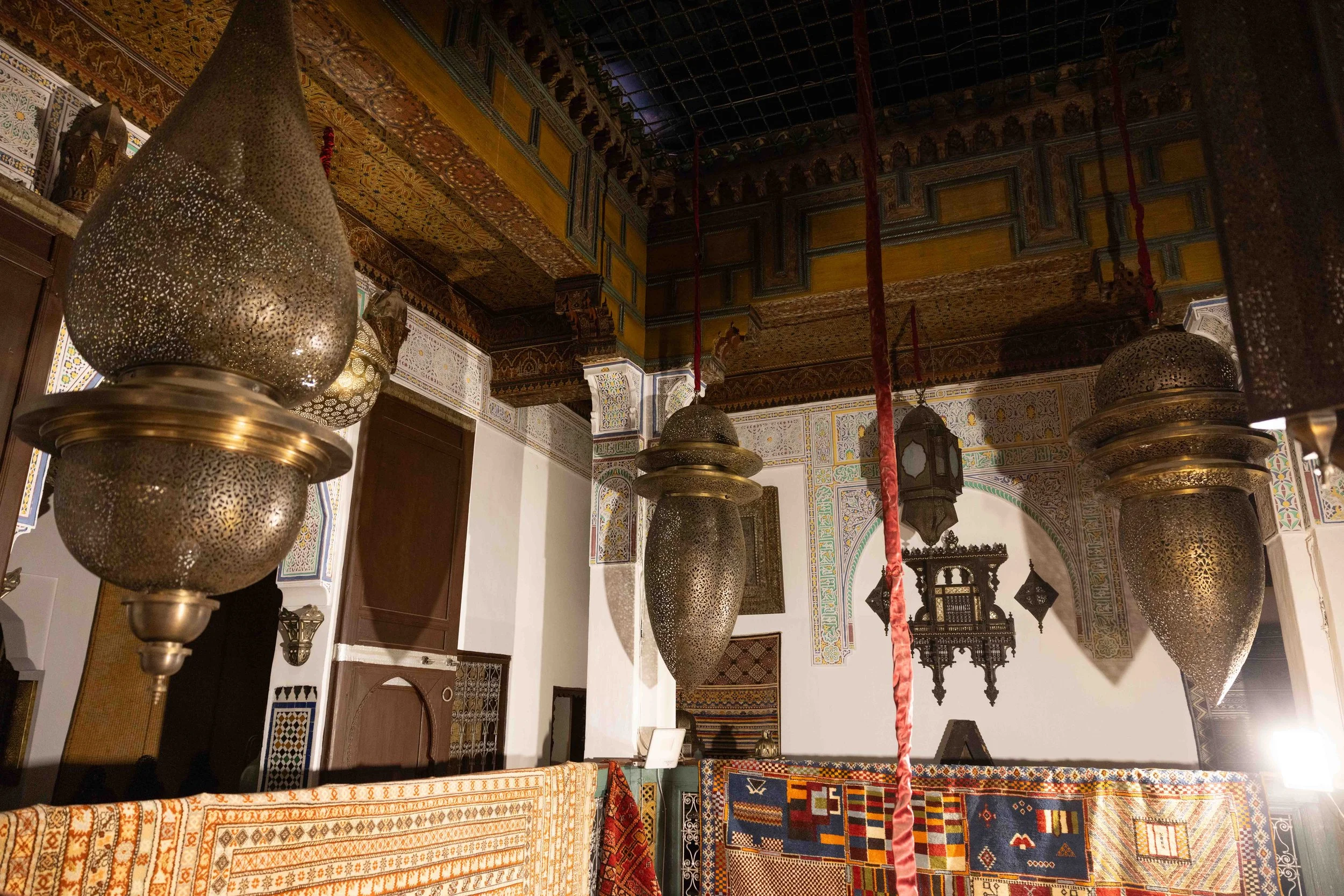
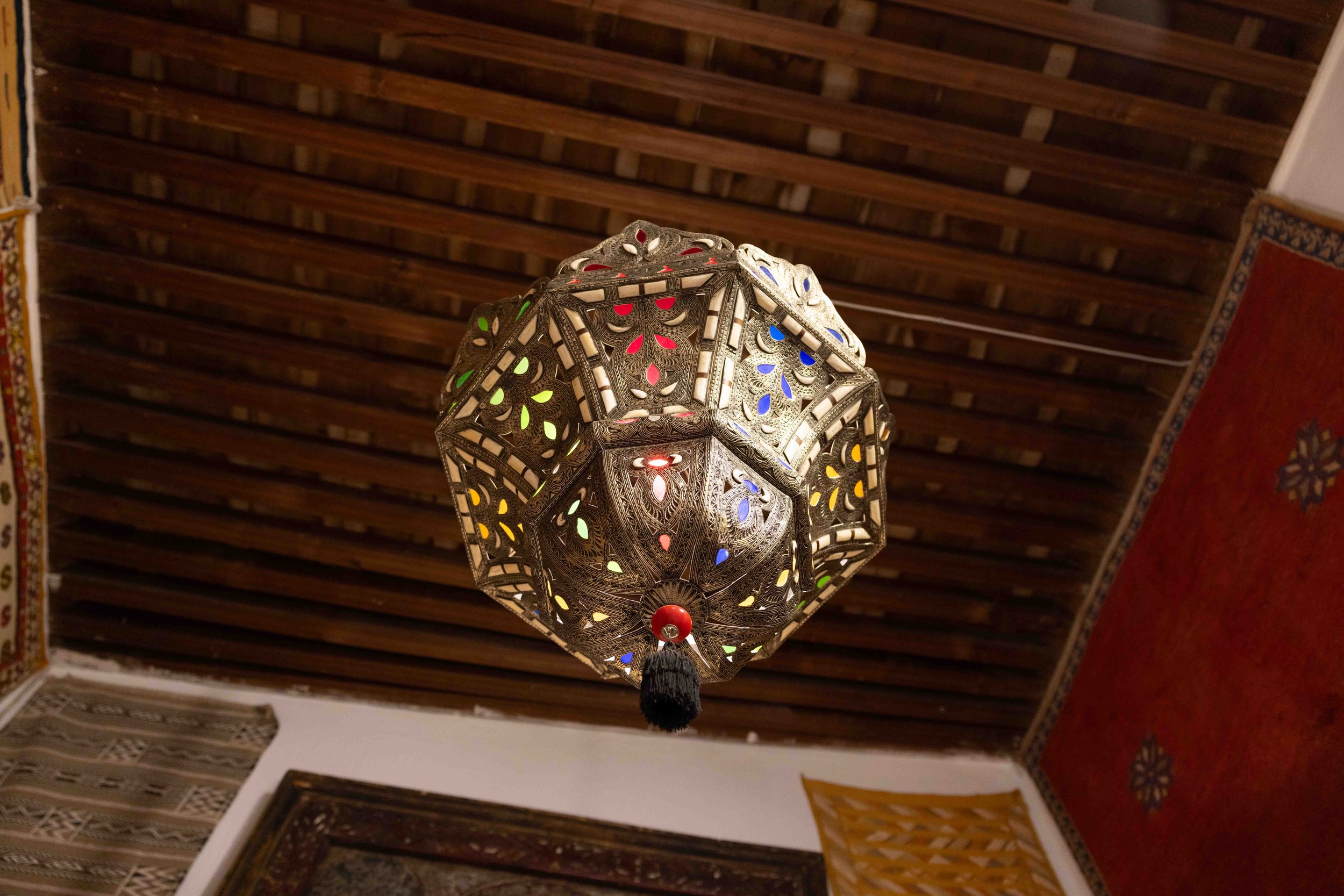
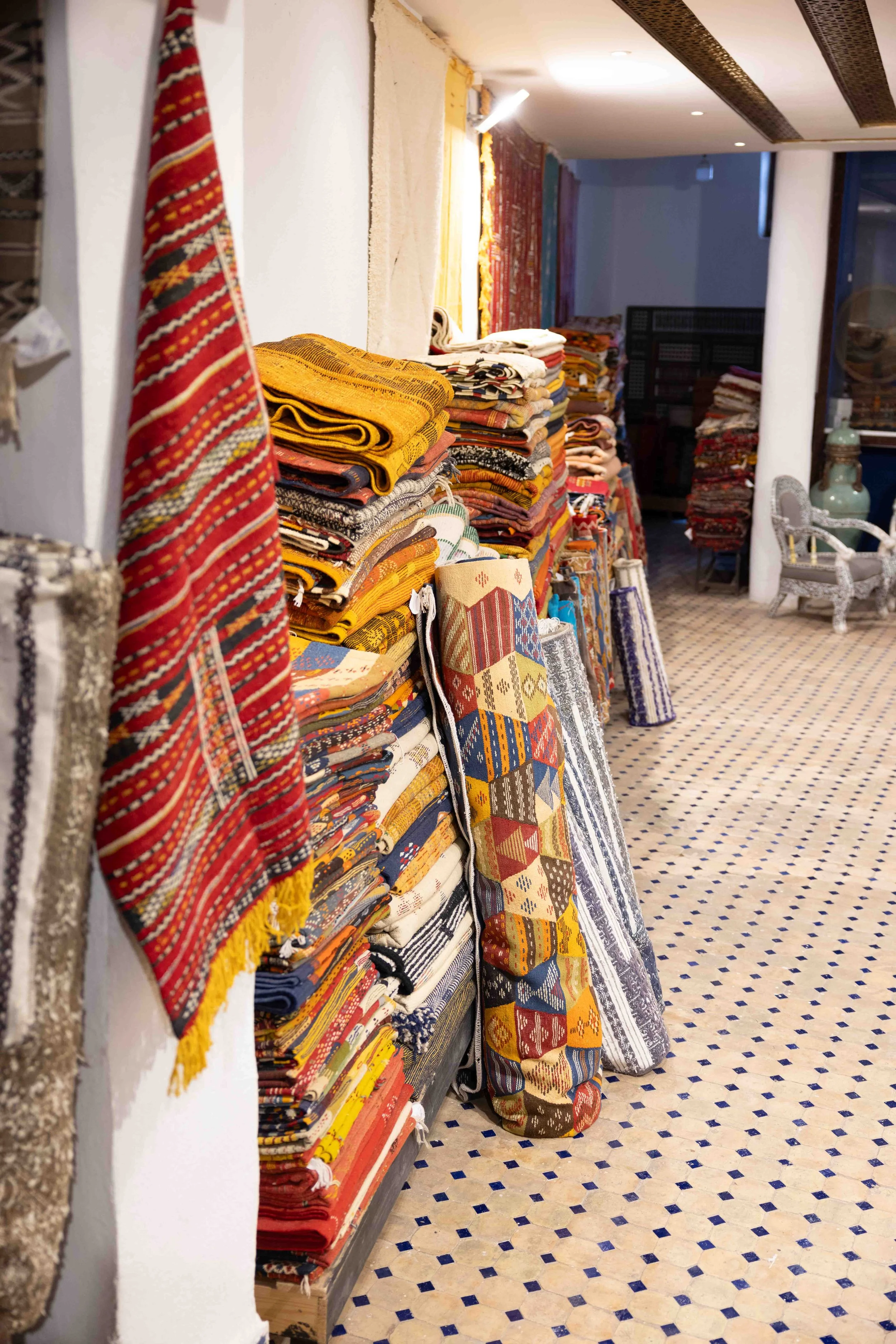
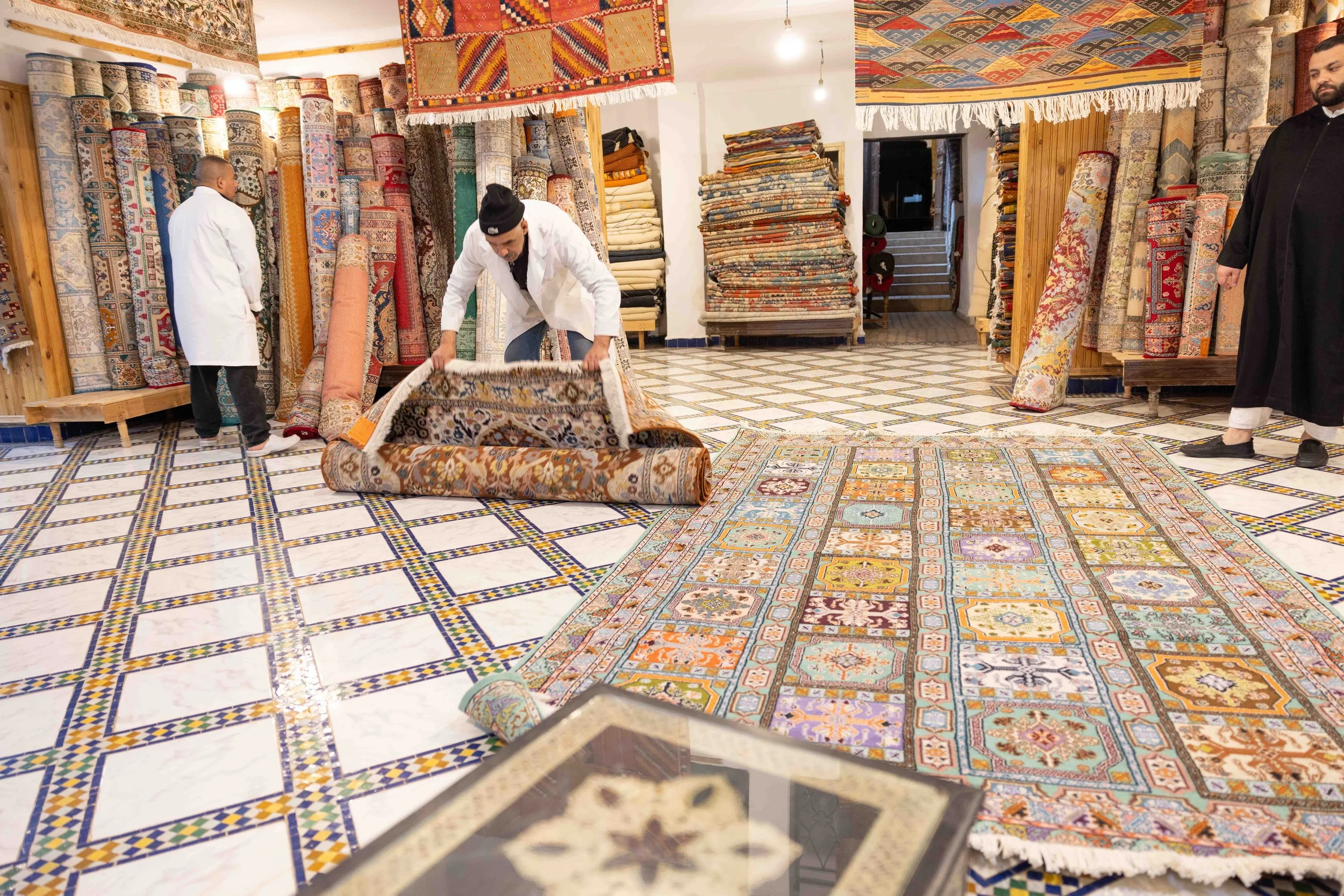
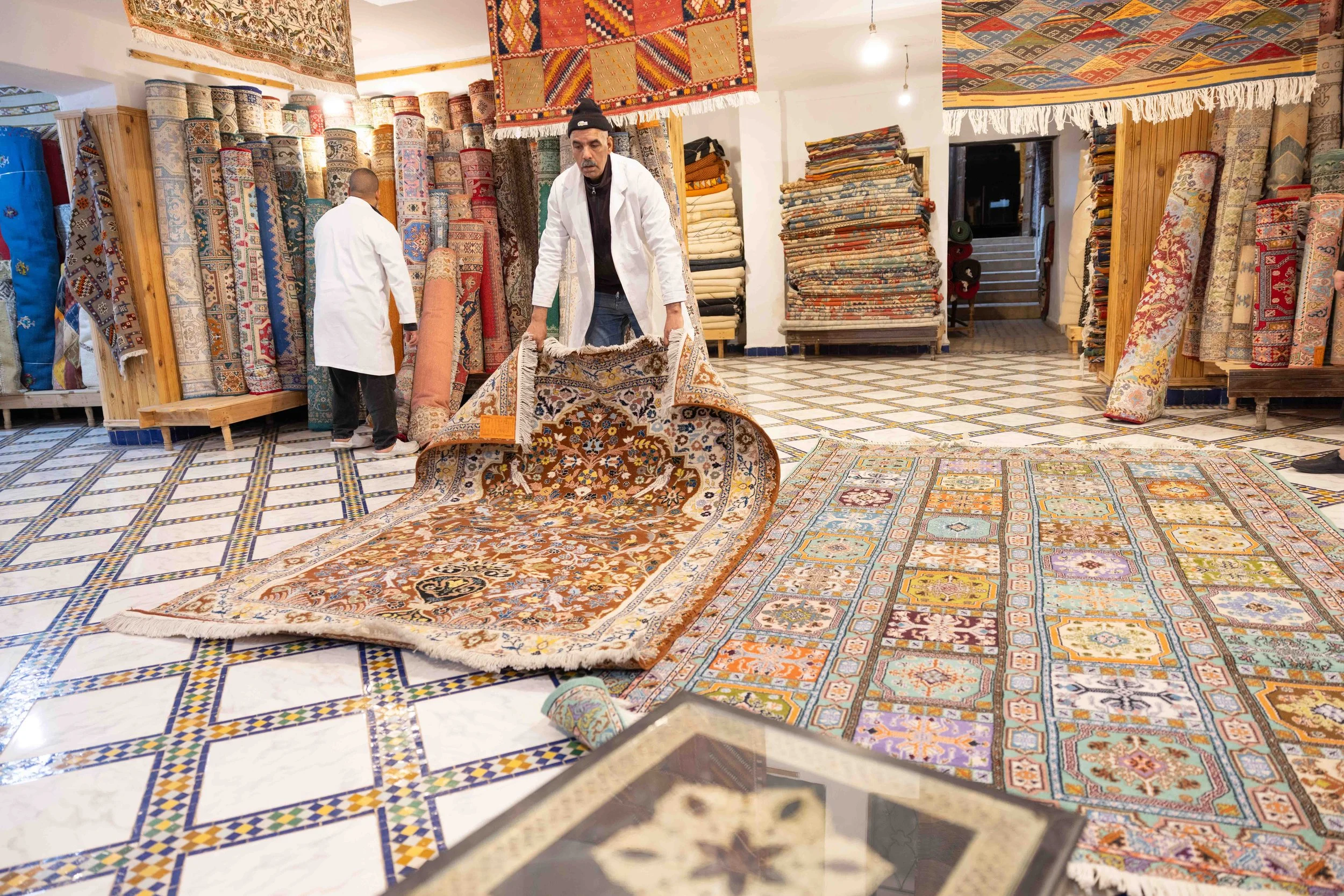
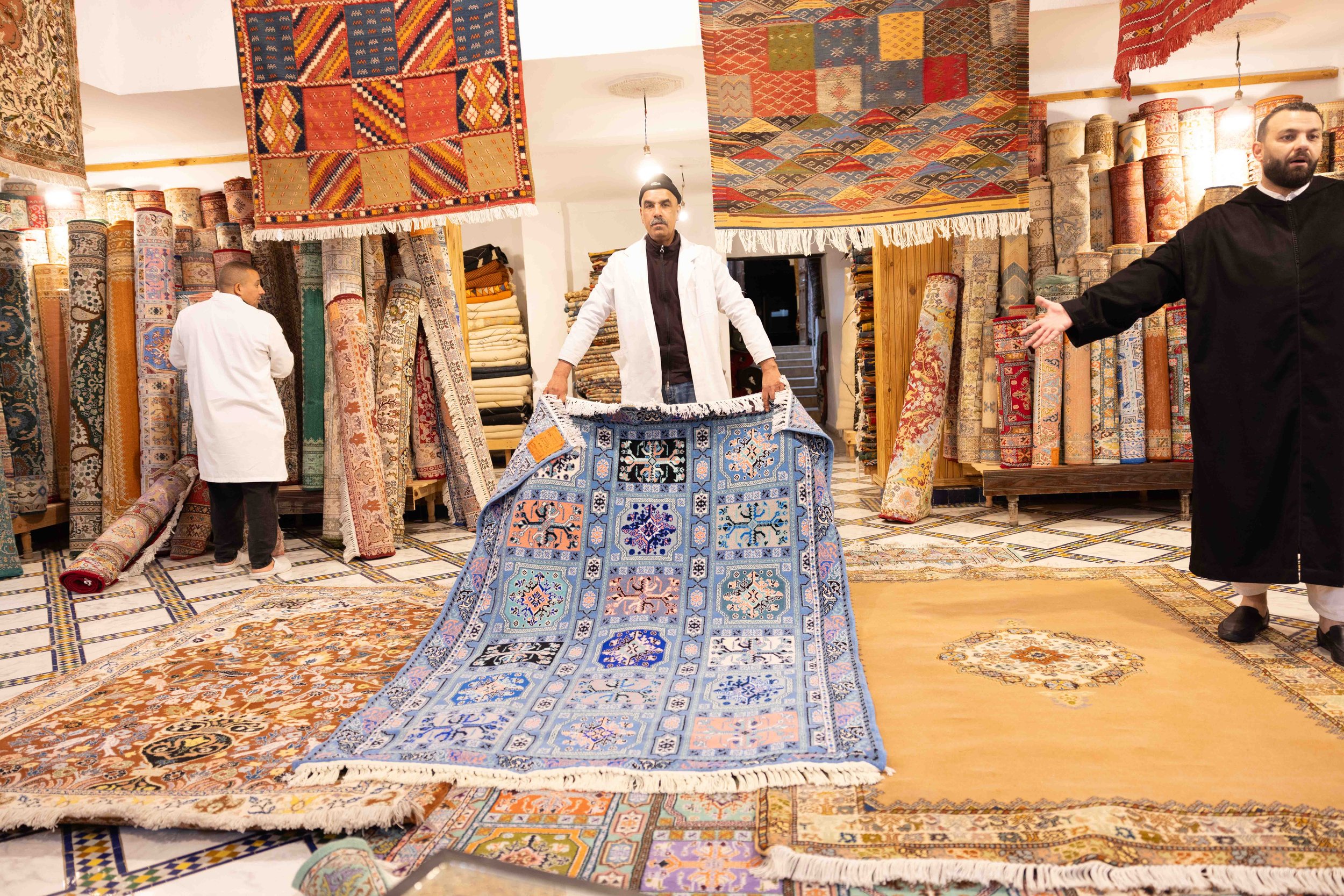
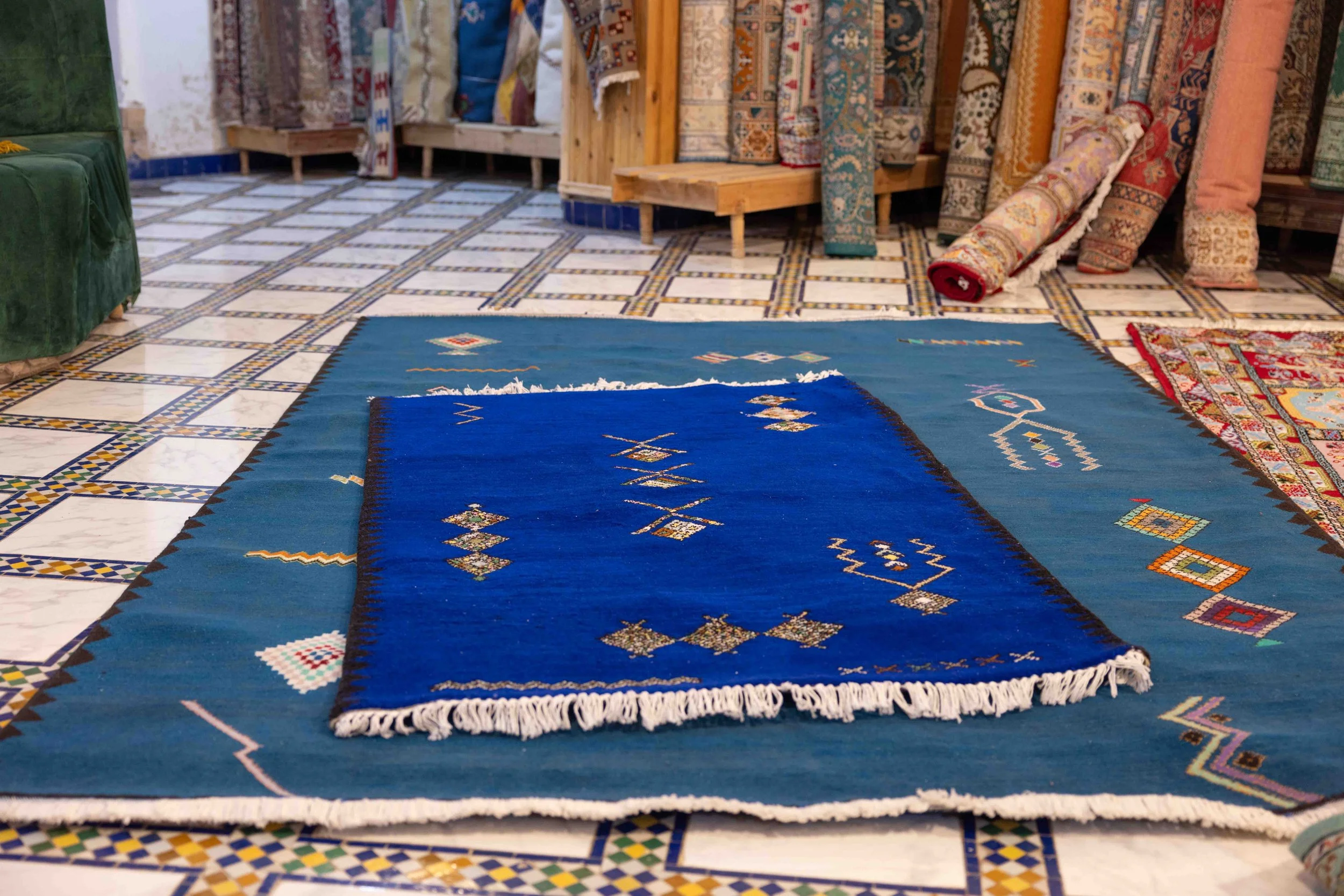
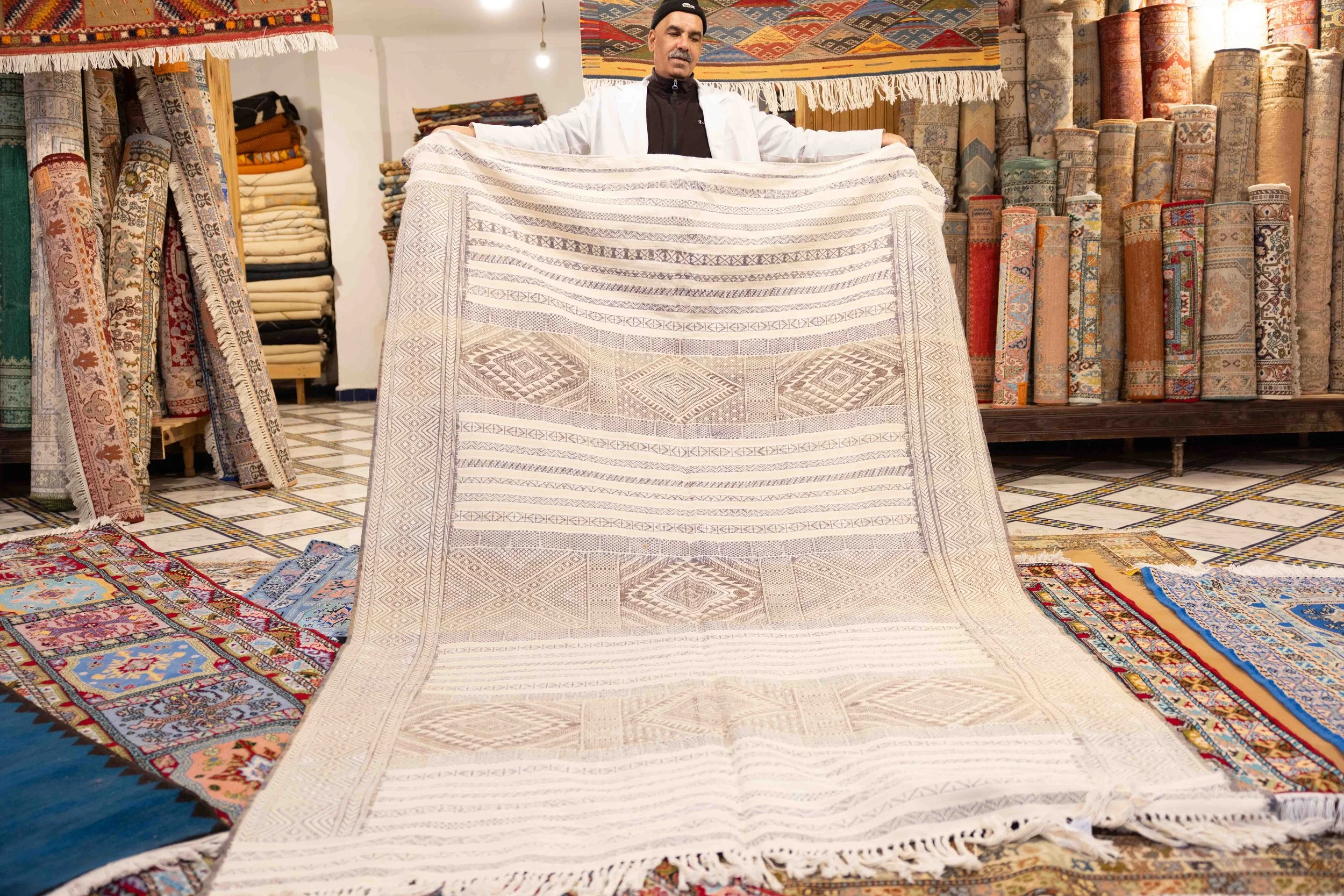
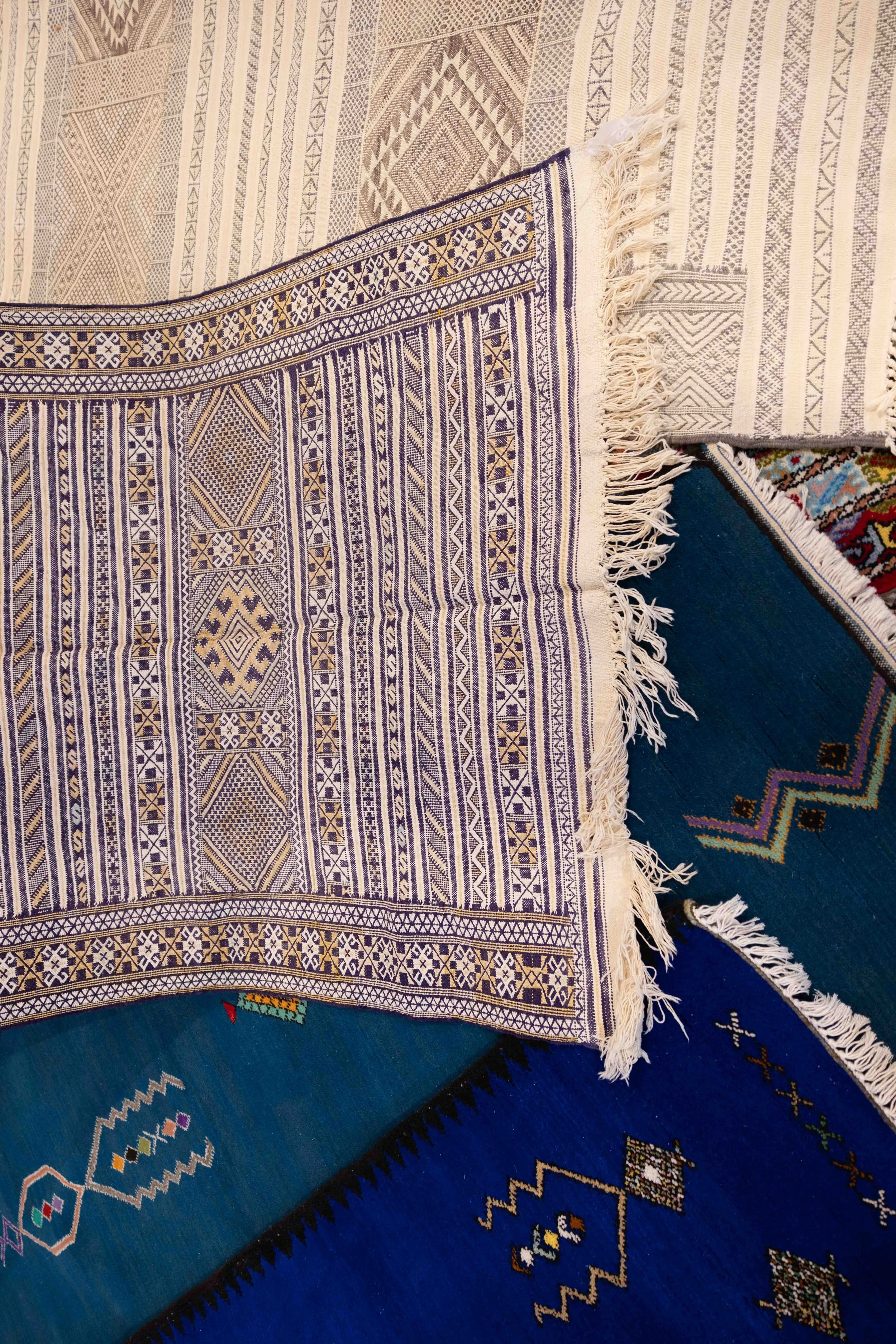
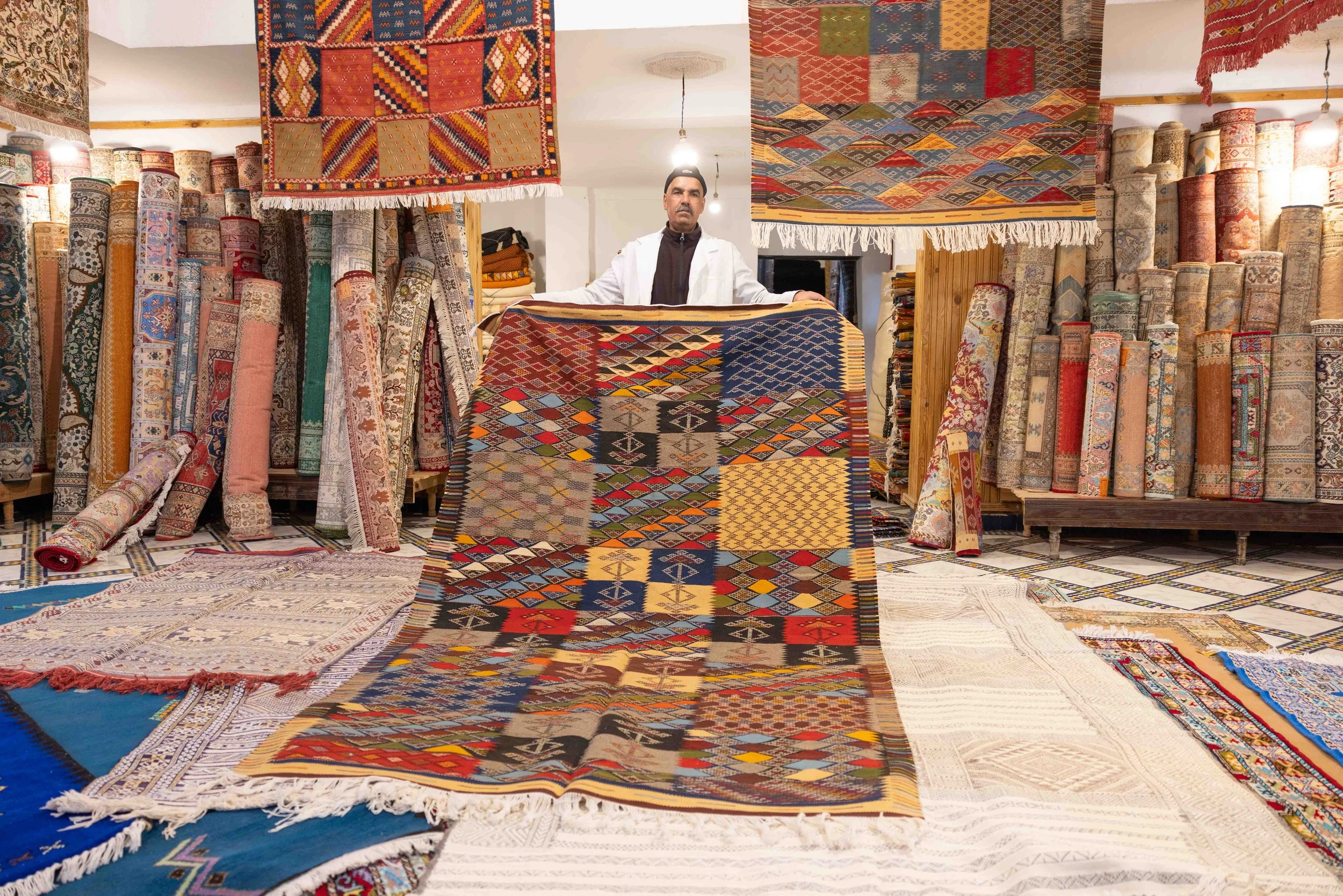
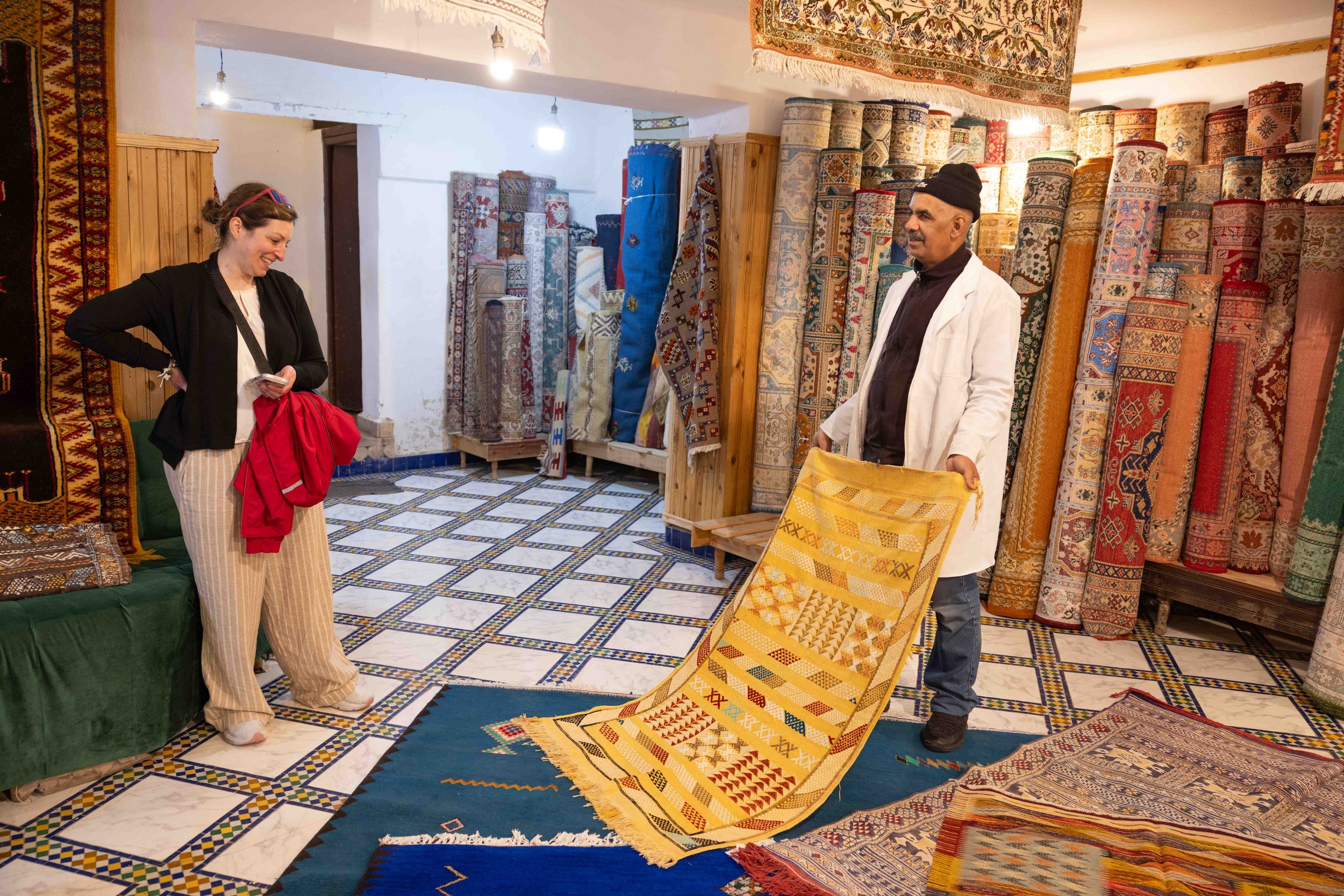
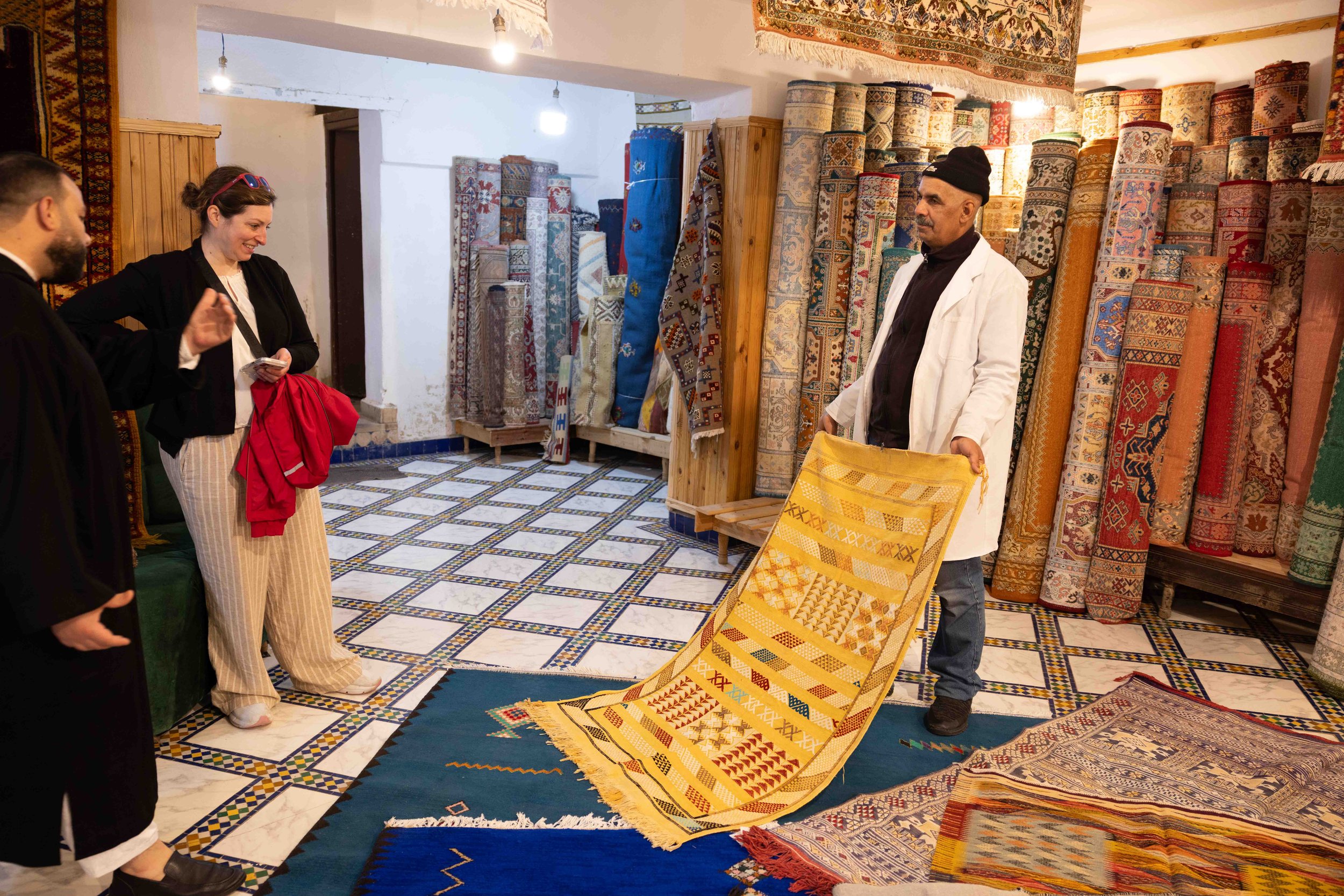
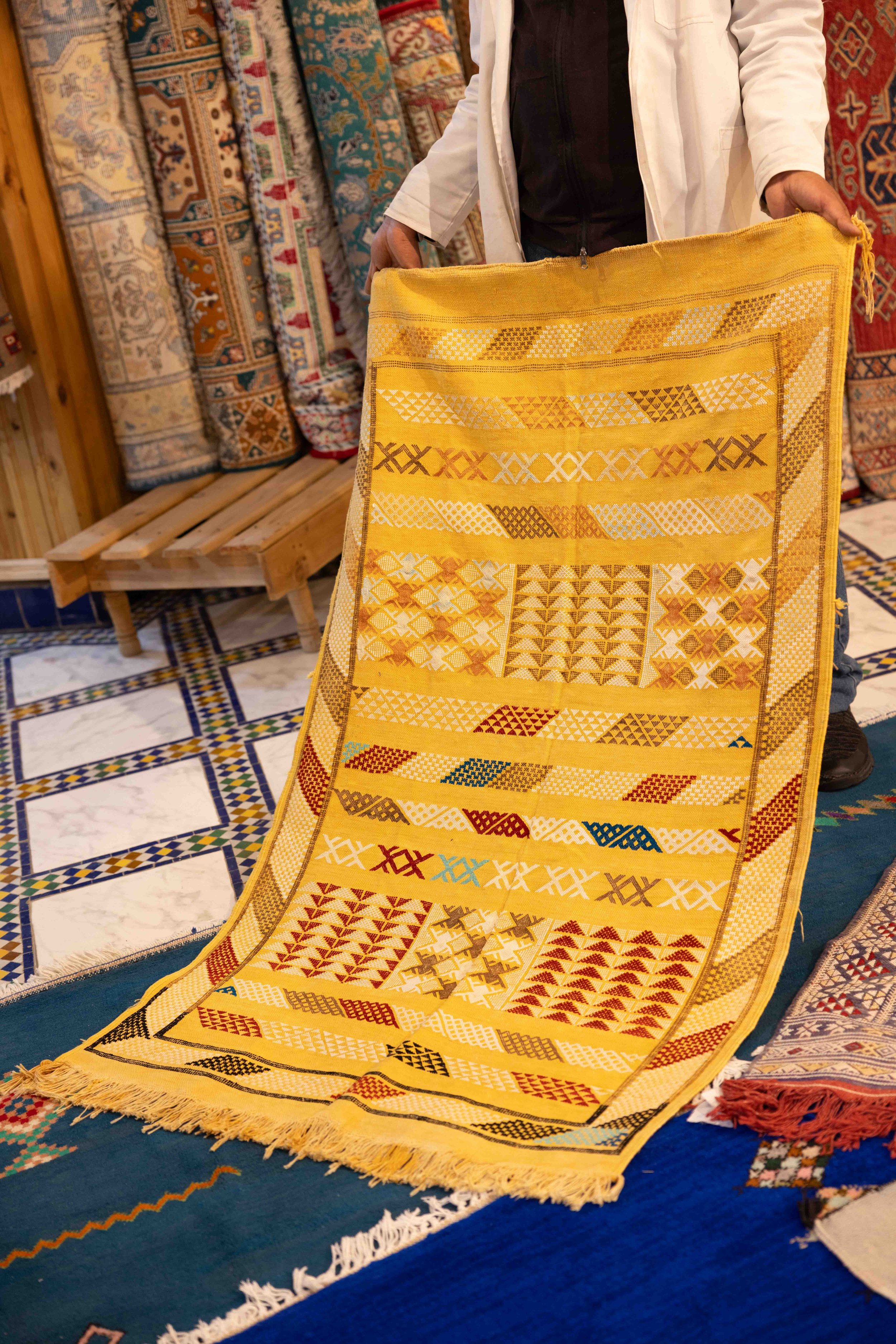
One of the most colourful stops in Fes was a visit to a traditional carpet workshop and showroom, where the artistry of Moroccan weaving unfolded right before our eyes. In a quiet corner, a woman worked patiently at her loom, her hands moving with a steady rhythm as intricate patterns slowly came to life thread by thread. Around her, the space opened into a treasure trove—piles upon piles of rugs stacked high, each one different in colour, texture, and design. Then came the theatre of the showroom: men expertly unfurling carpet after carpet in a cascade of pattern and colour, each more striking than the last, their movements quick and persuasive as they tried to match us with the “perfect” piece. It was impossible not to be captivated—the deep reds, rich blues, and warm gold tones seemed to glow under the light, and for a moment, it felt like stepping inside a living gallery where every rug carried the spirit of Moroccan craftsmanship.
There at the carpet workshop in Fes, we were introduced to the rich diversity of Moroccan rugs, each style reflecting a different cultural tradition. Berber rugs, woven by the indigenous Amazigh people, felt the most personal—often crafted from wool with bold geometric patterns and symbolic motifs that tell stories of daily life, family, and nature. In contrast, Arabic rugs carried a more formal, refined aesthetic, with intricate floral designs, repeating patterns, and a clear sense of symmetry influenced by centuries of Islamic art and architecture. We also learned about Jewish Moroccan rugs, which stood out for their vibrant color palettes and distinctive patterns, sometimes incorporating unique symbolic elements and weaving techniques. Seeing these styles side by side gave us a deeper appreciation for how history, culture, and identity are woven—quite literally—into every piece.
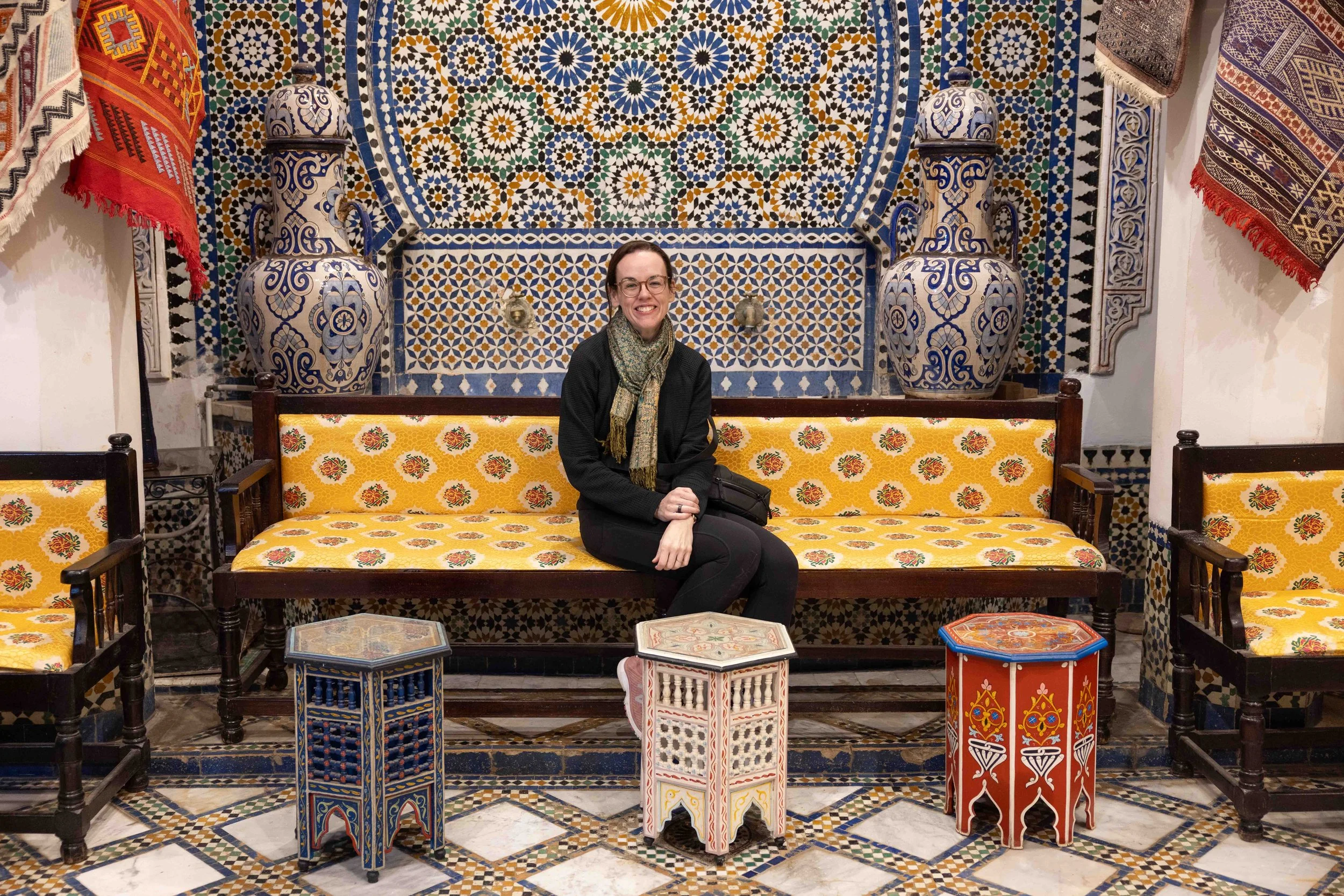
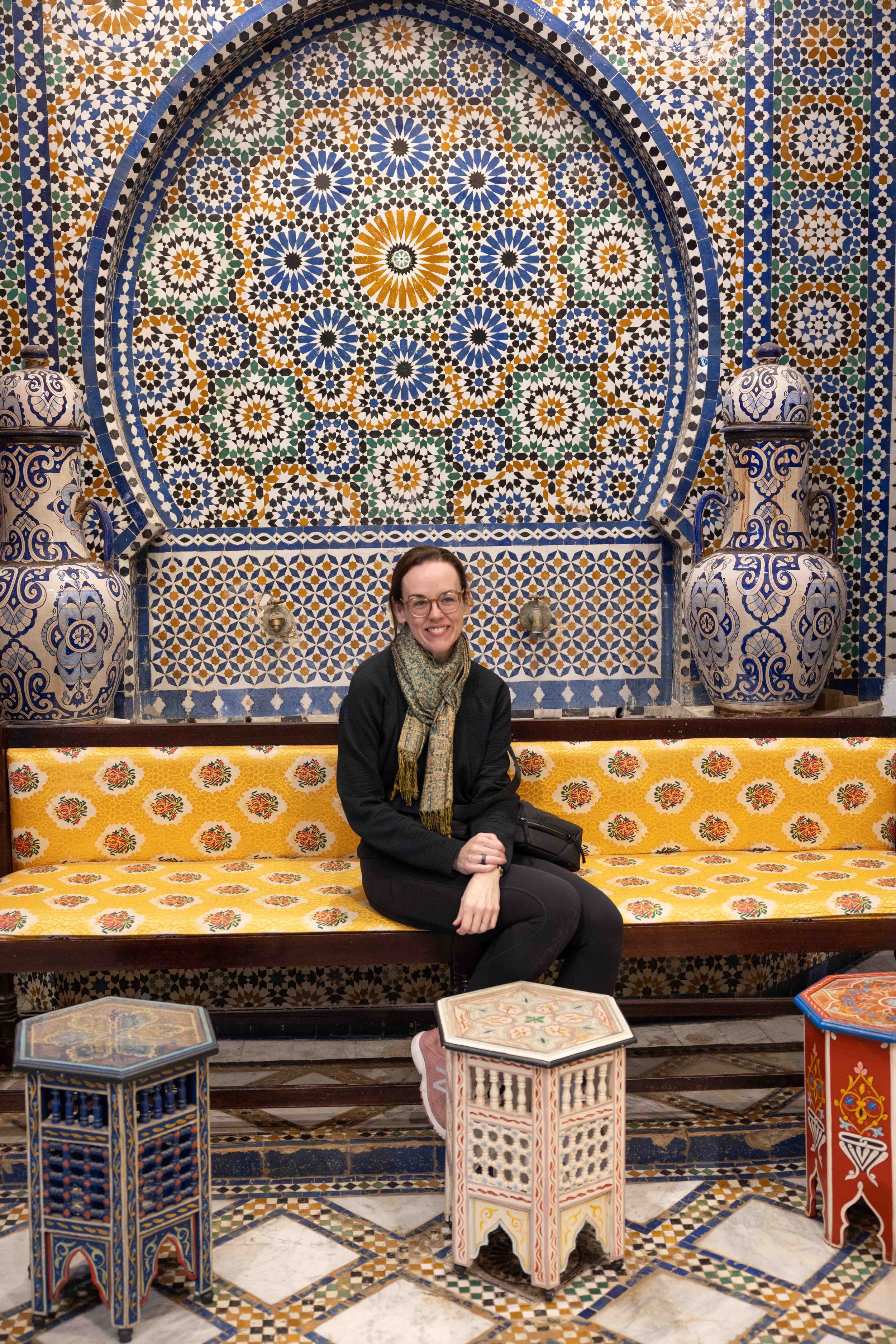
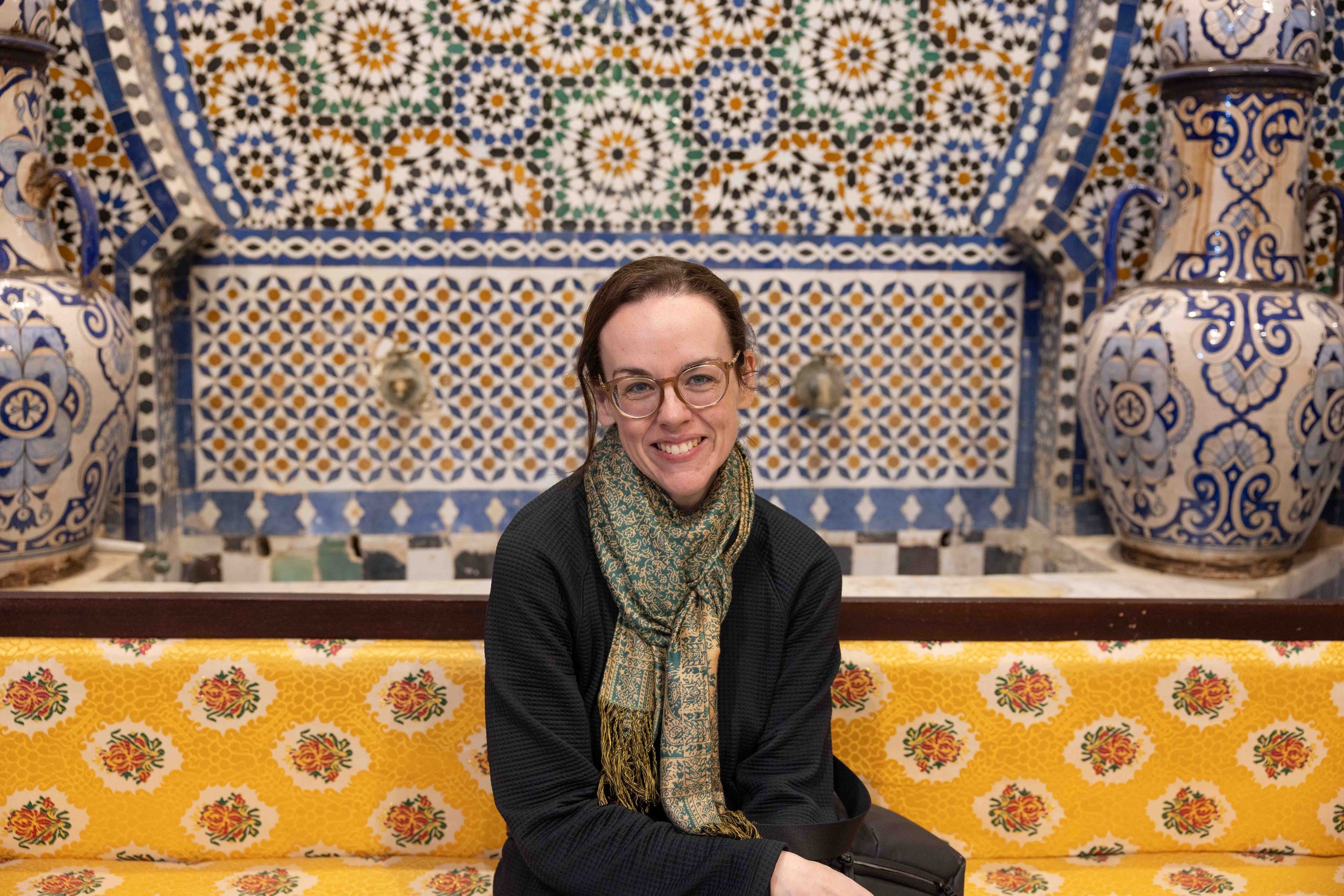
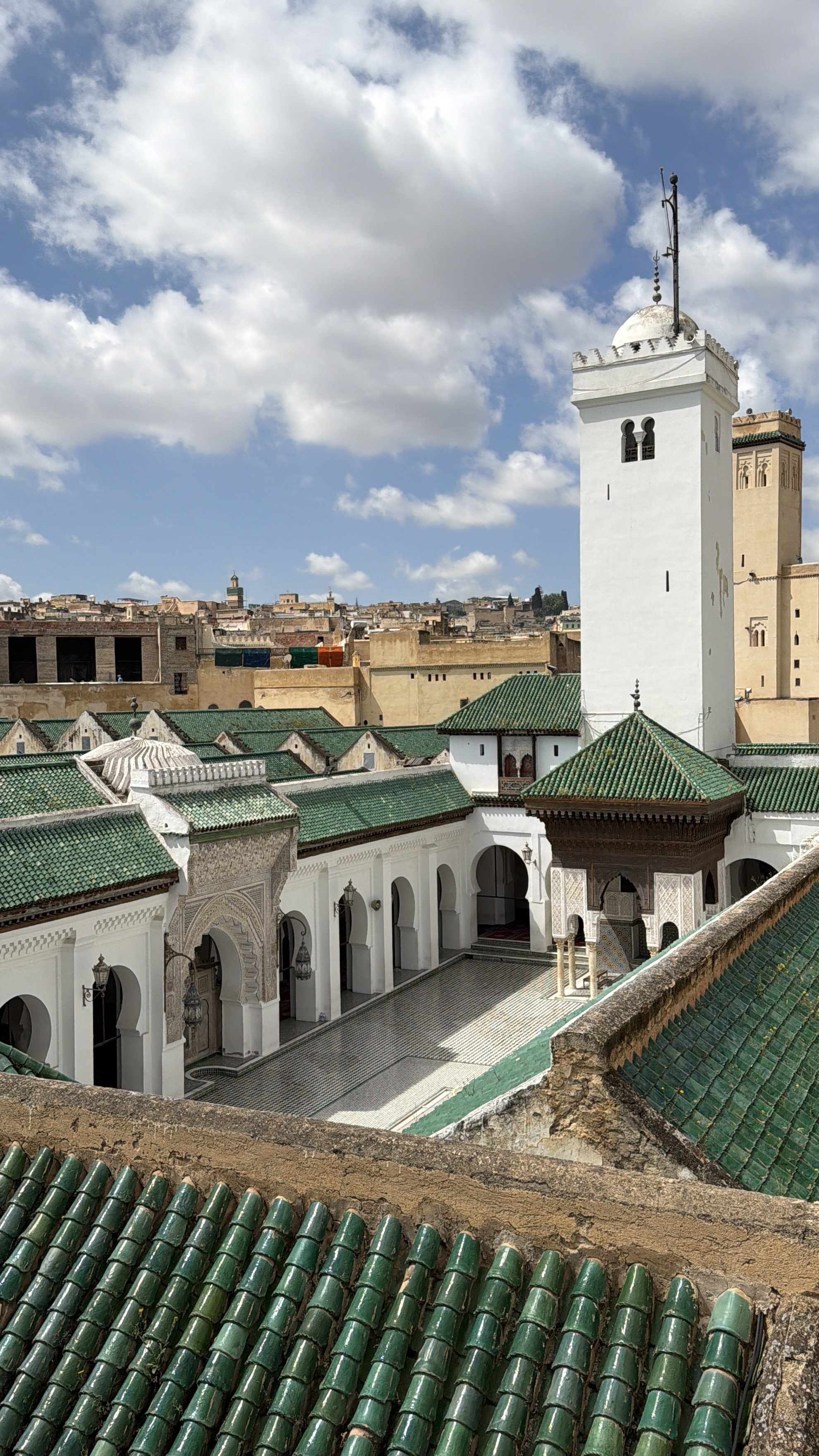
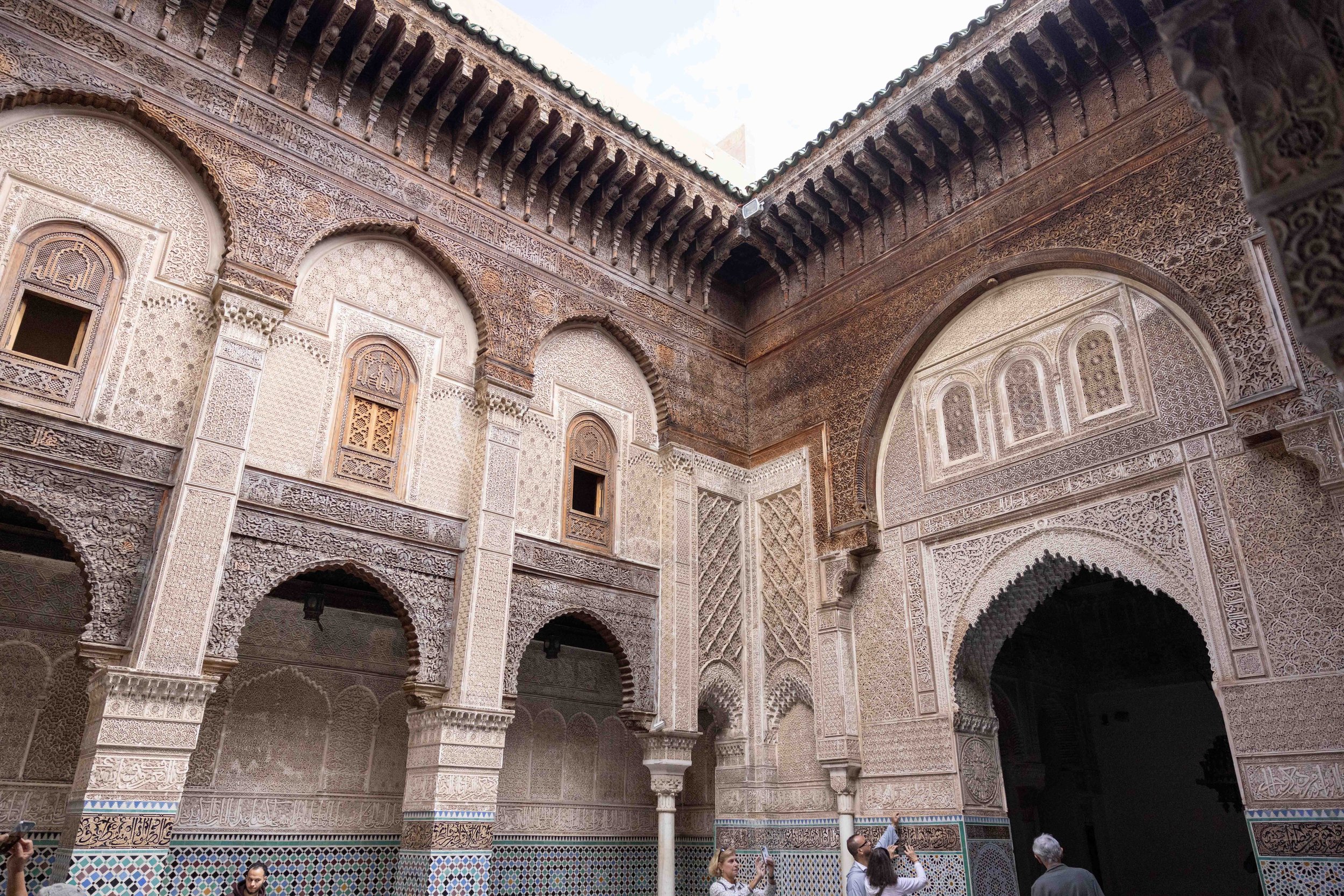
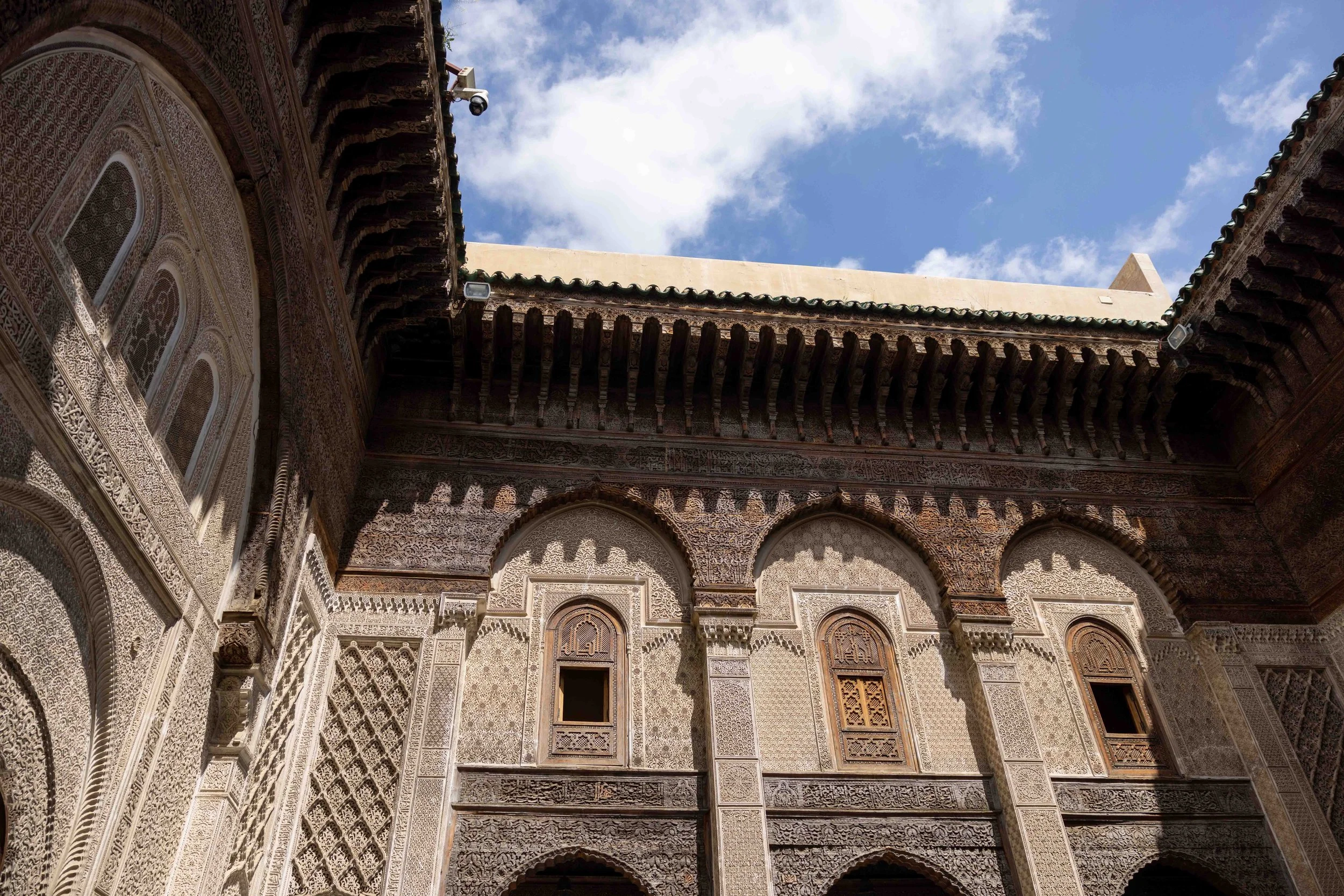
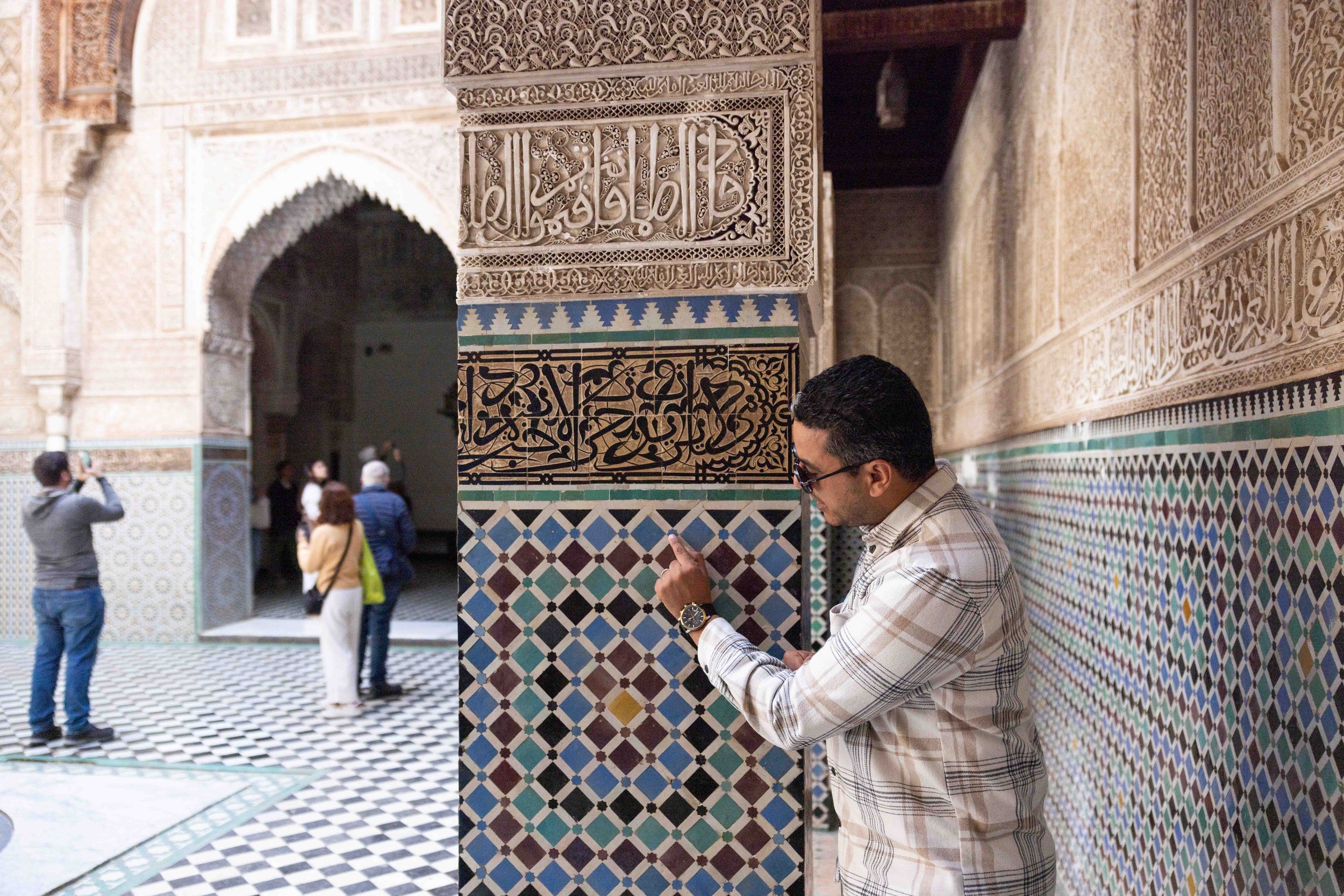
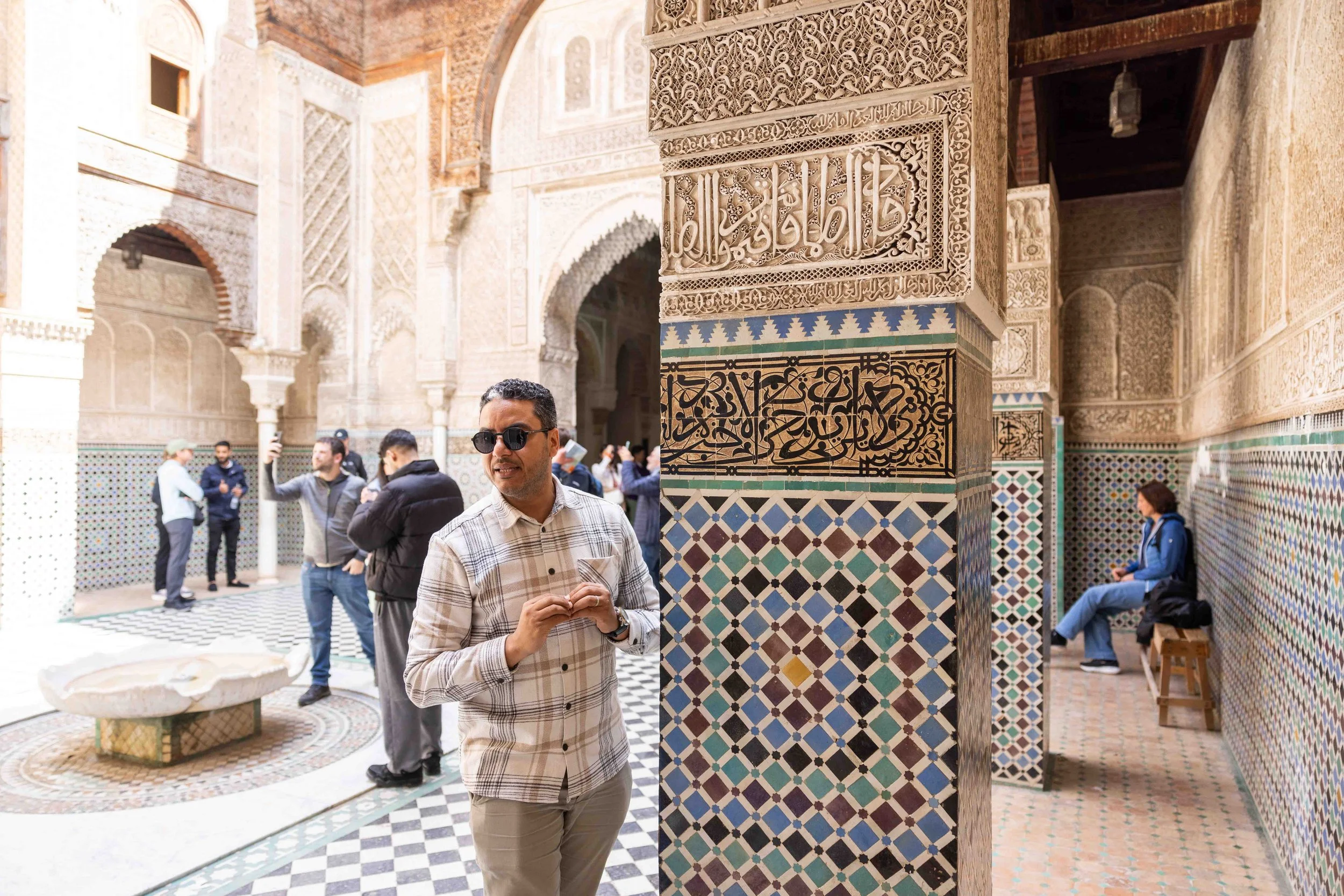
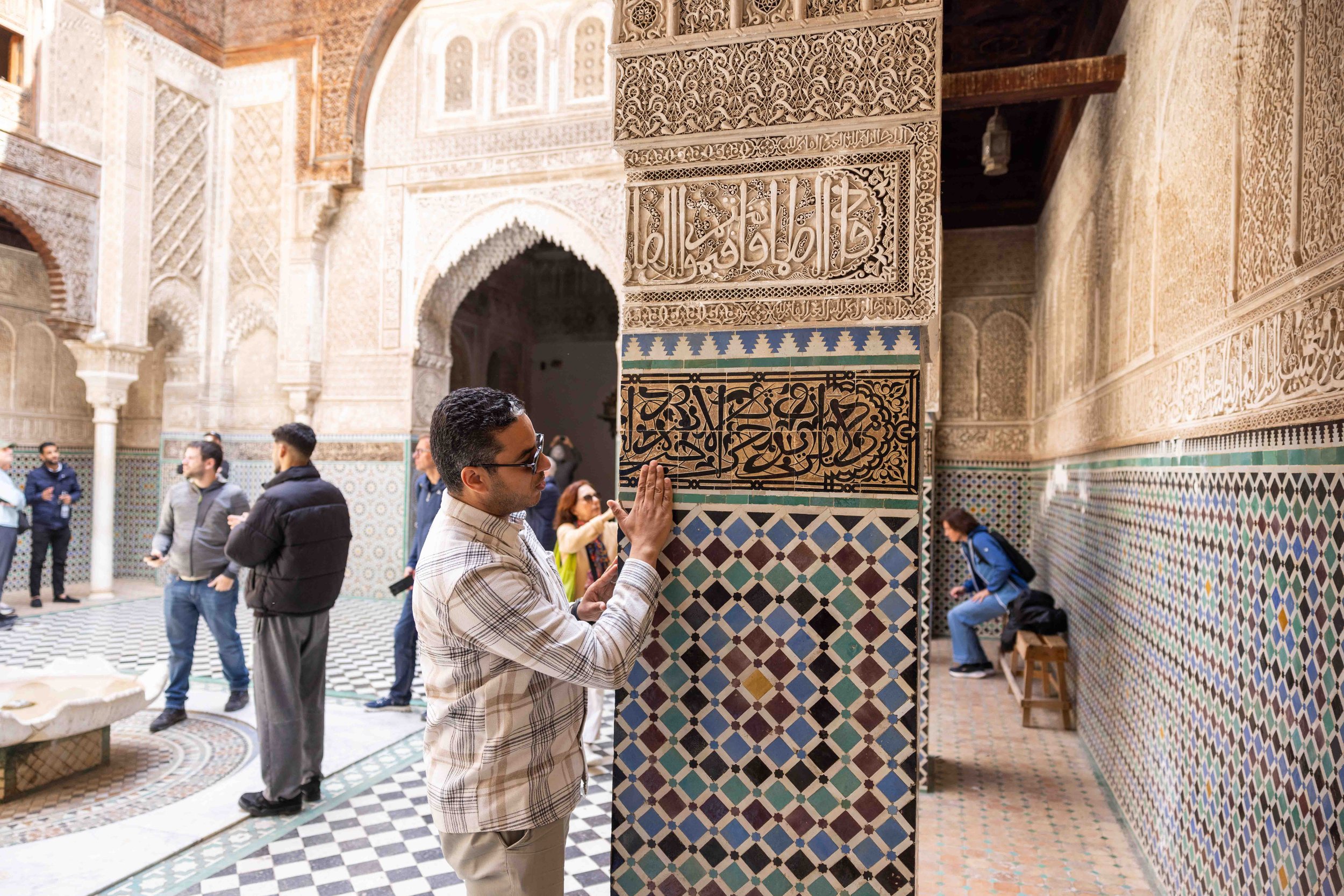
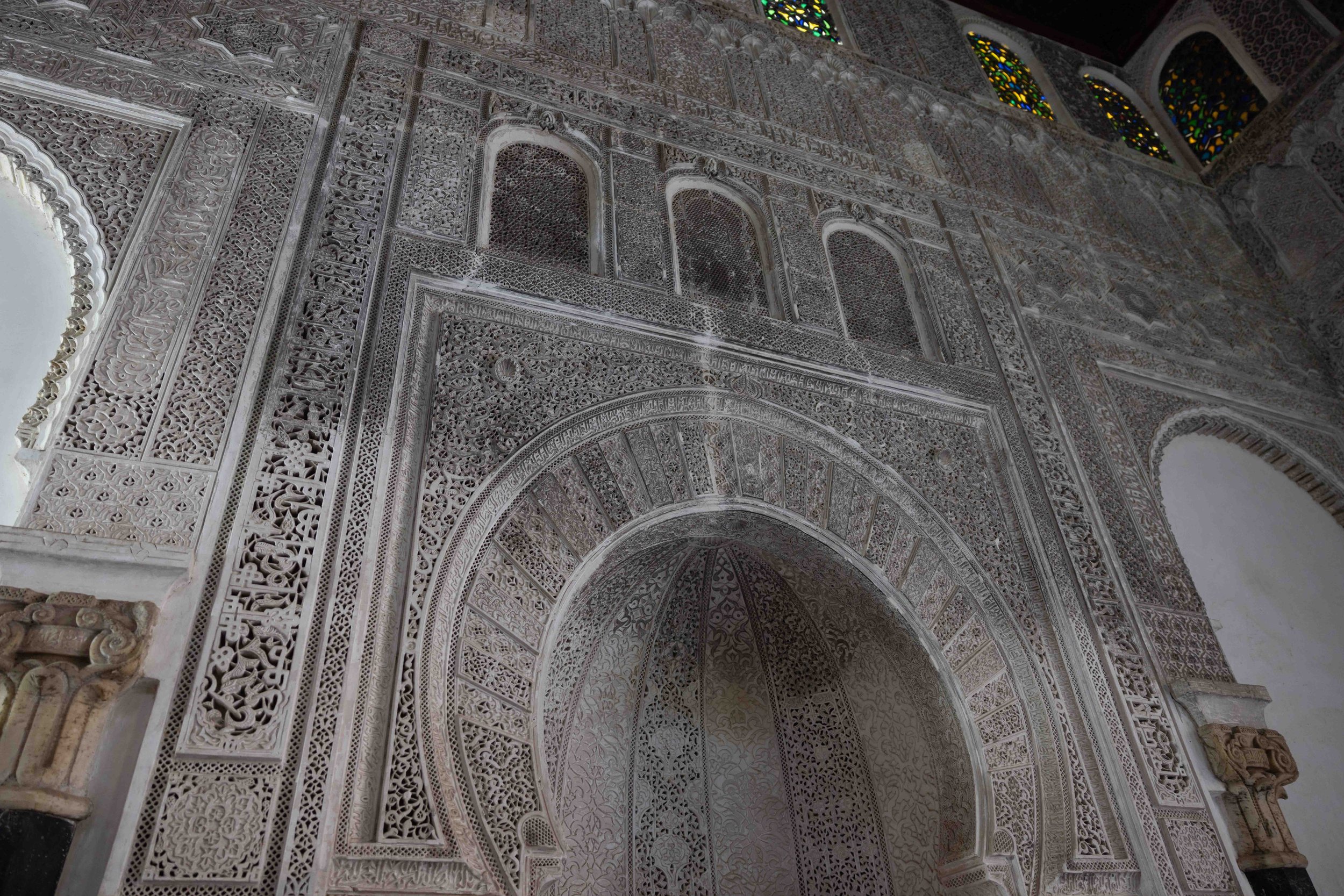
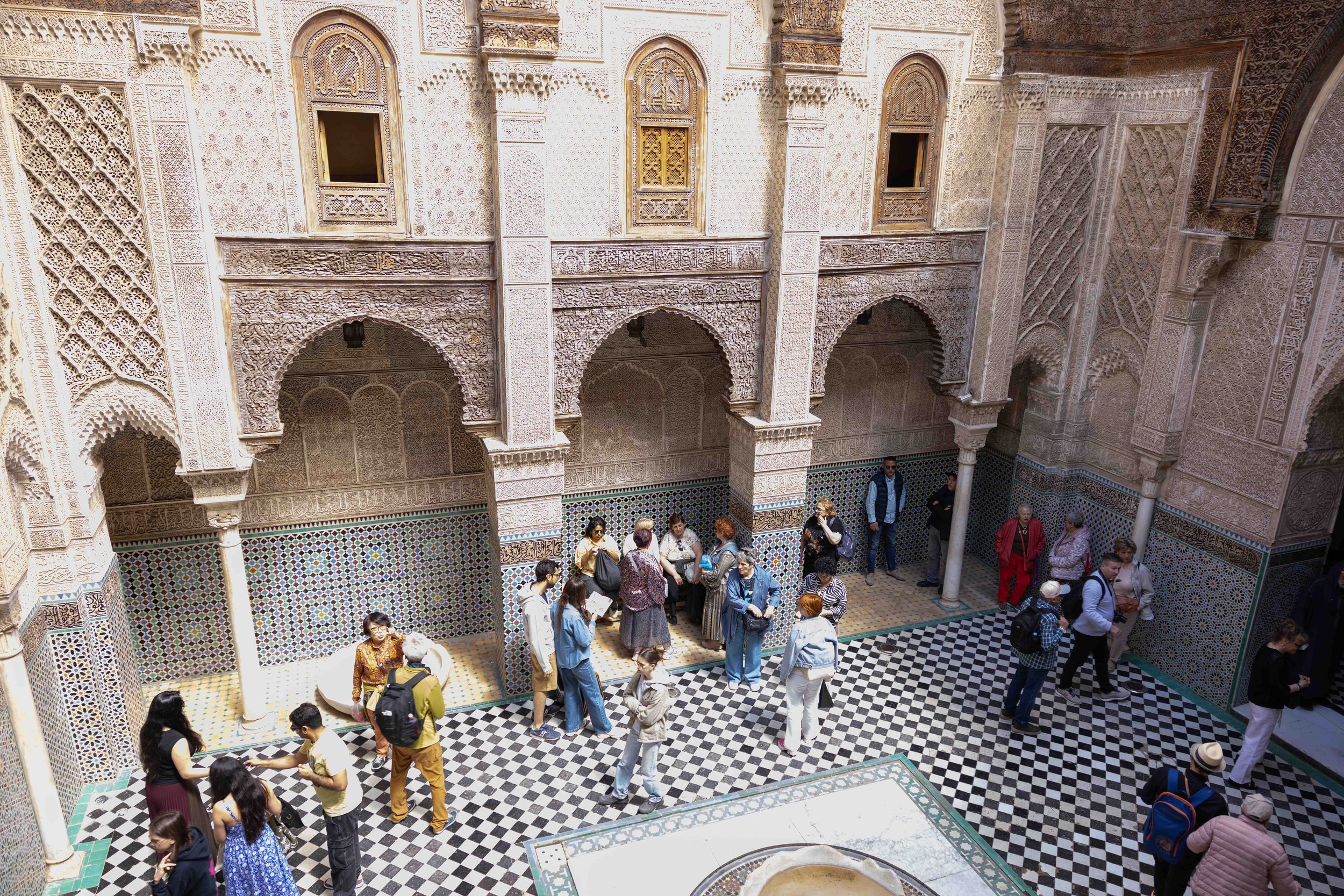
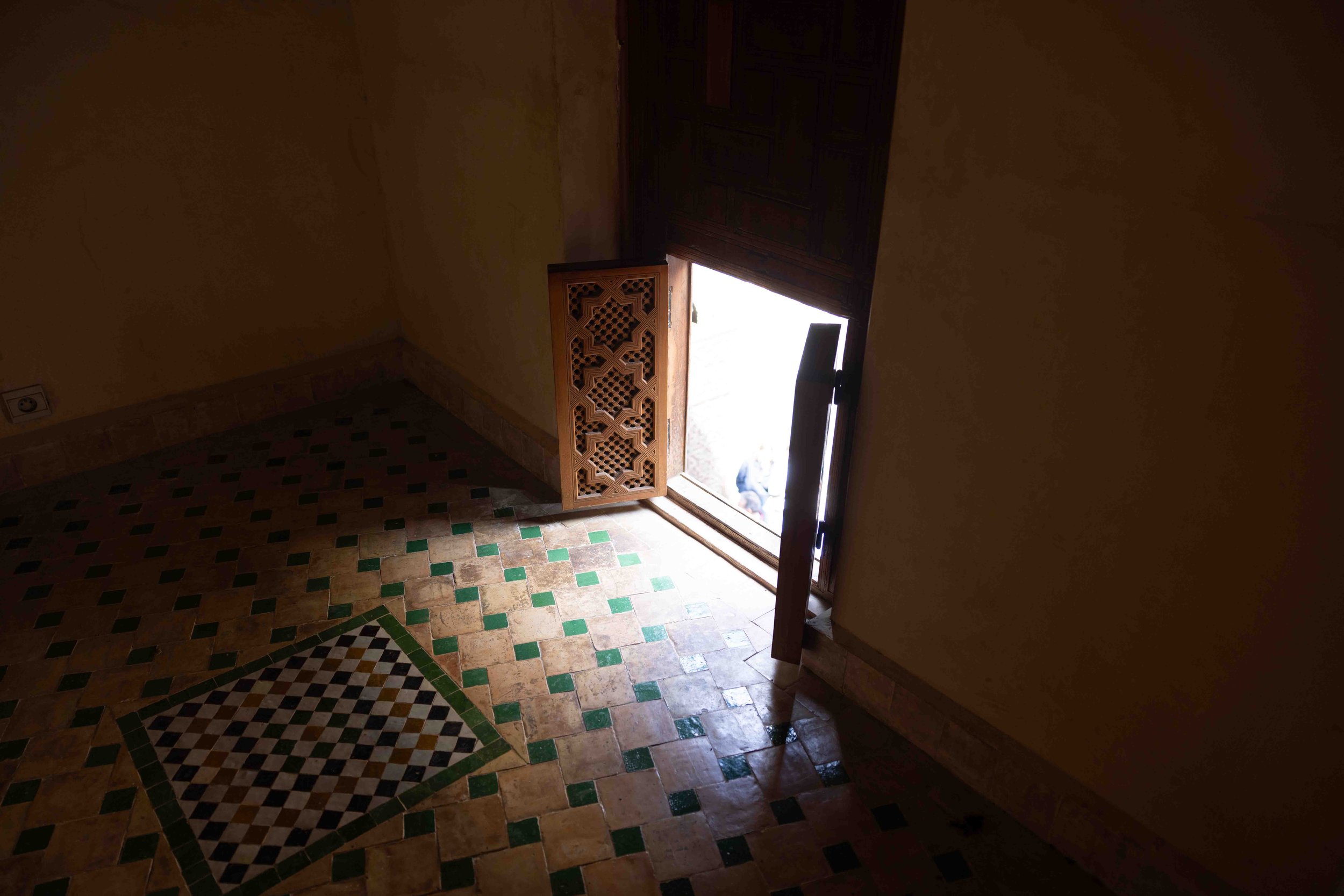
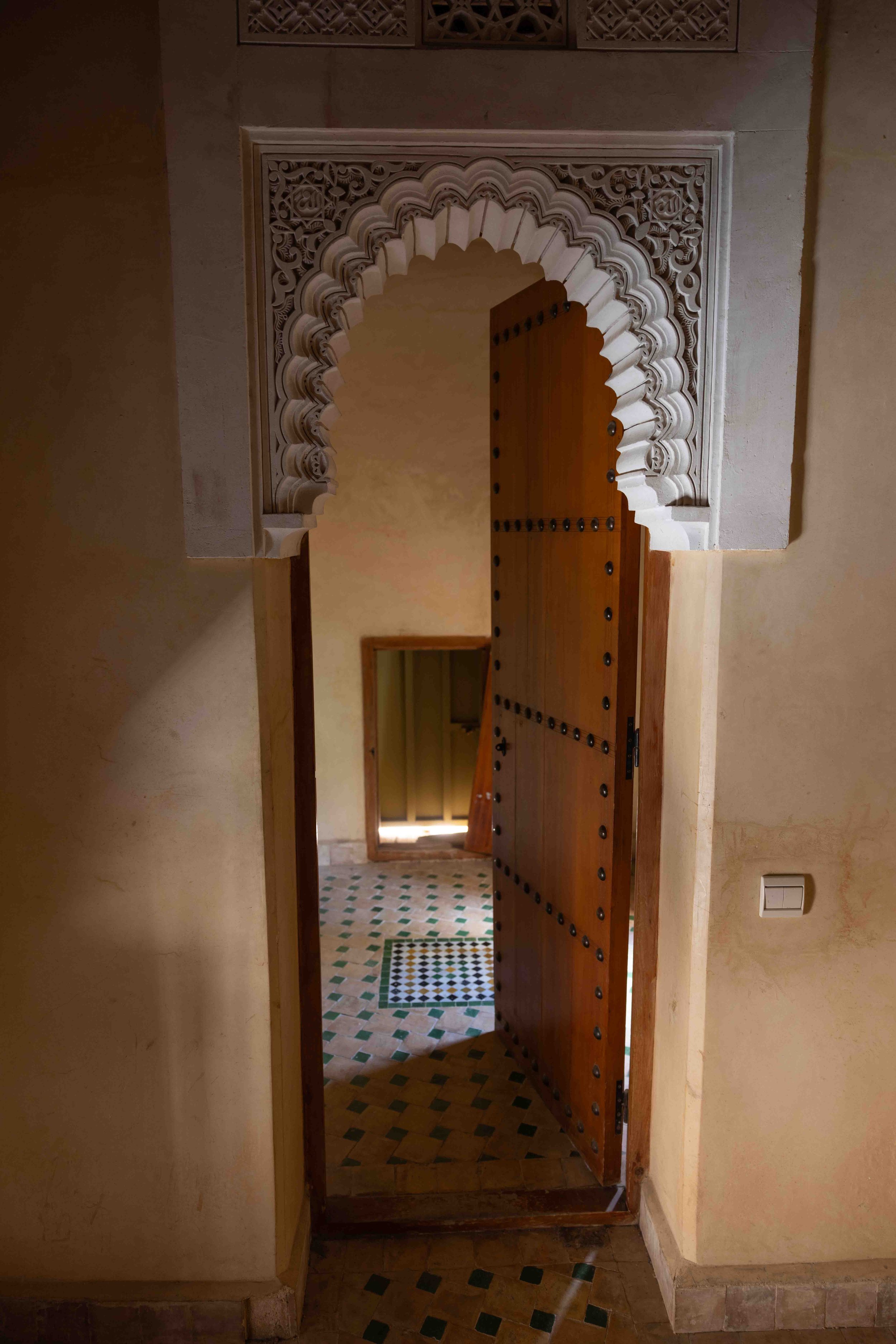
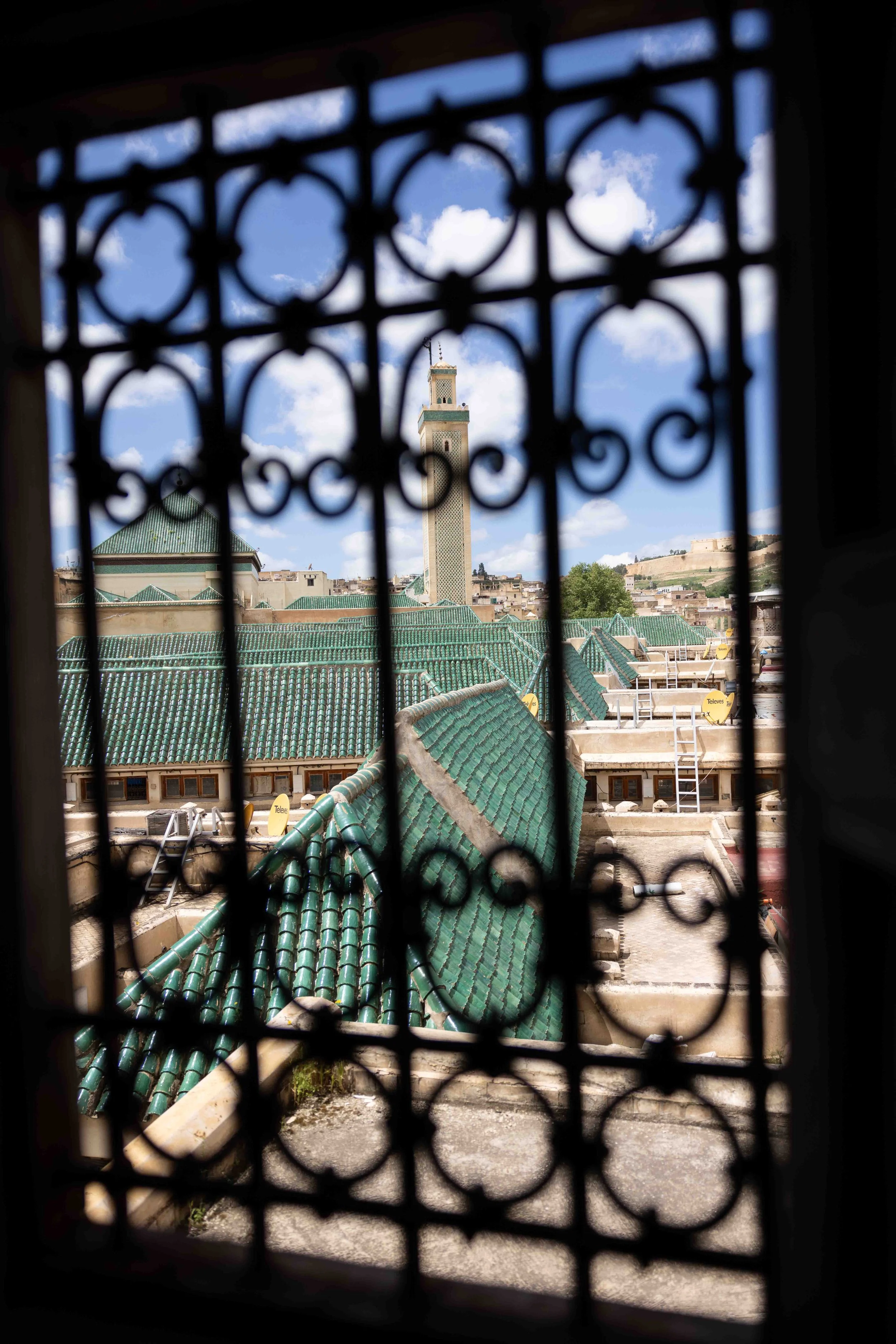
We then visited an old Madrasa/school where students would come and live. We toured through the school and viewed the intricate tiles and wood and ceramic carvings. It was breathtaking. Our guide Noureddine provided so much information and context regarding student life, as well as the beautiful design and architectural features of the building.
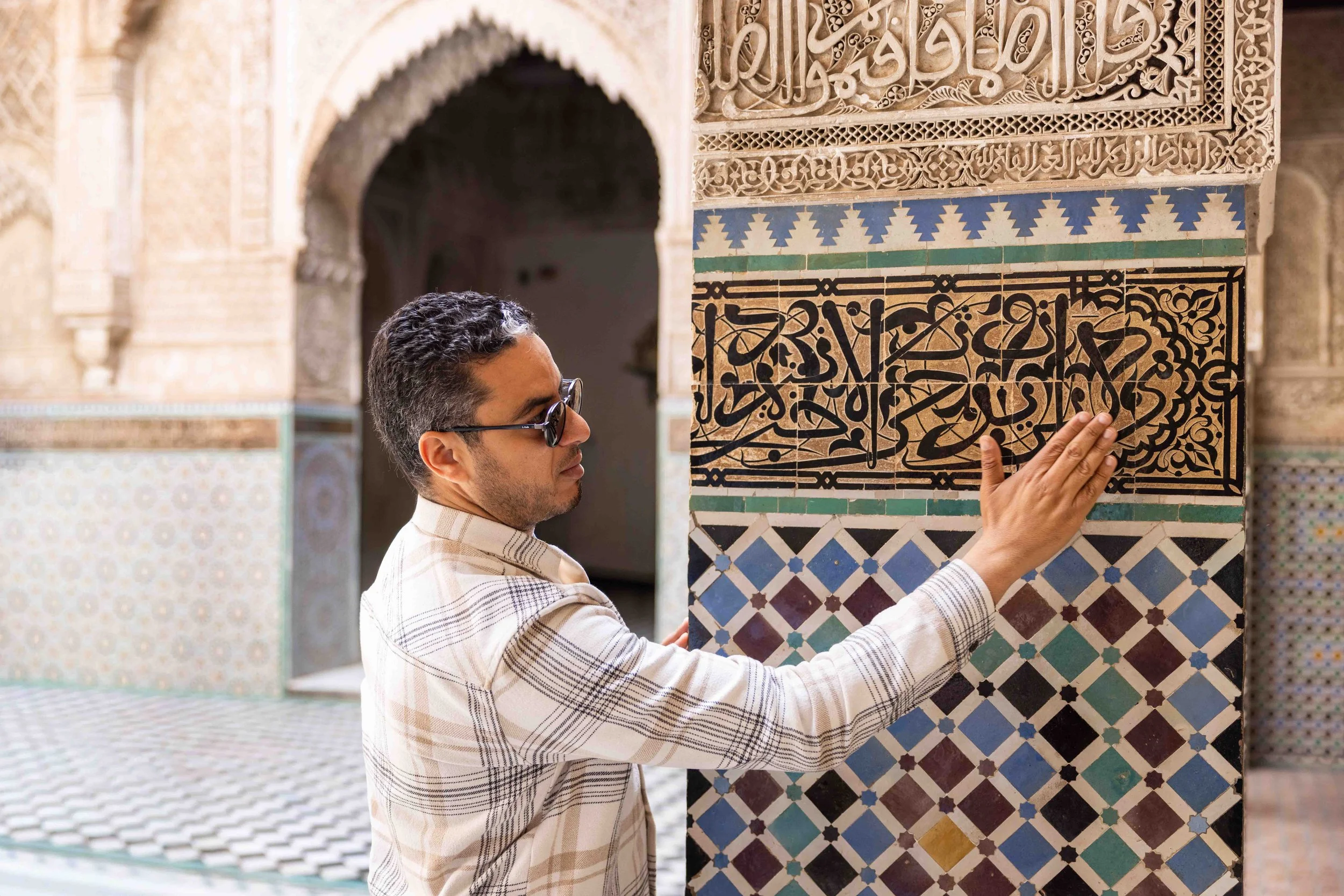
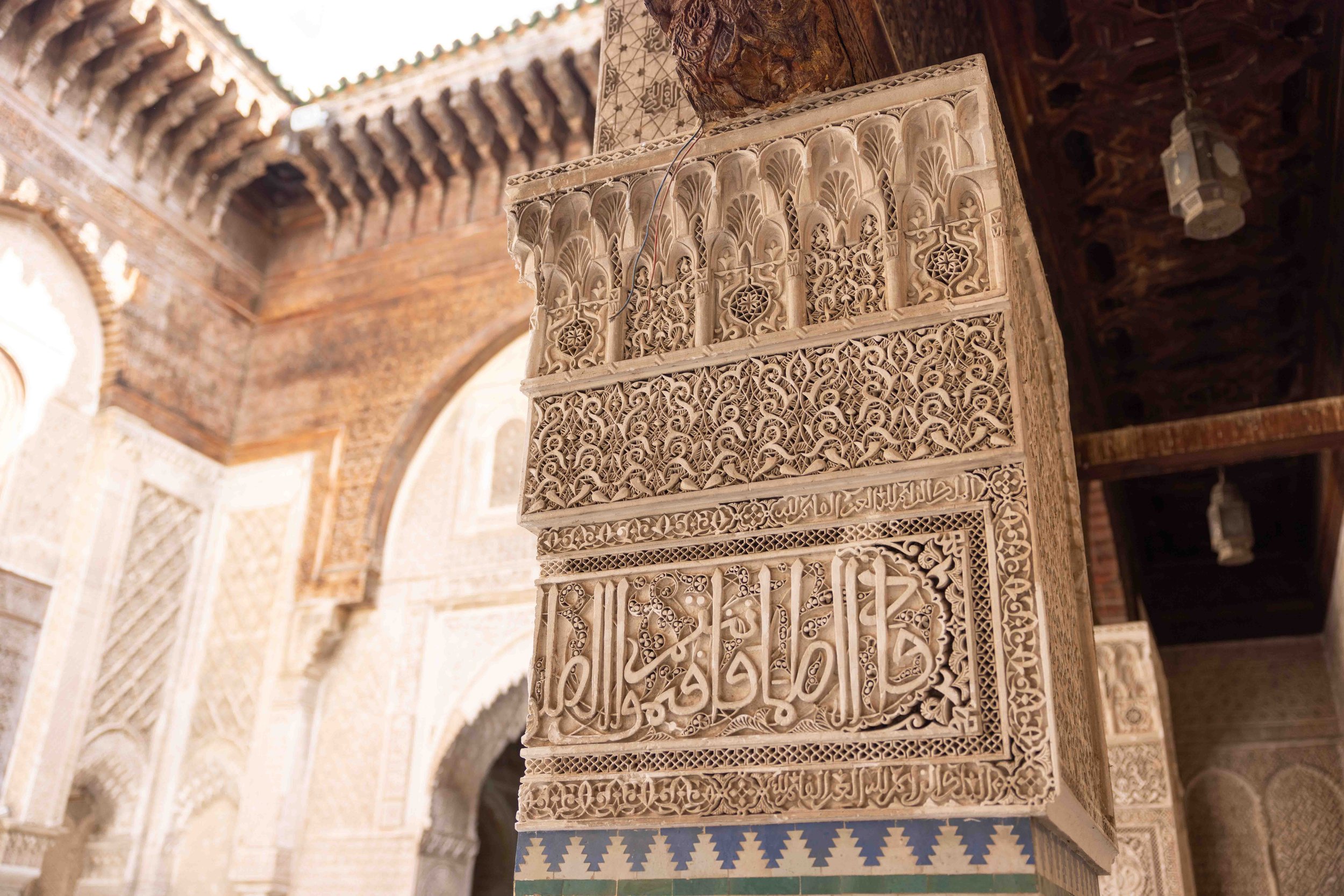
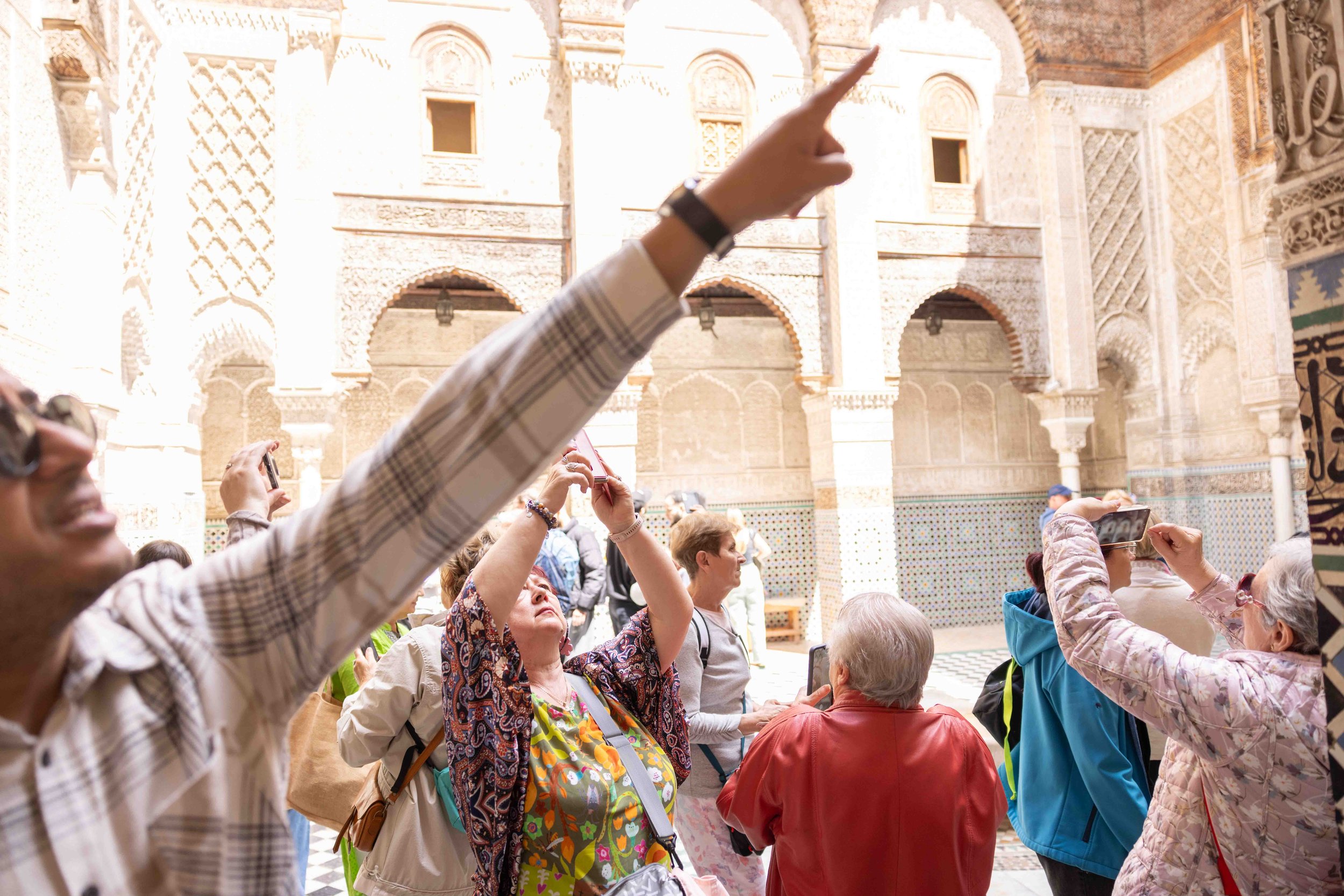
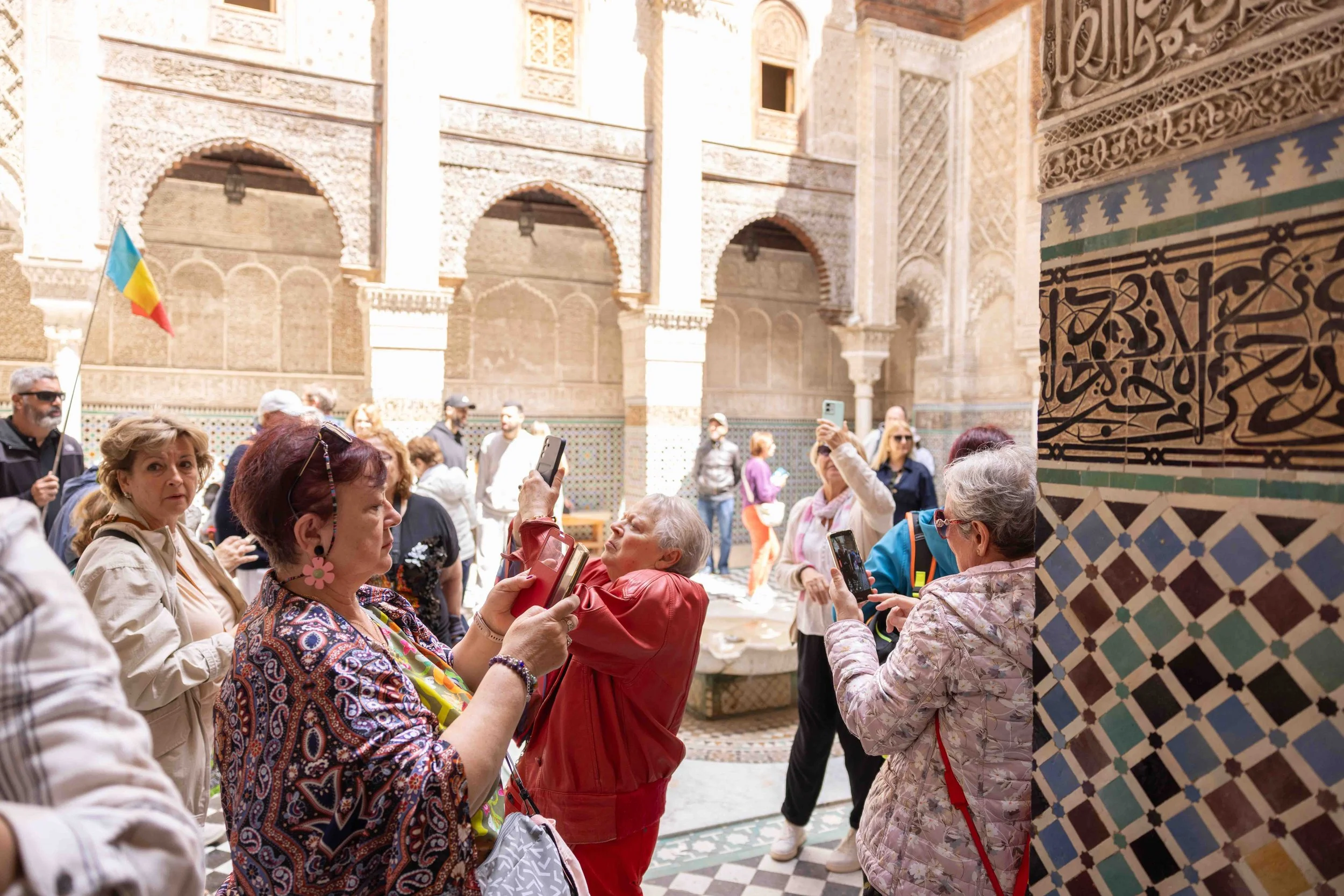
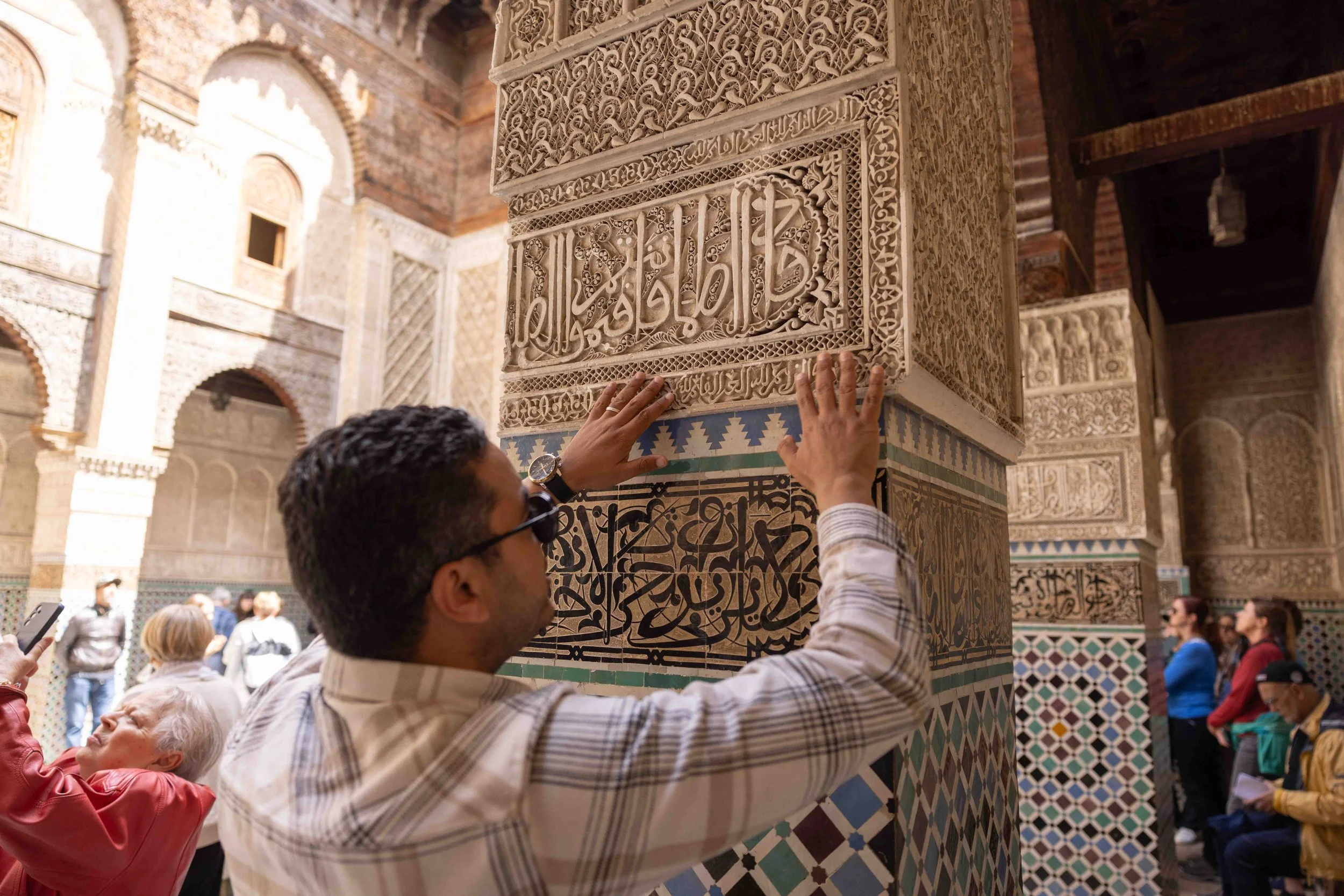
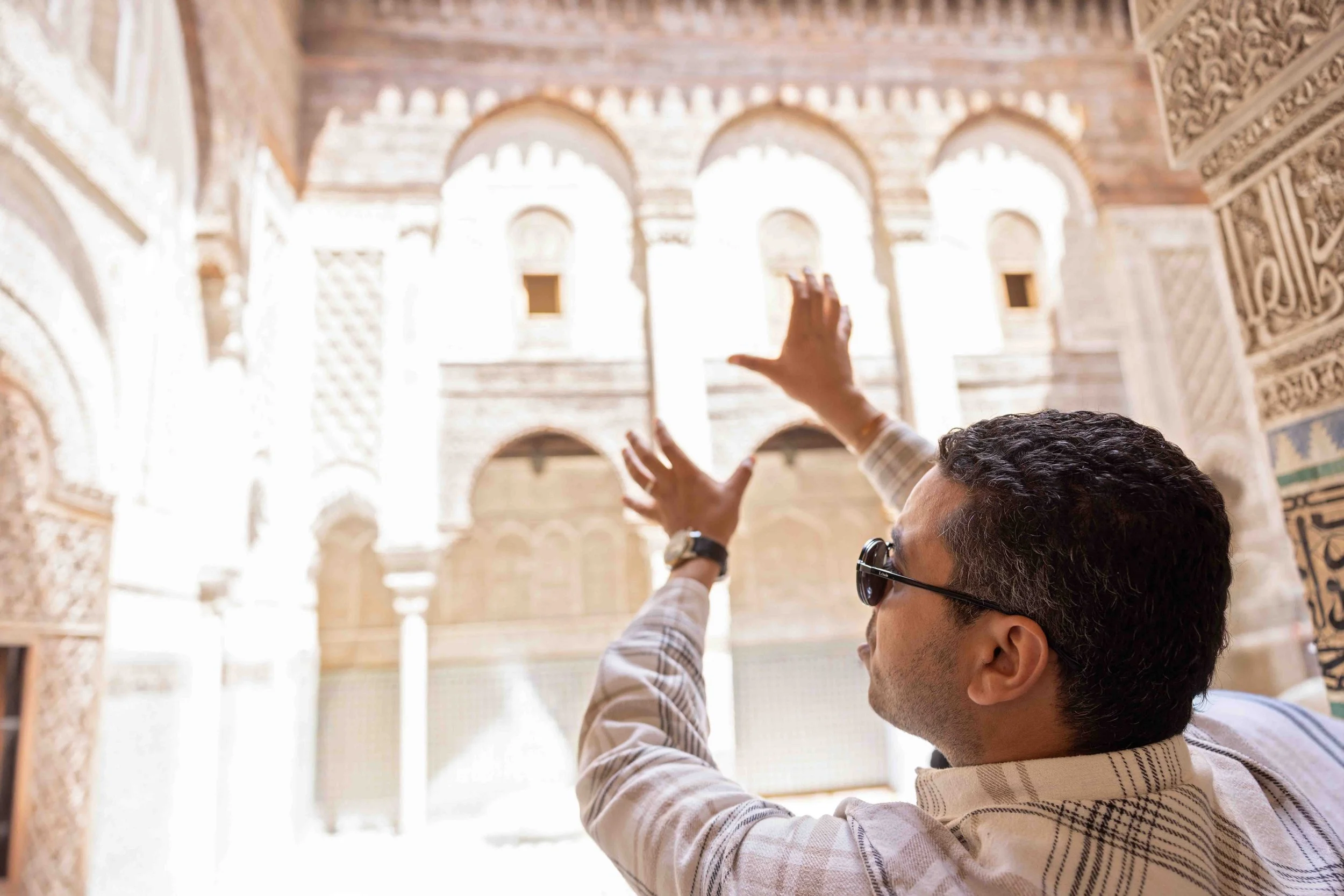
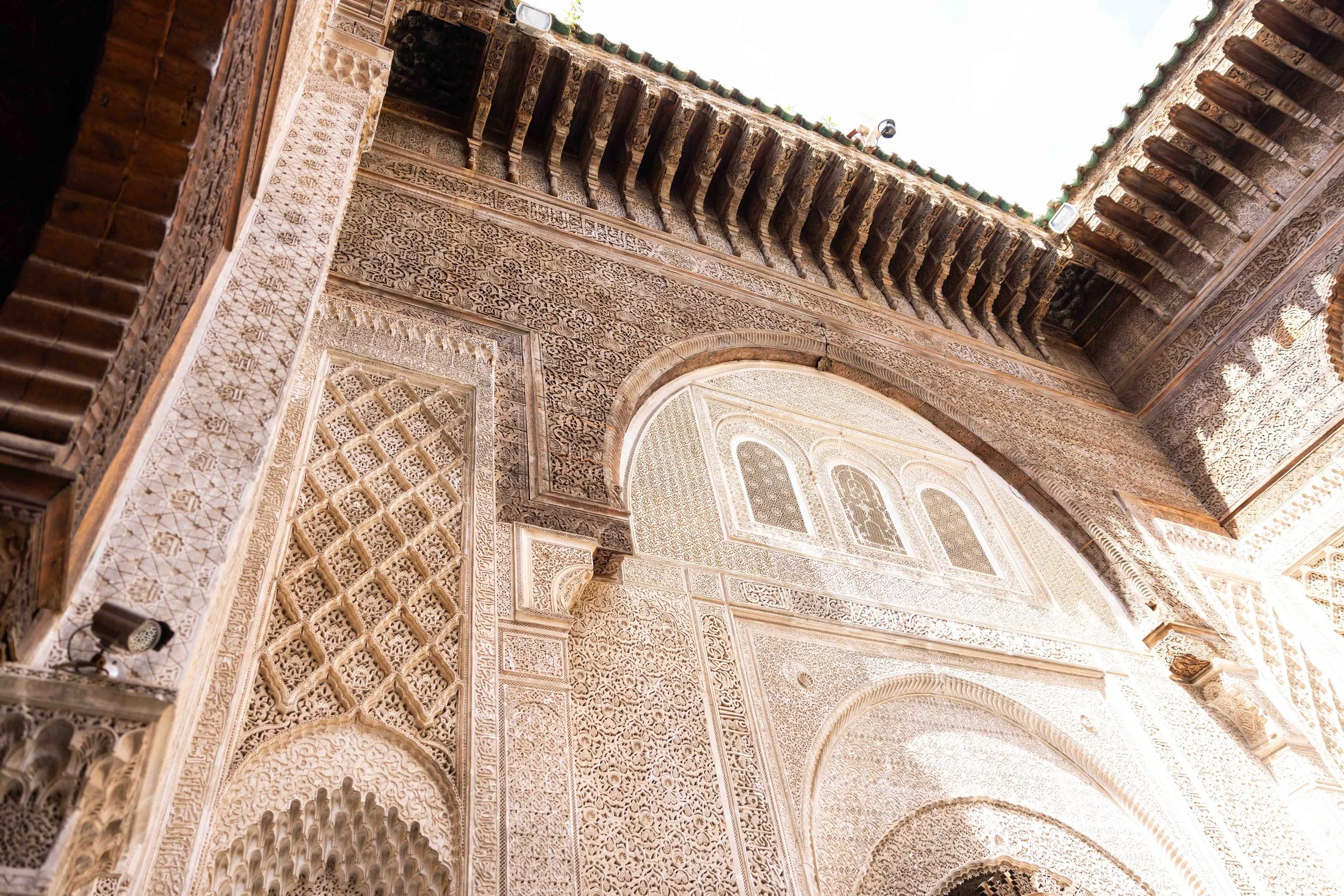
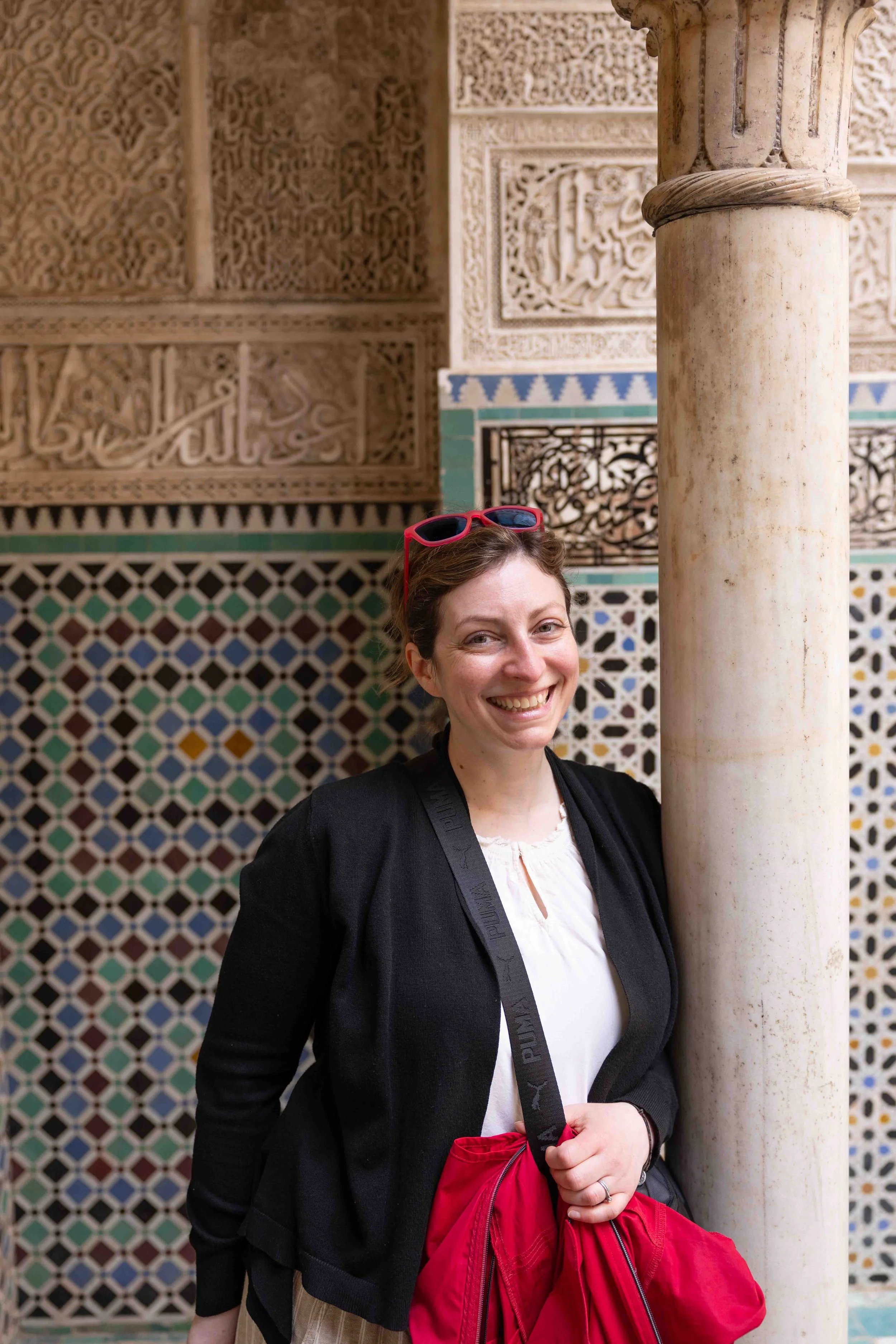
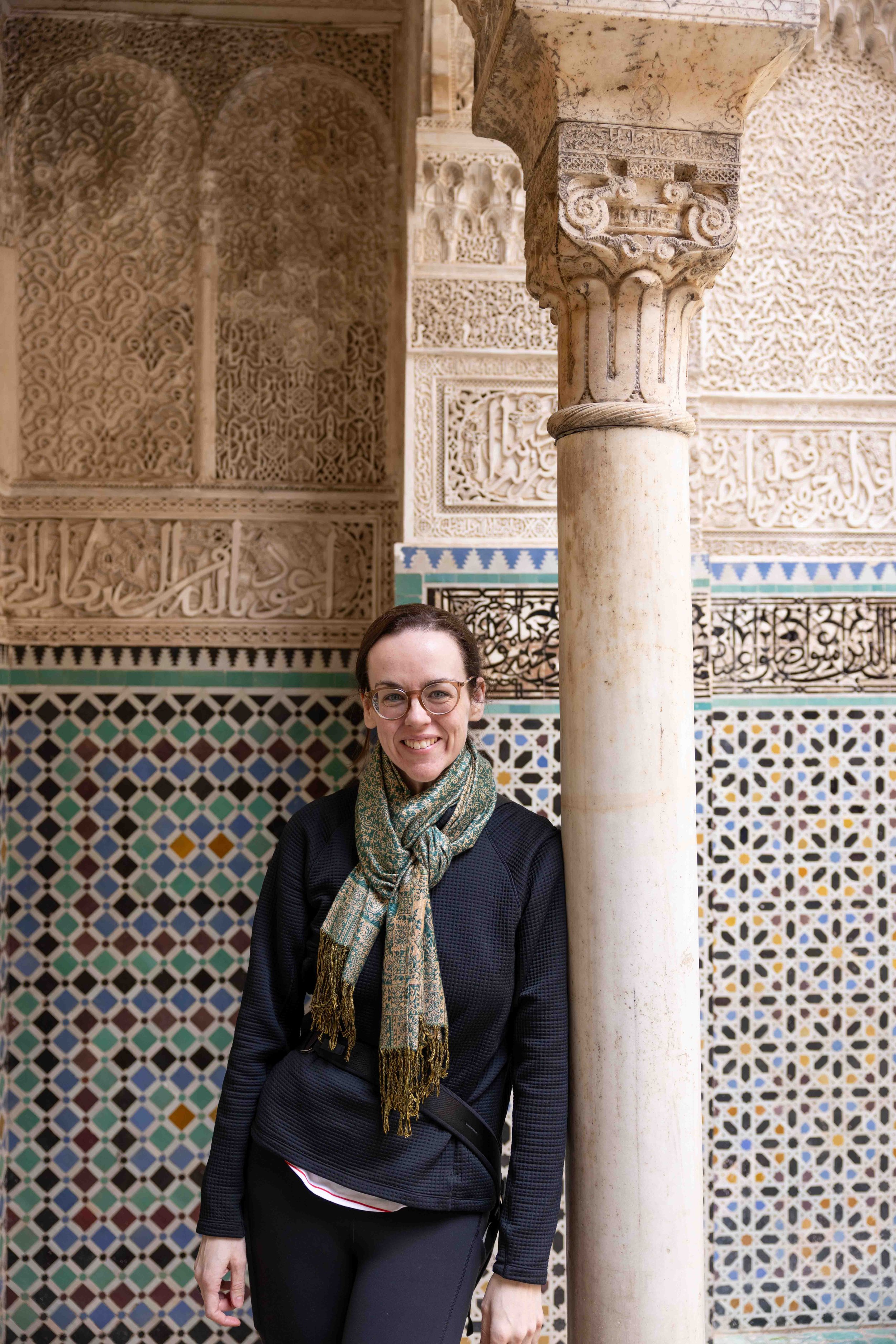
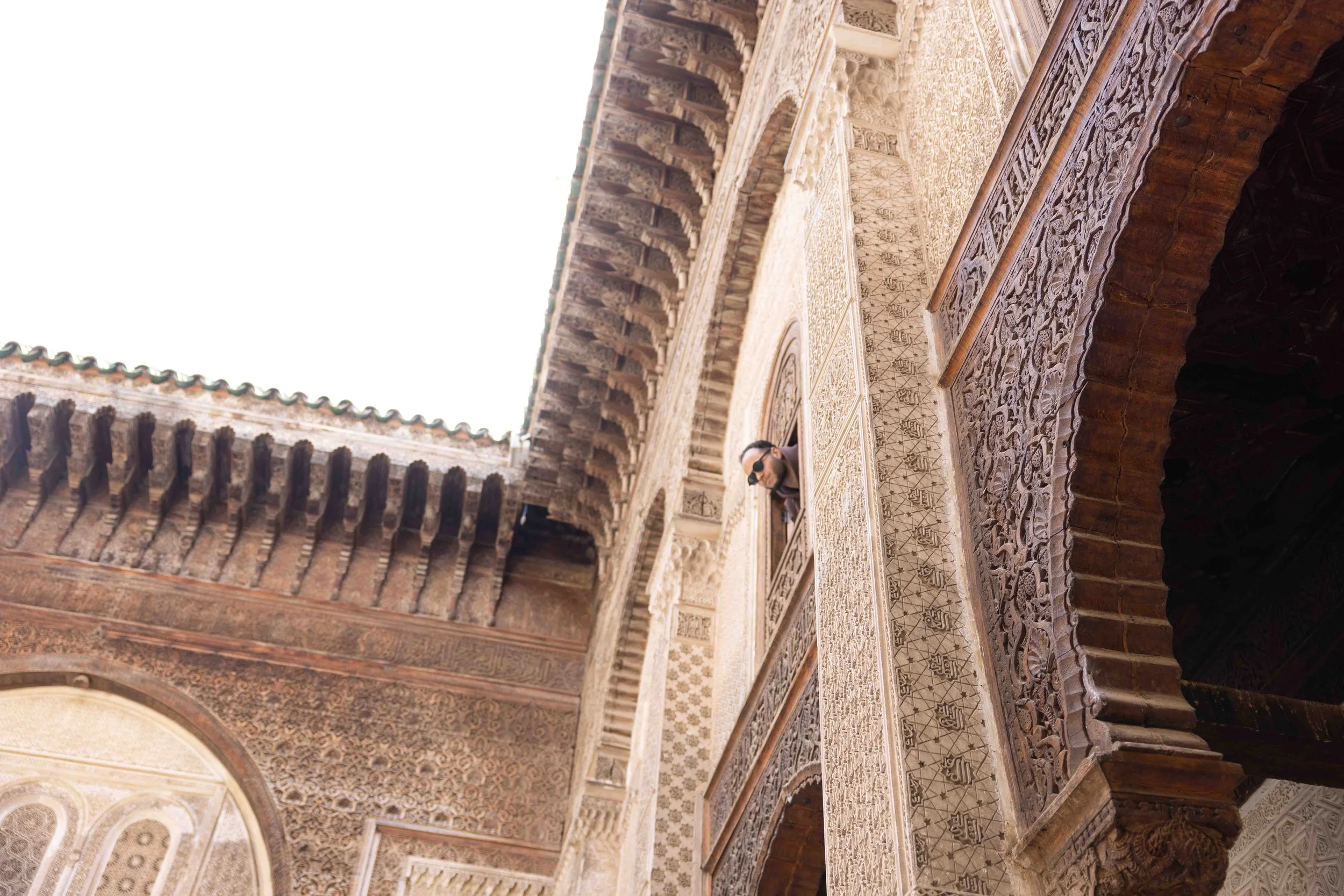
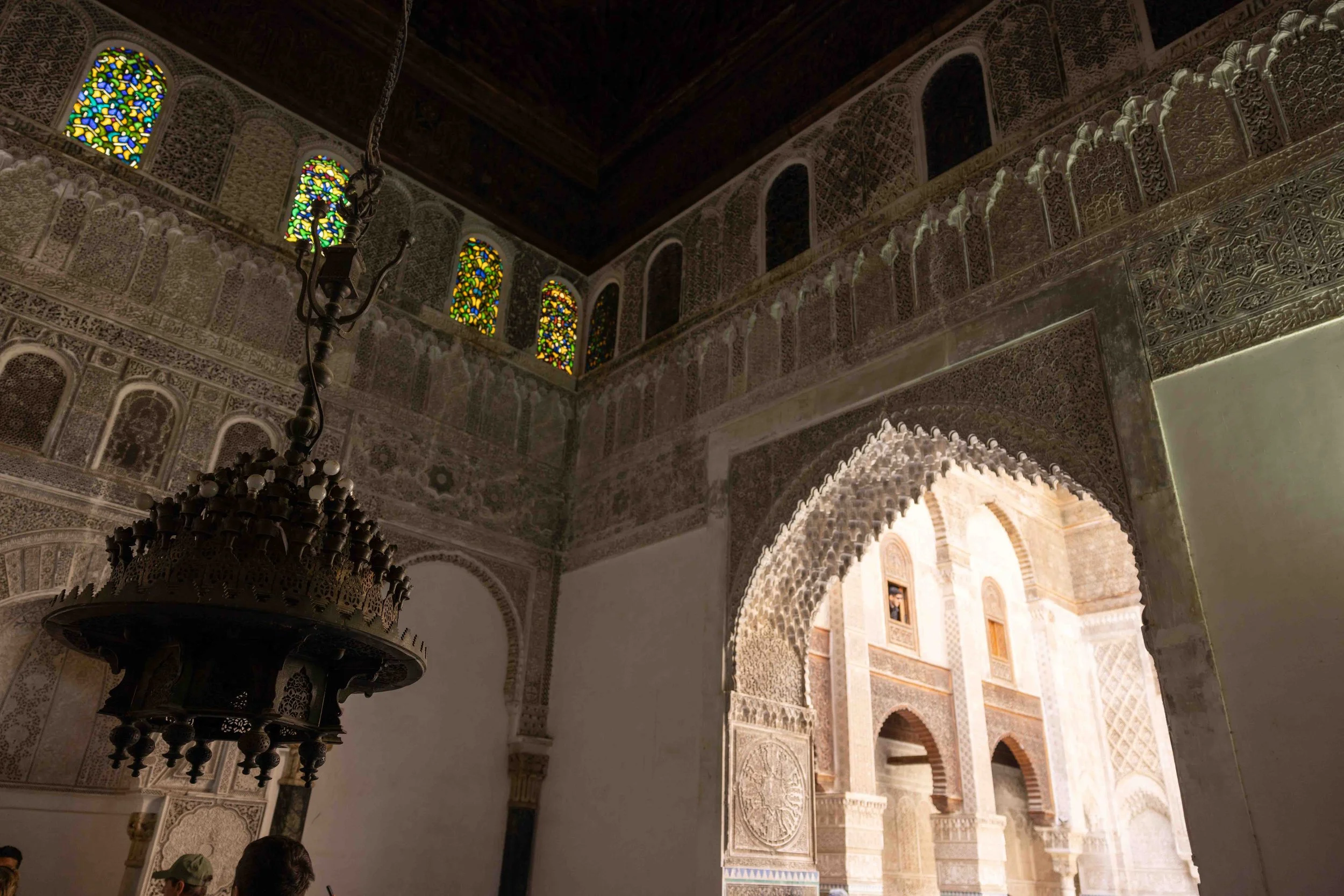
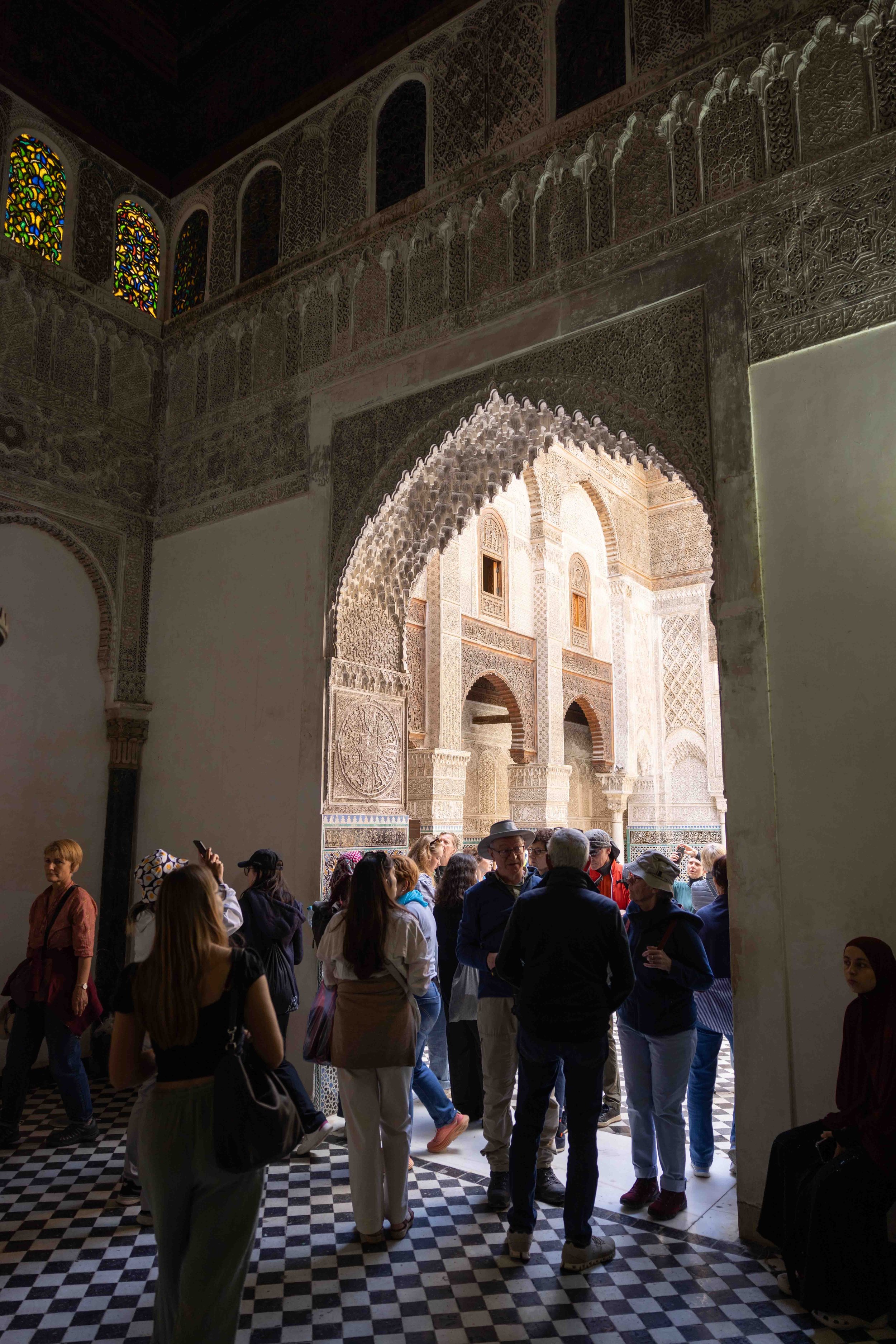
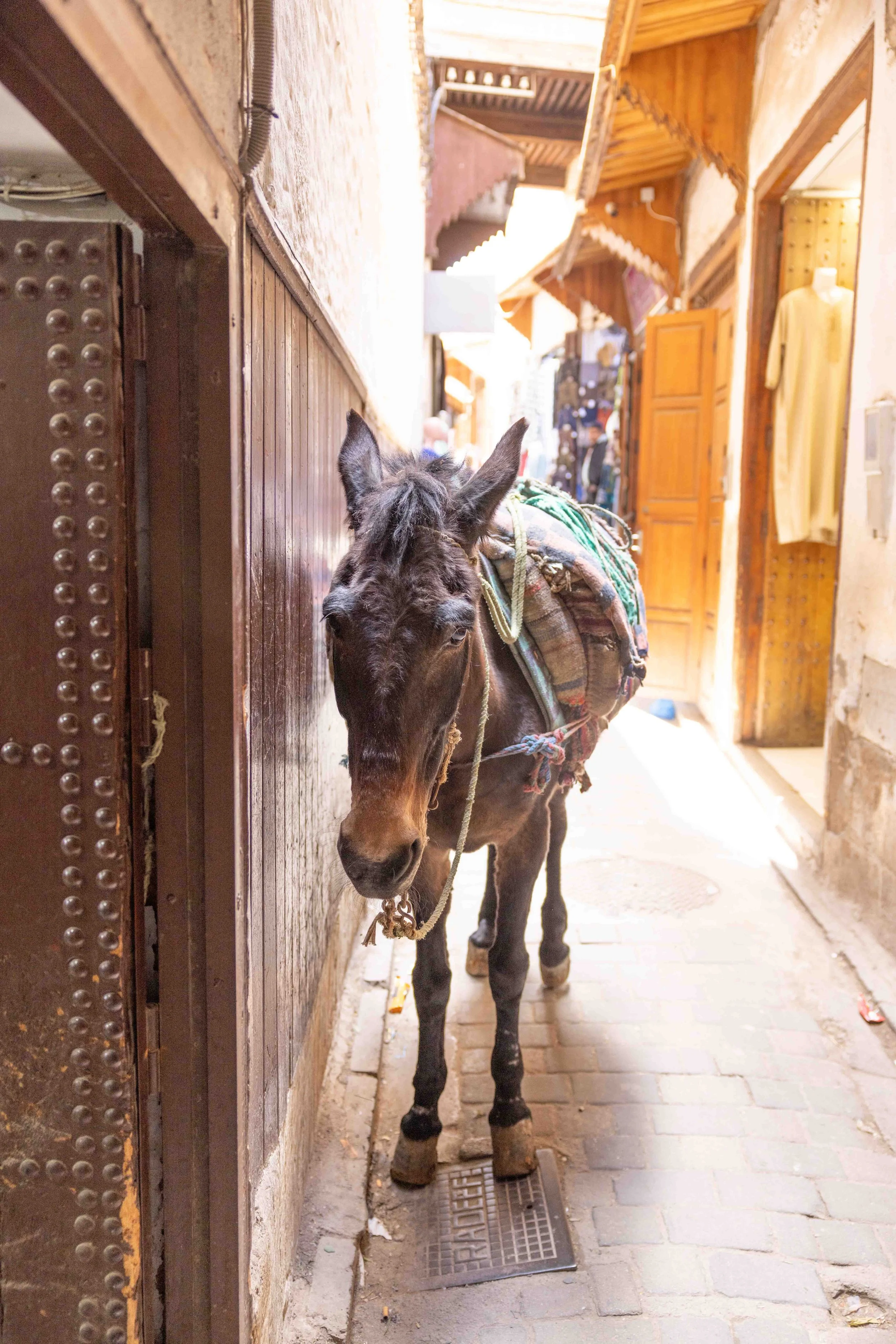
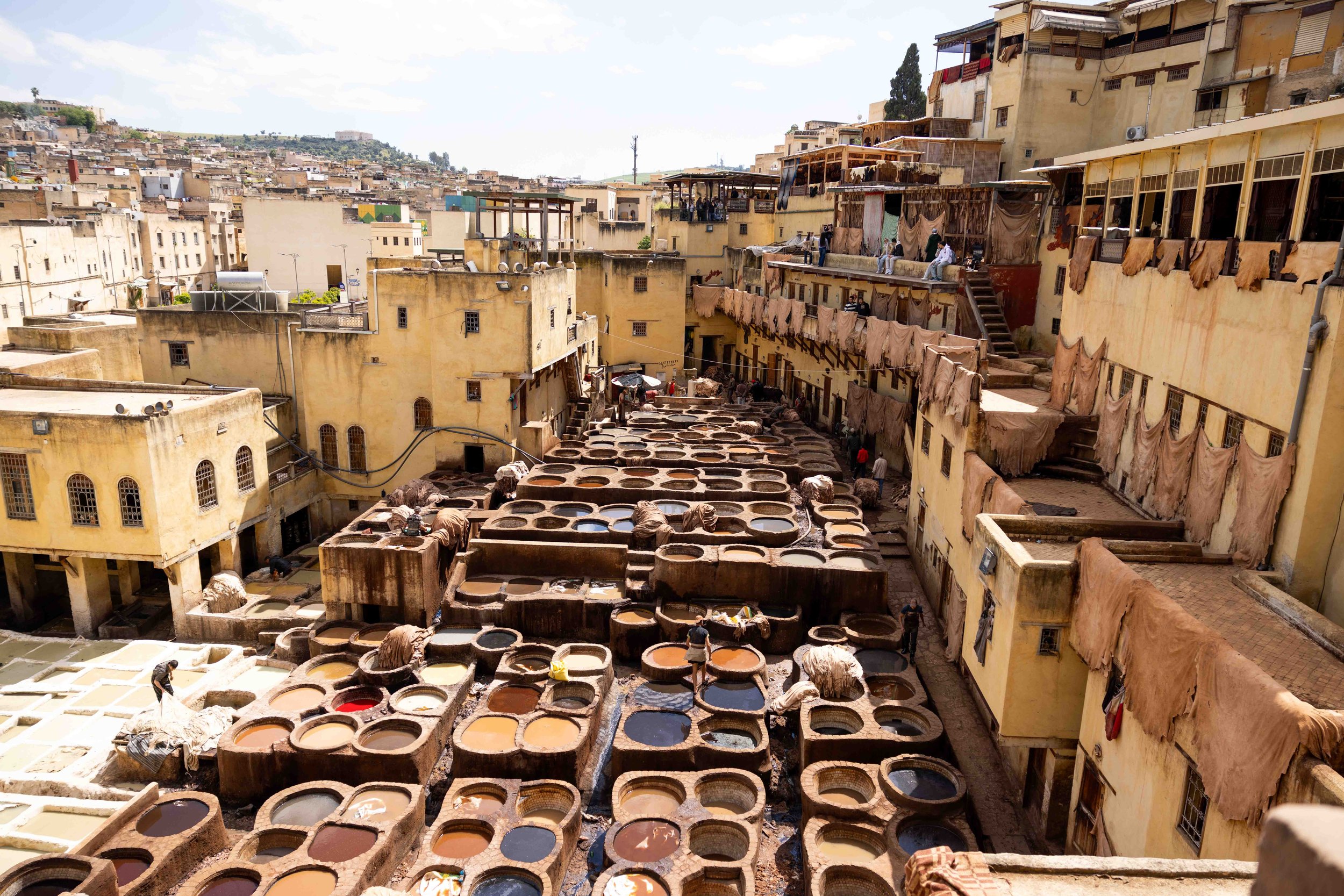
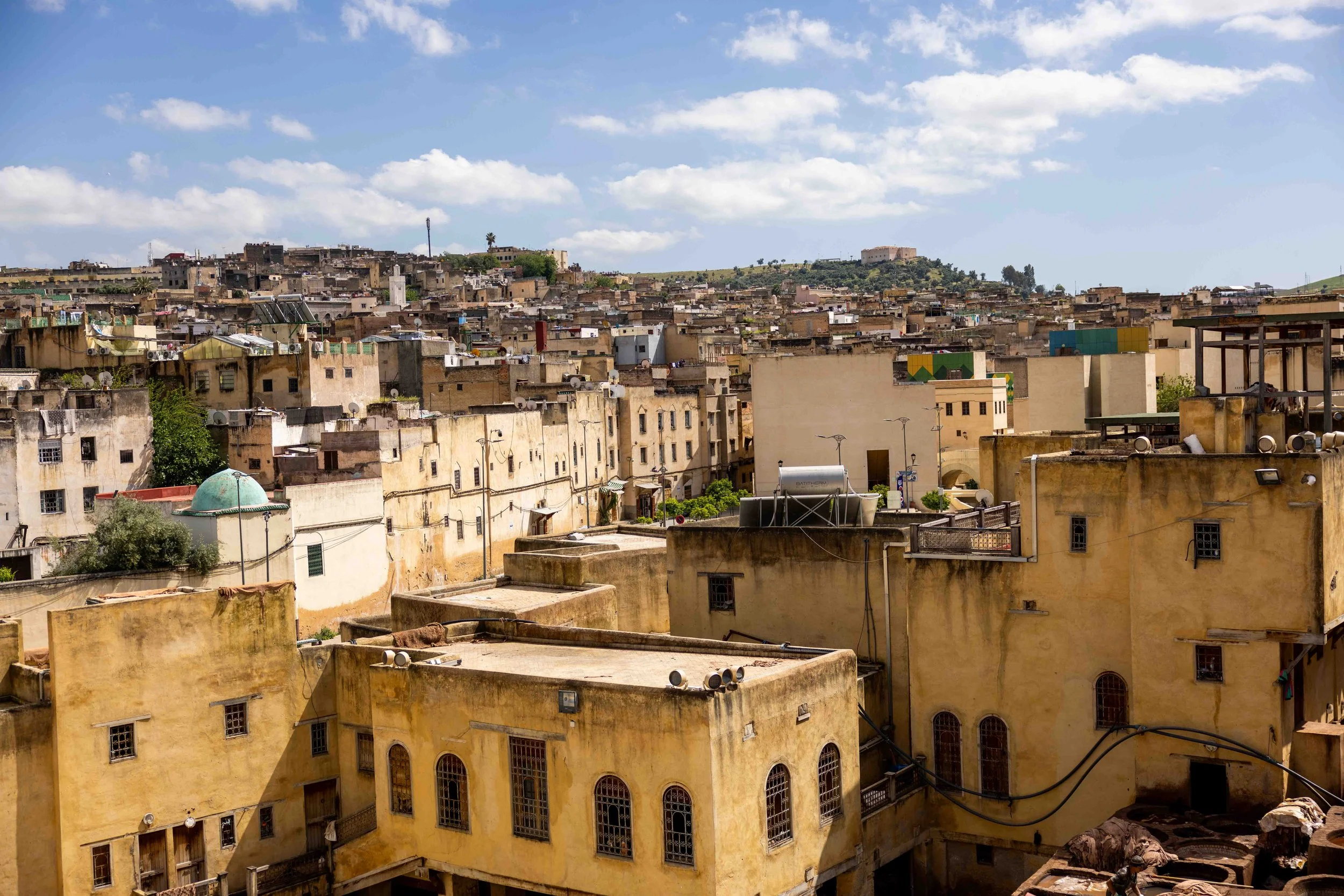
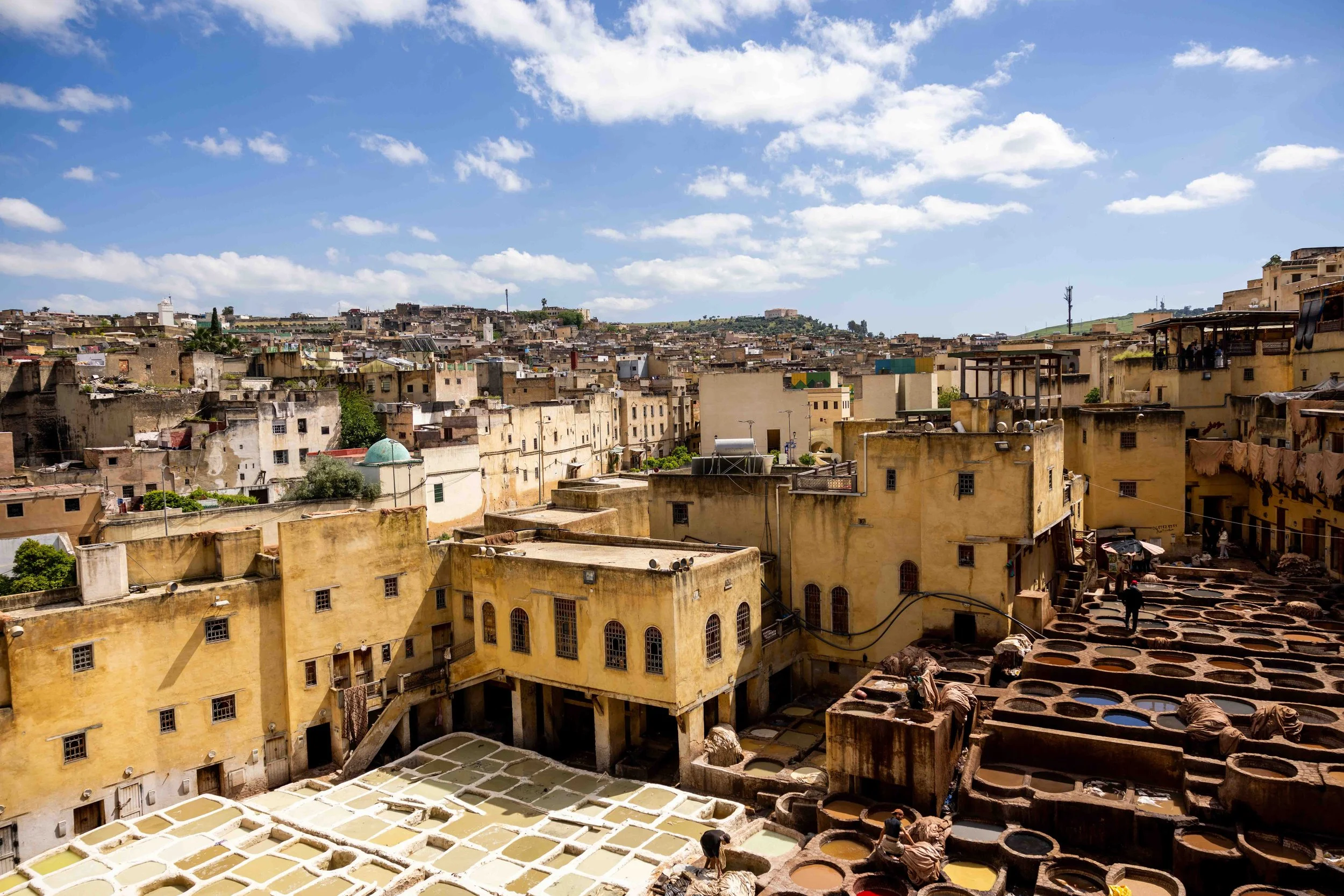
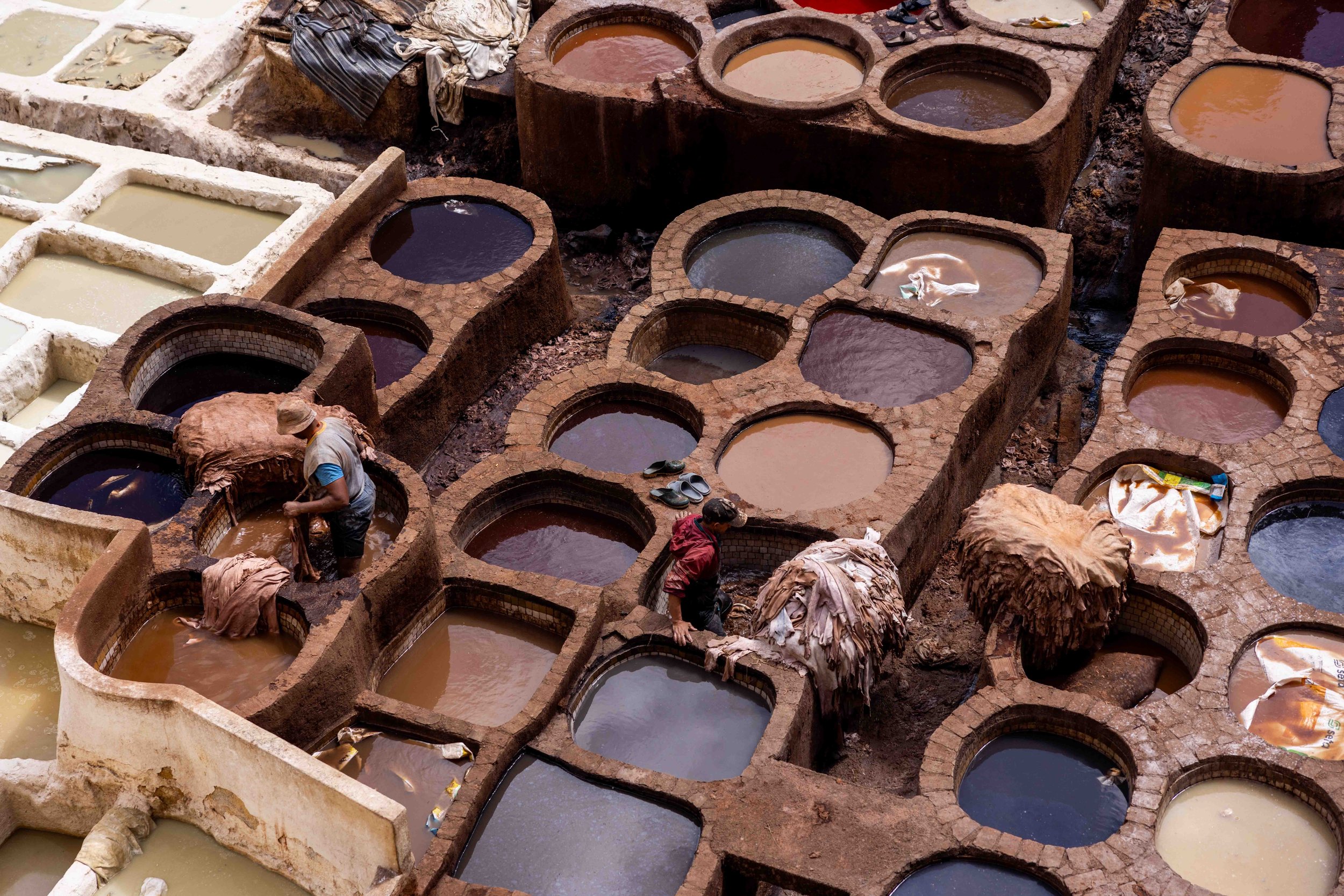
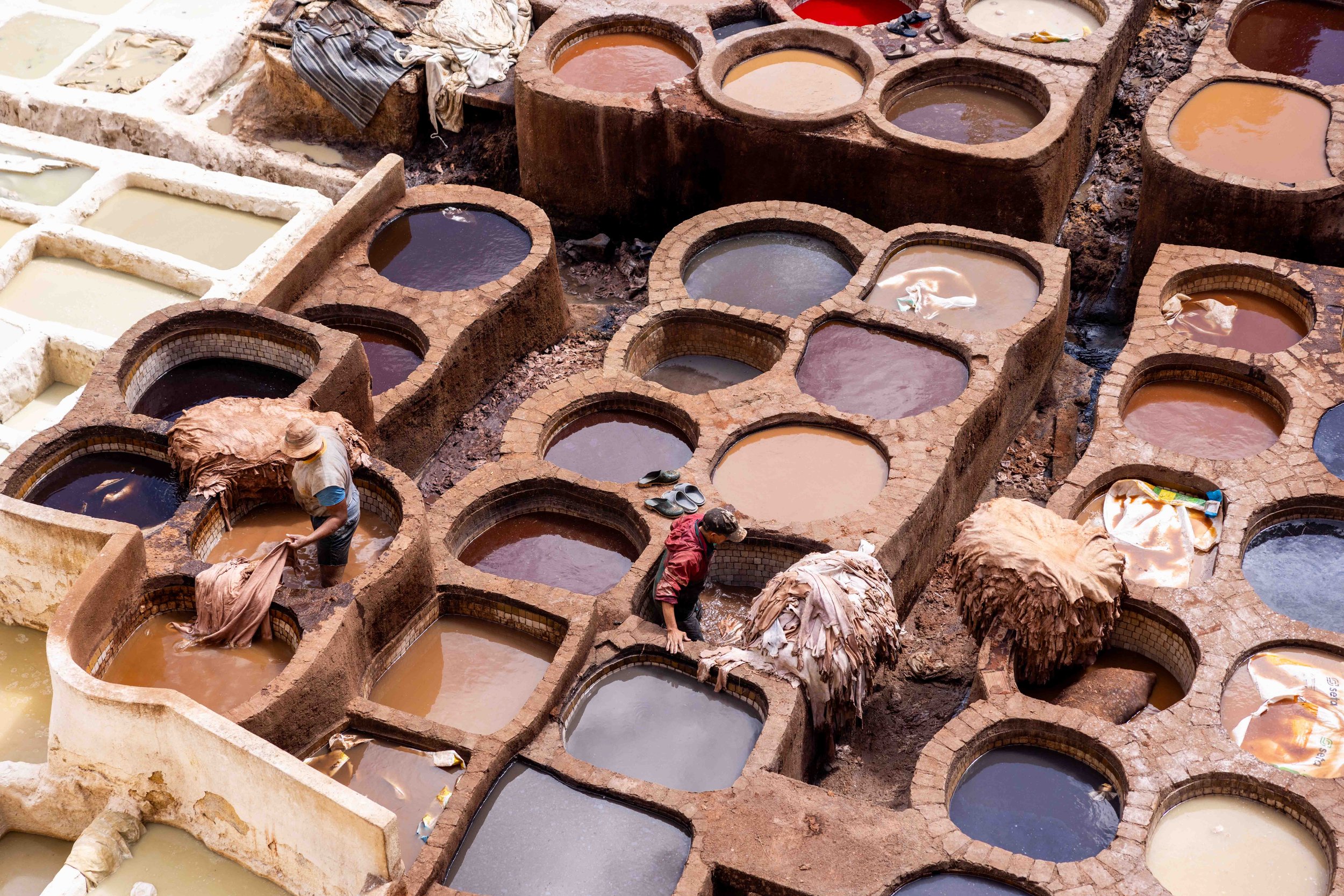
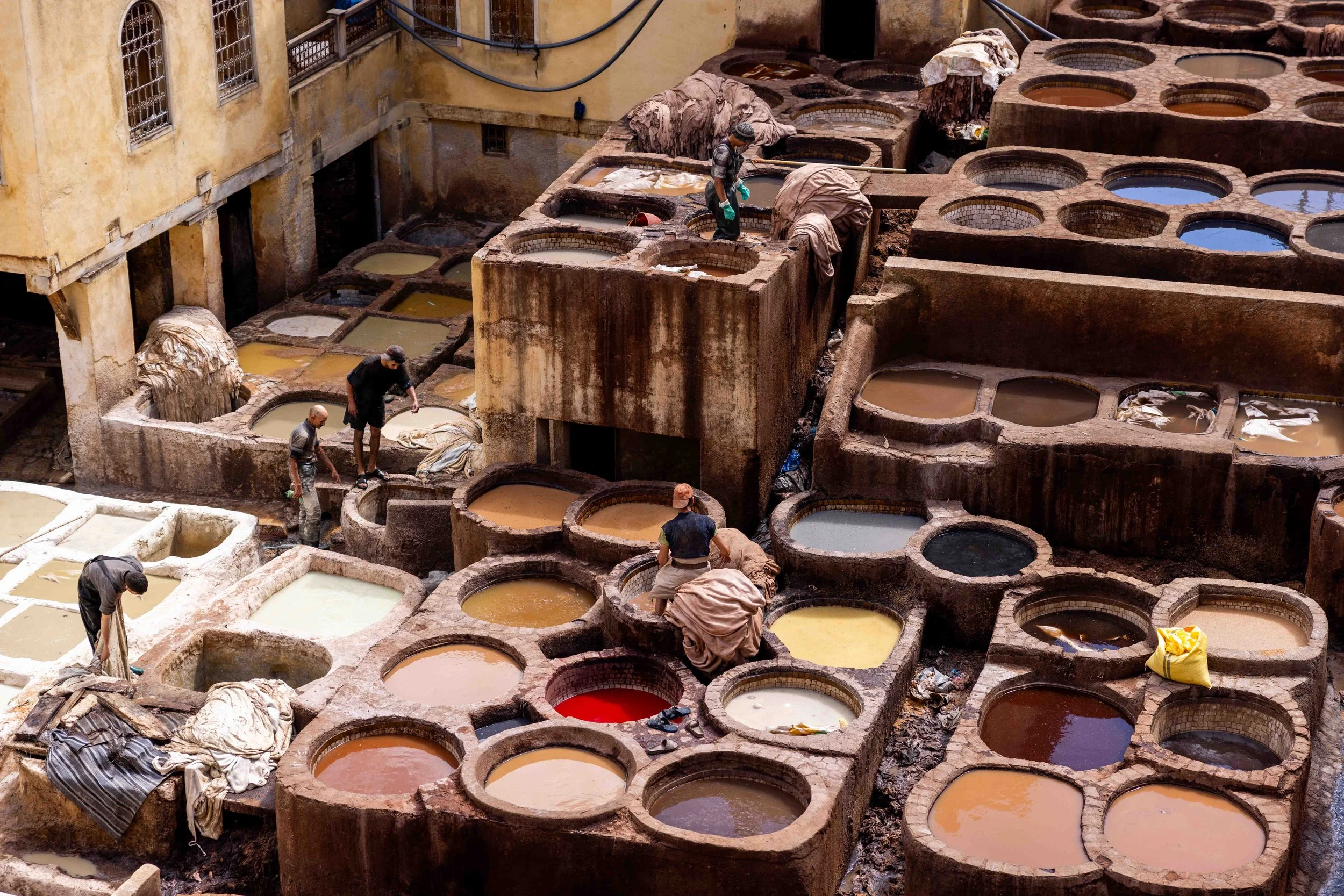
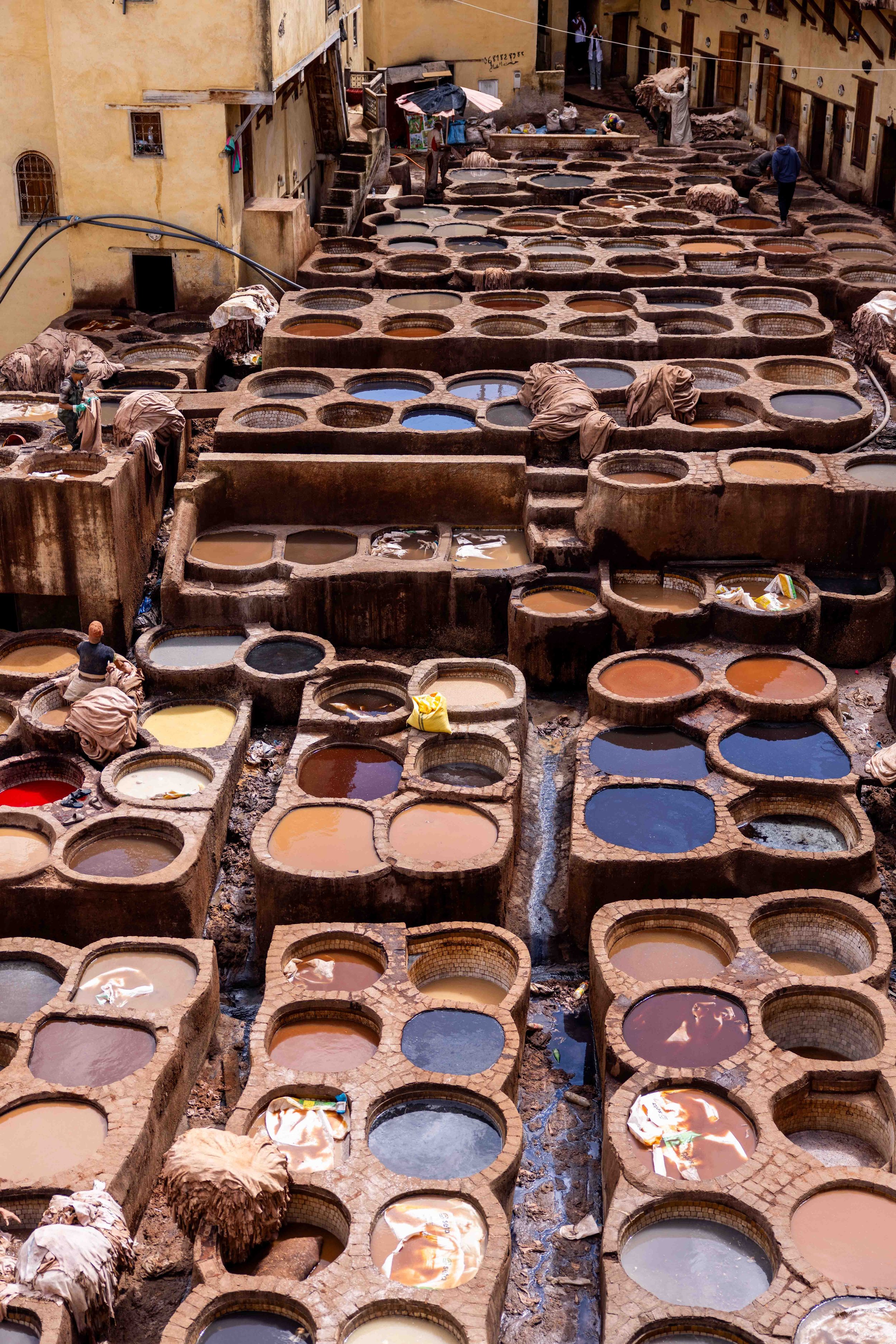
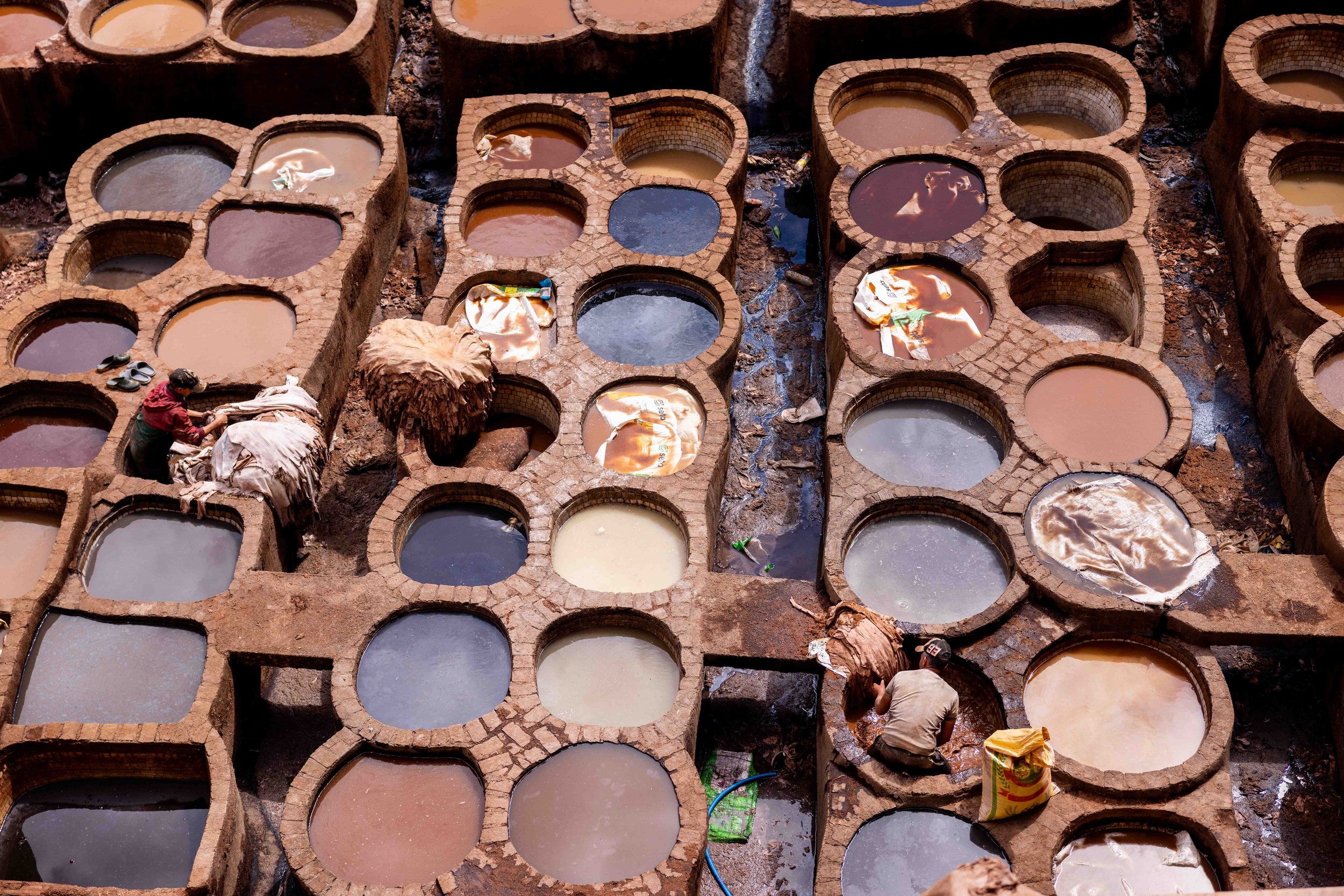
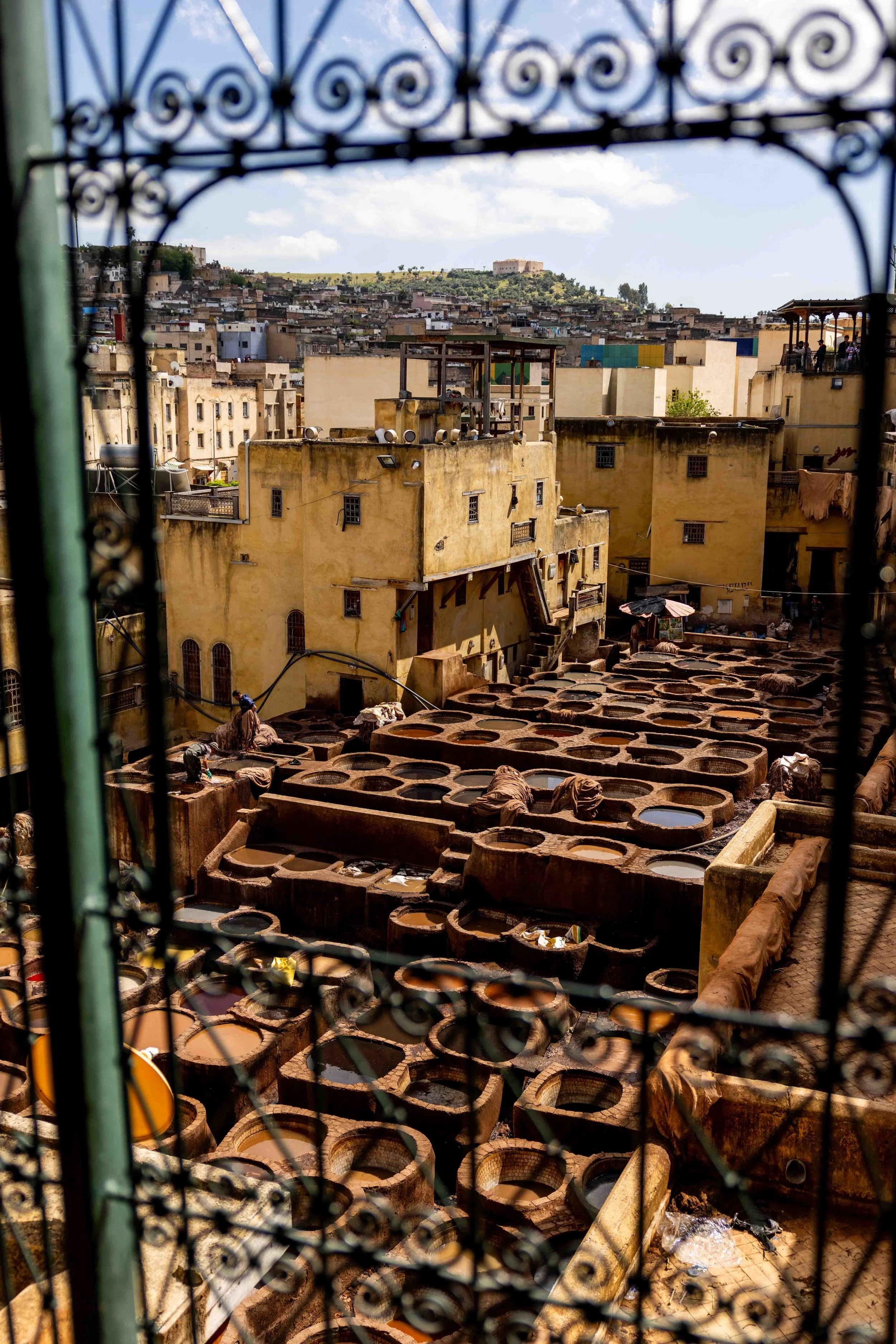
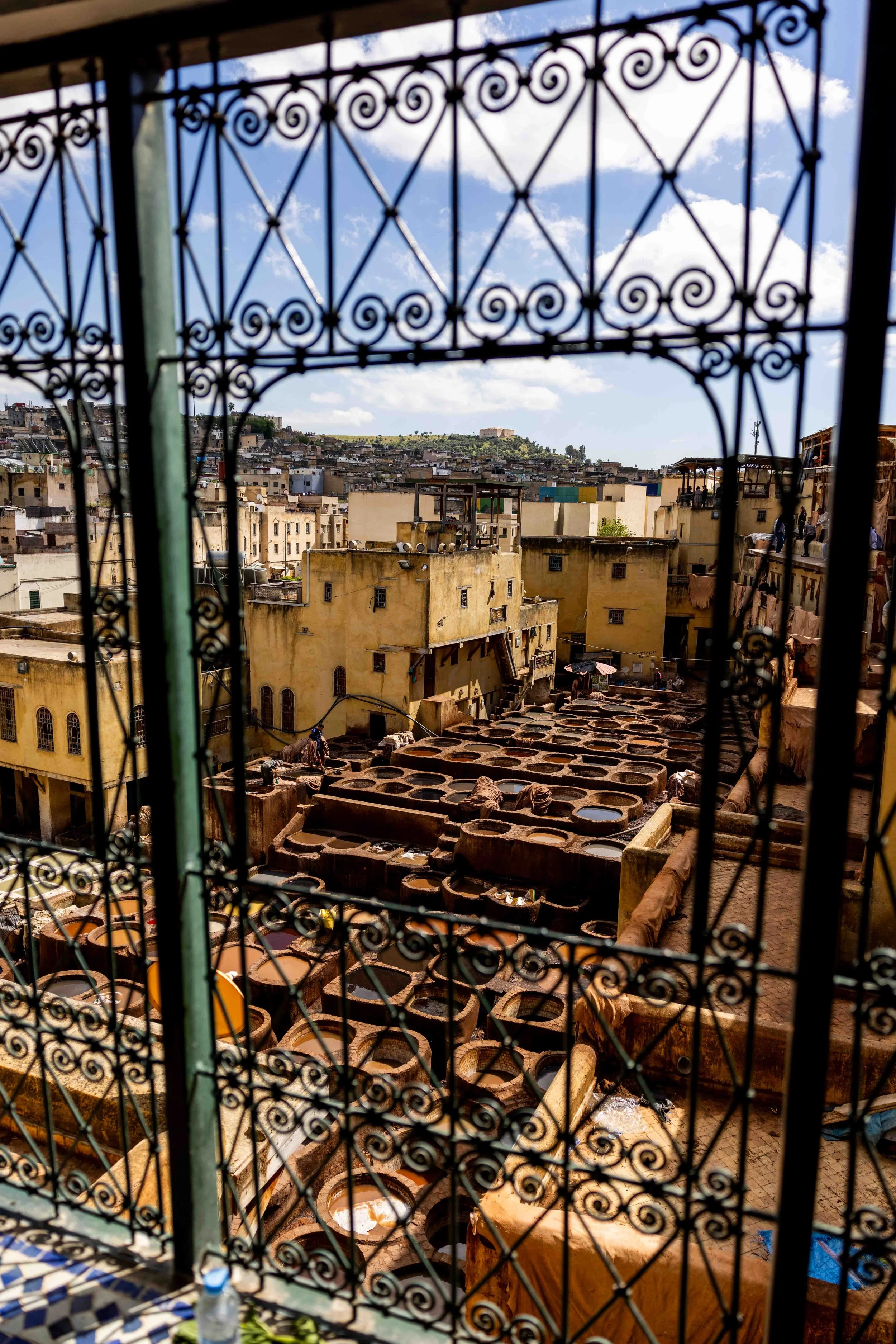
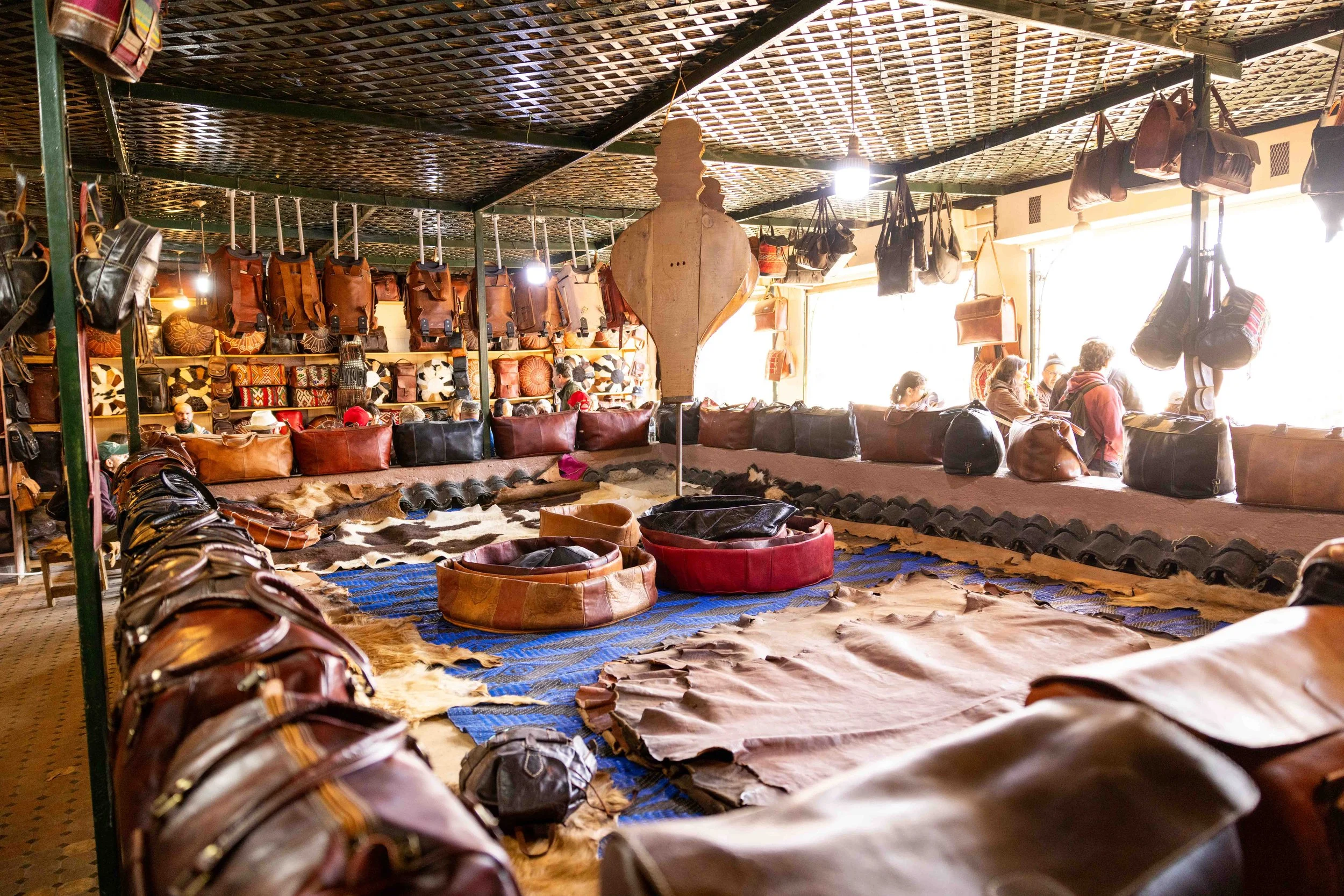
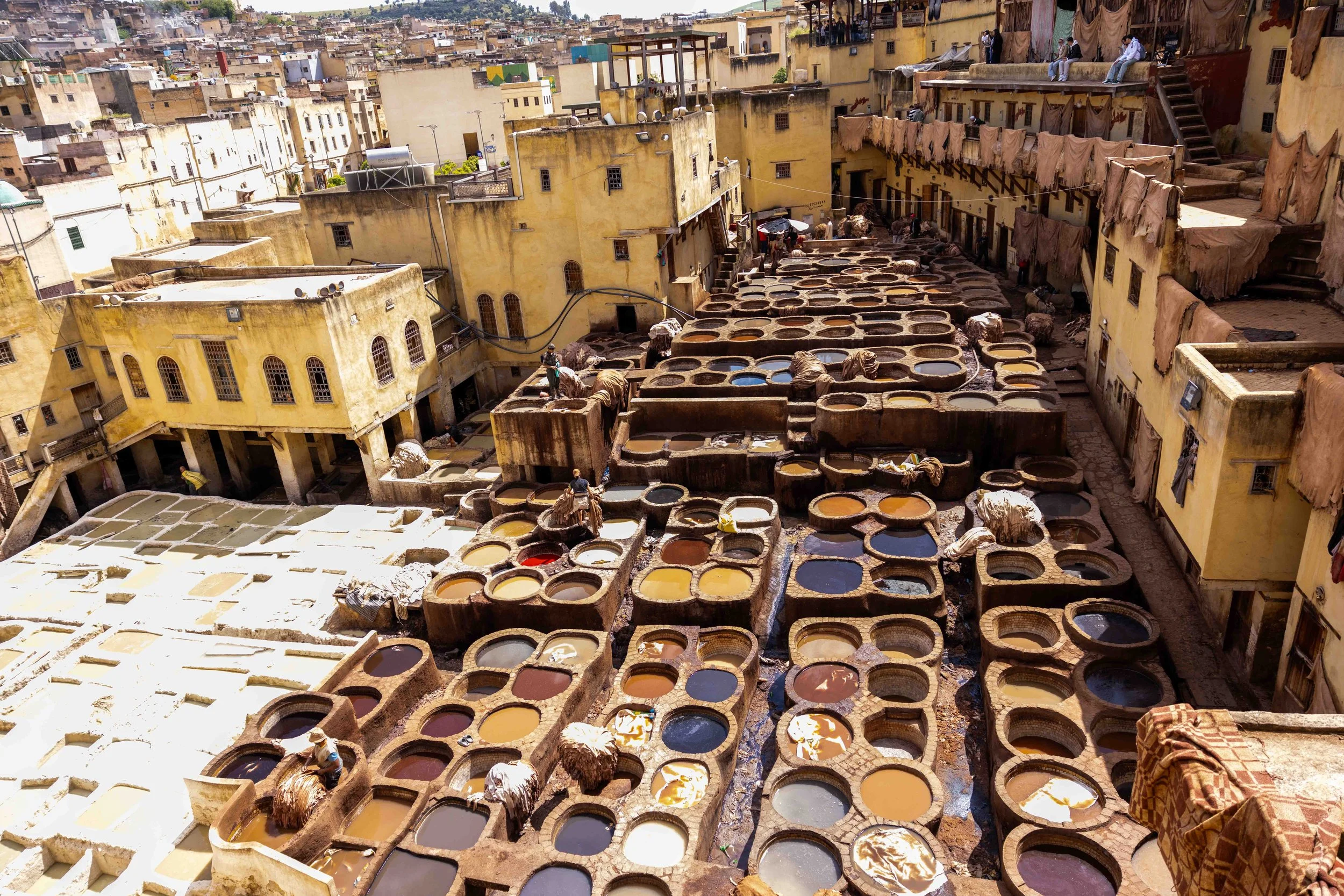
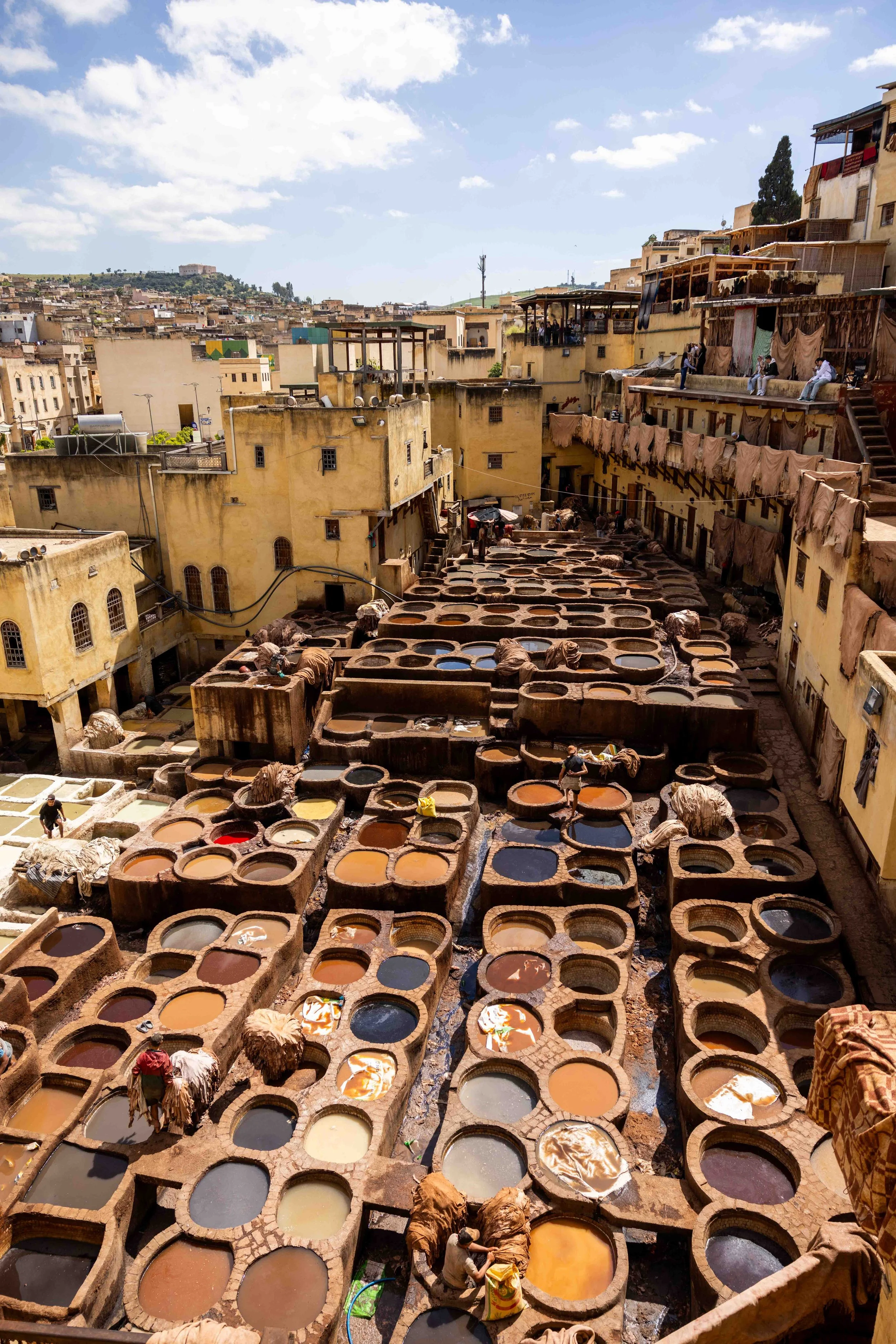
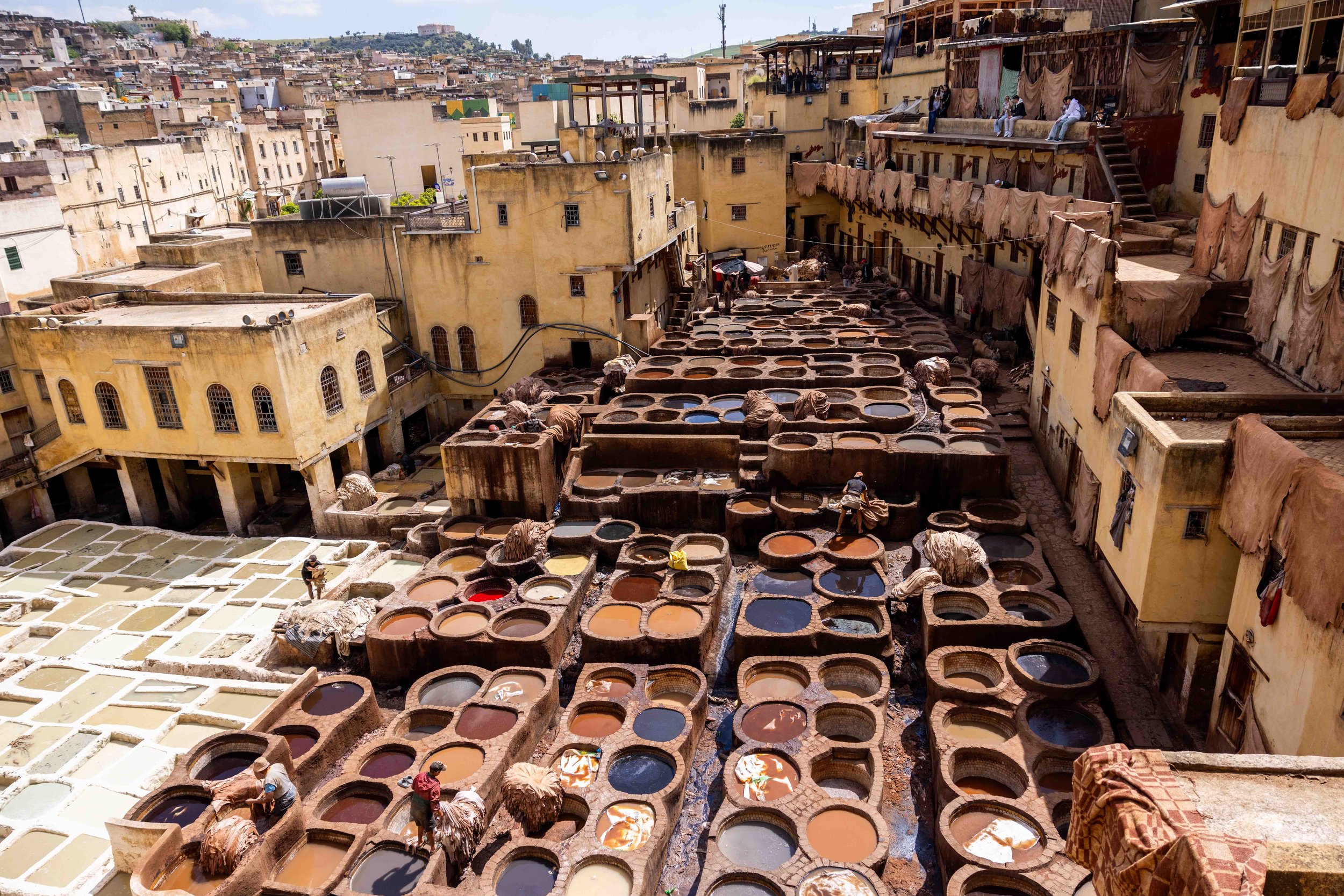
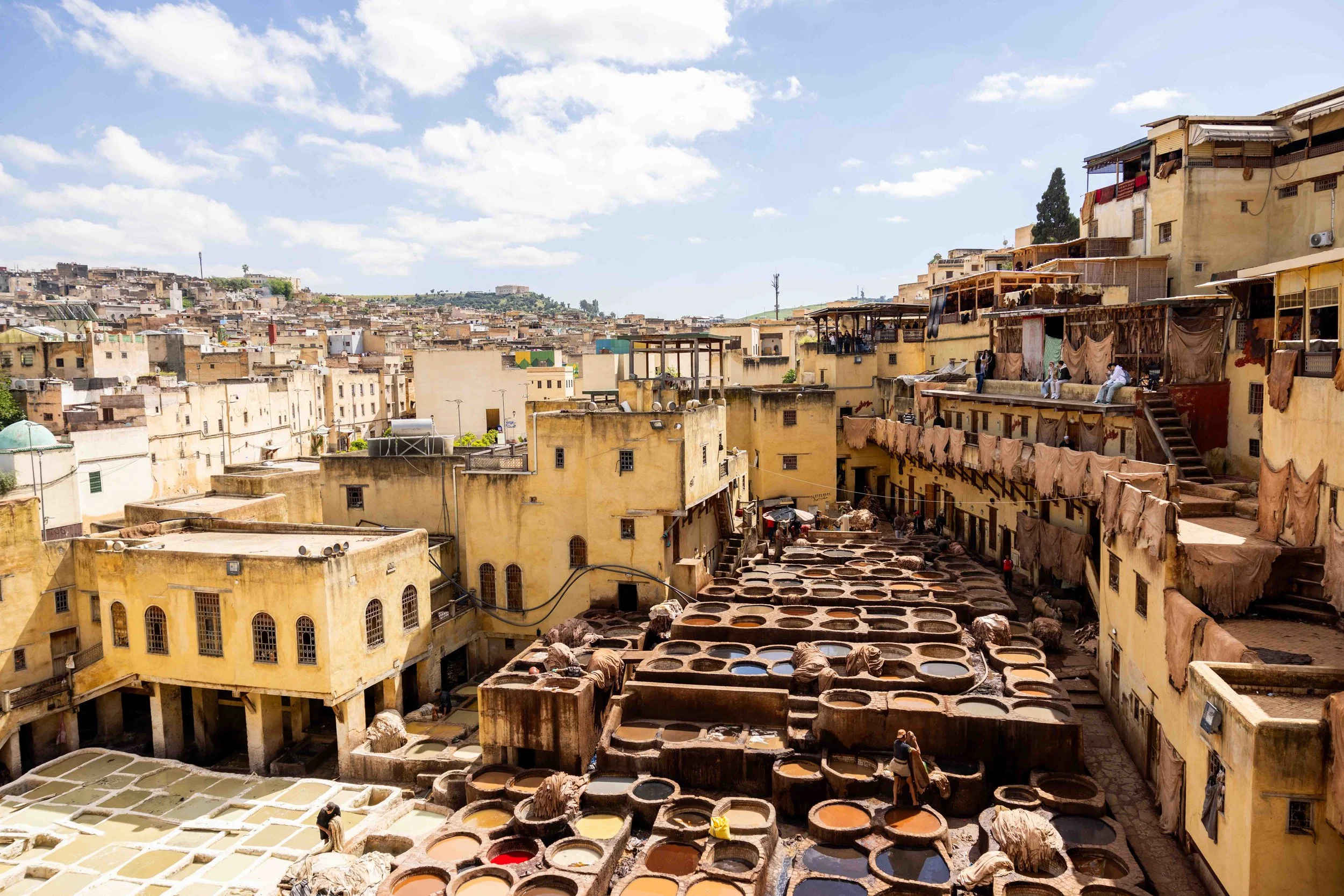
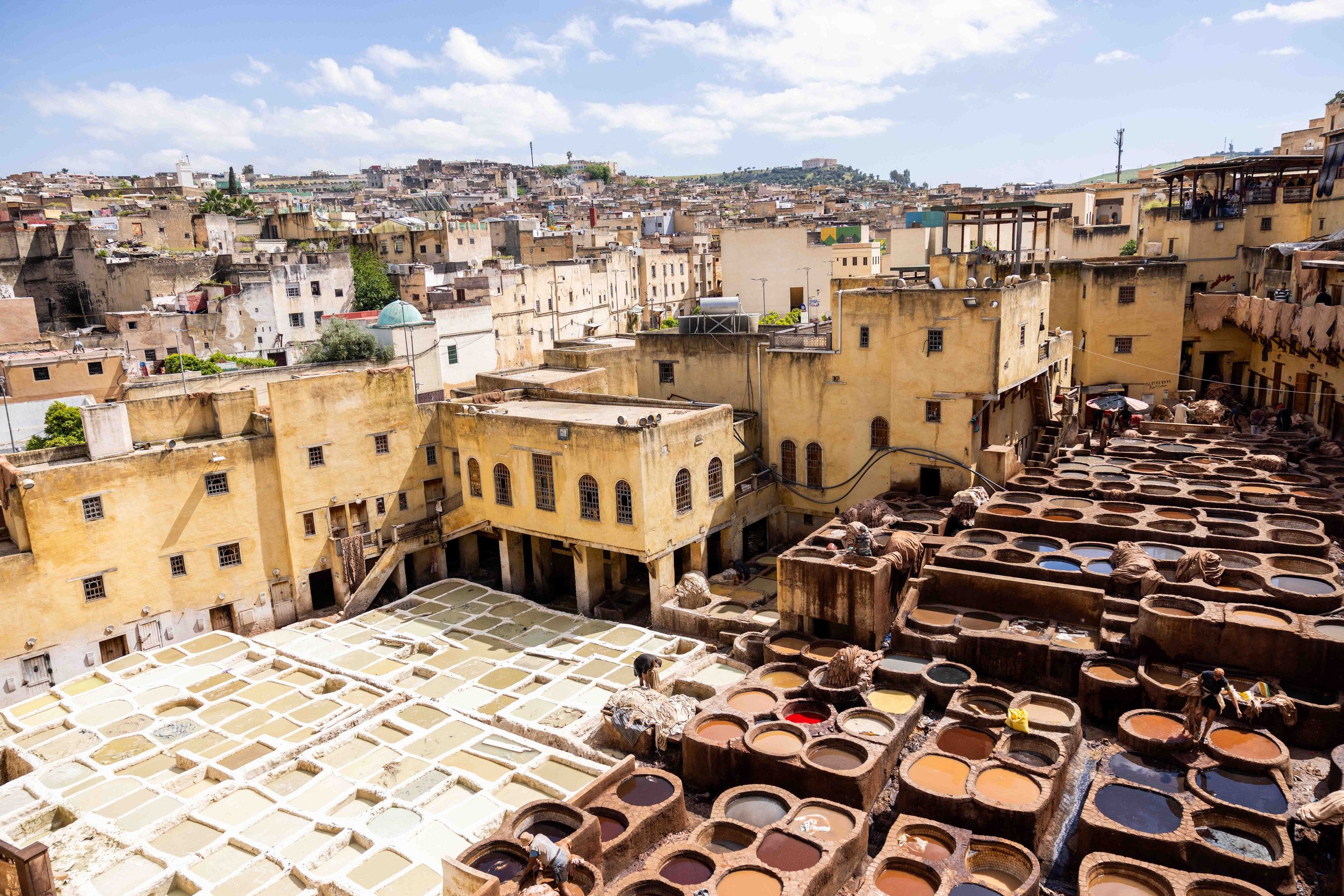
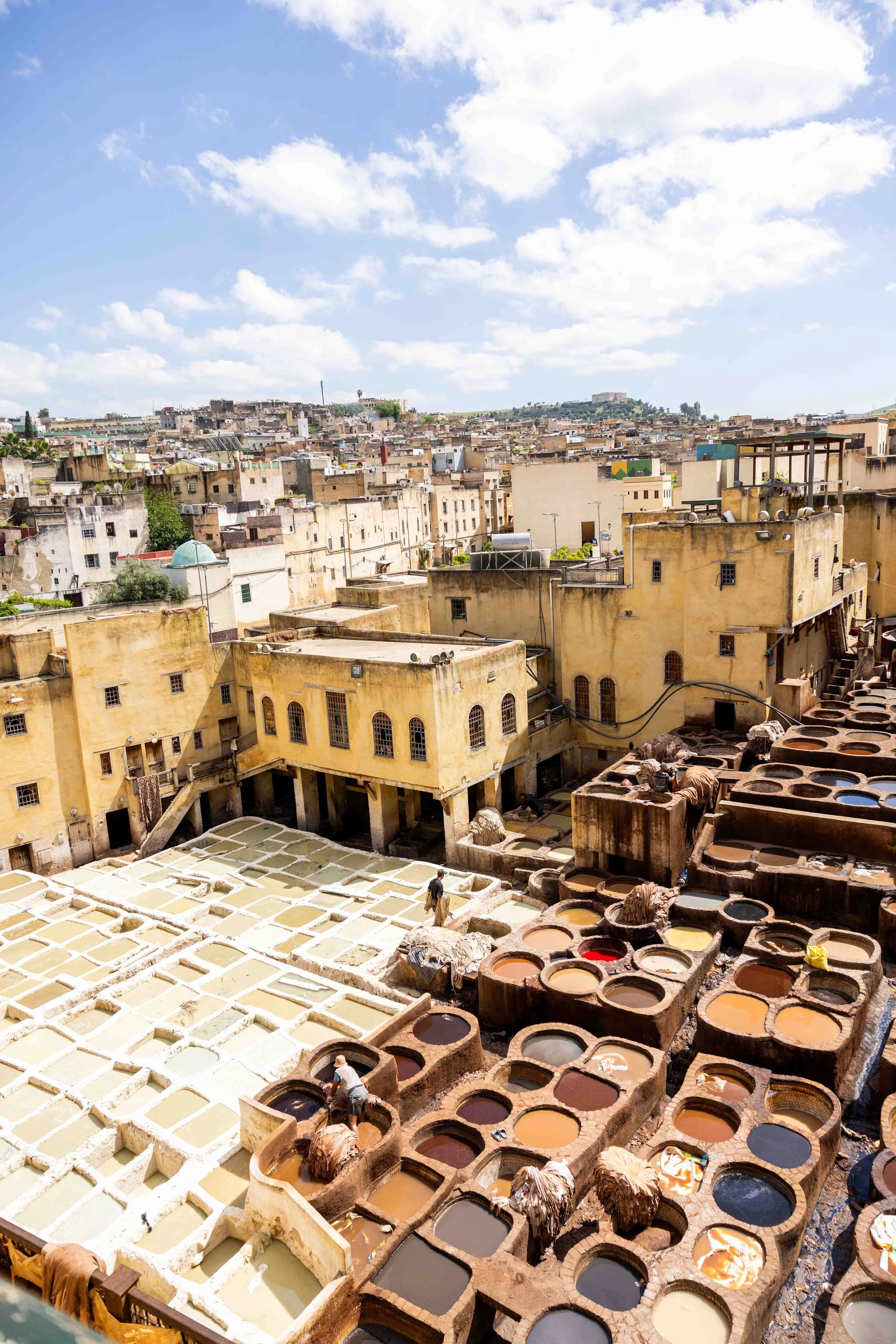
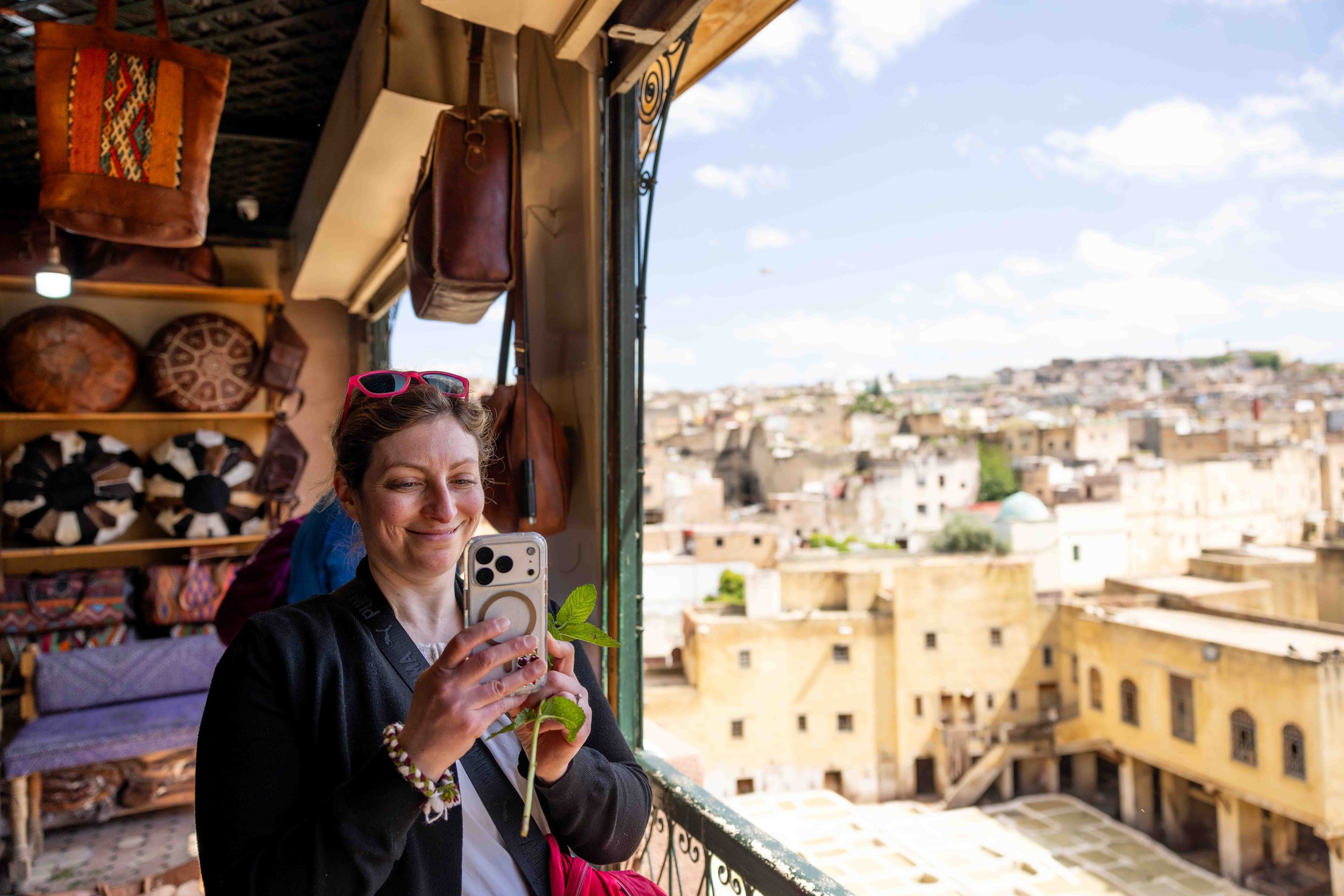
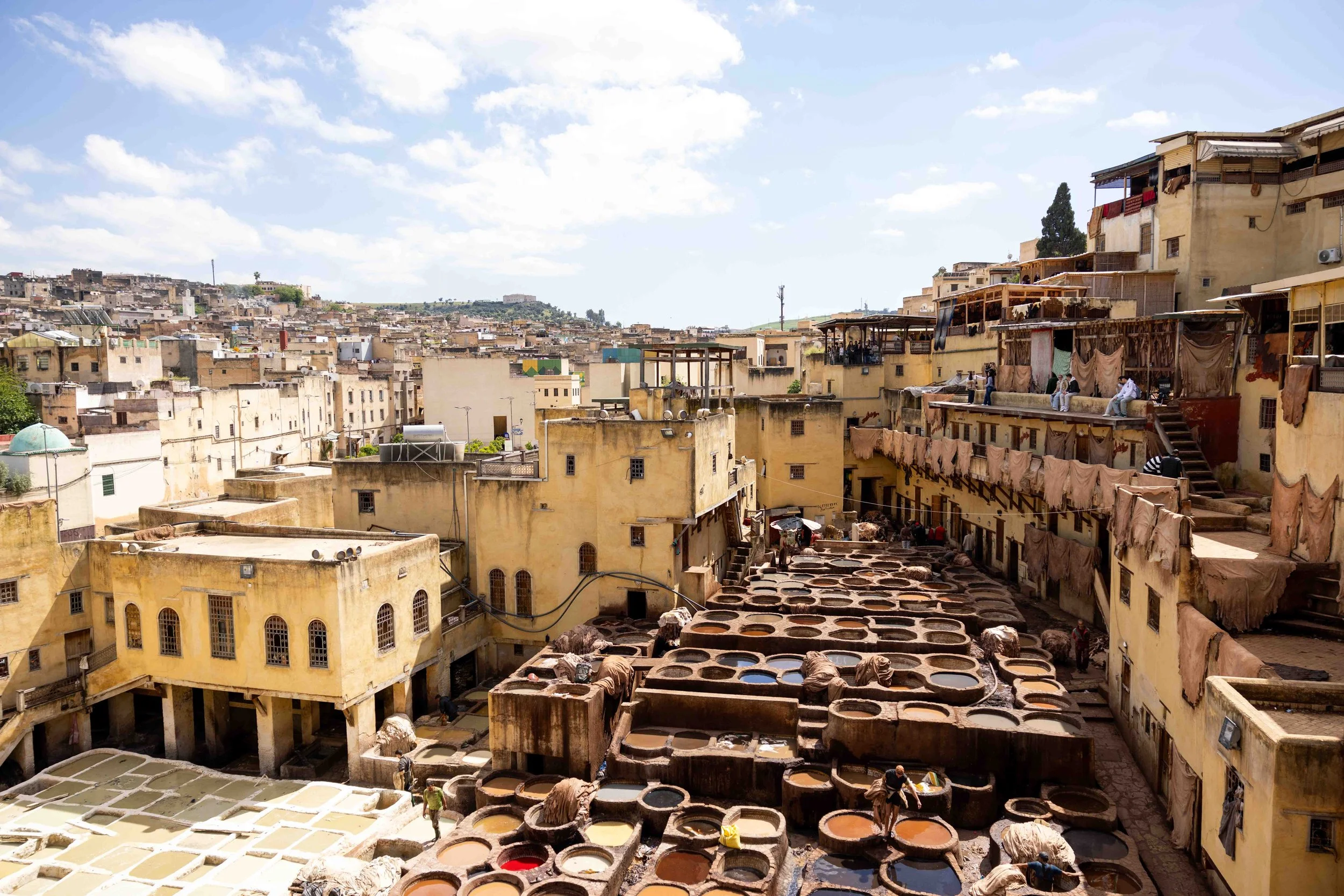
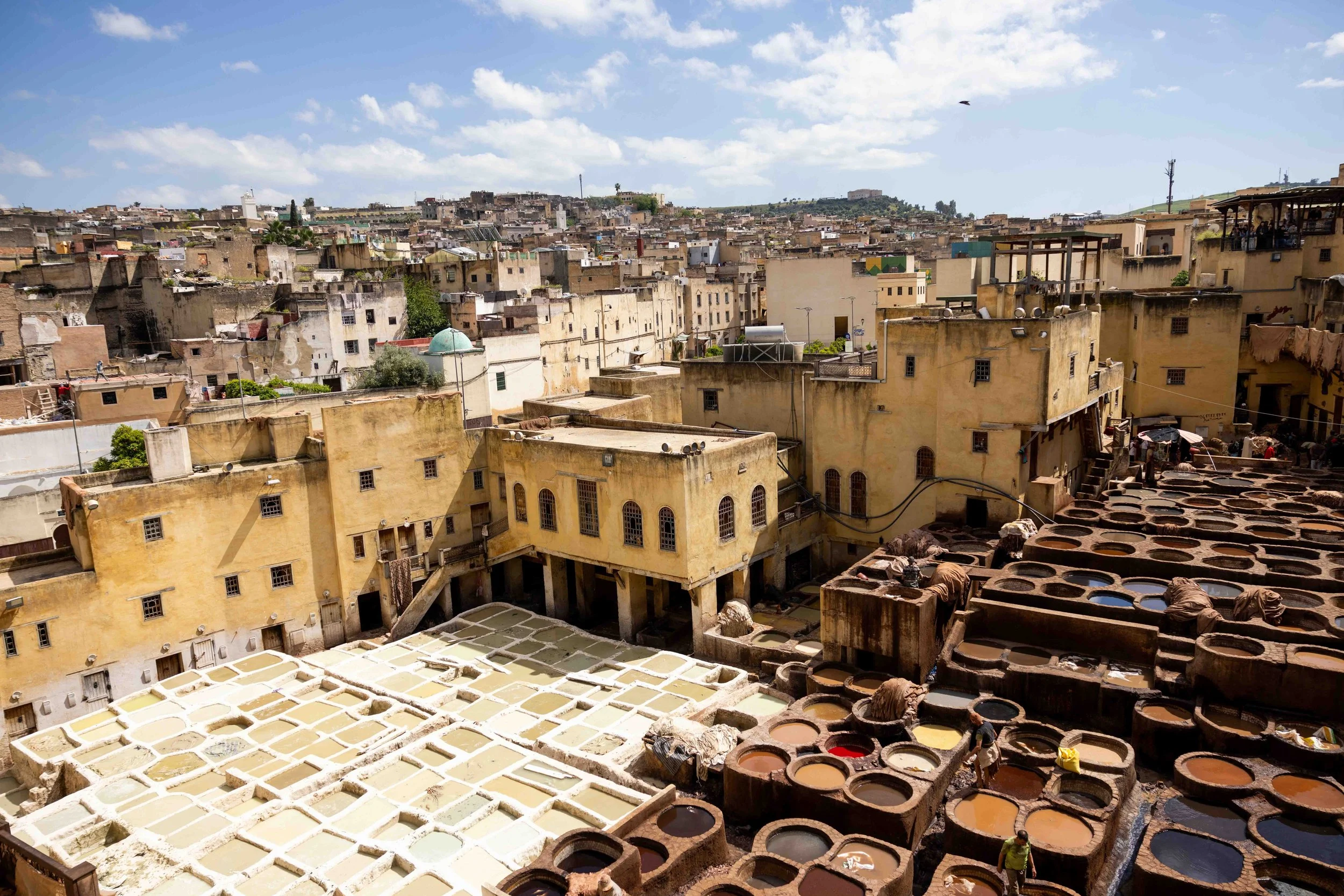
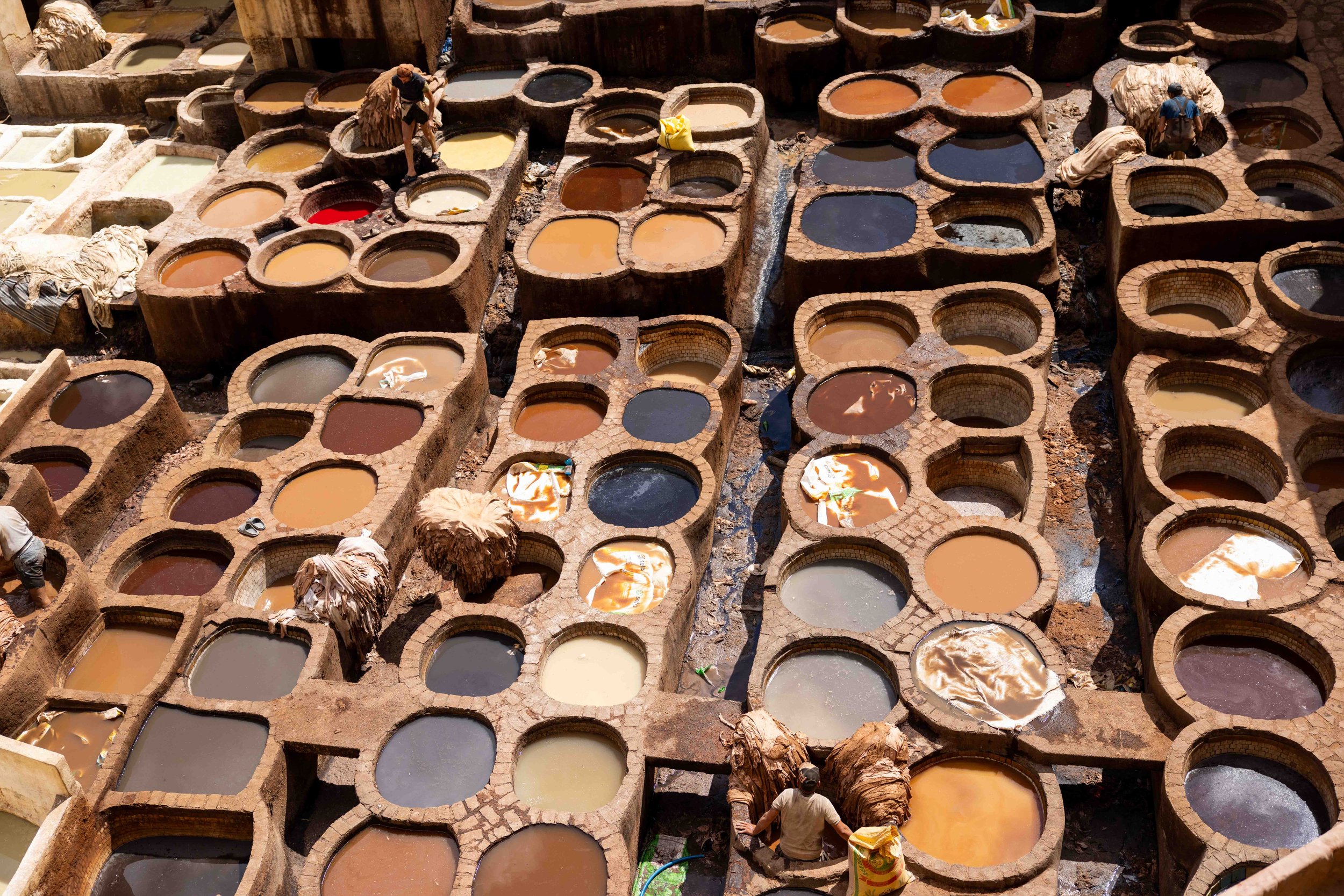
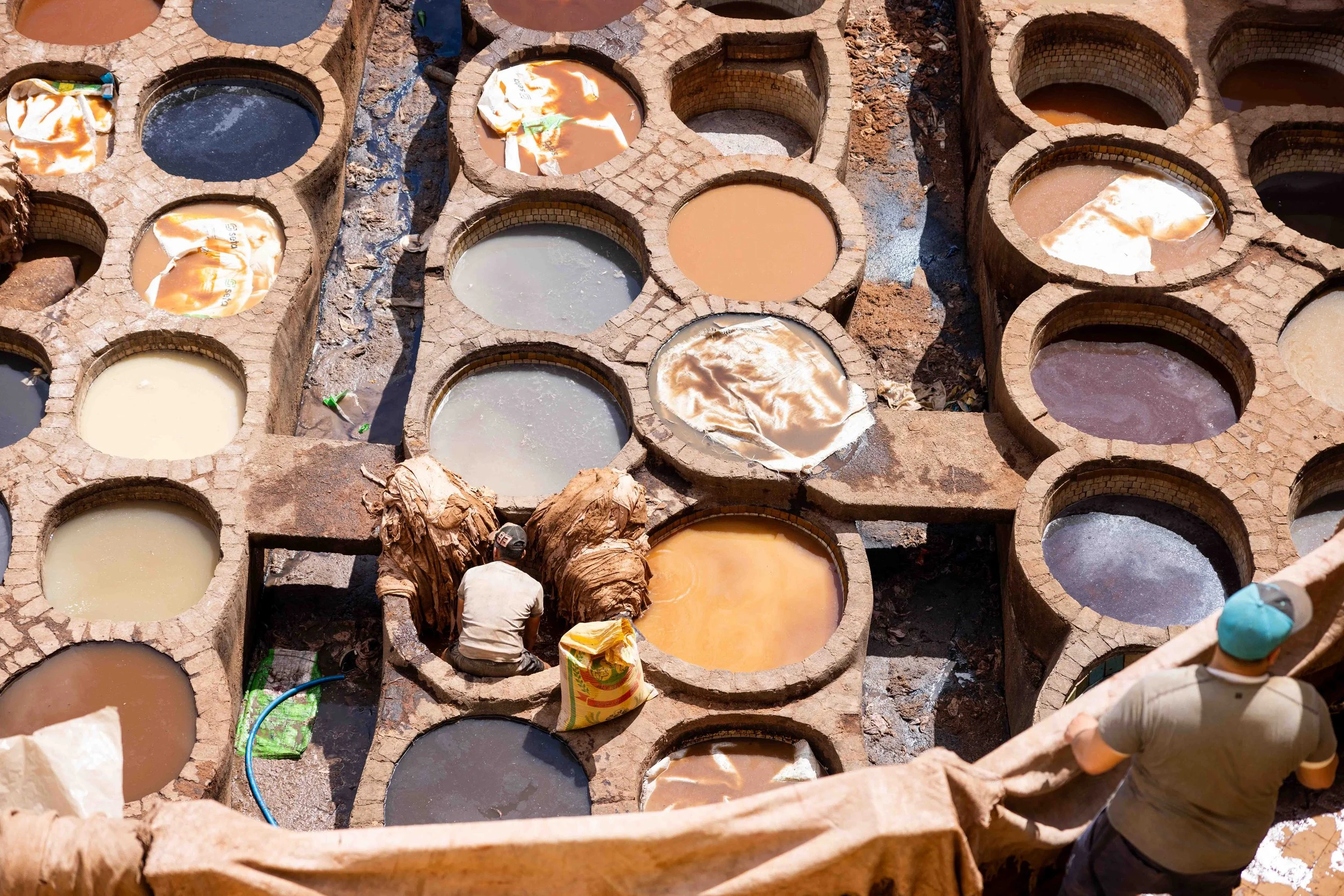
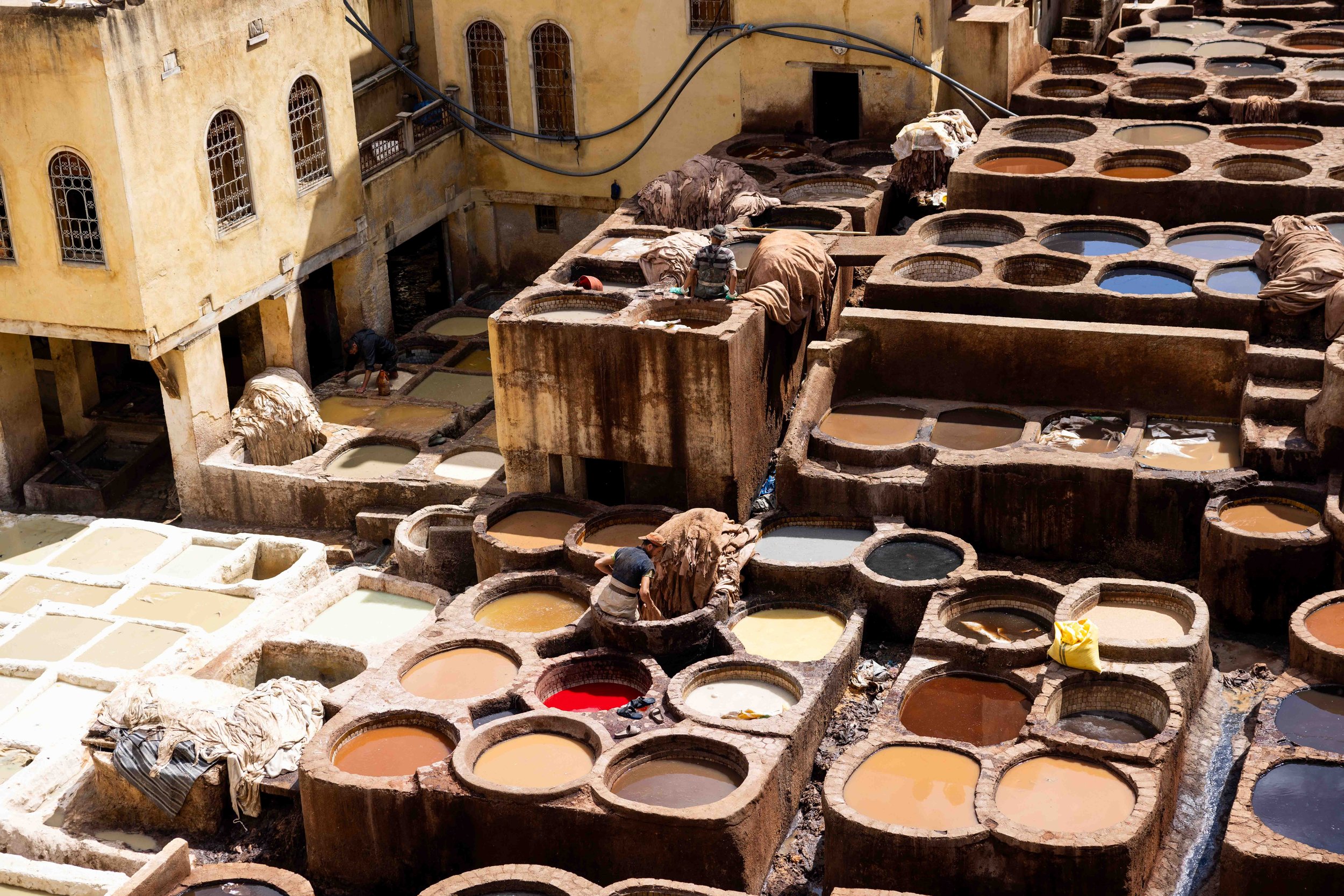
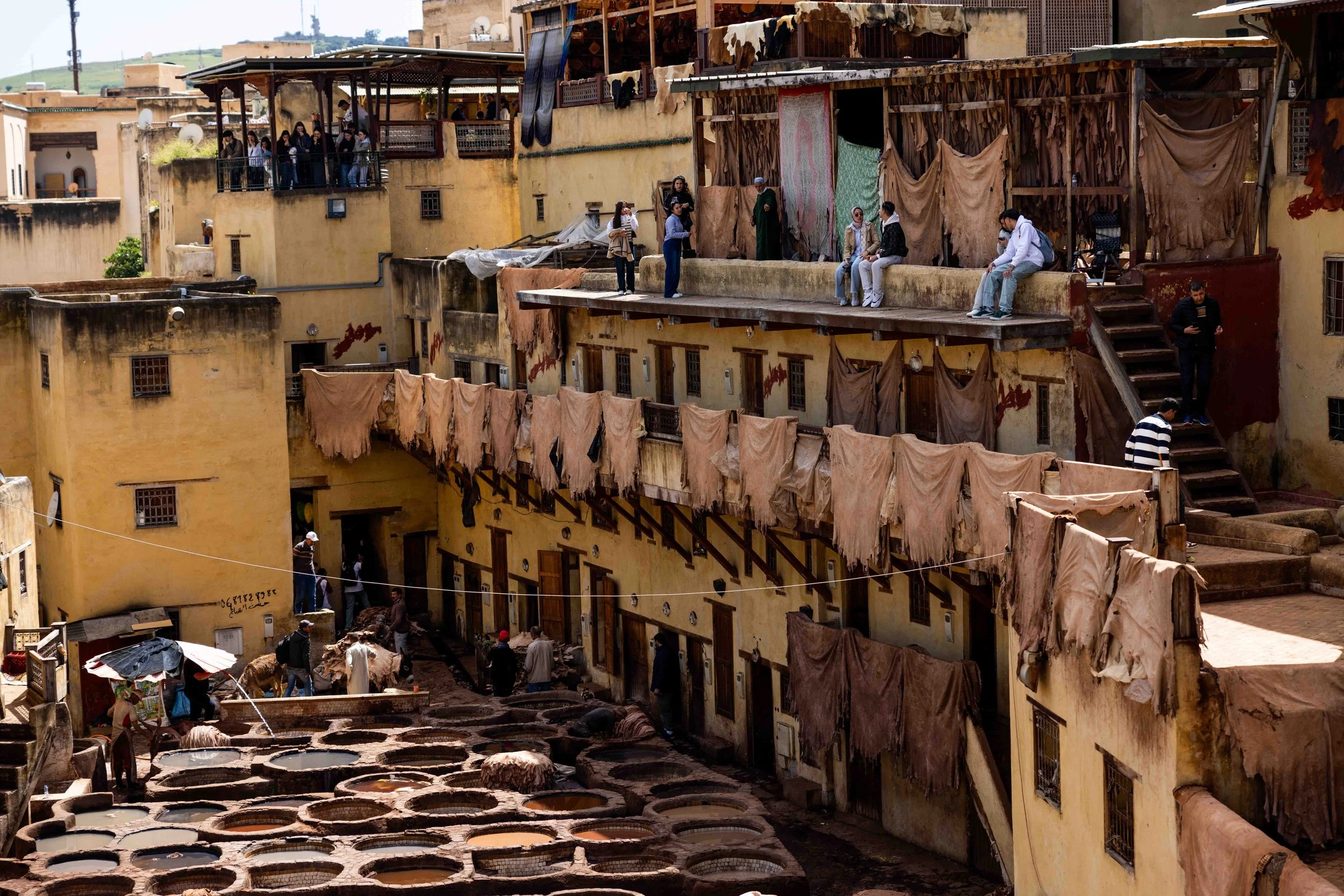
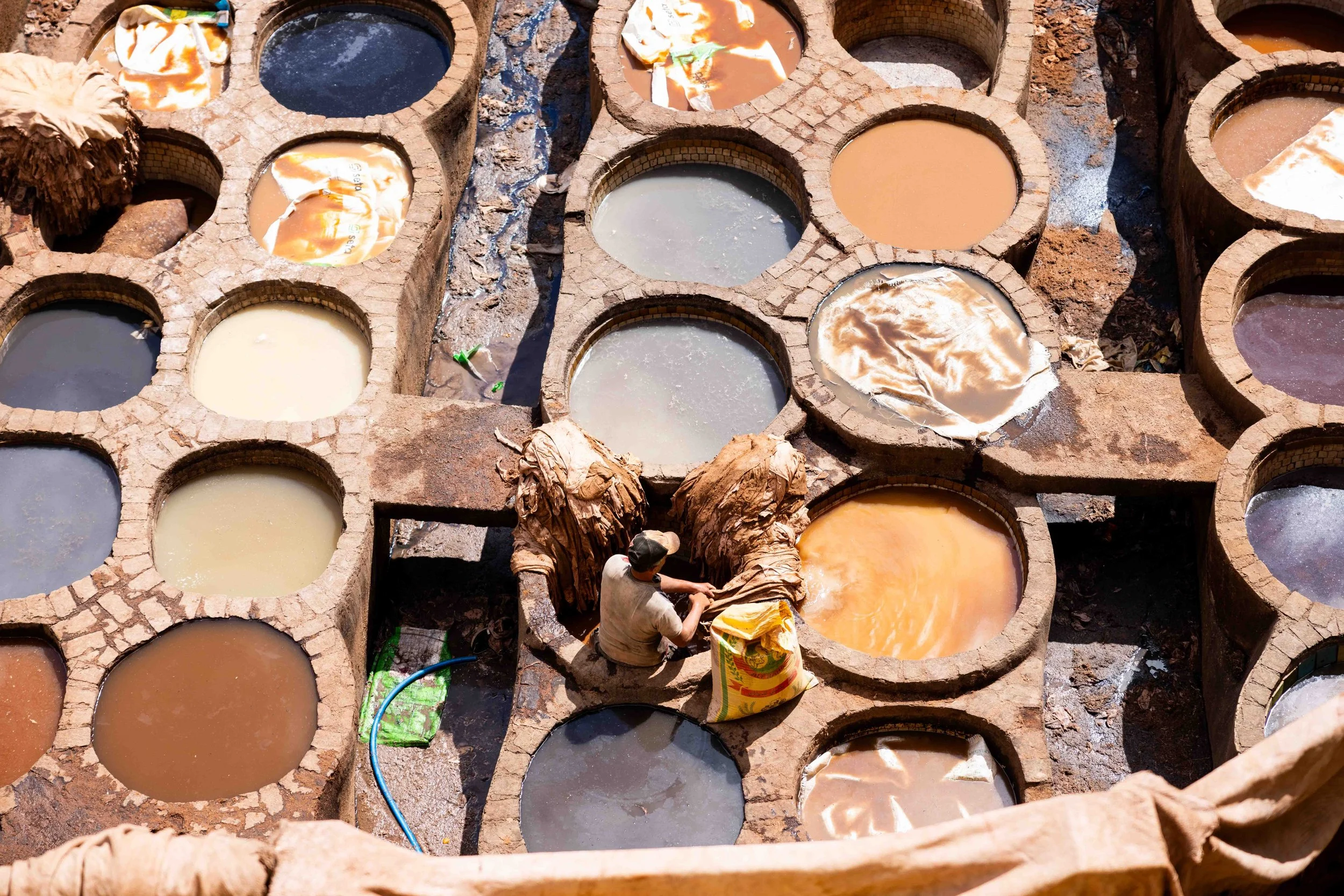
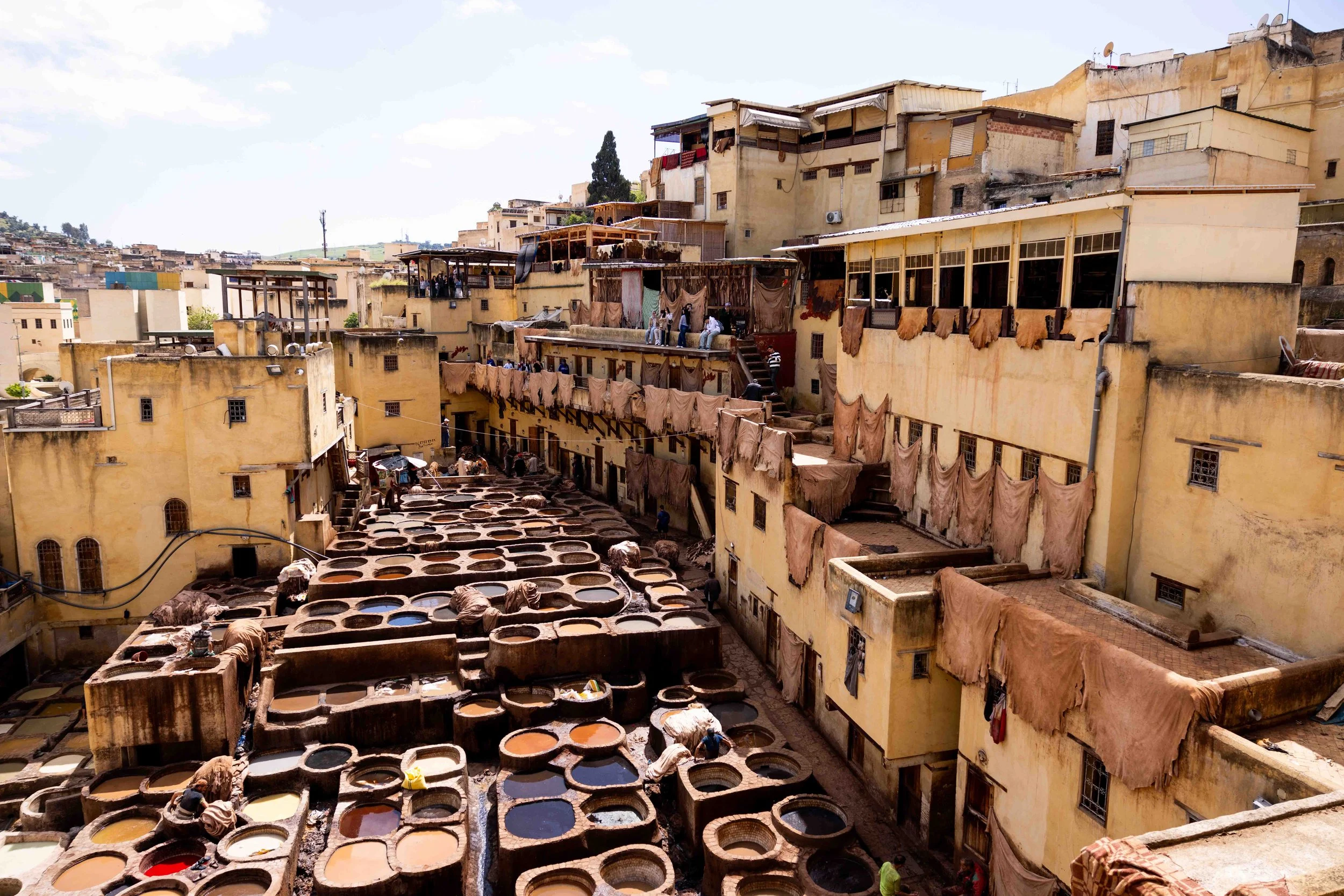
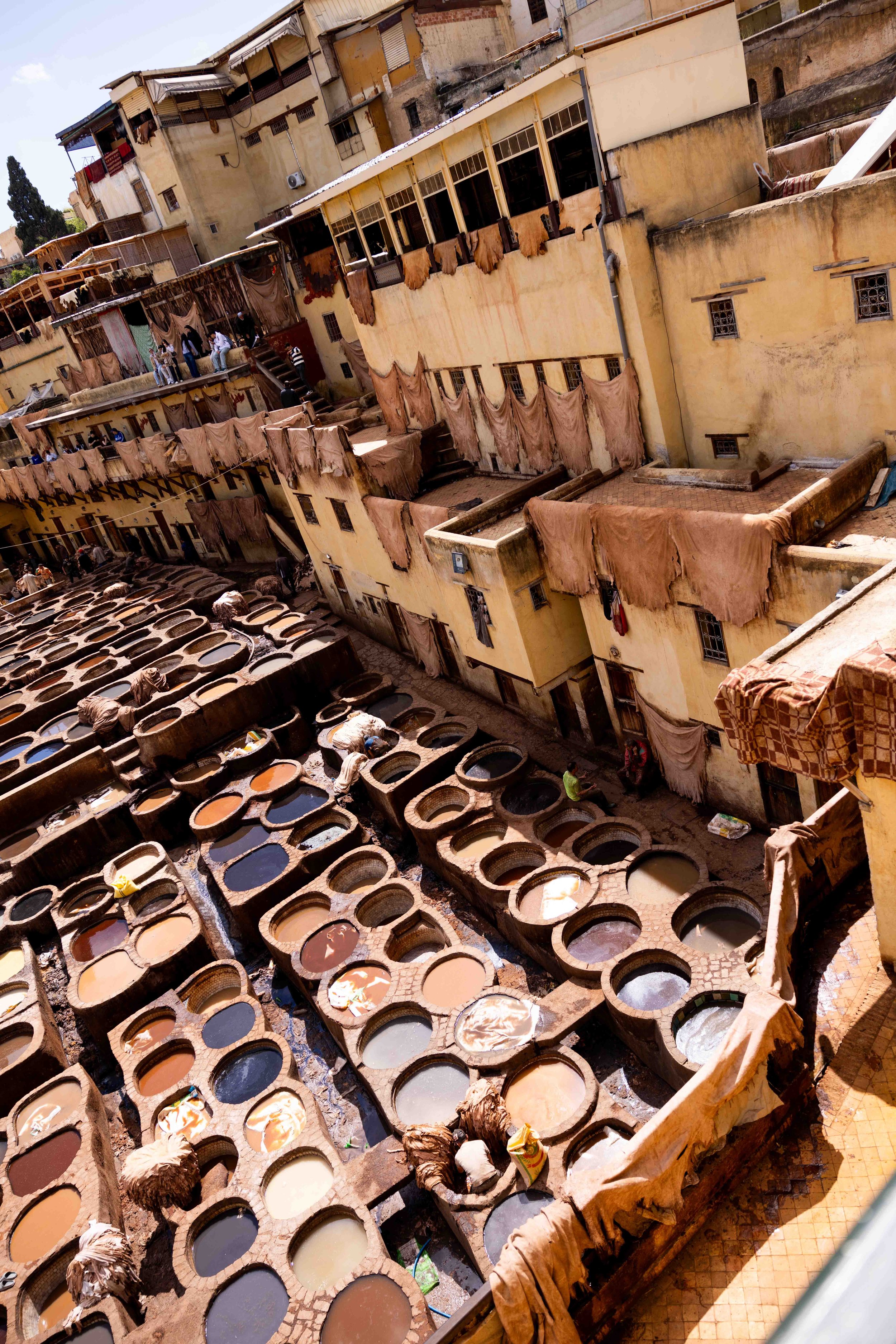
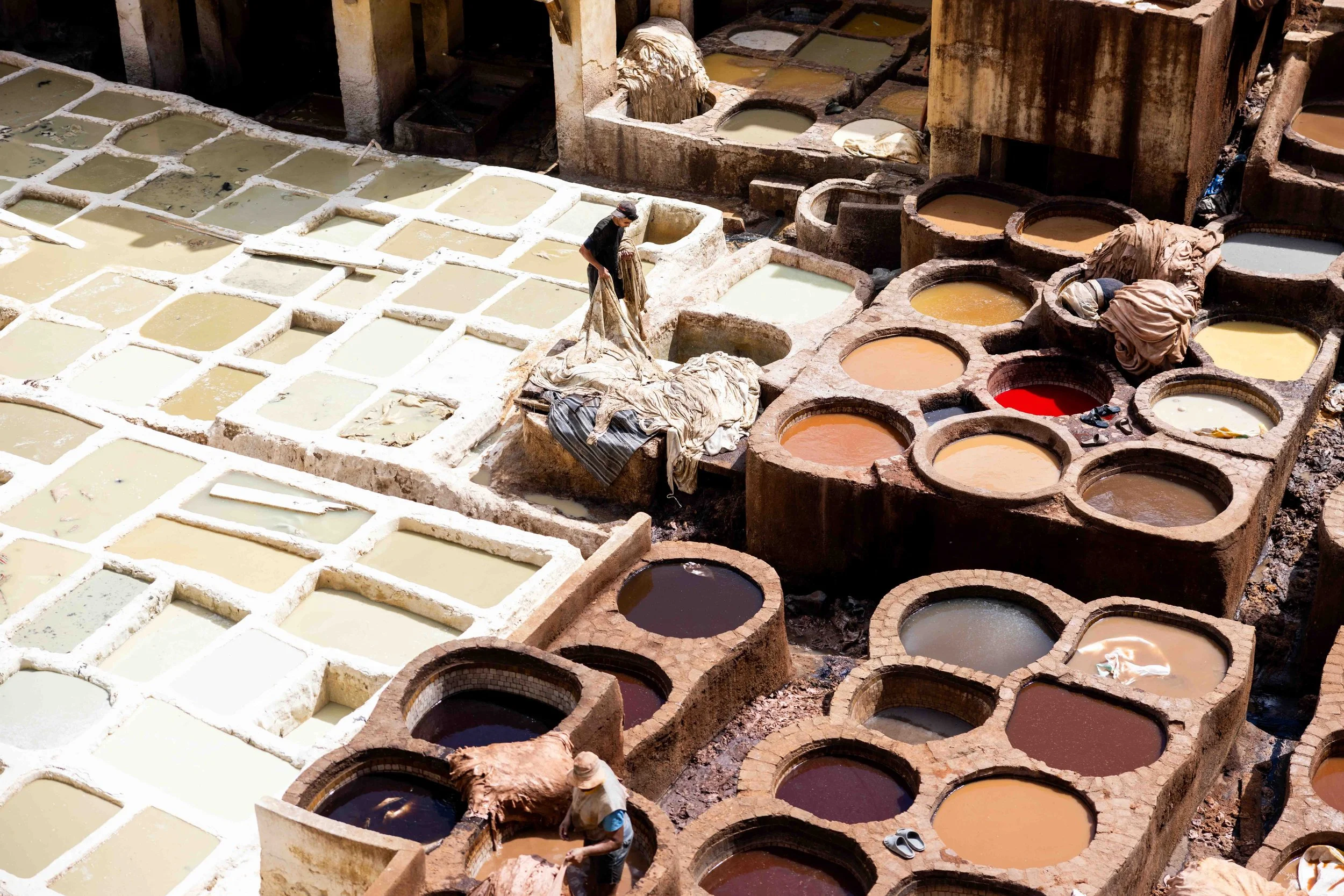
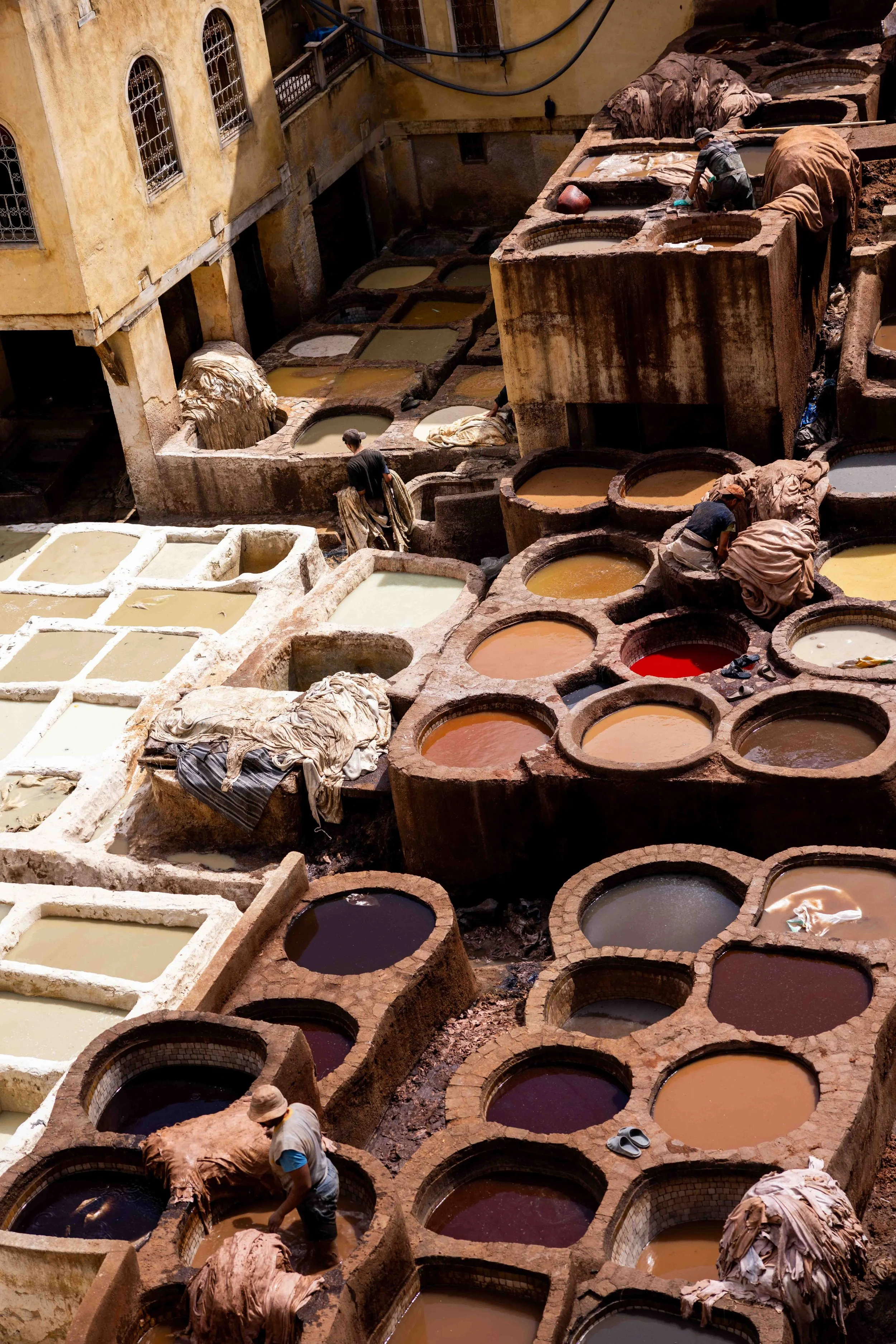
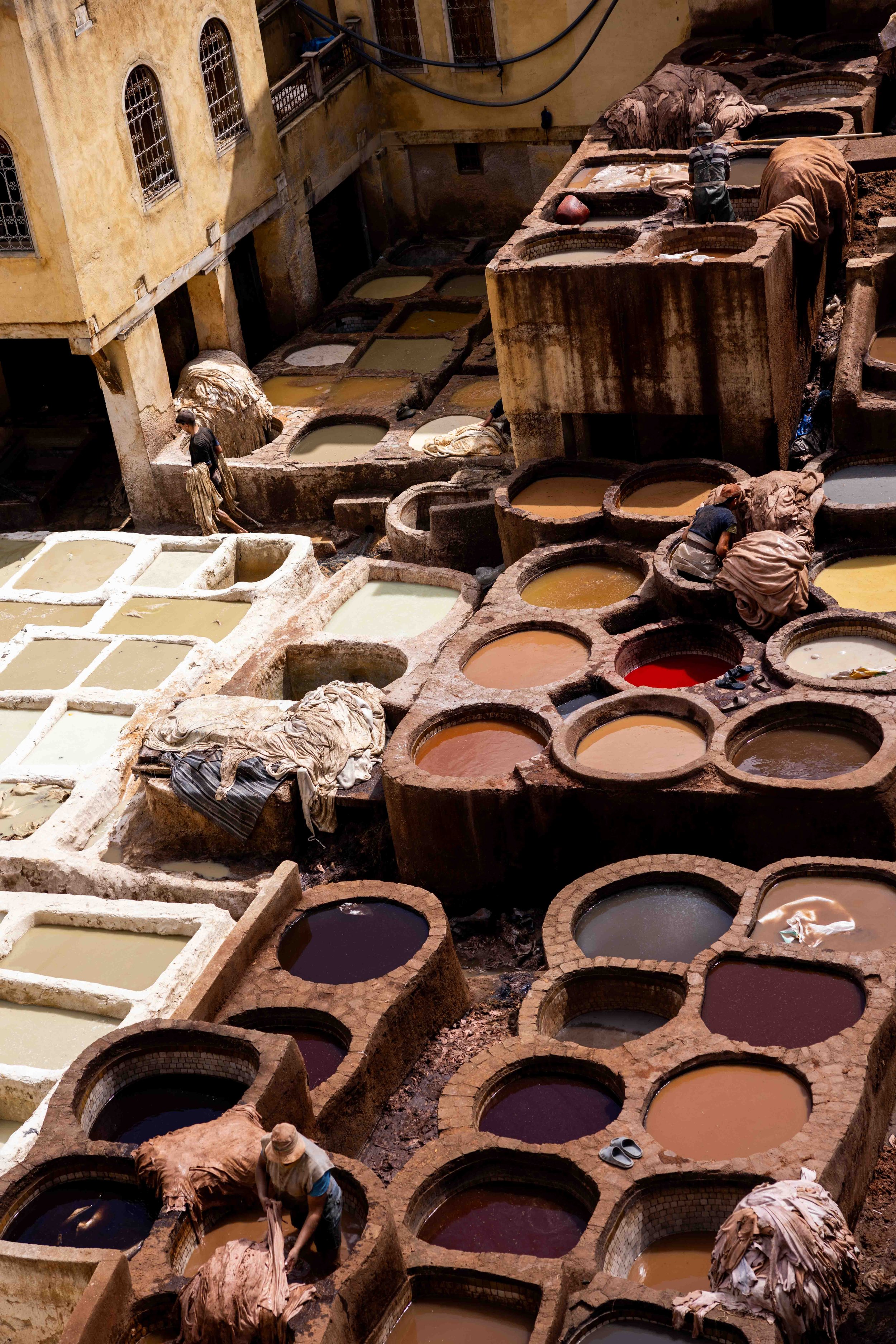
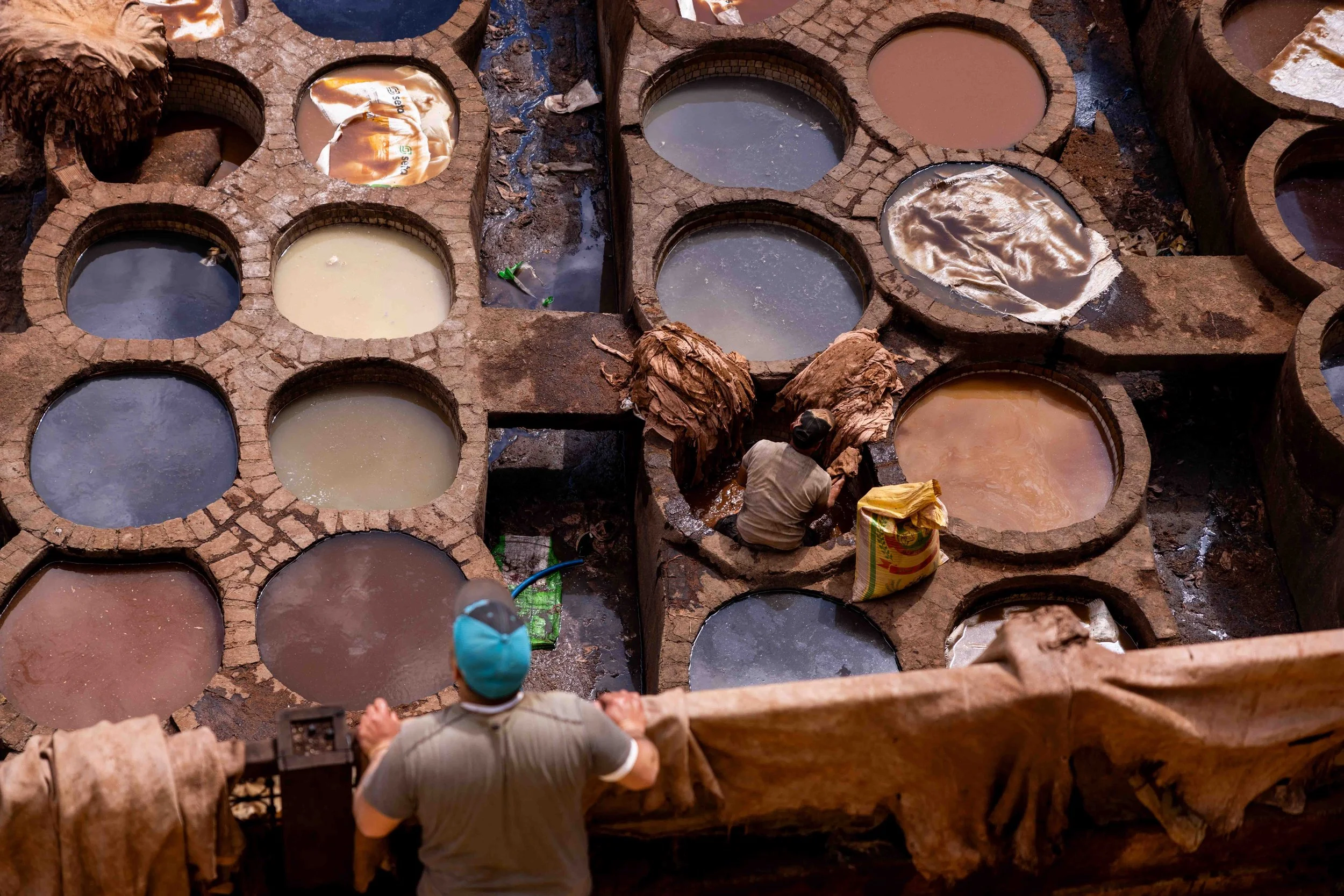
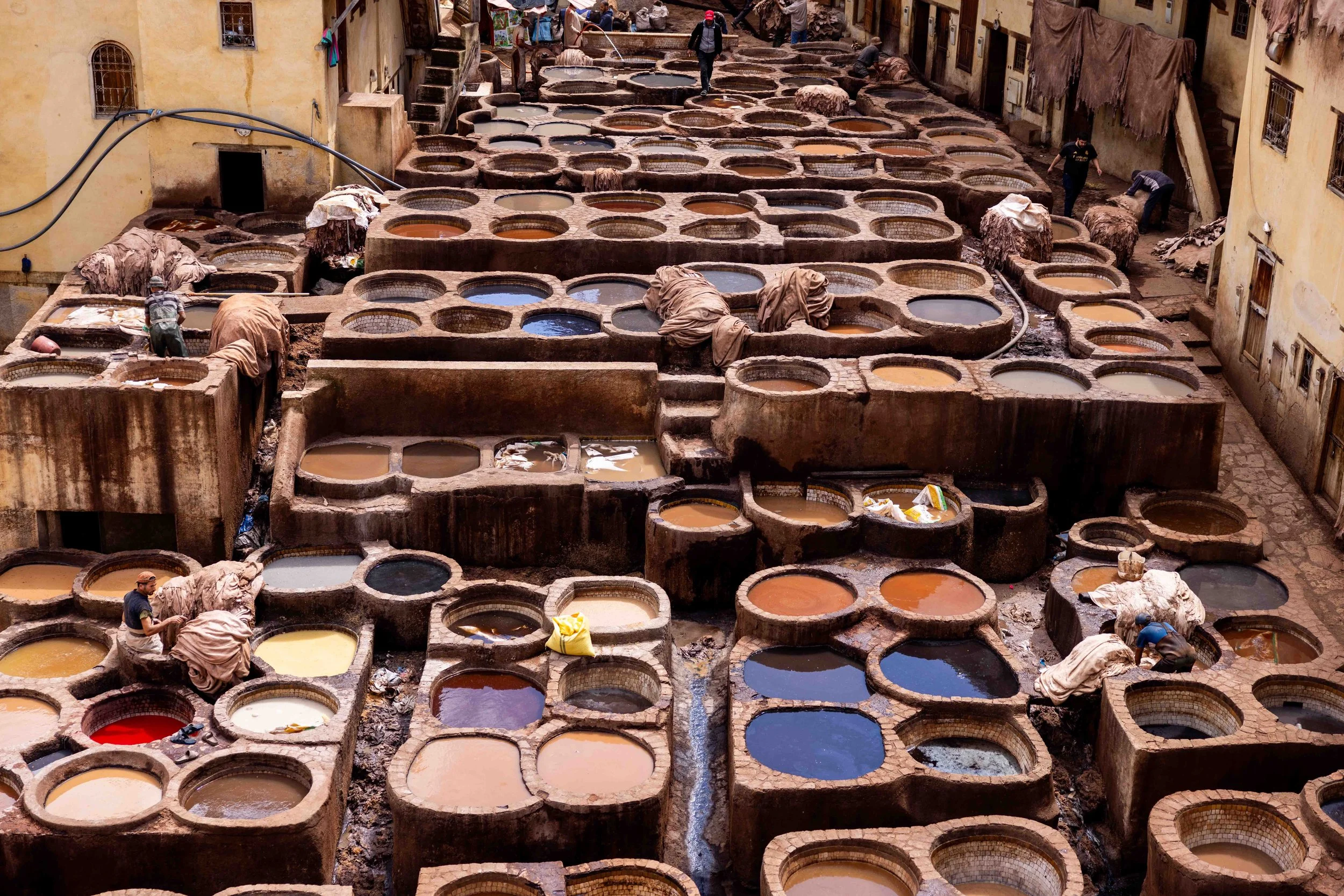
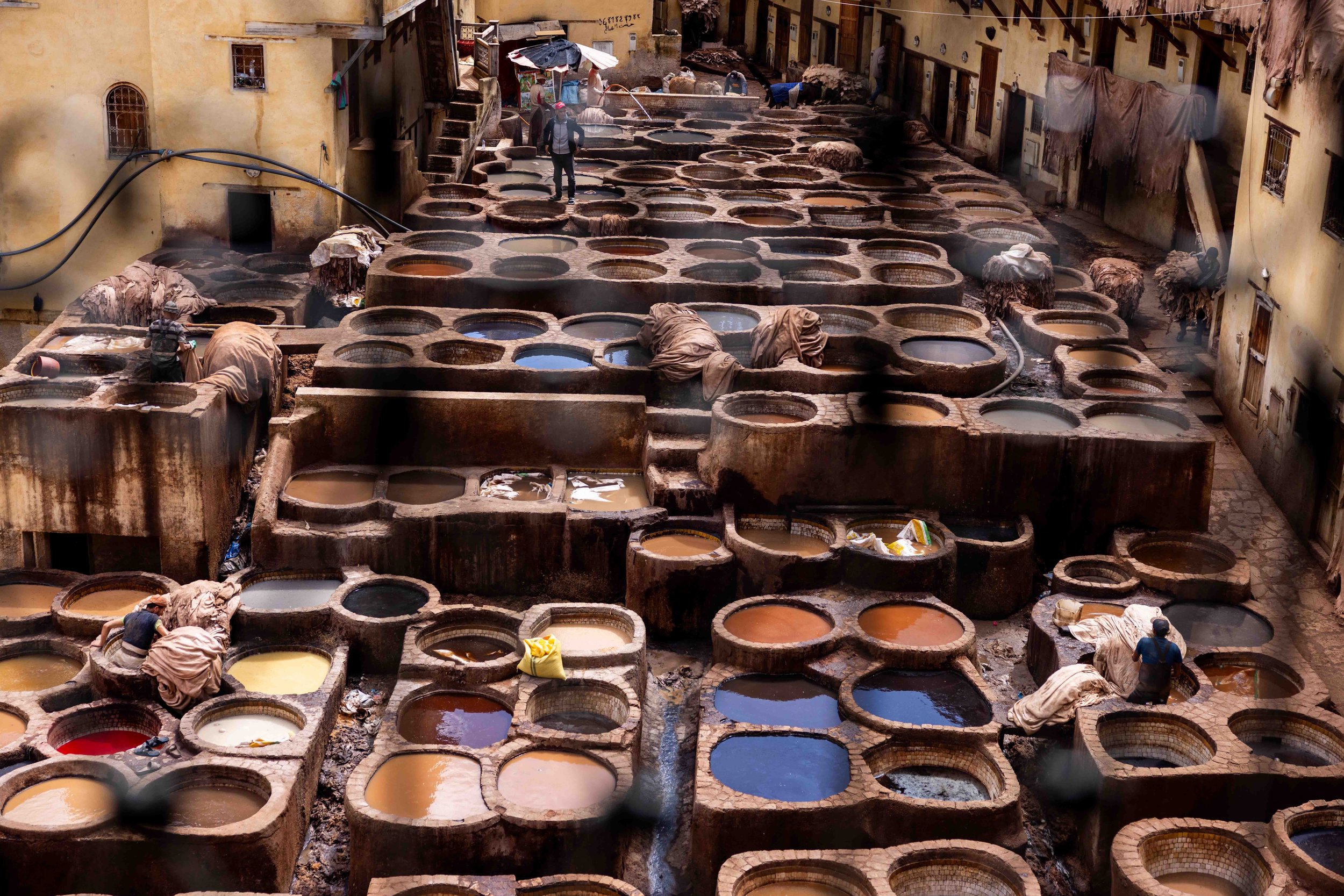
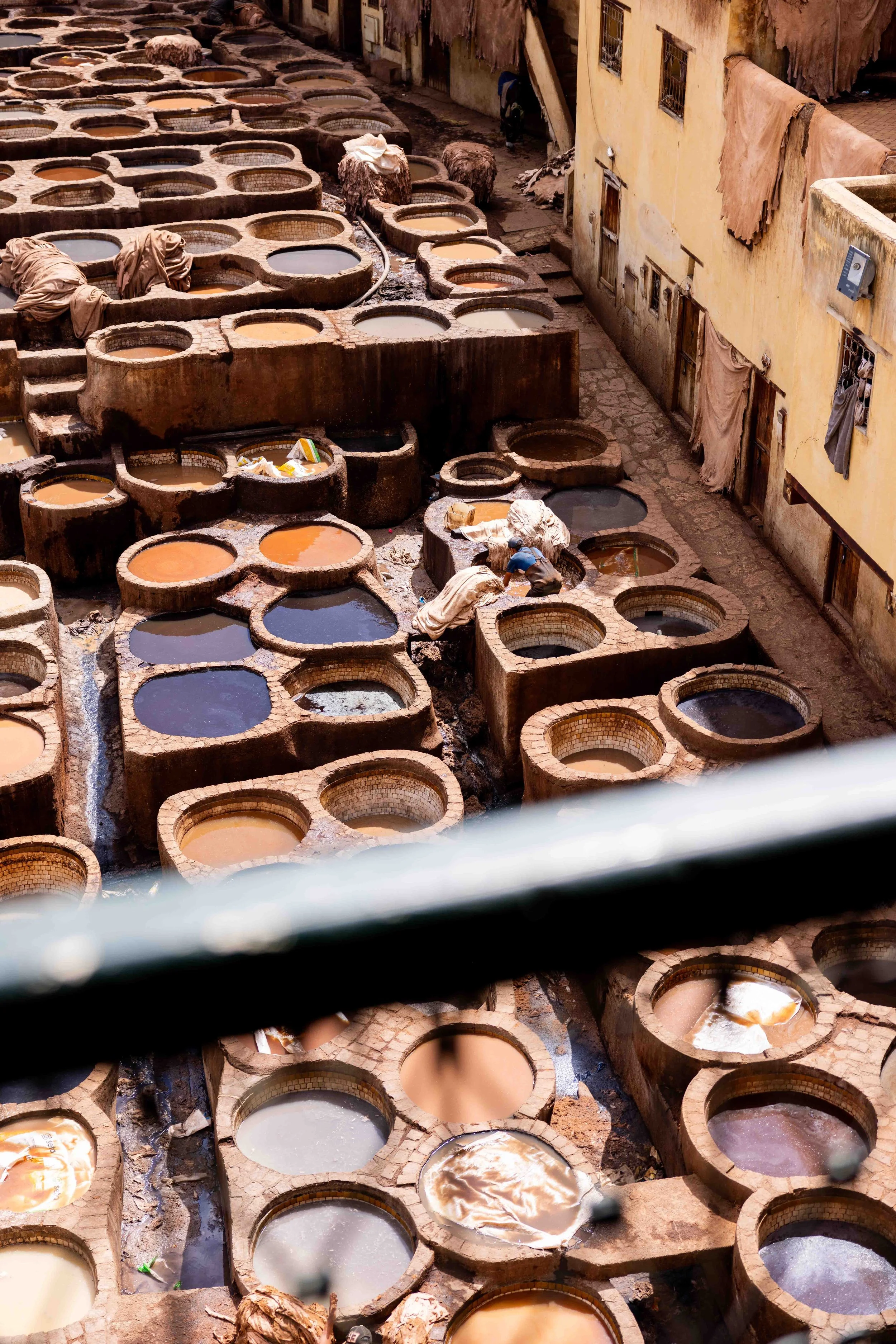
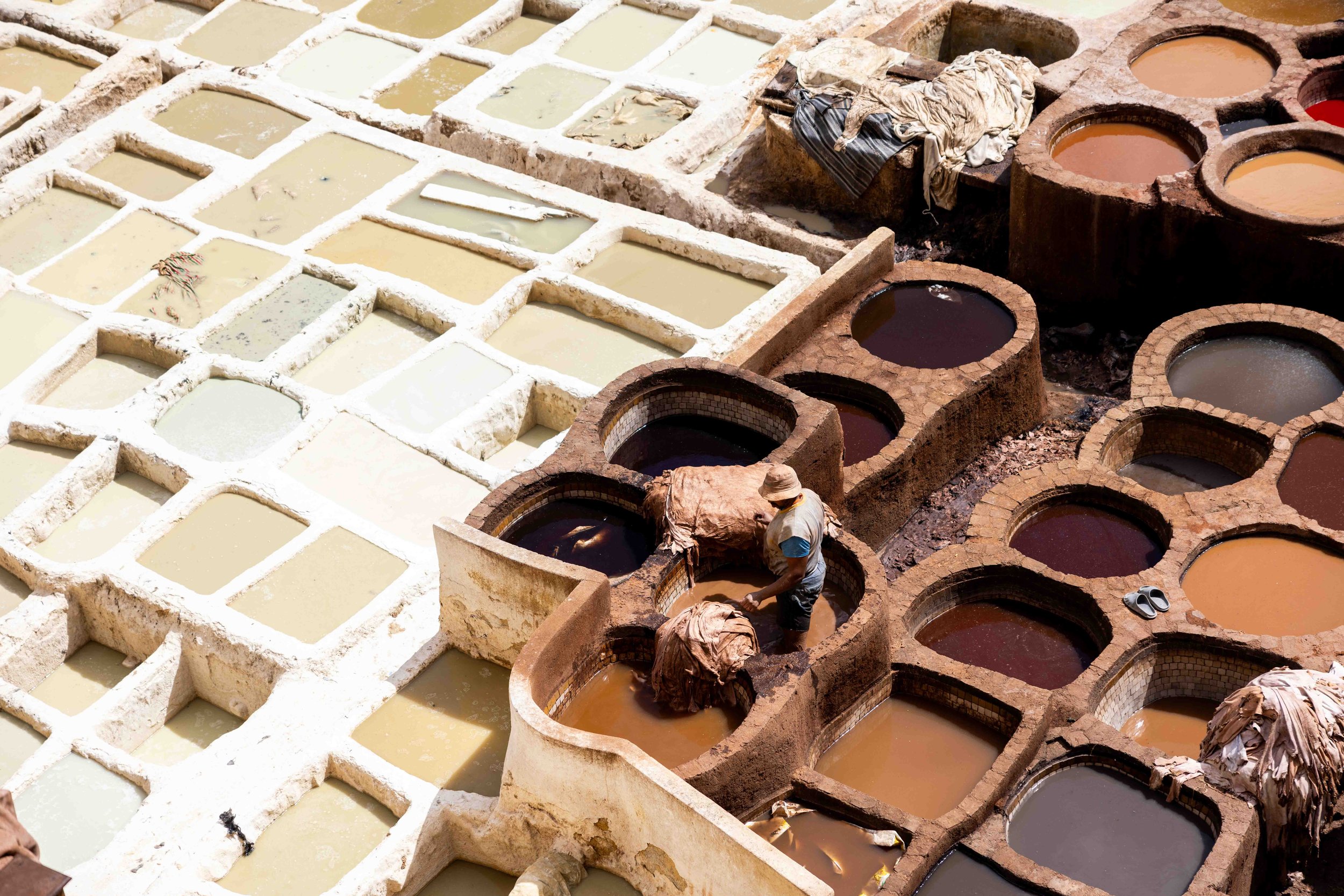
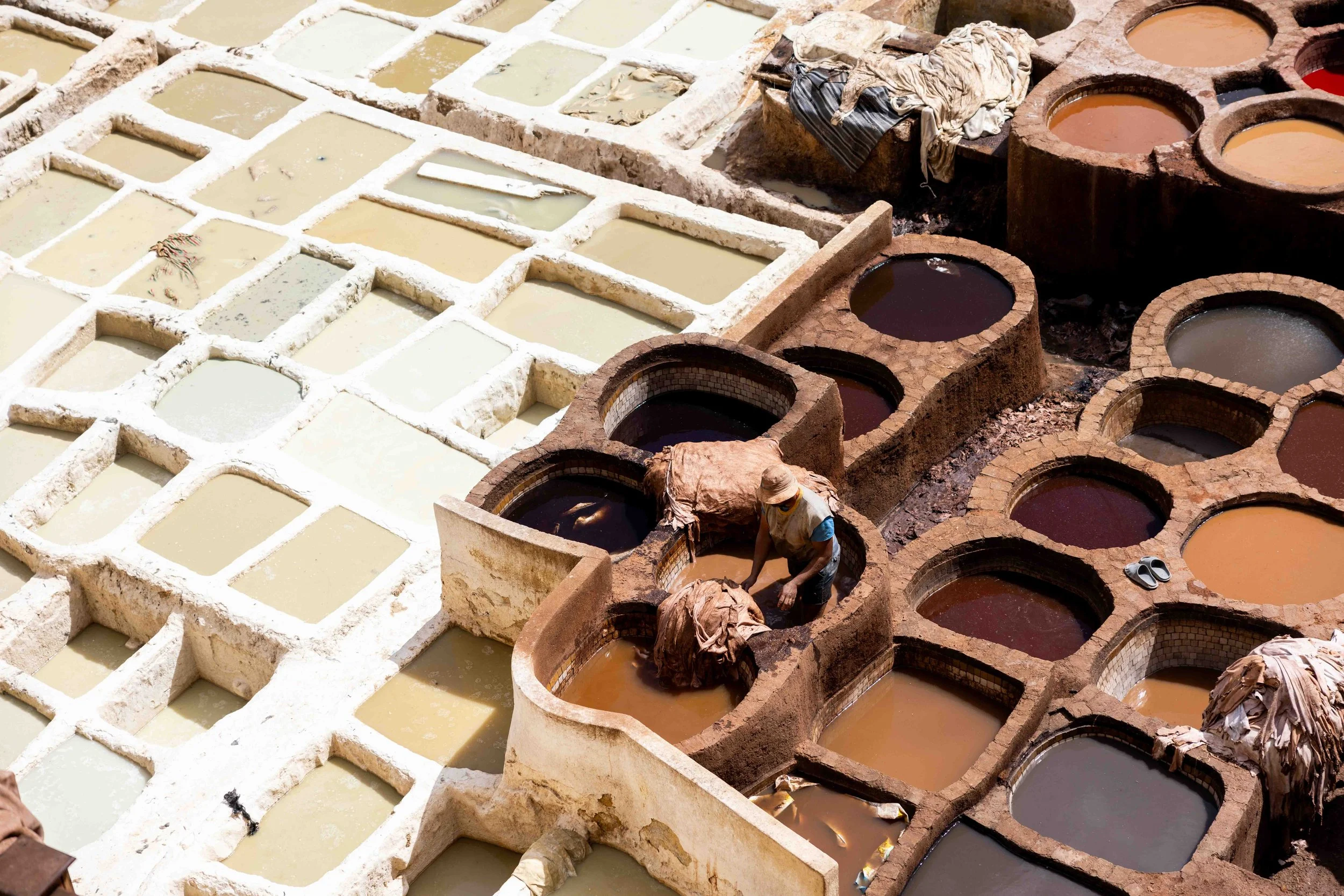
As we wandered deeper into the medina, it became clear that Fes is not preserved—it is lived. Donkeys navigated impossibly narrow alleys, shopkeepers called out from tiny stalls, and the scent of leather and spices lingered in the air. The famous tanneries, born from centuries-old demand for bookbinding leather, remain active to this day—a testament to the city’s enduring craft traditions.
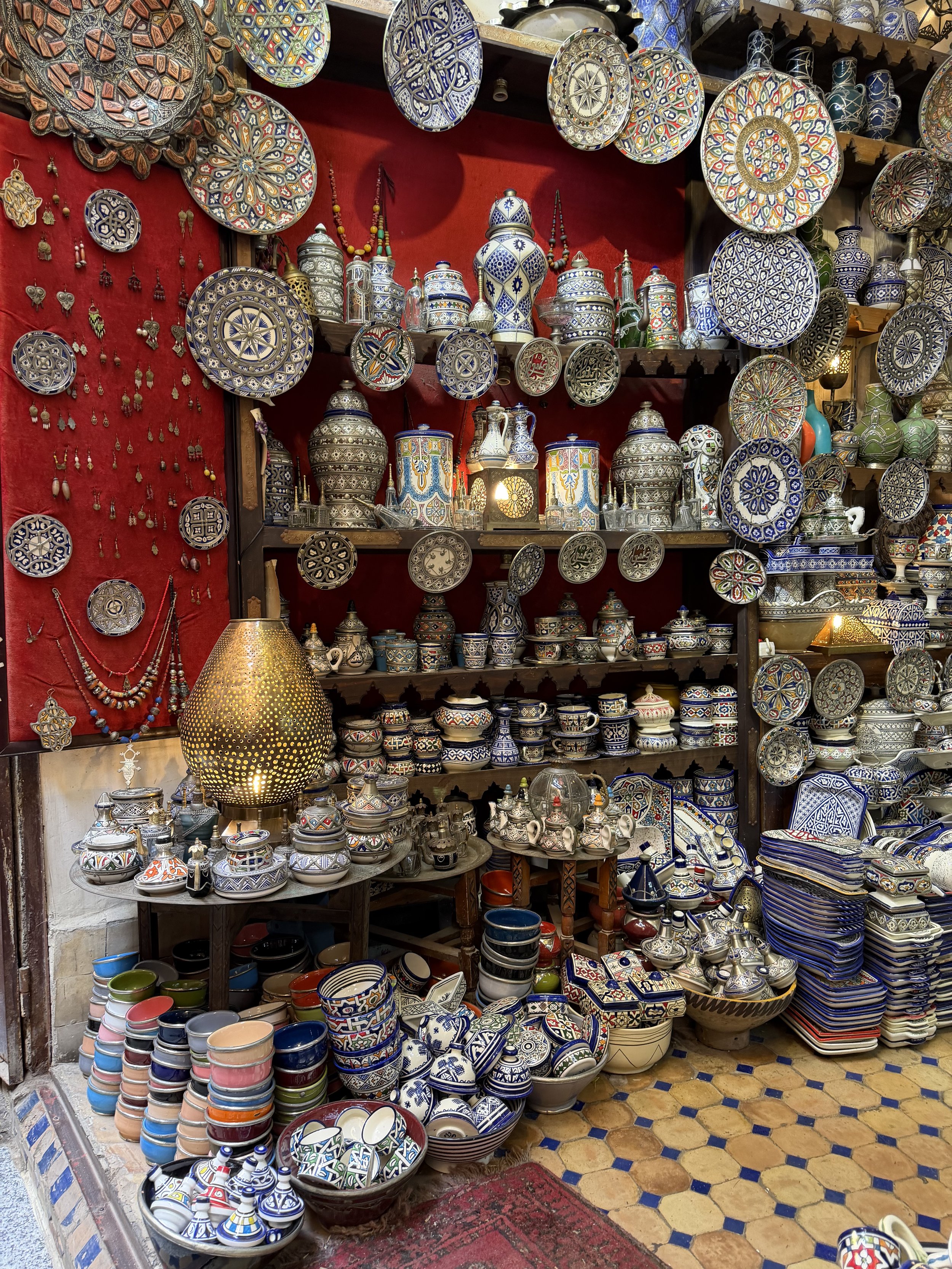
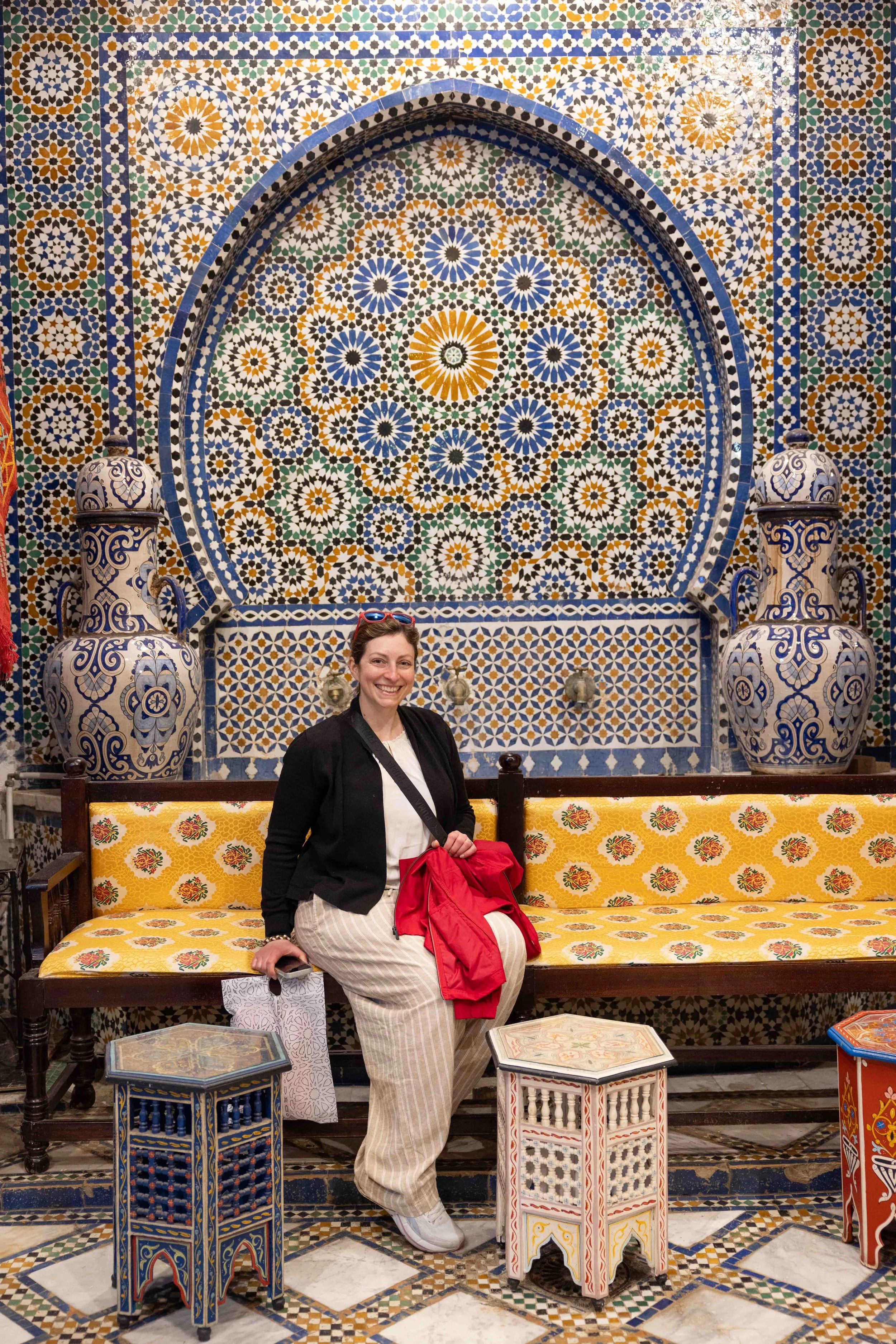
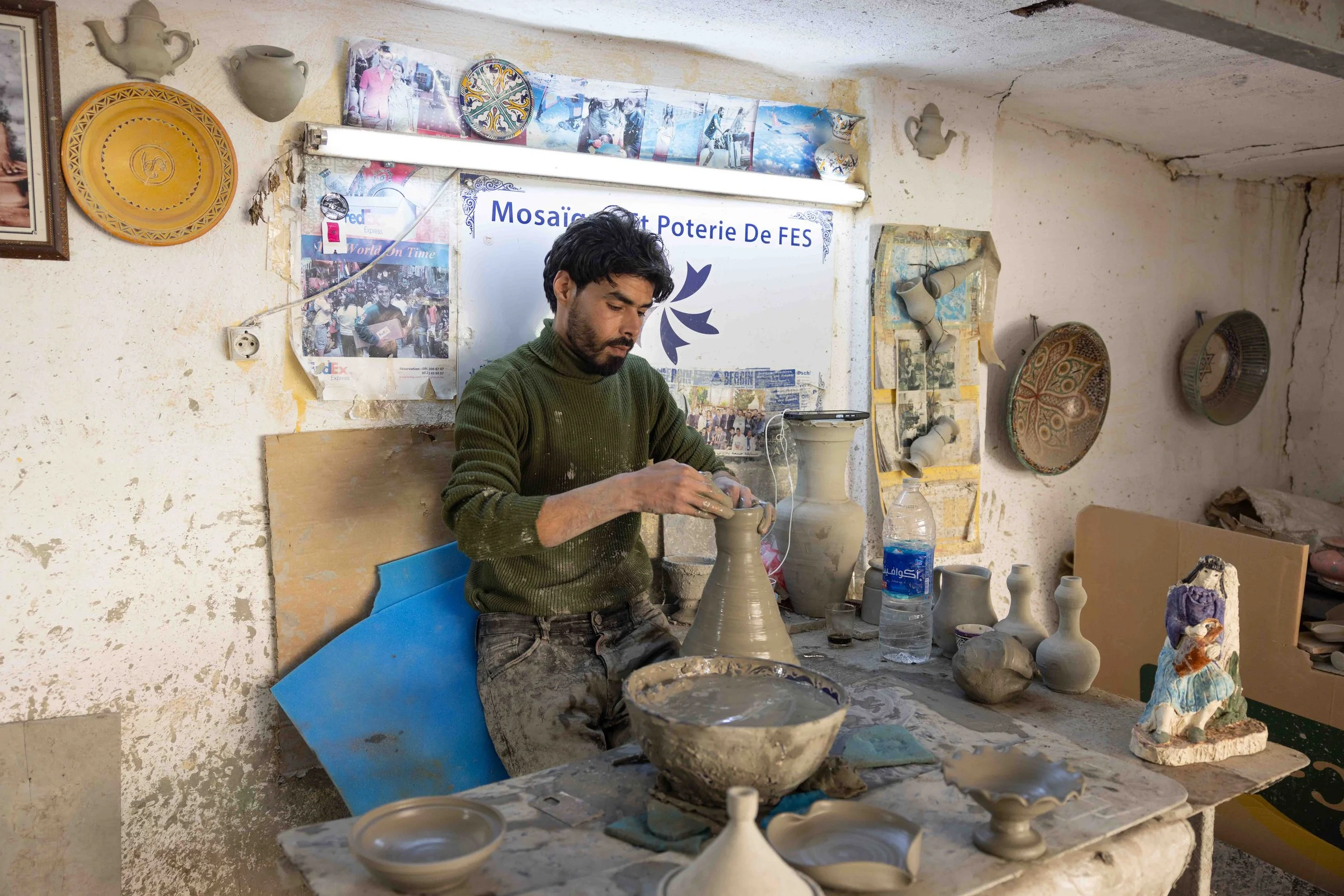
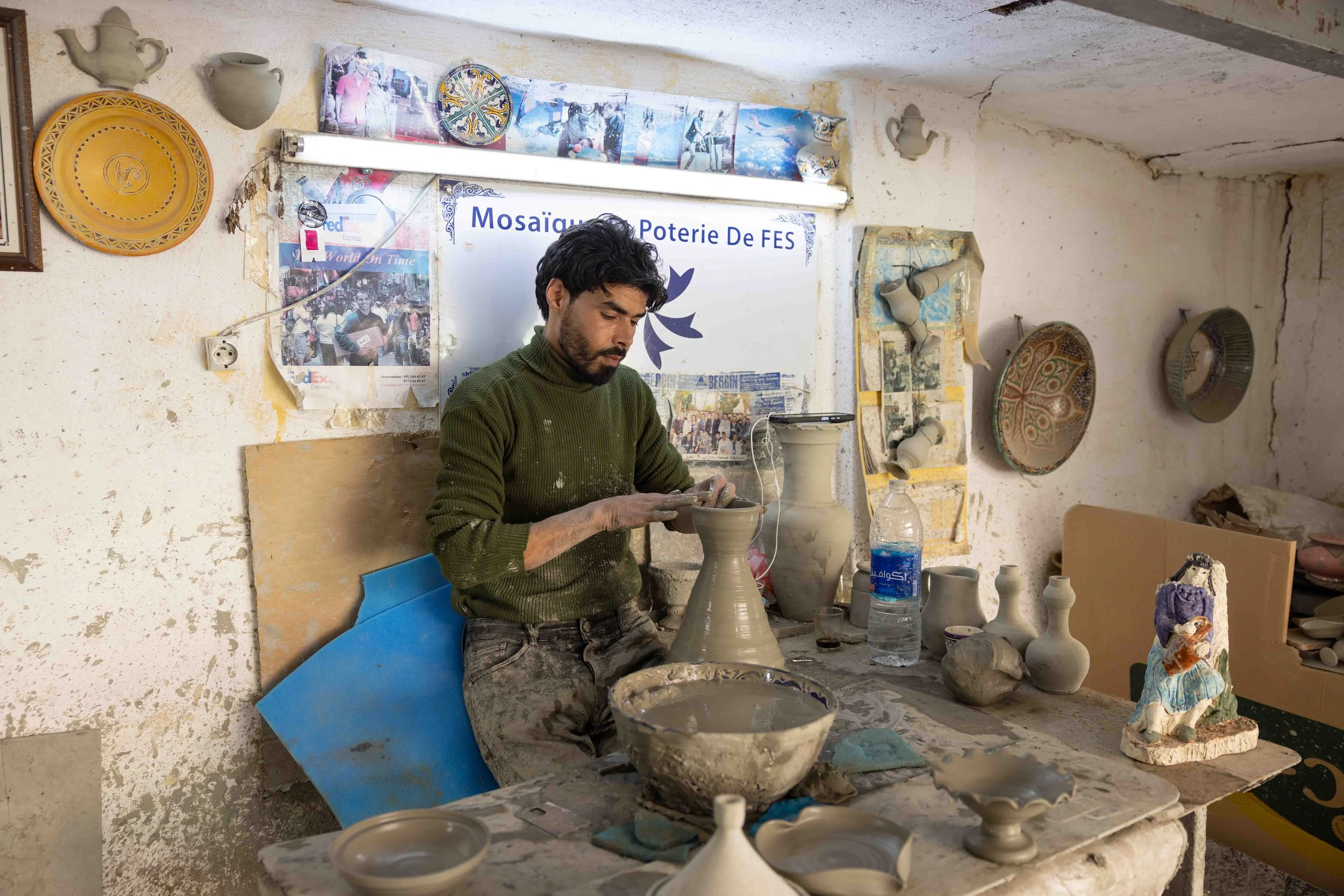
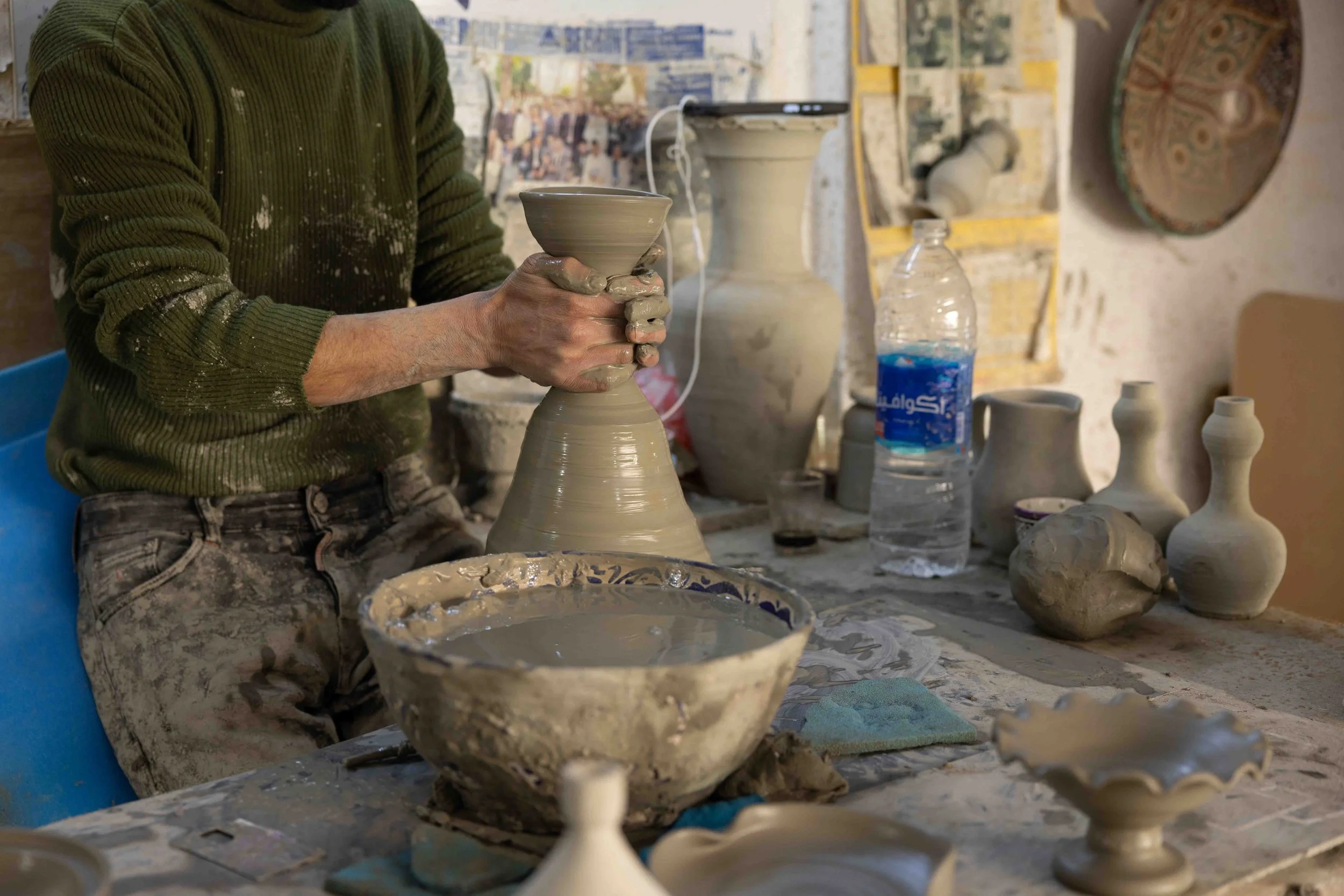
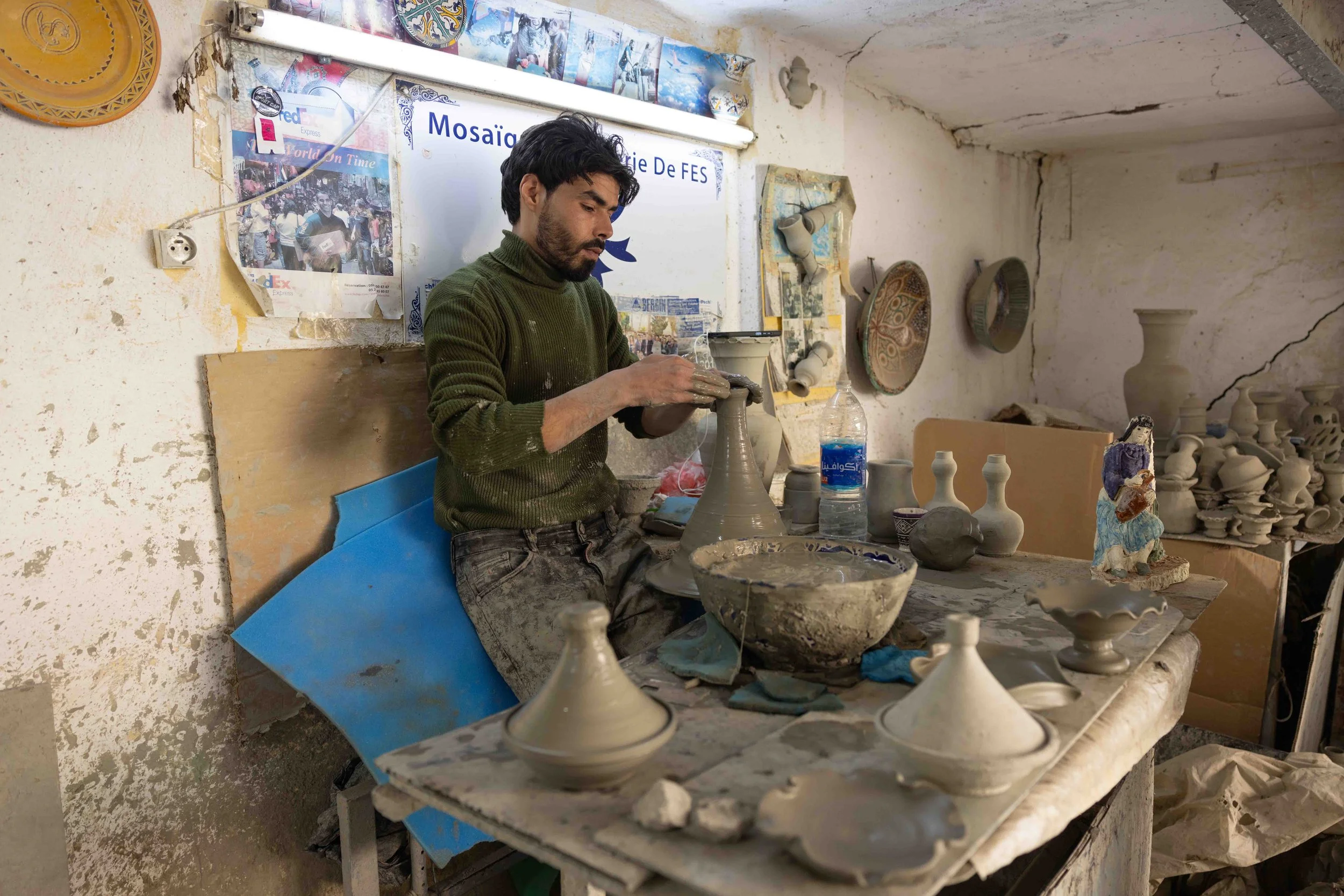
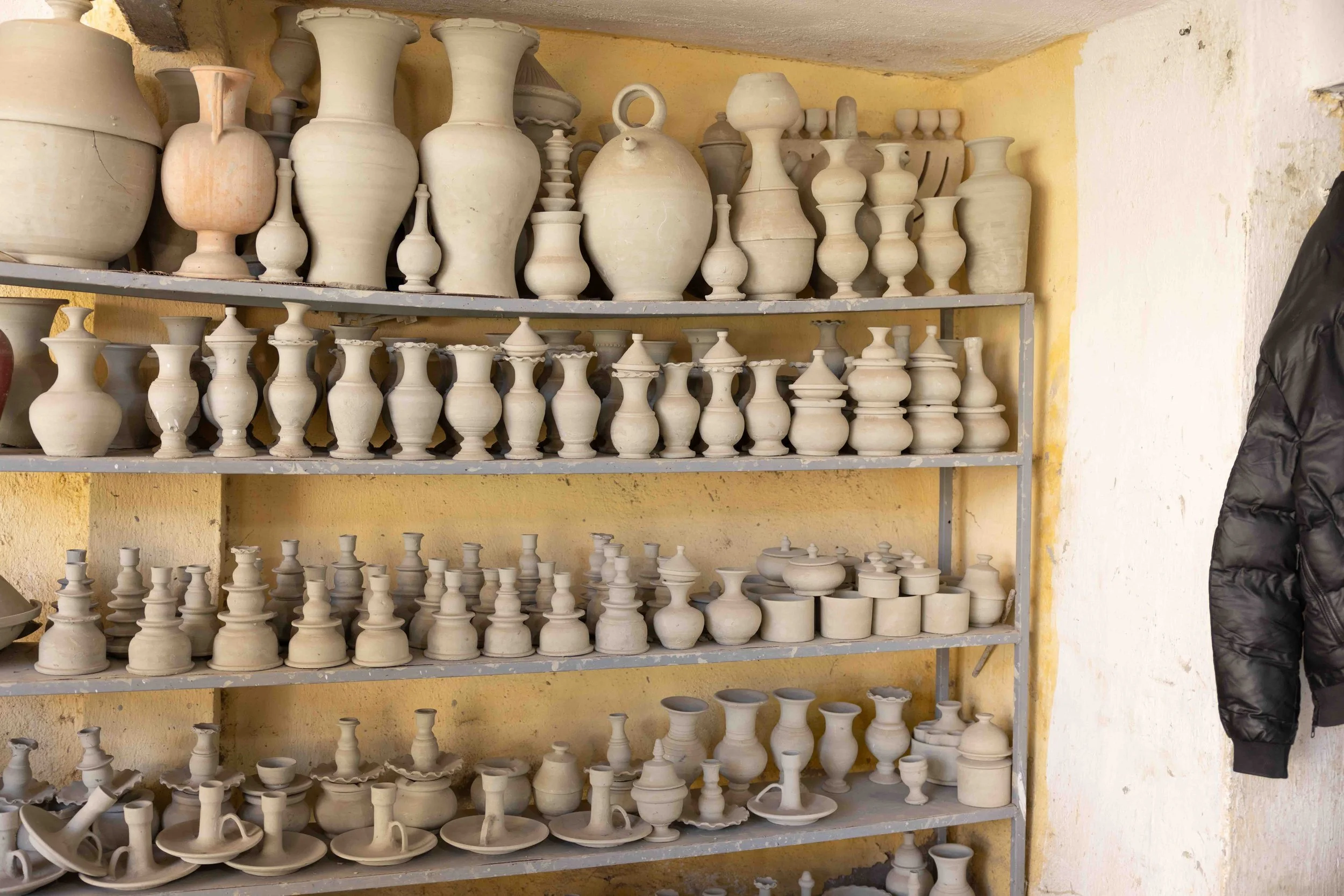
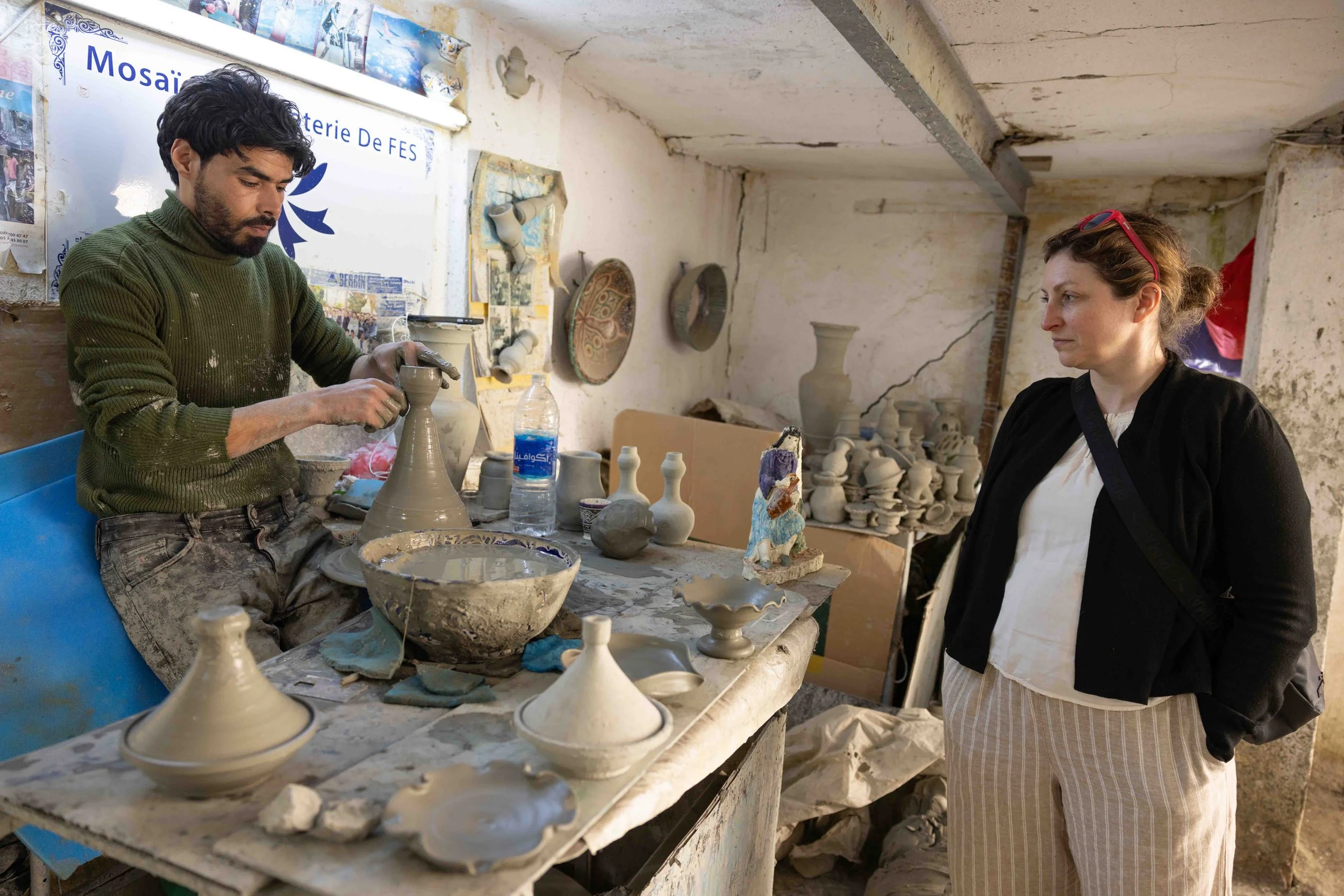
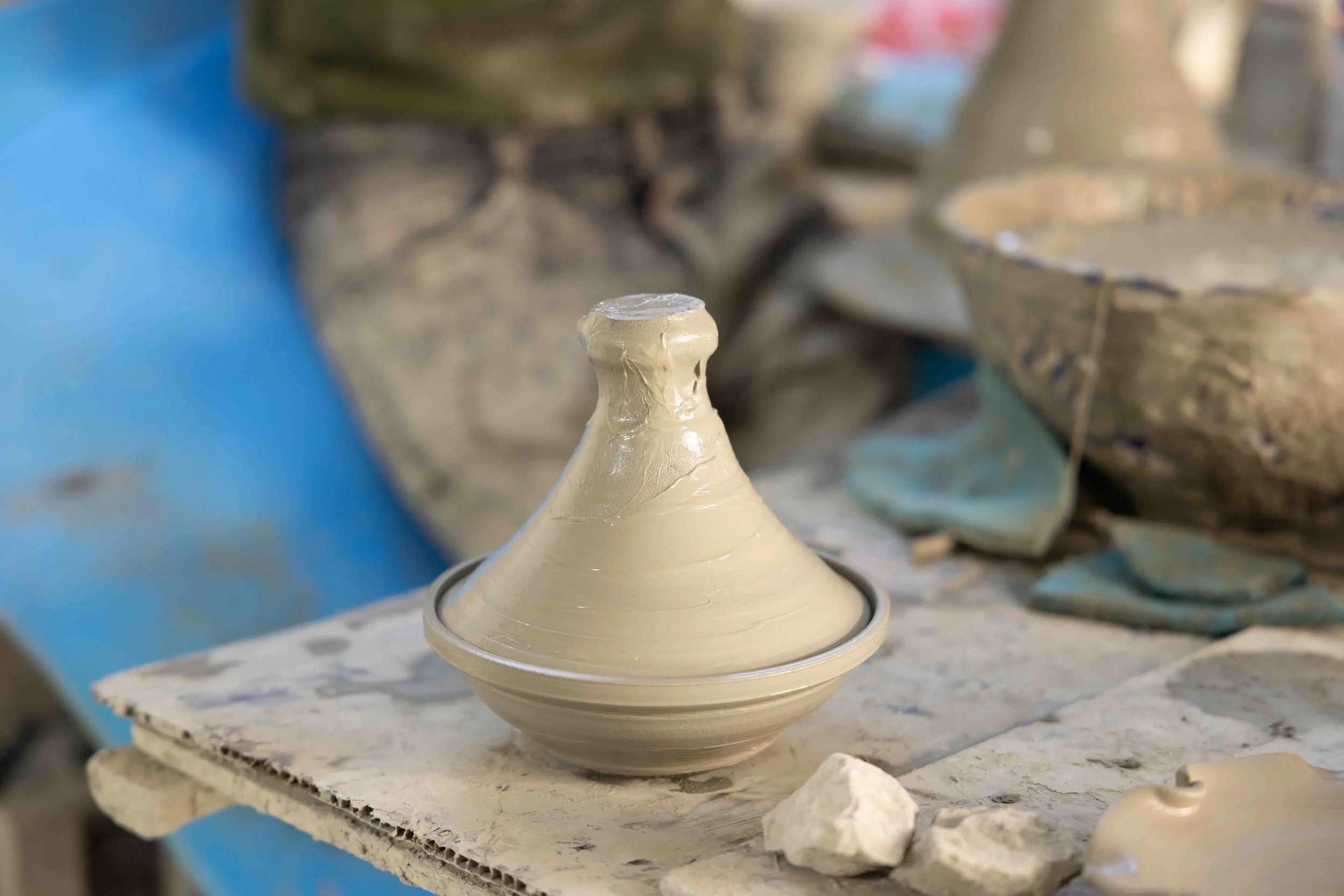
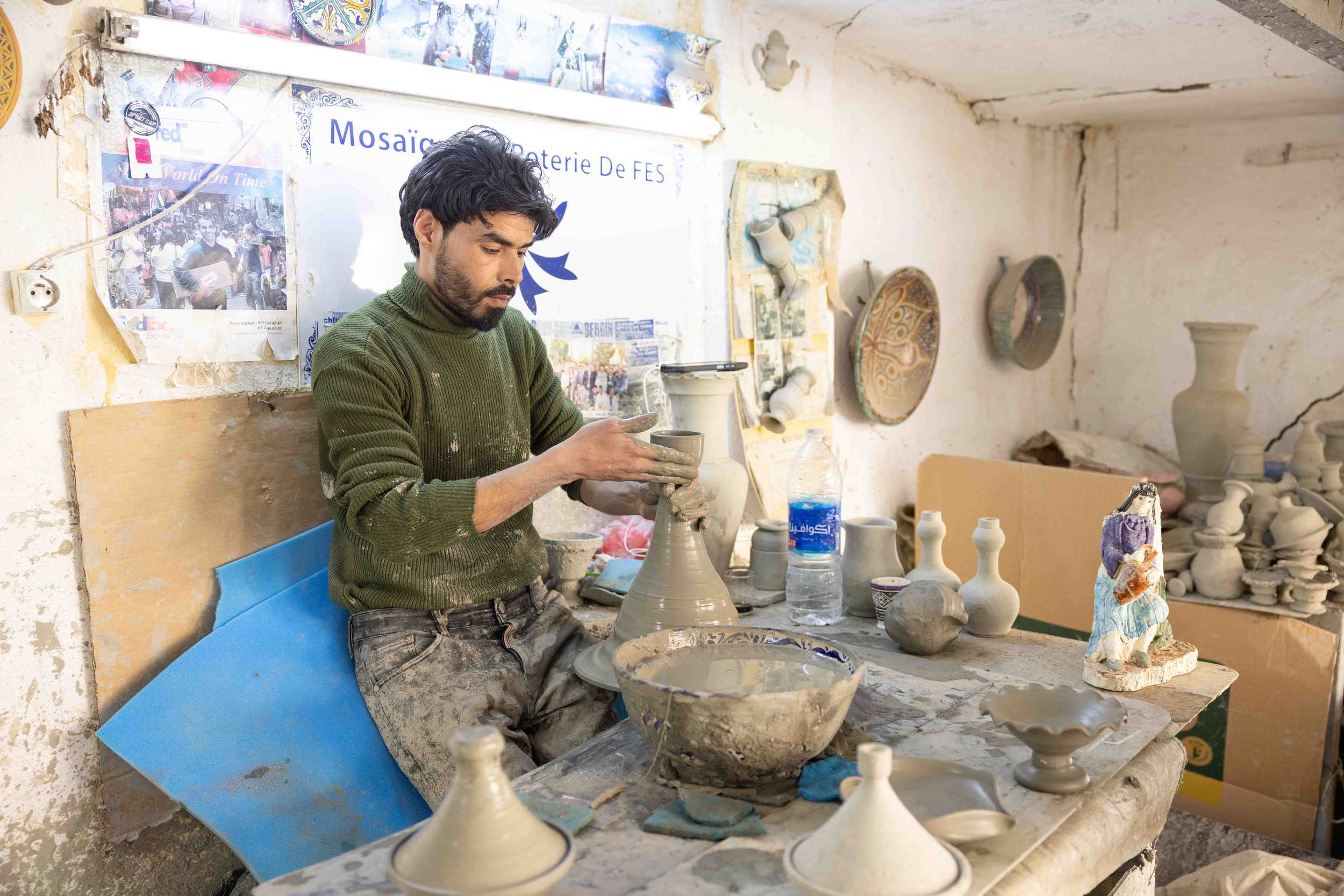
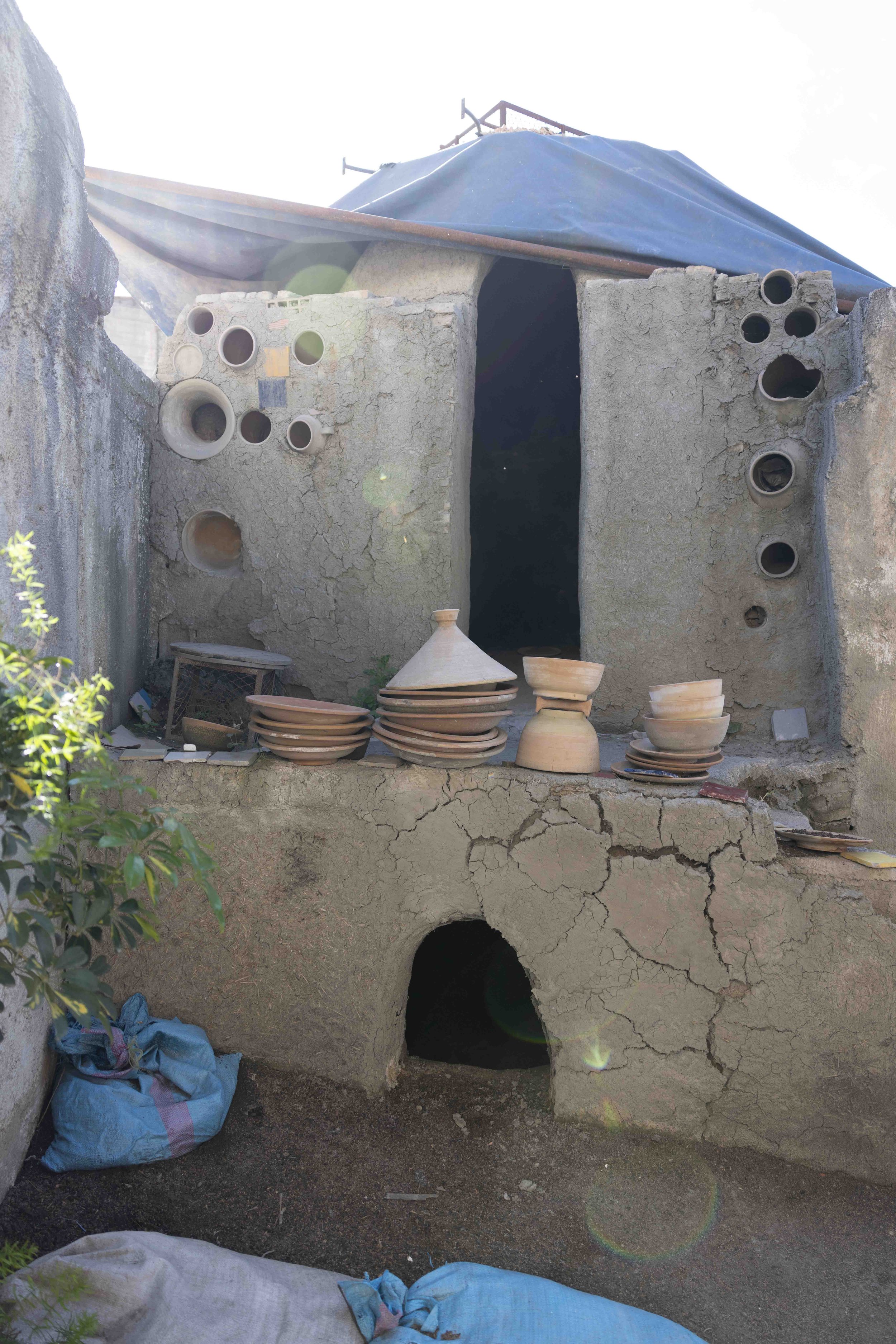
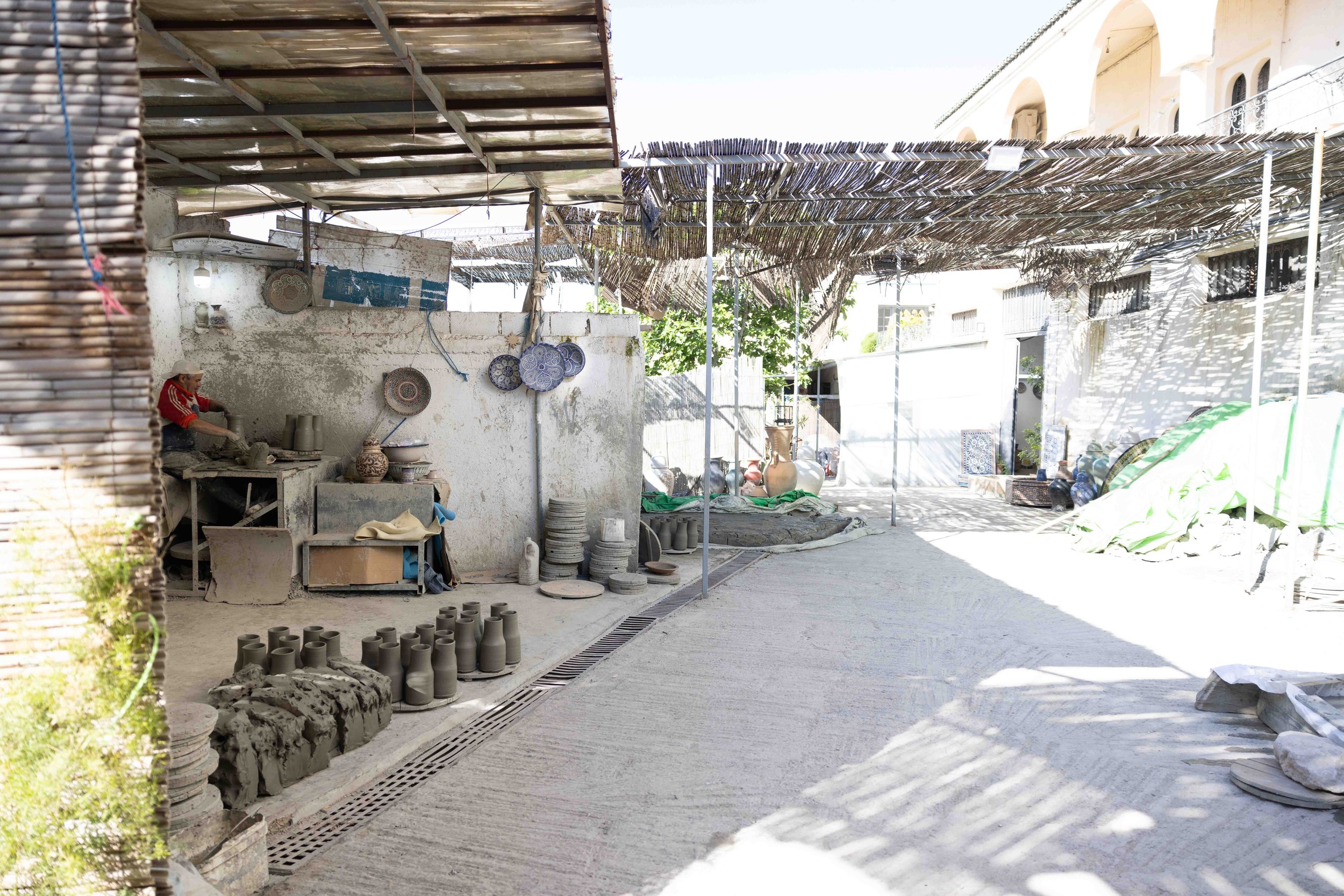
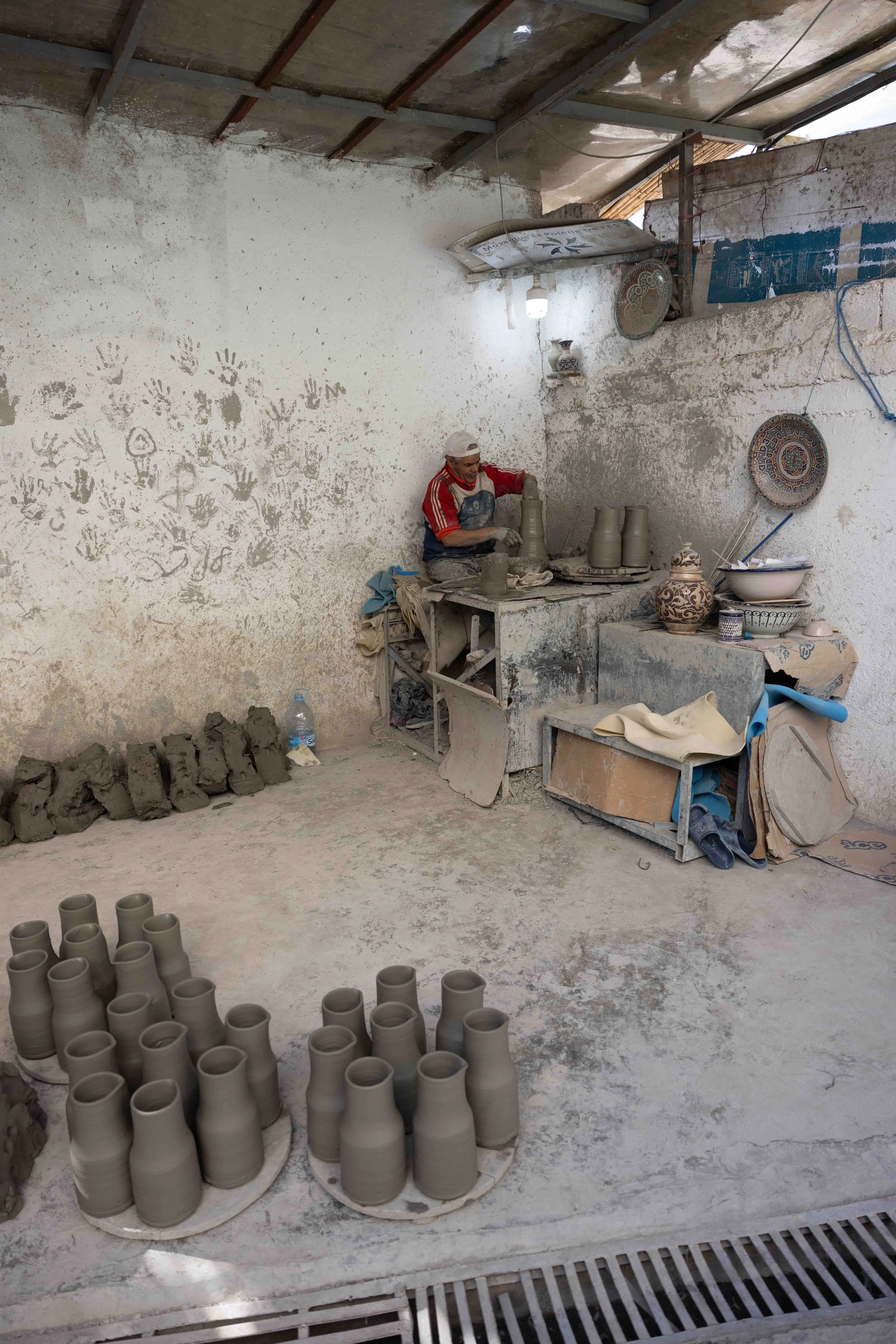
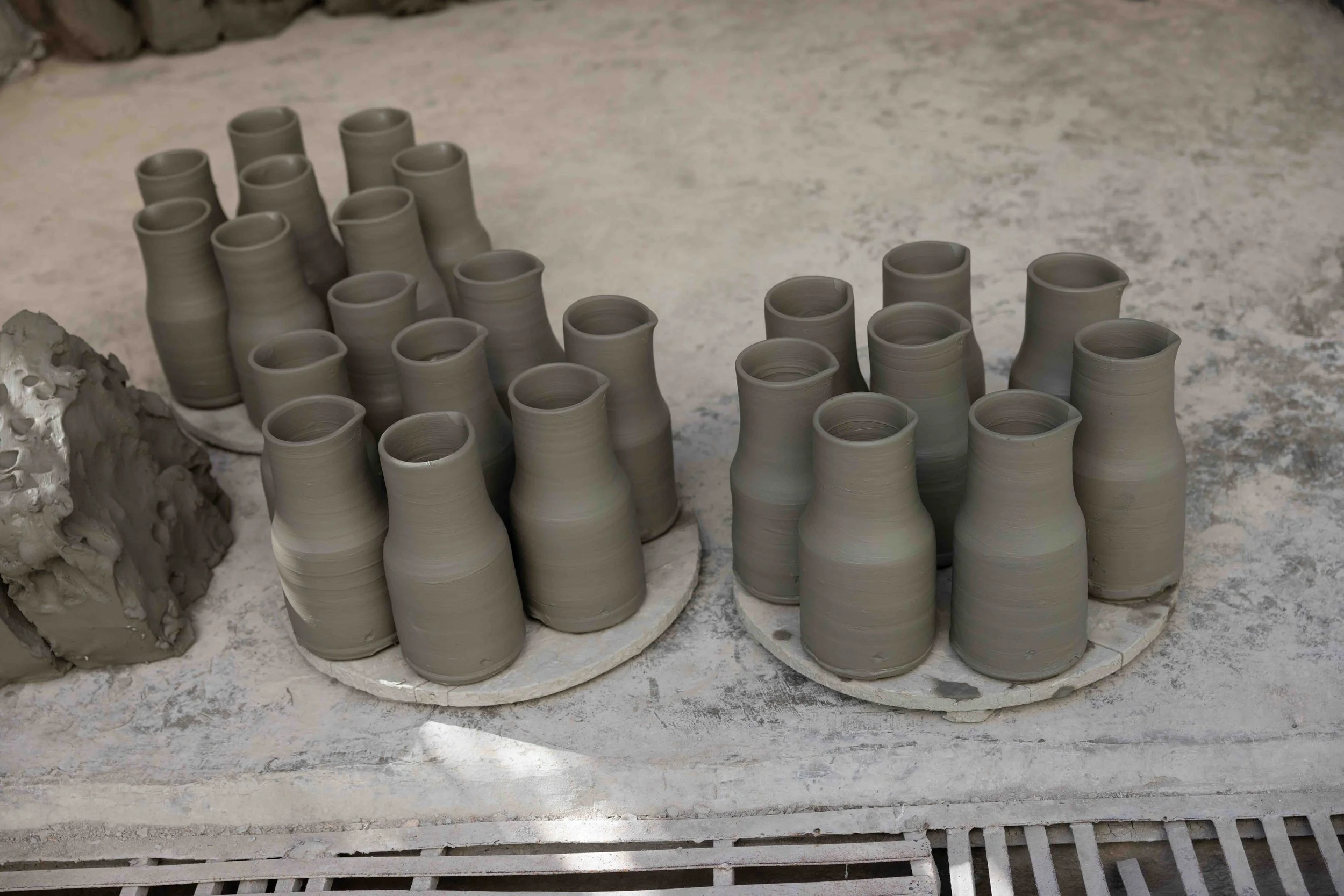
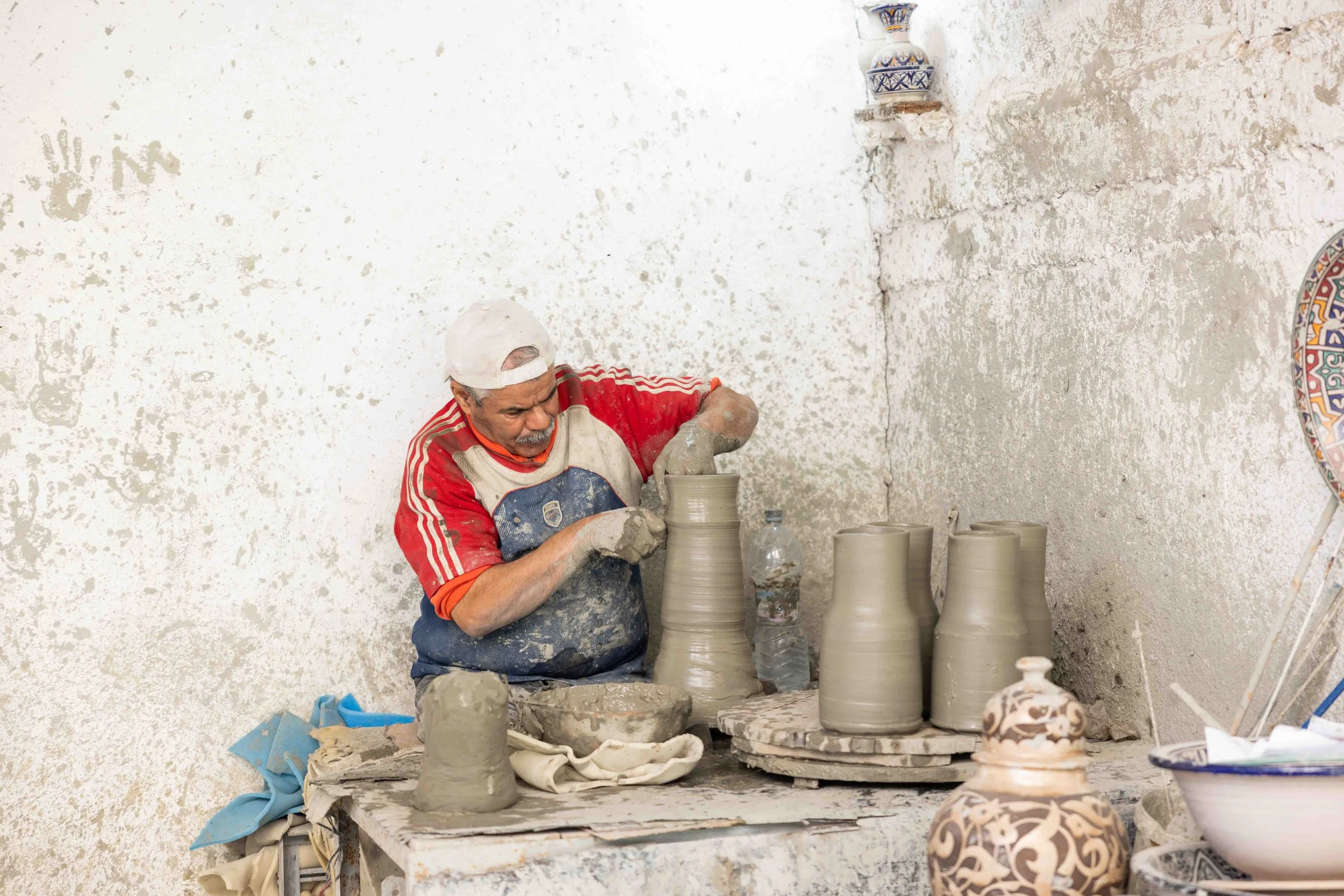
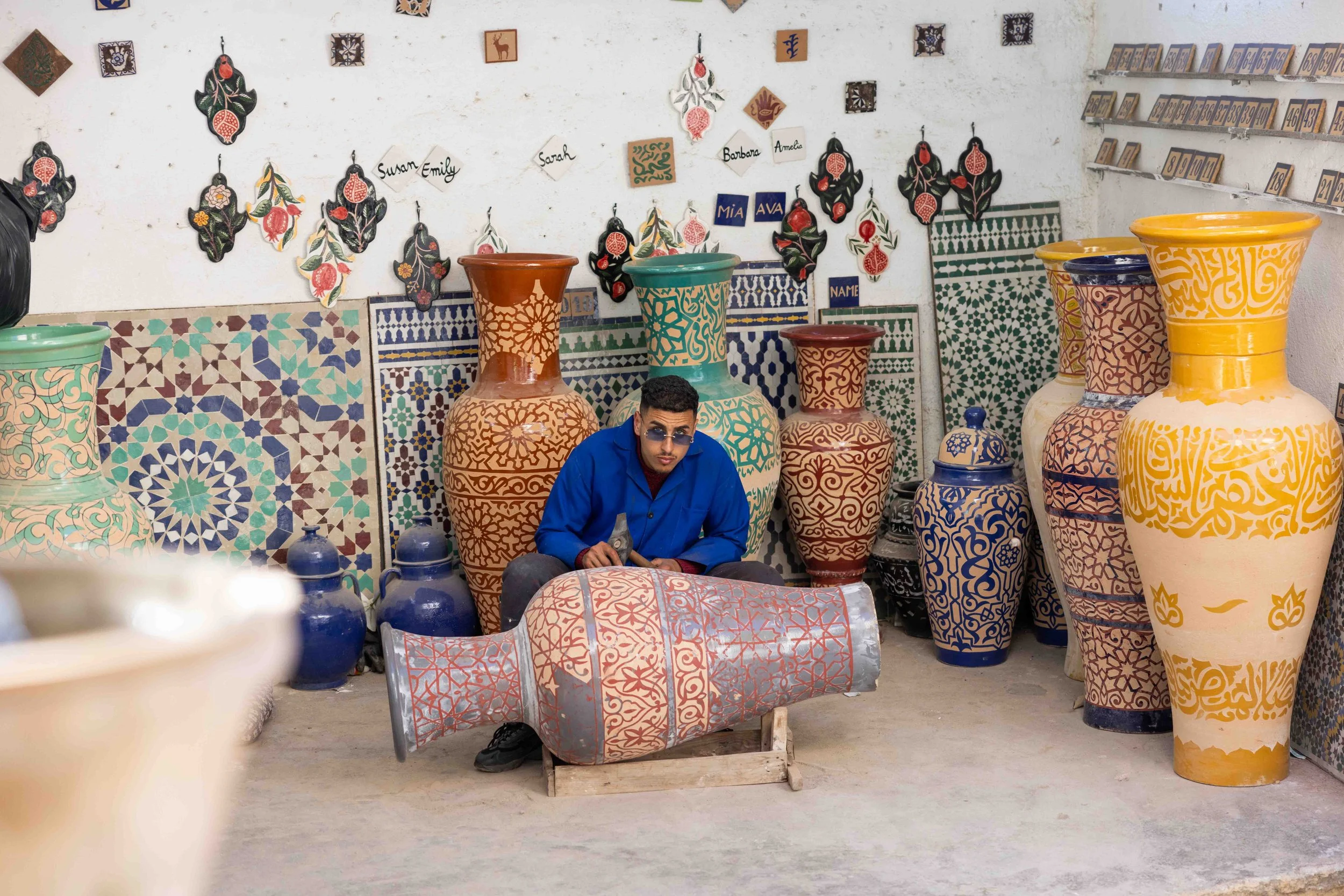
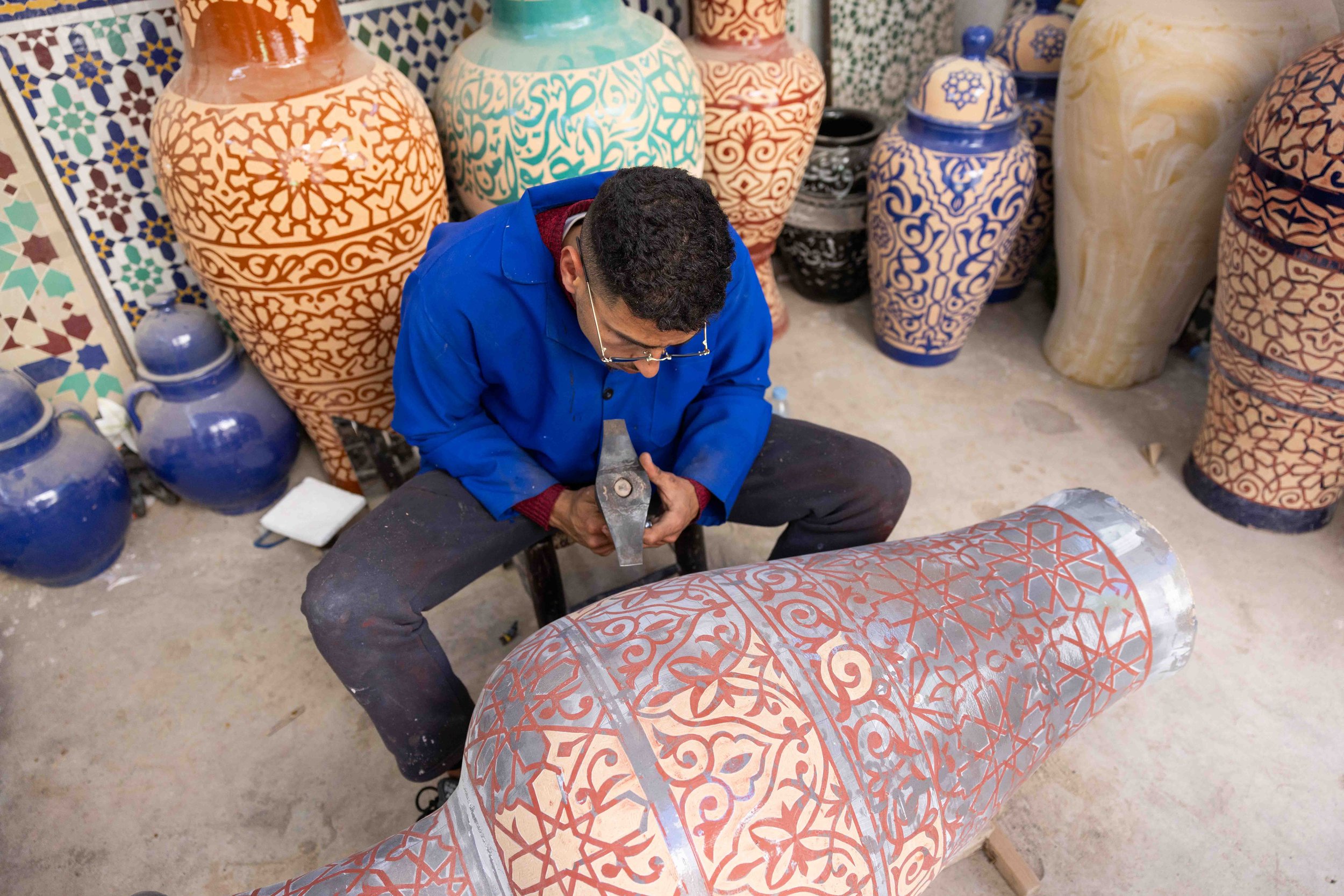
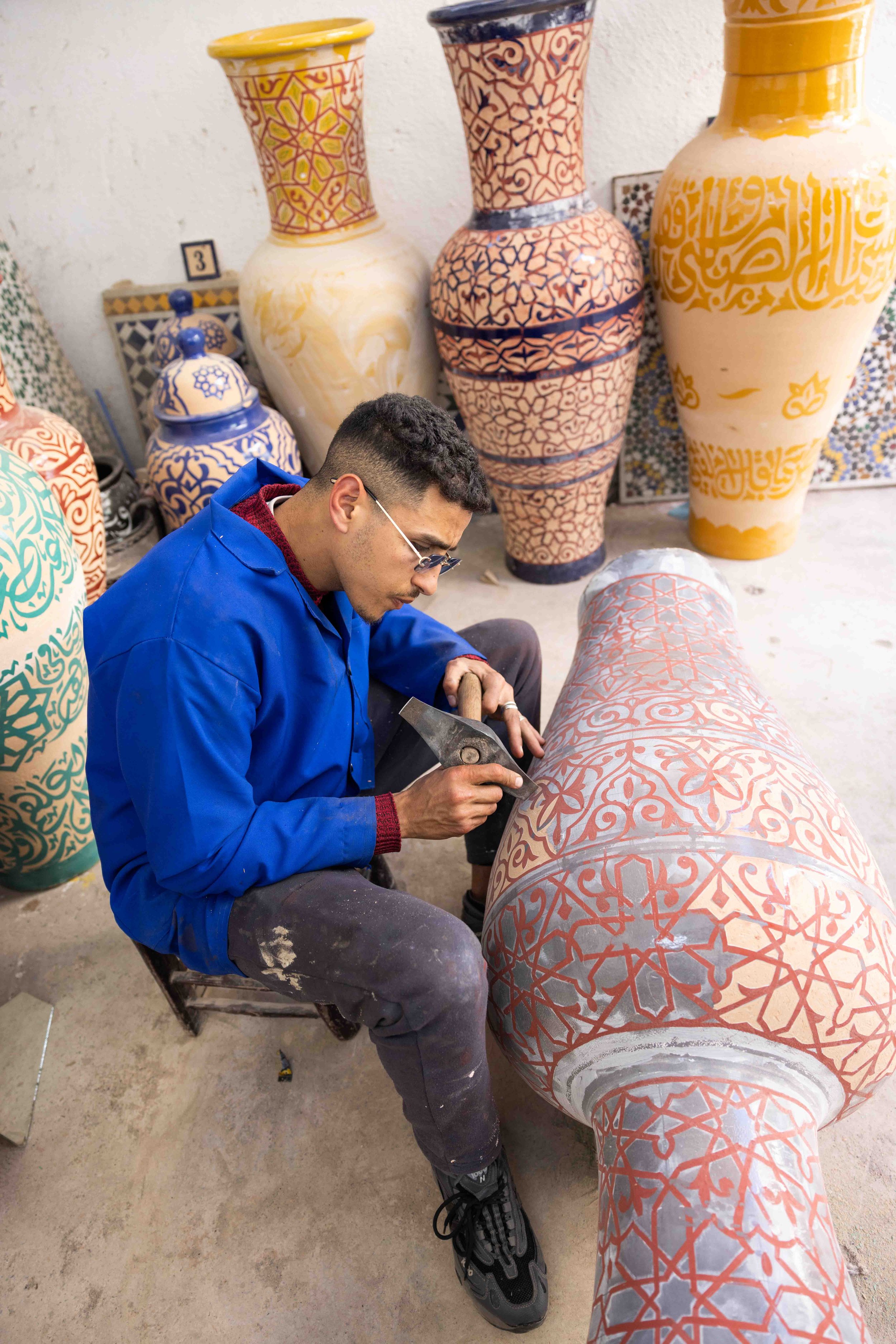
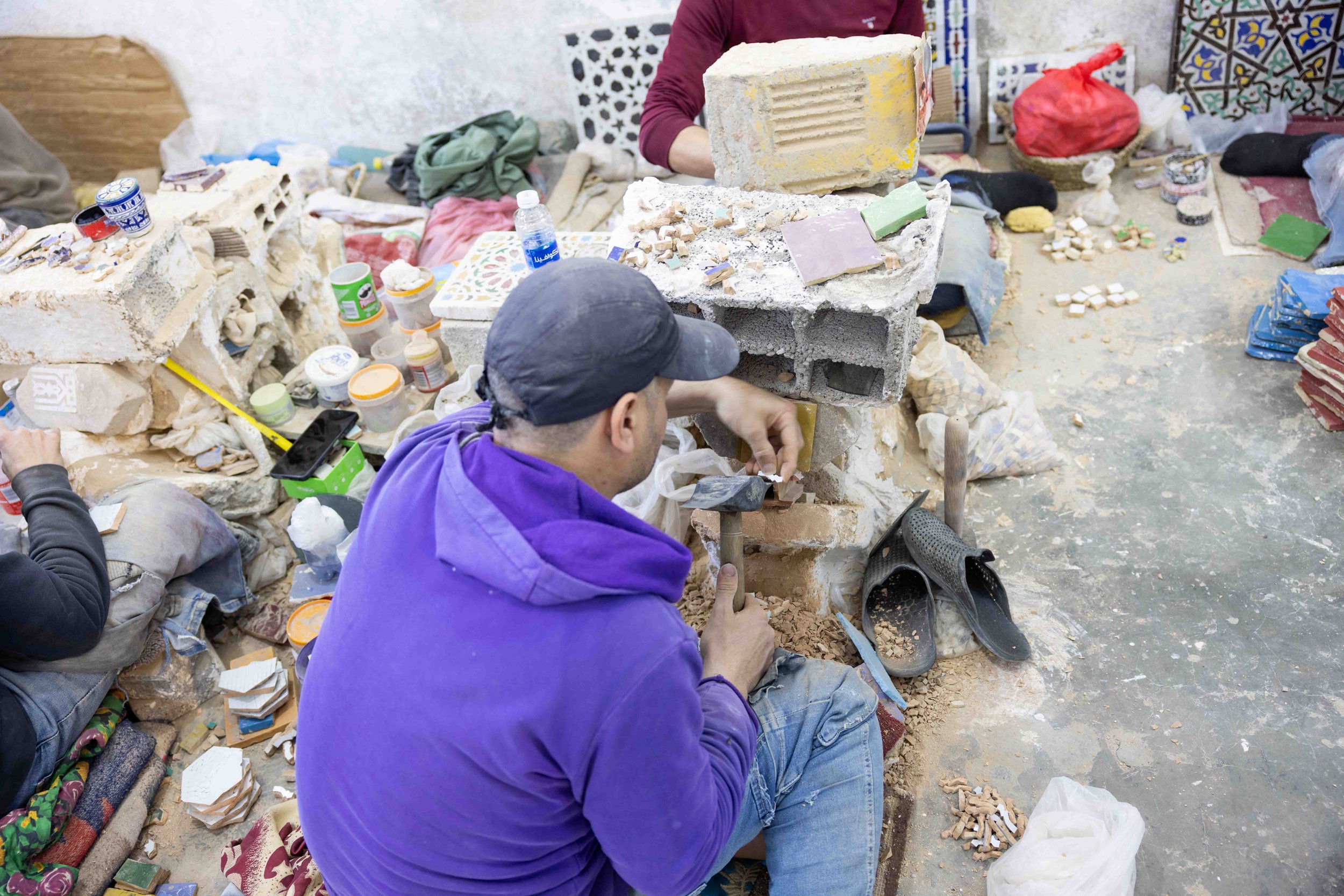
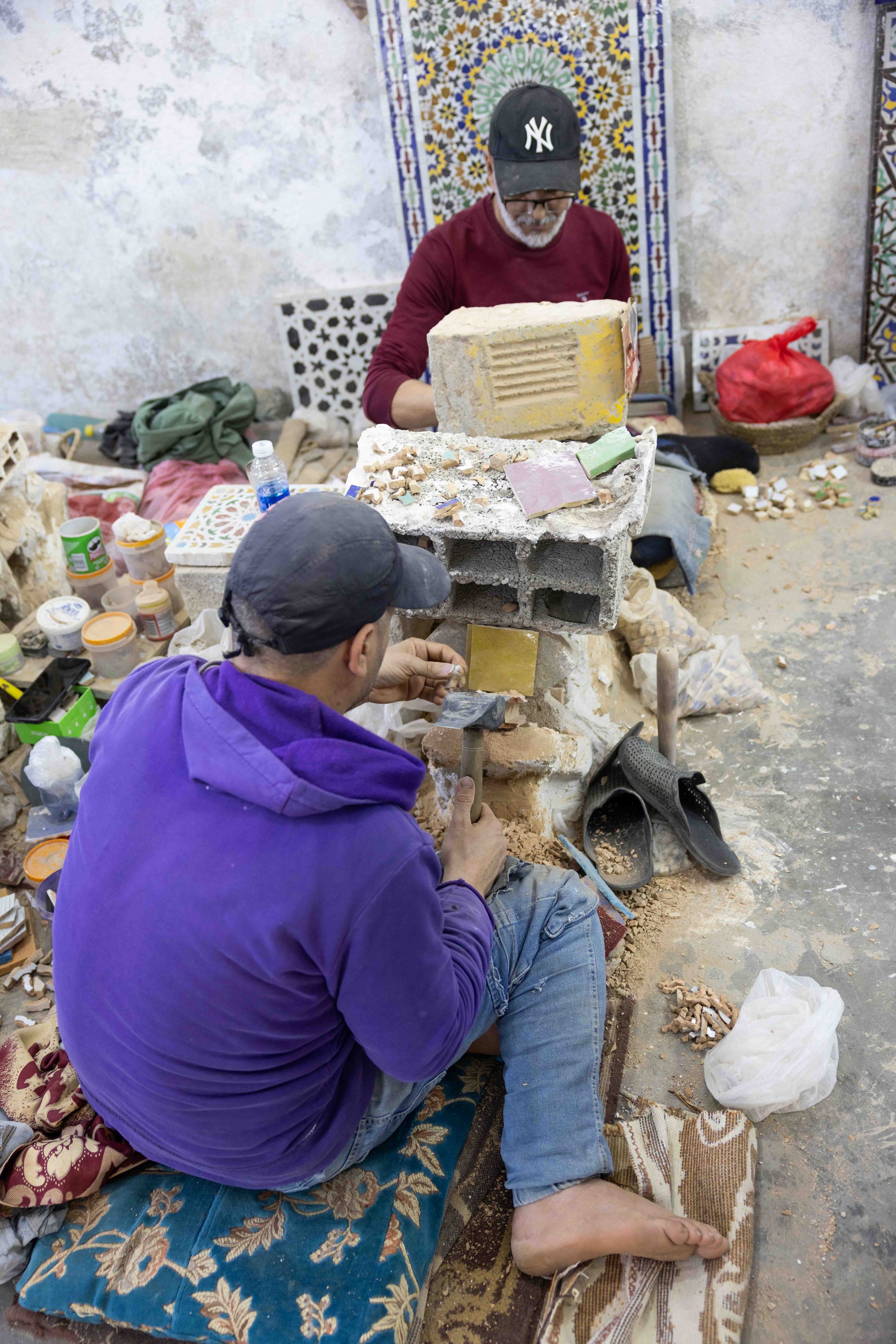
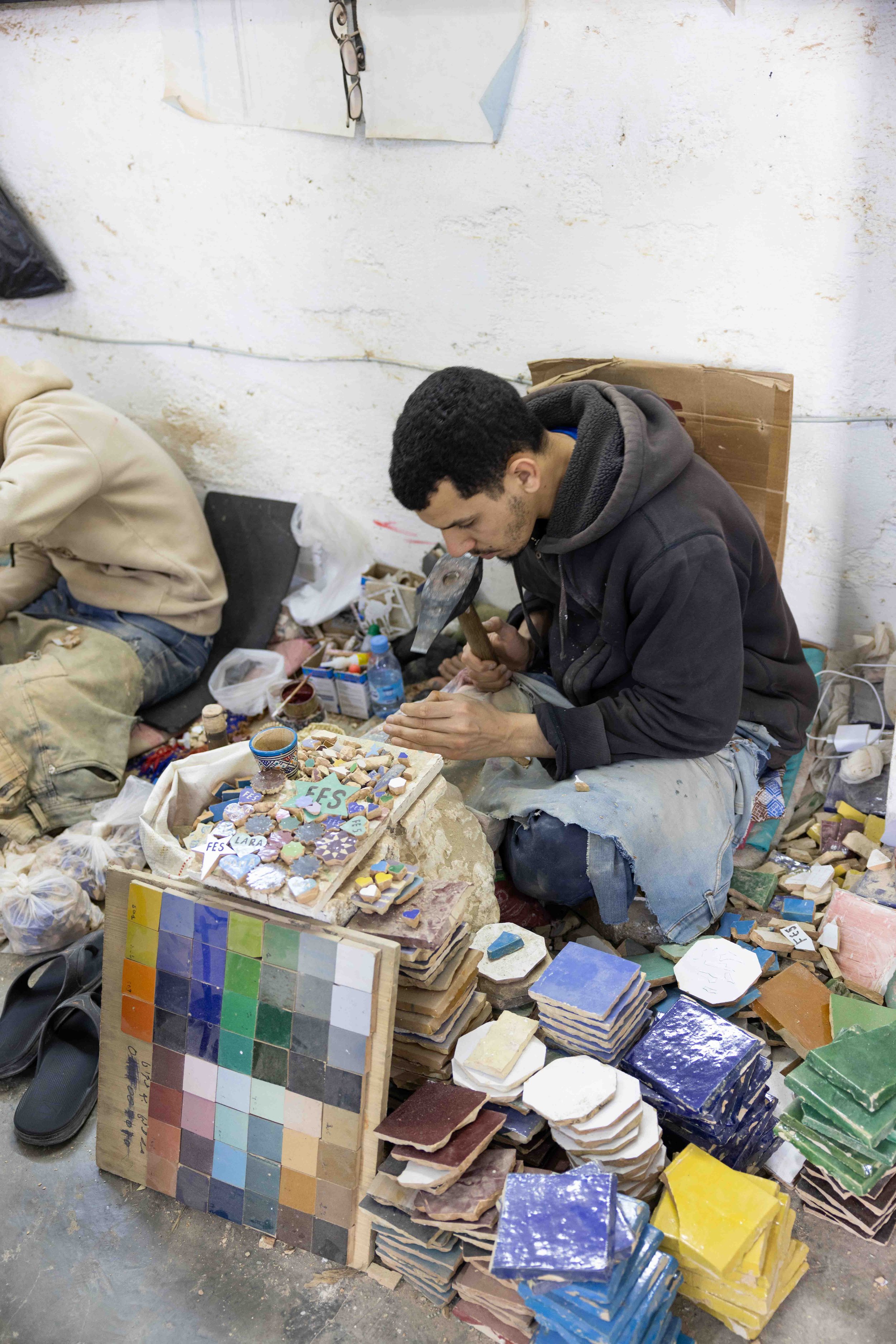
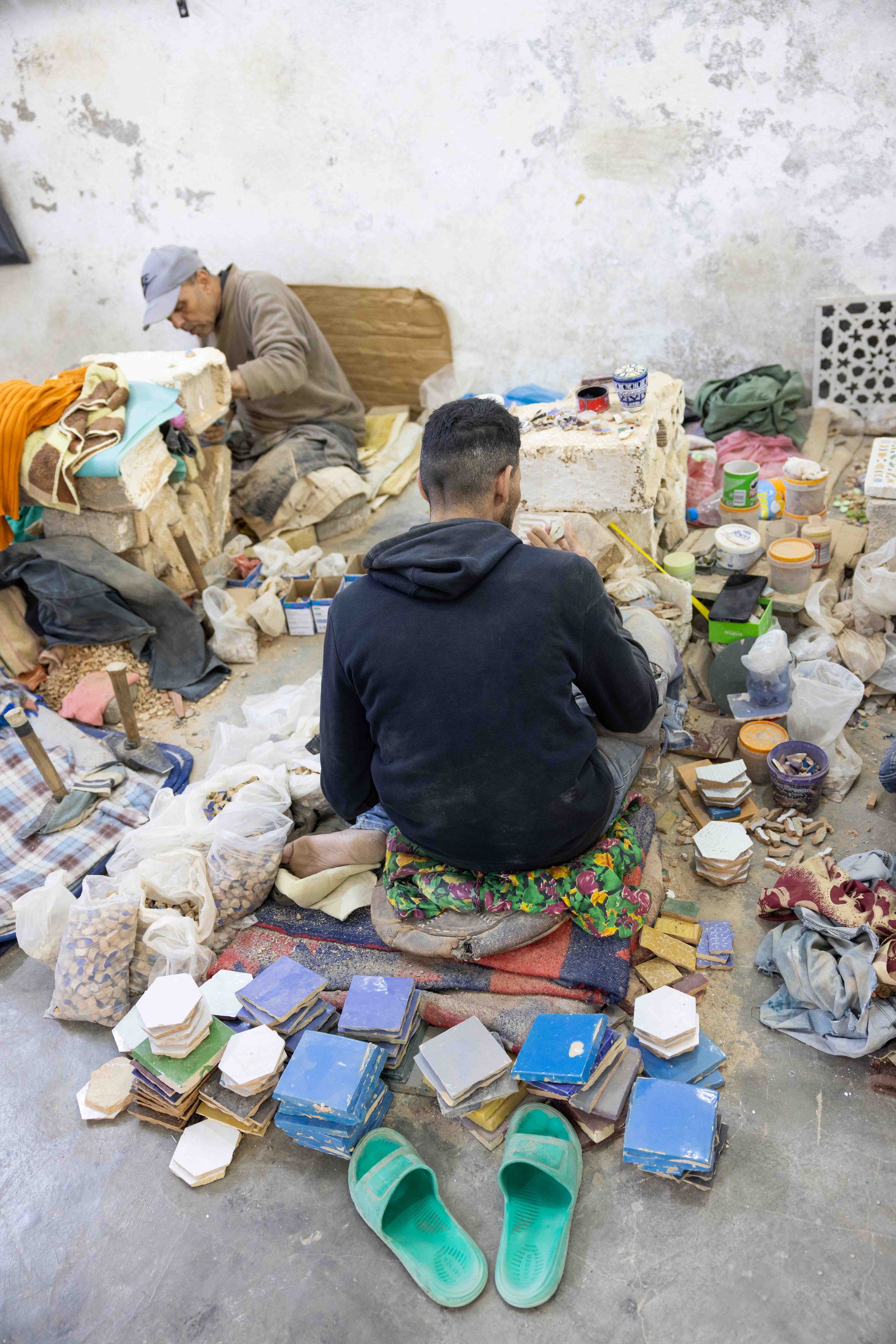
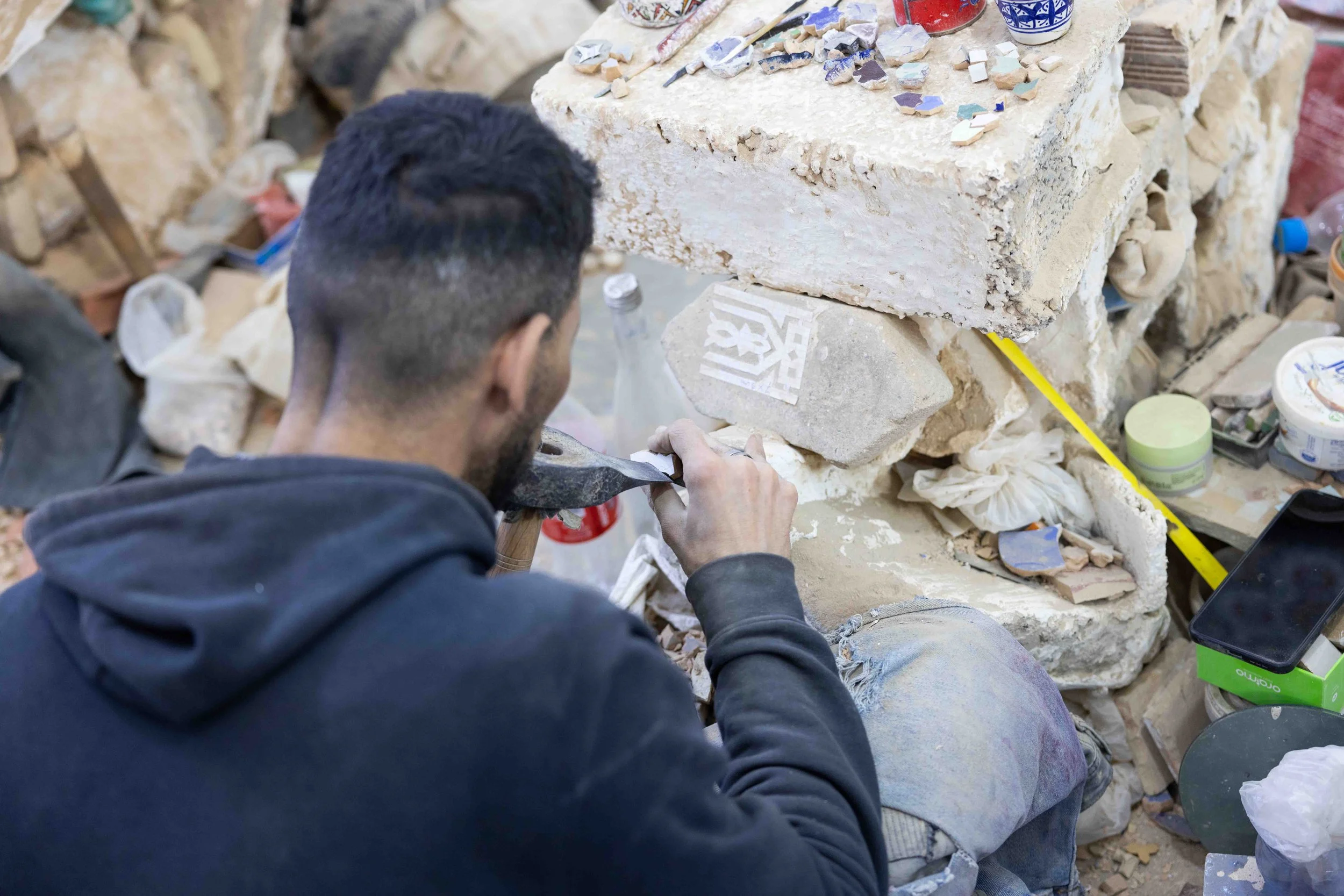
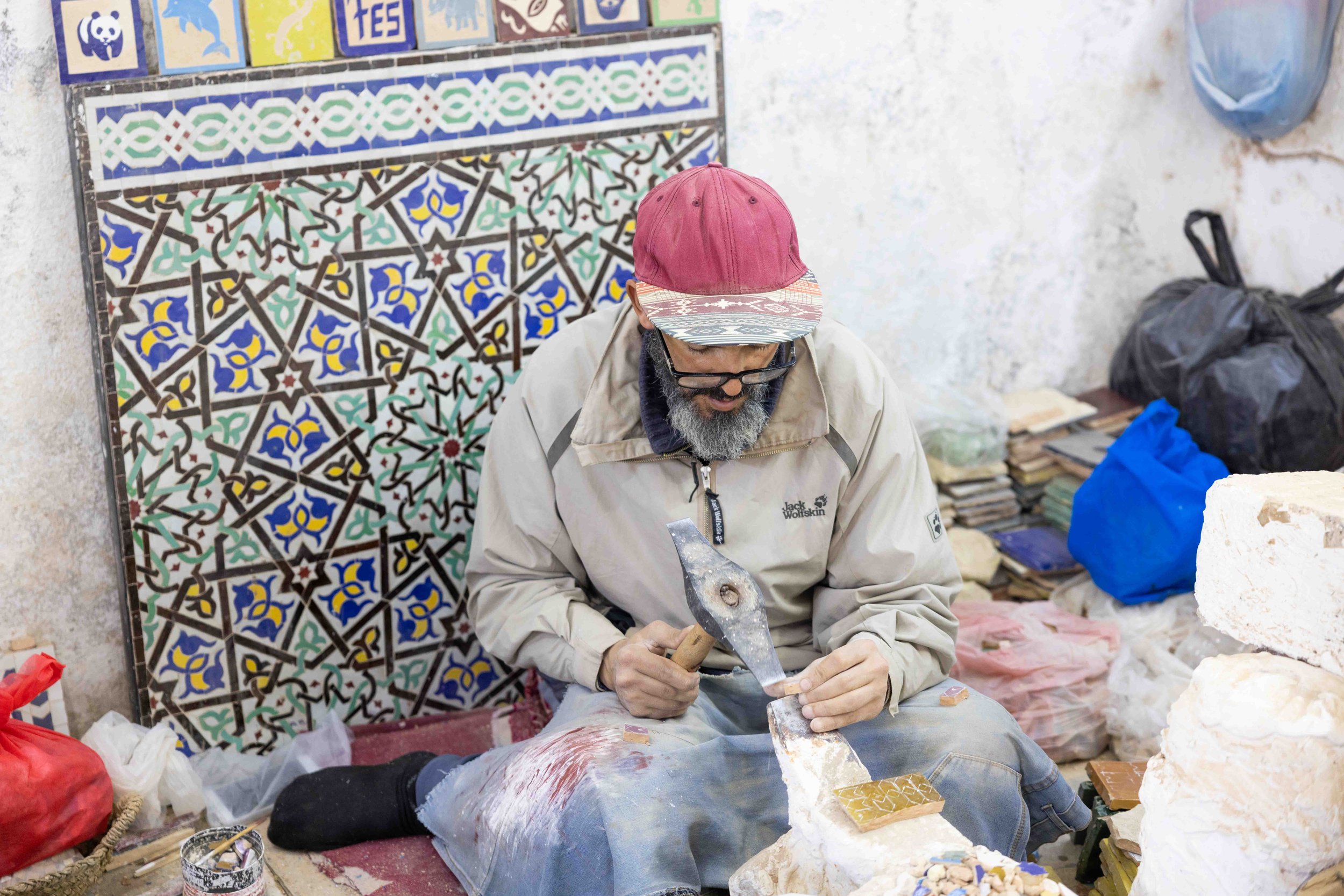
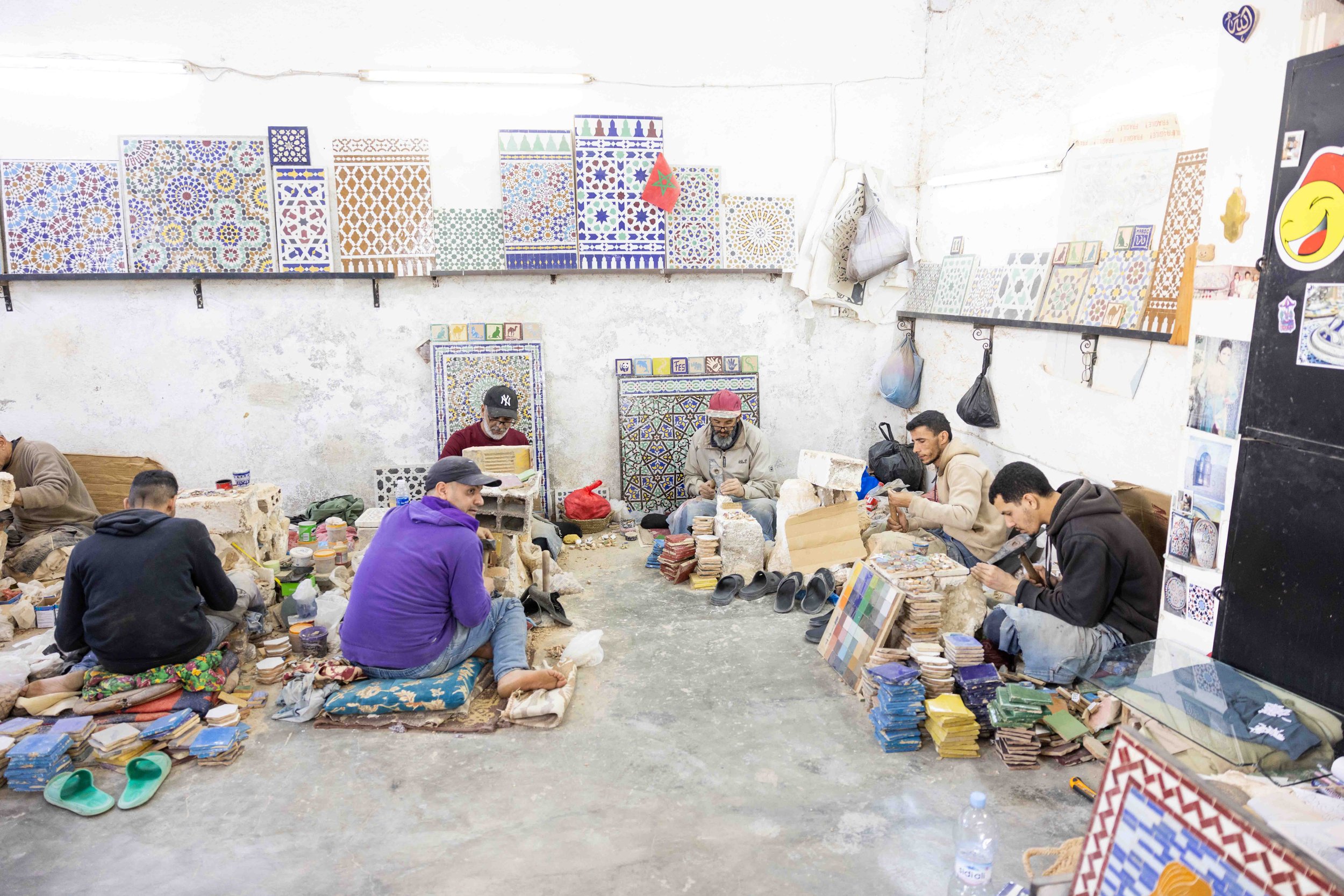
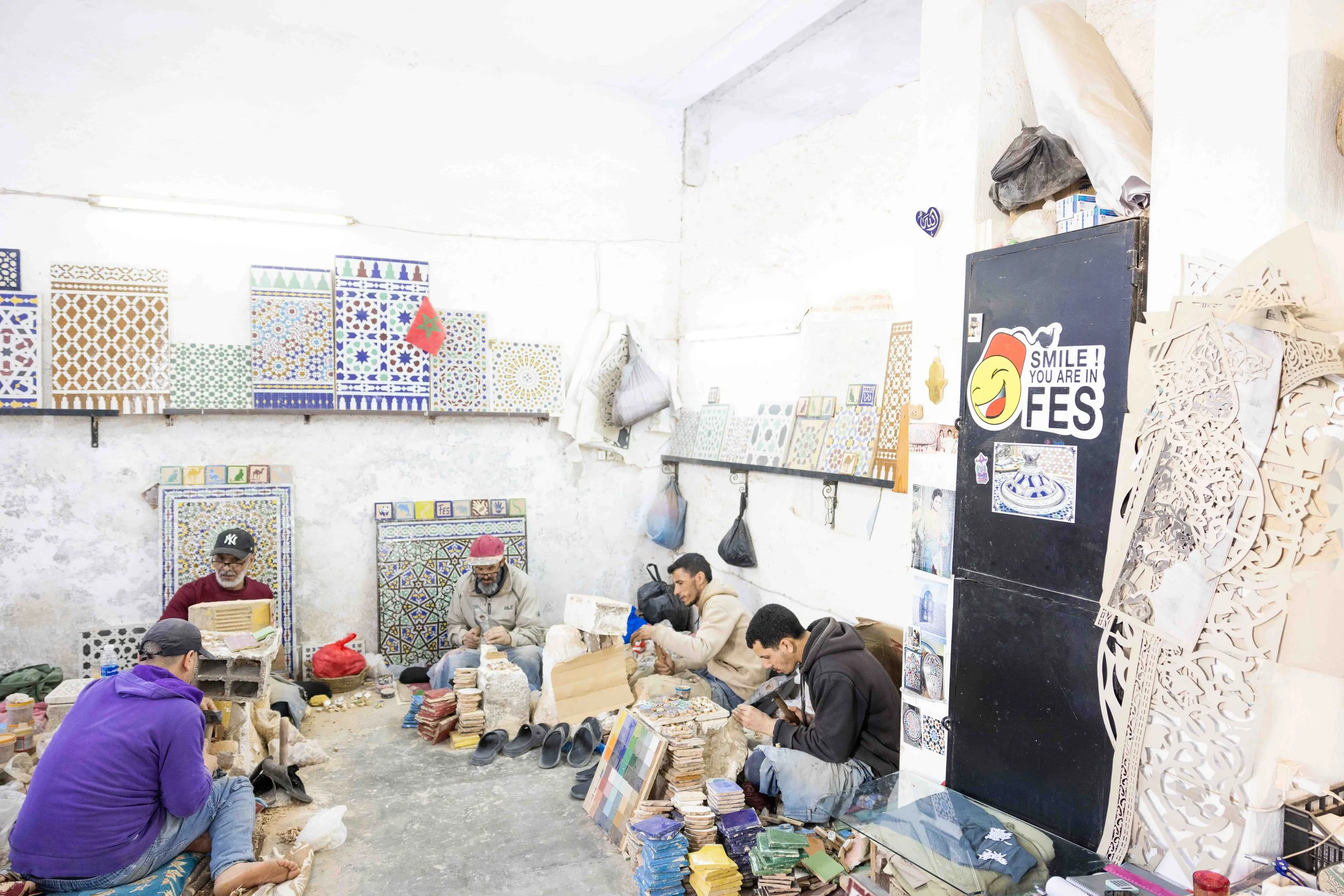
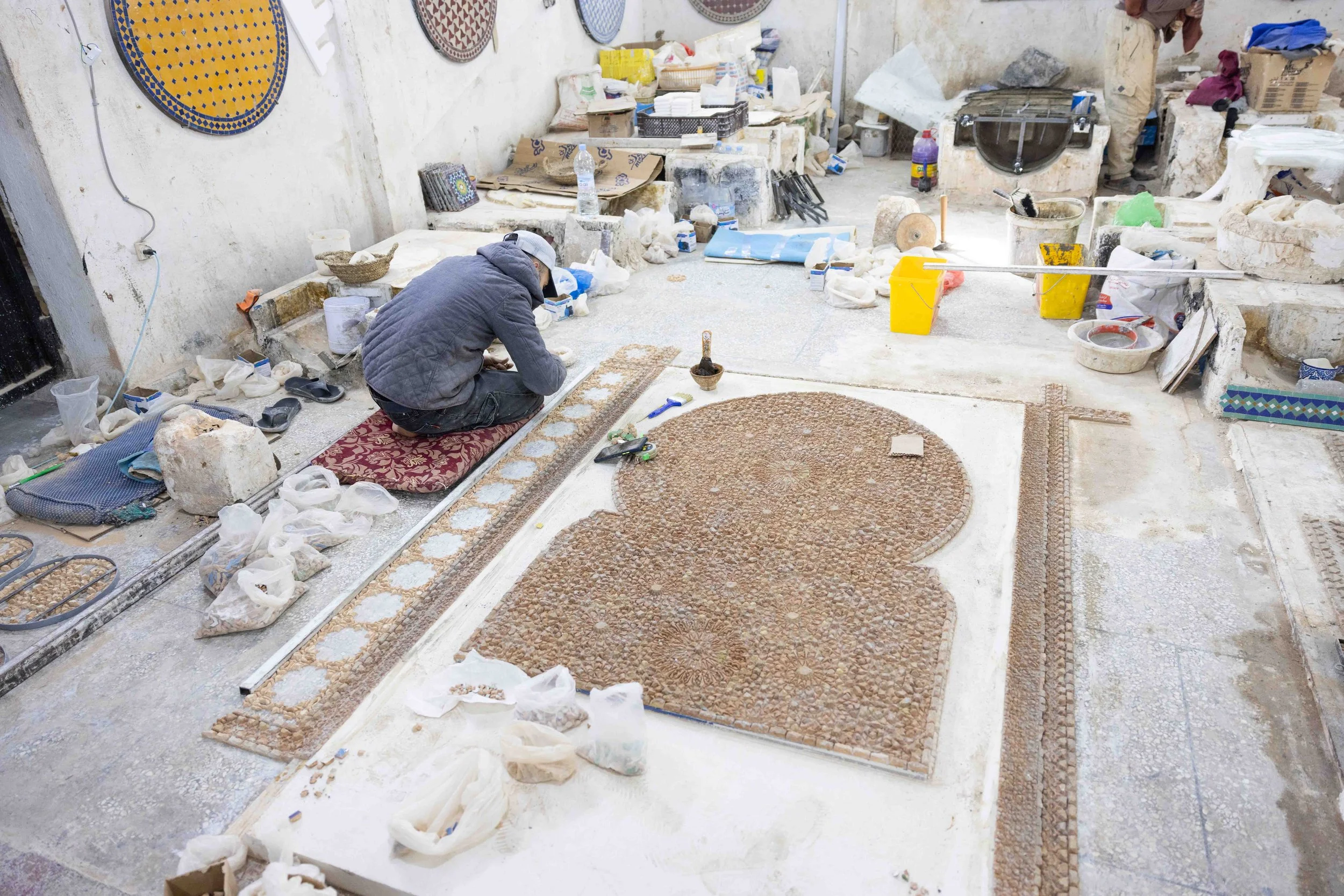
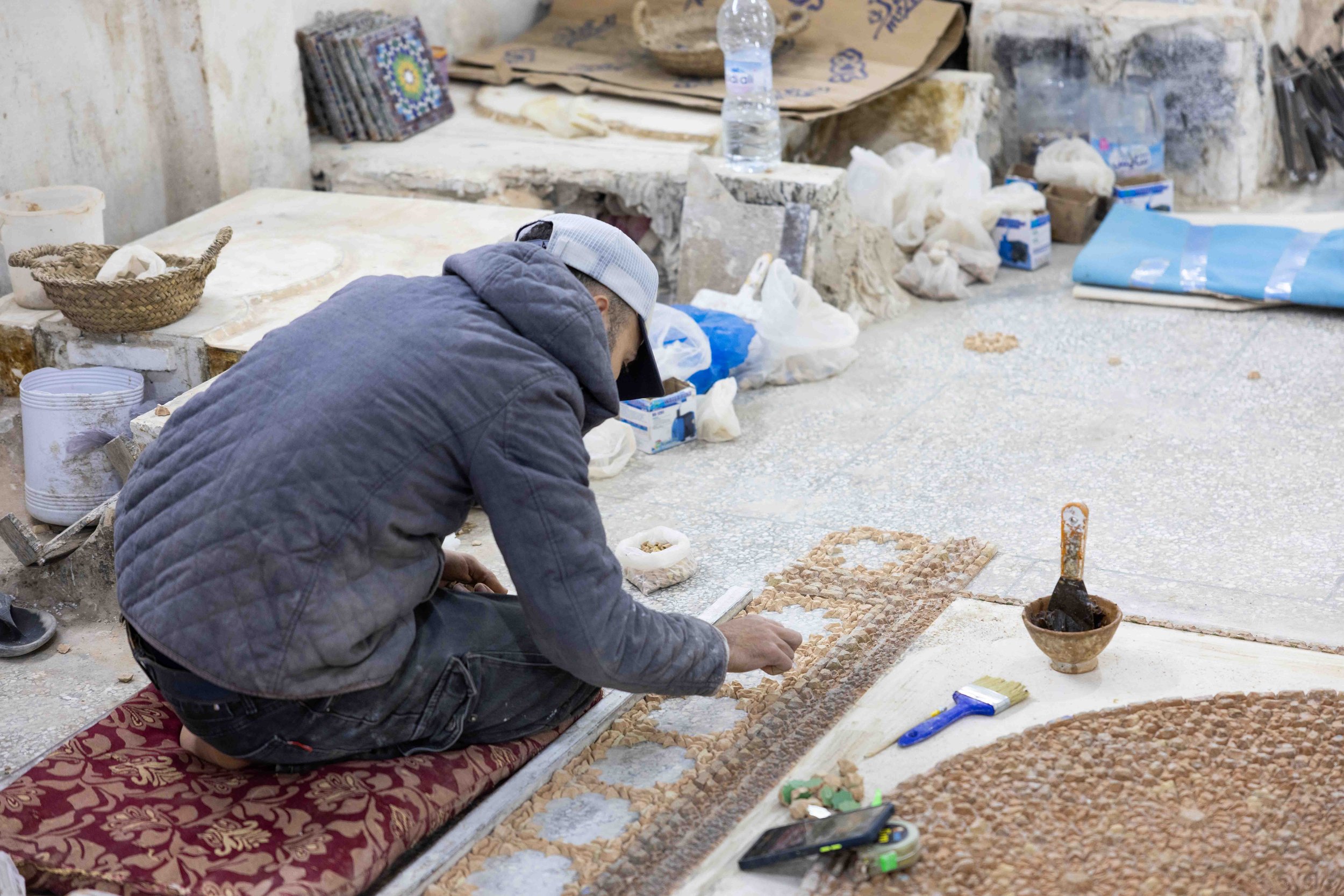
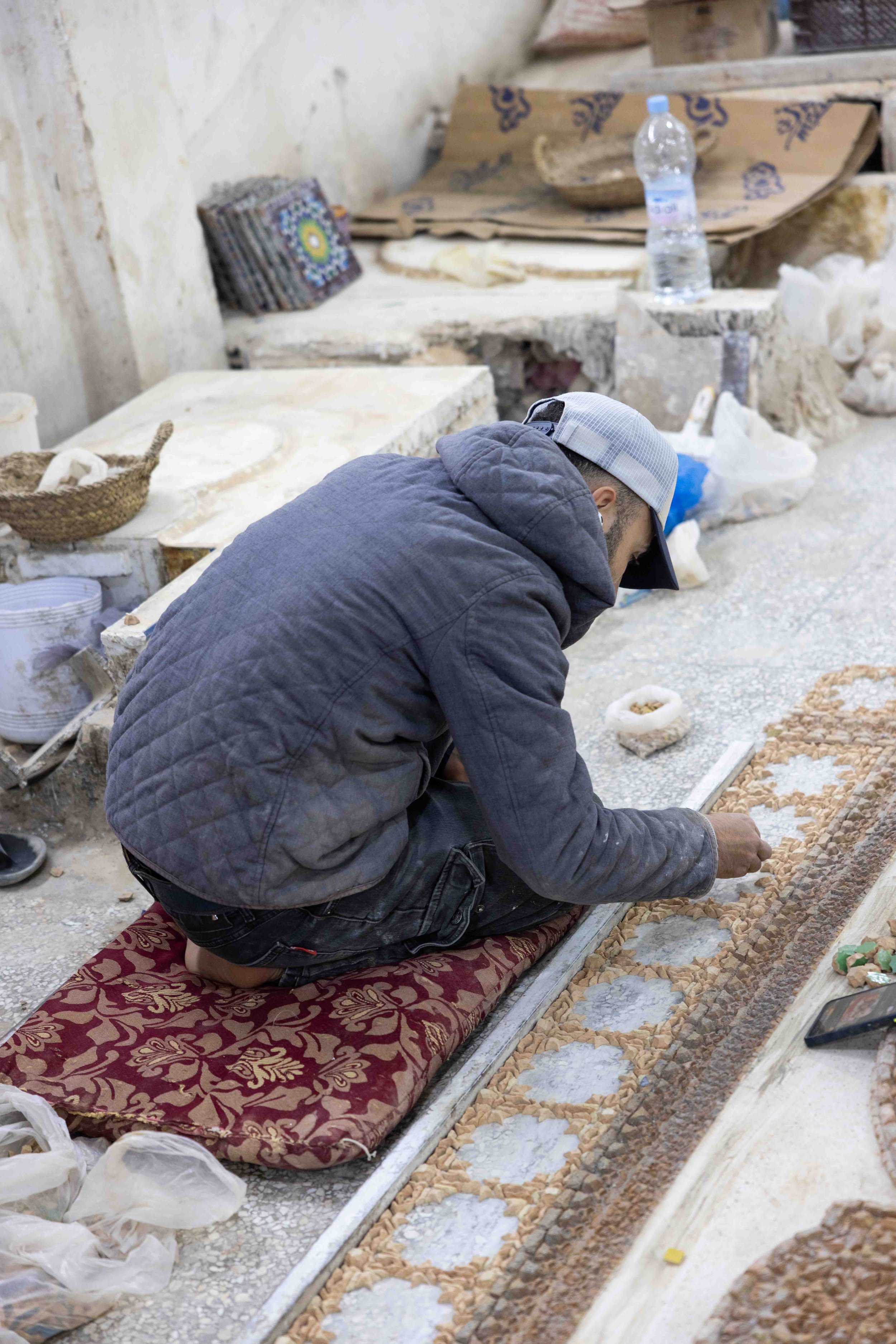
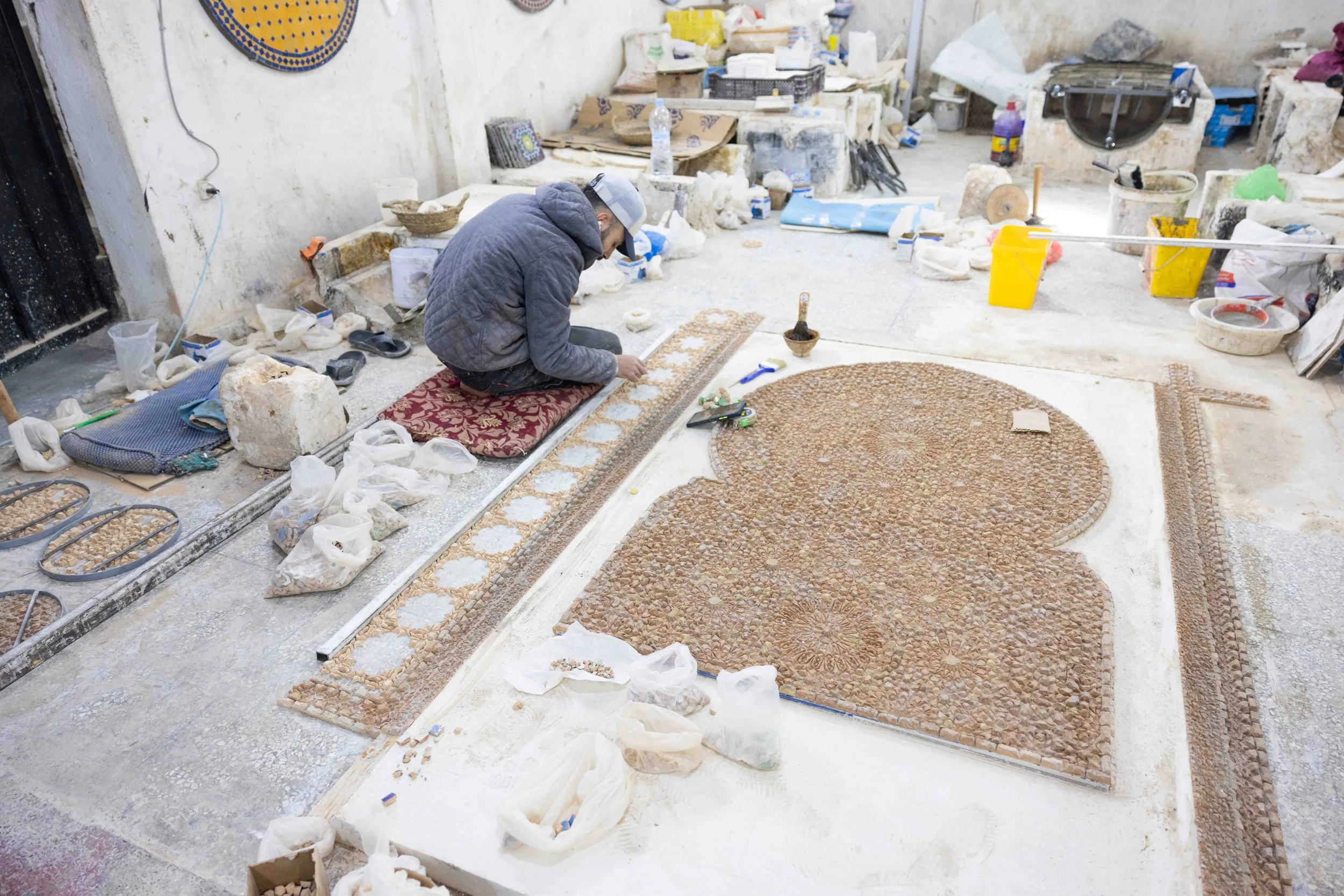
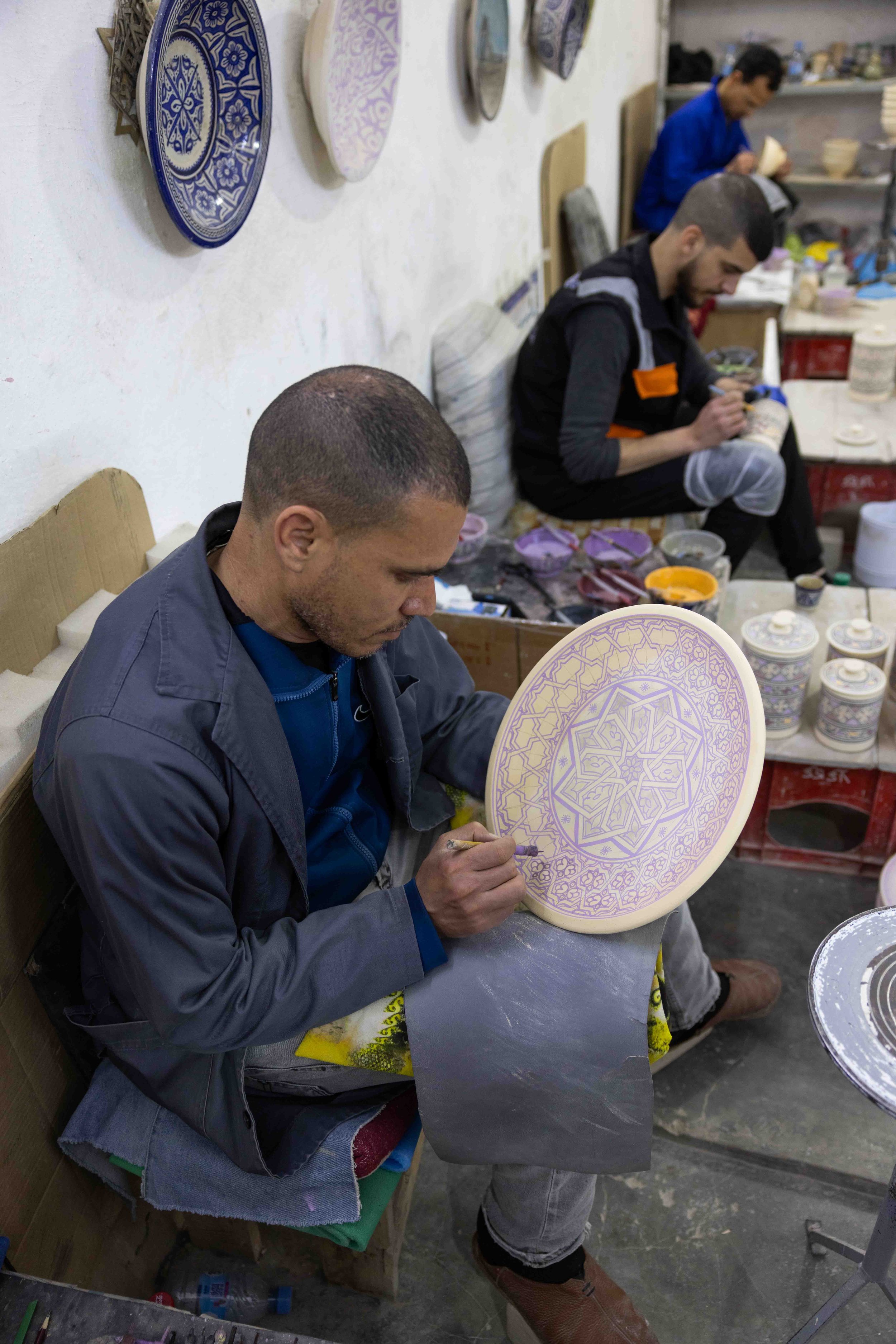
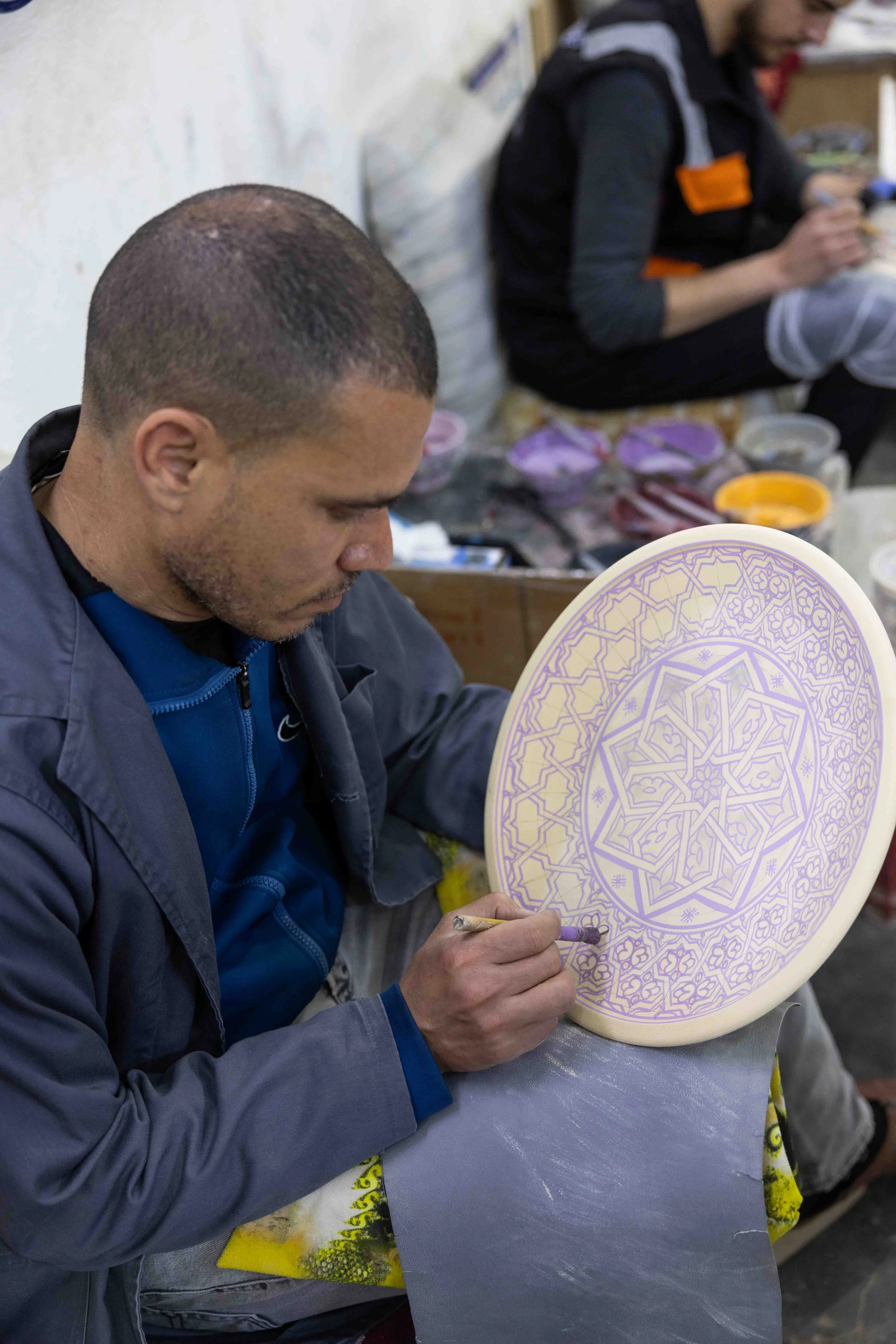
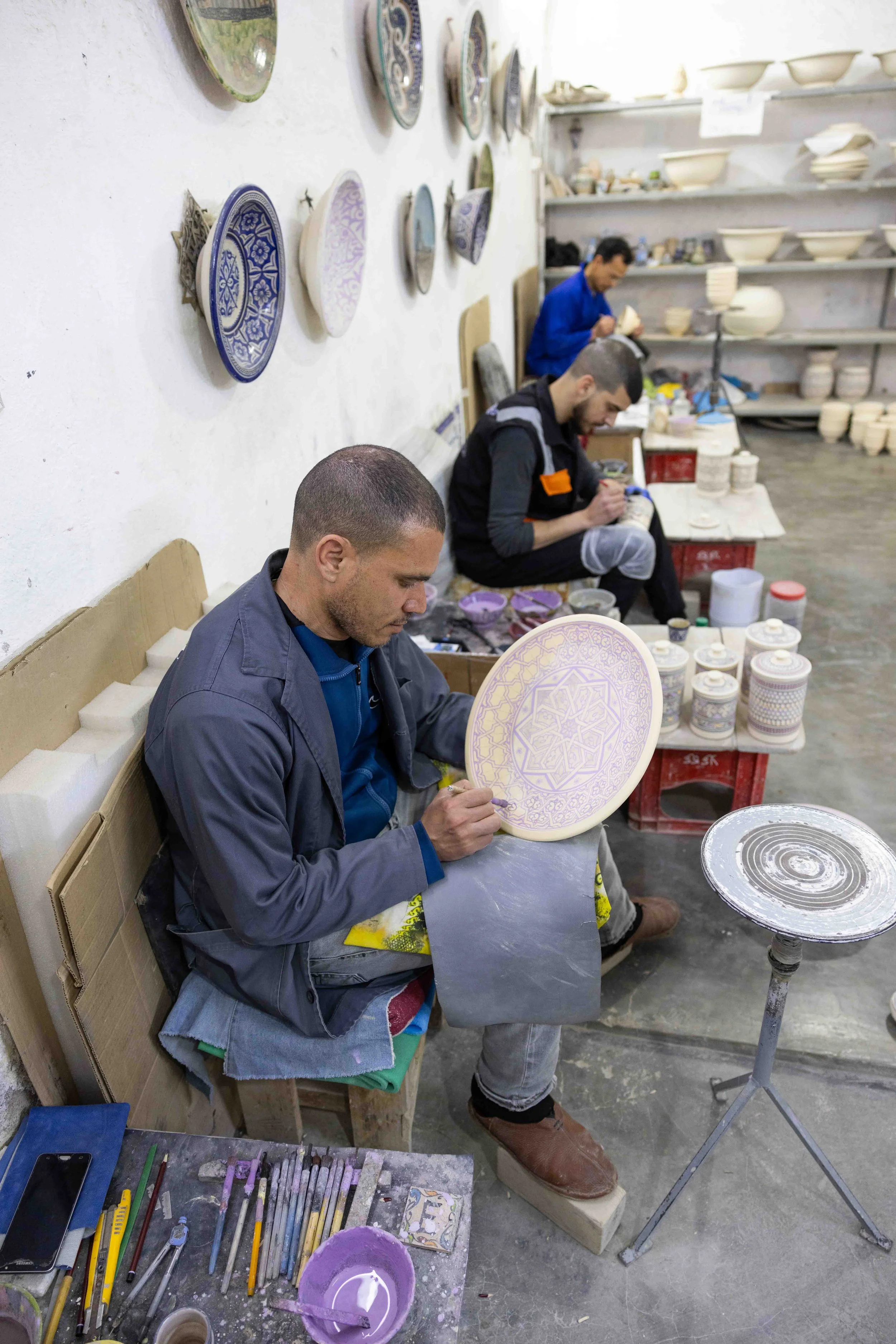
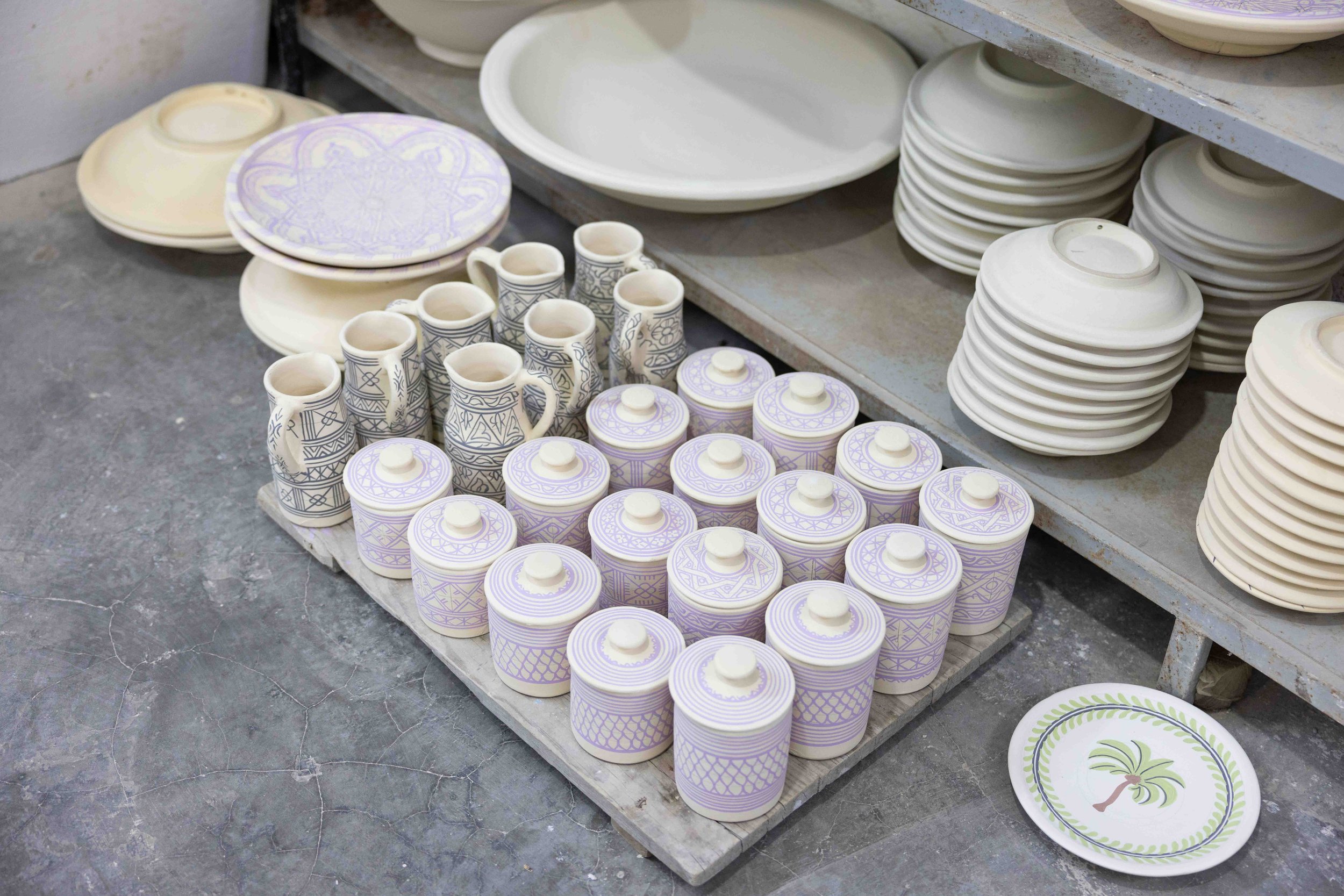
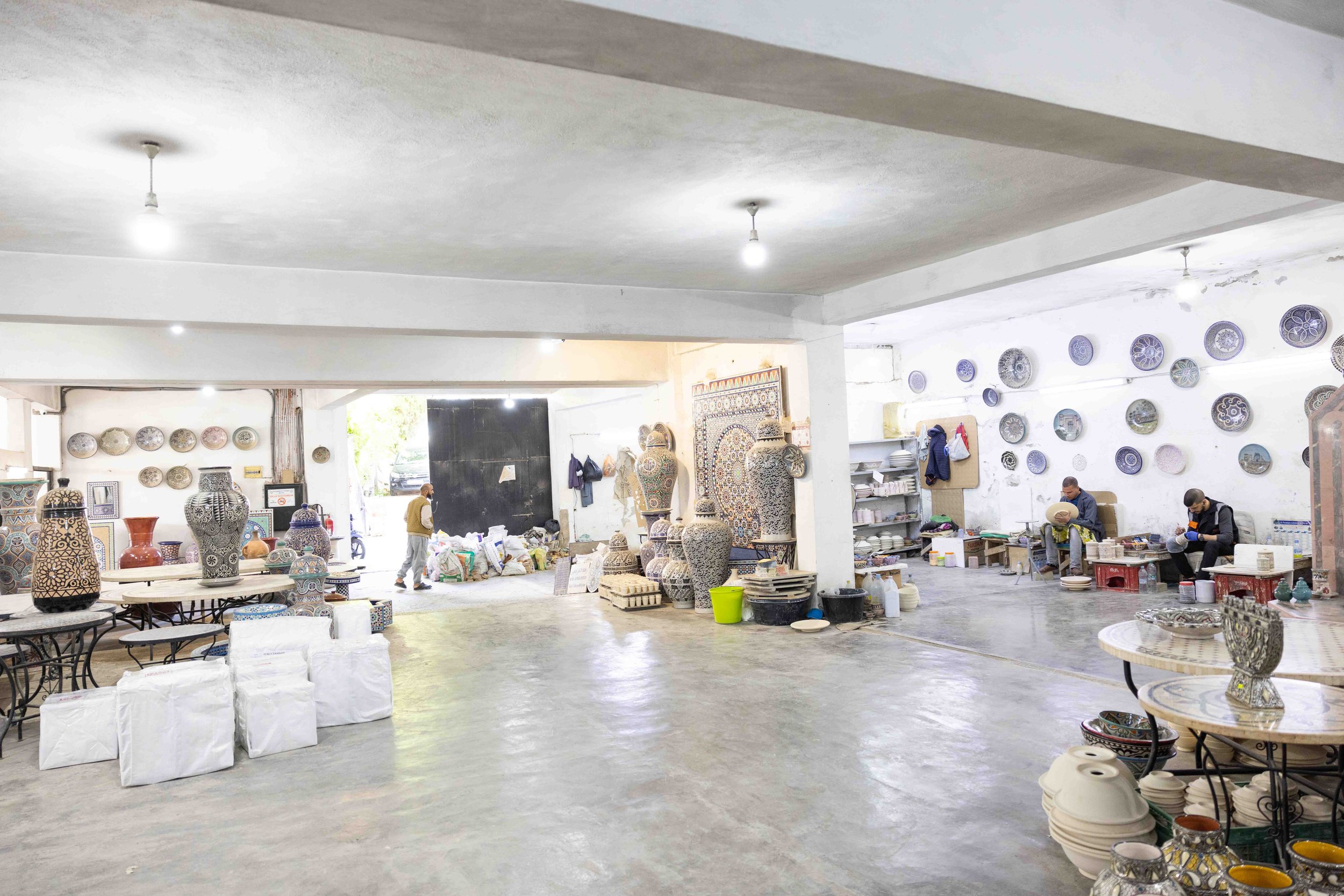
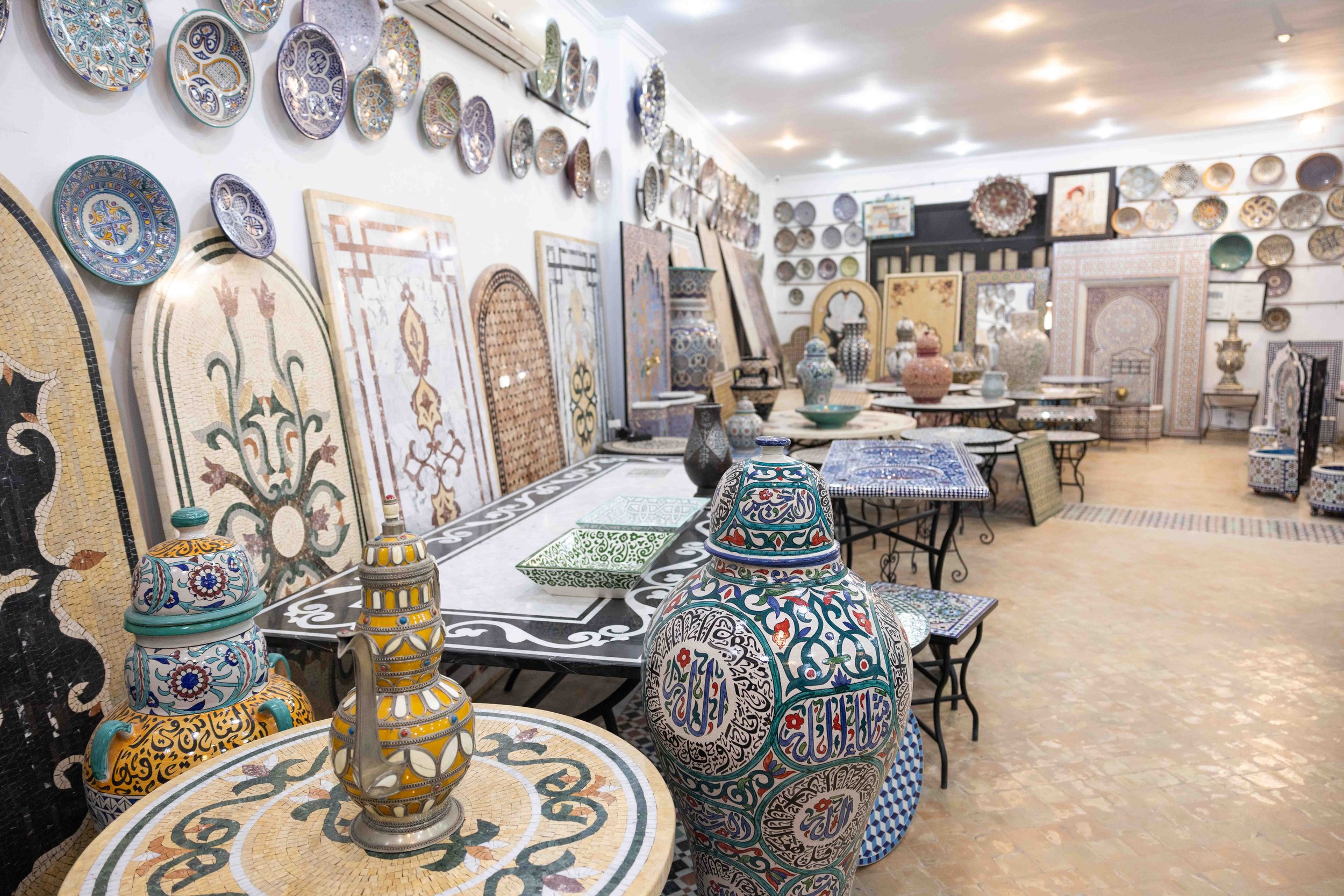
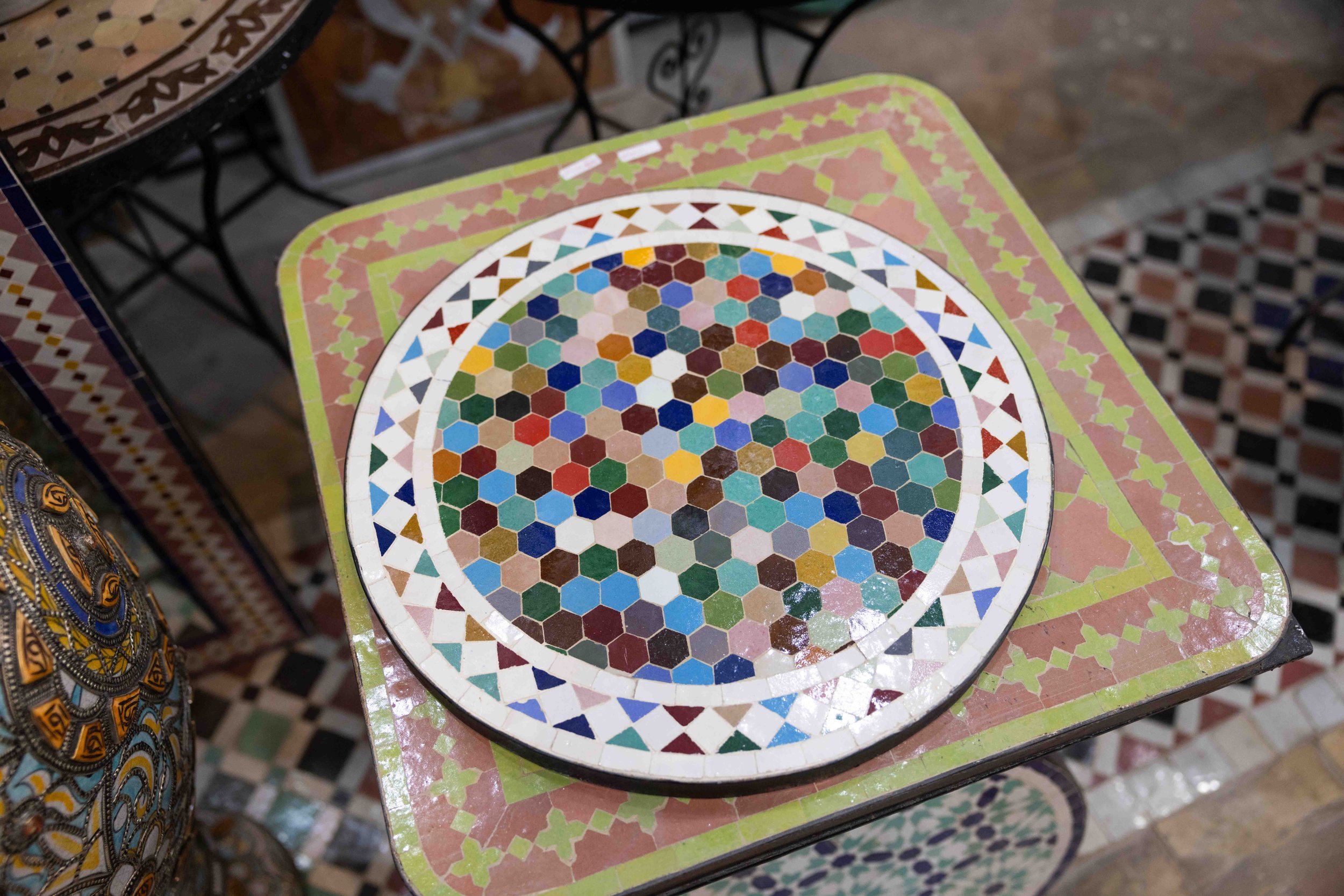
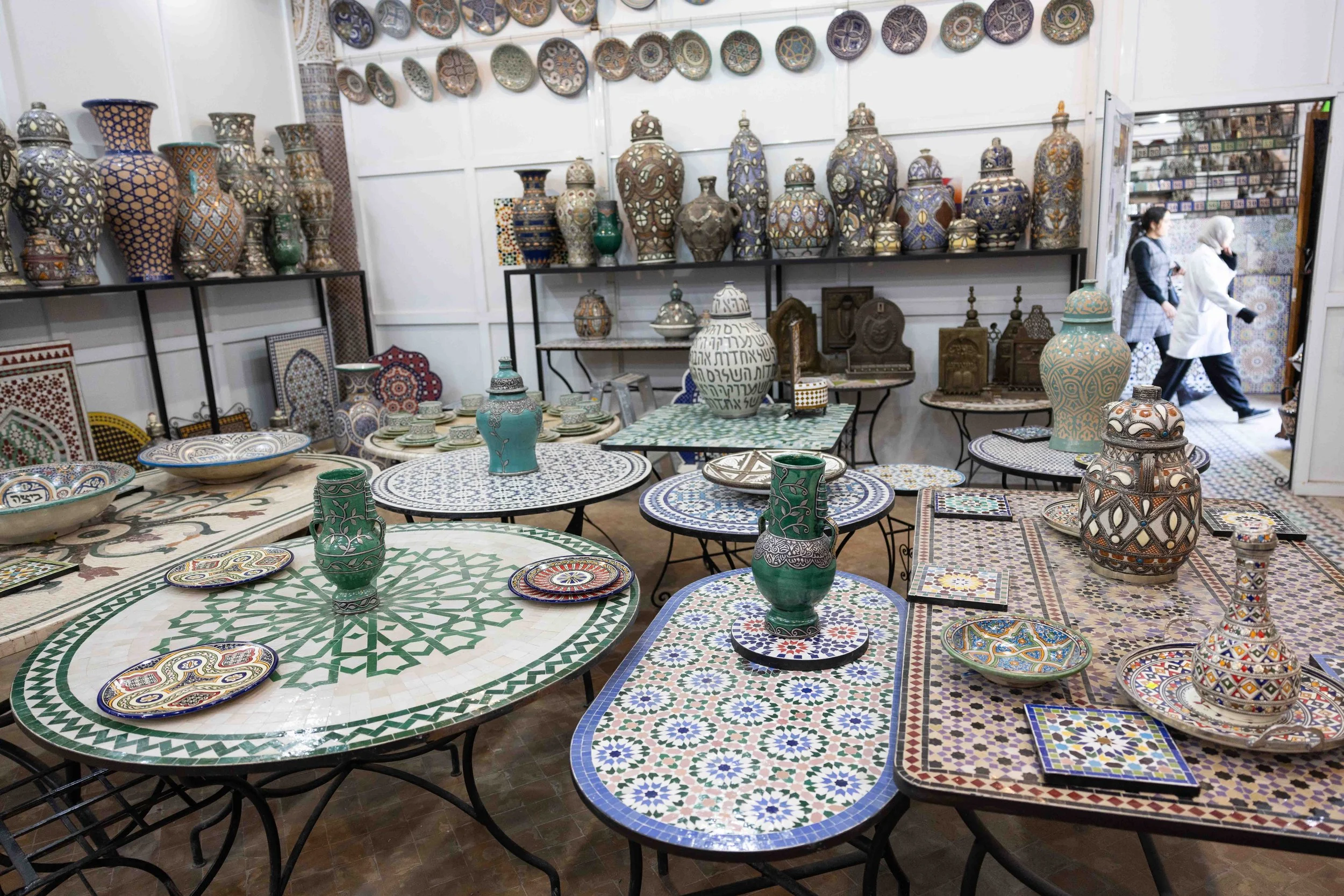
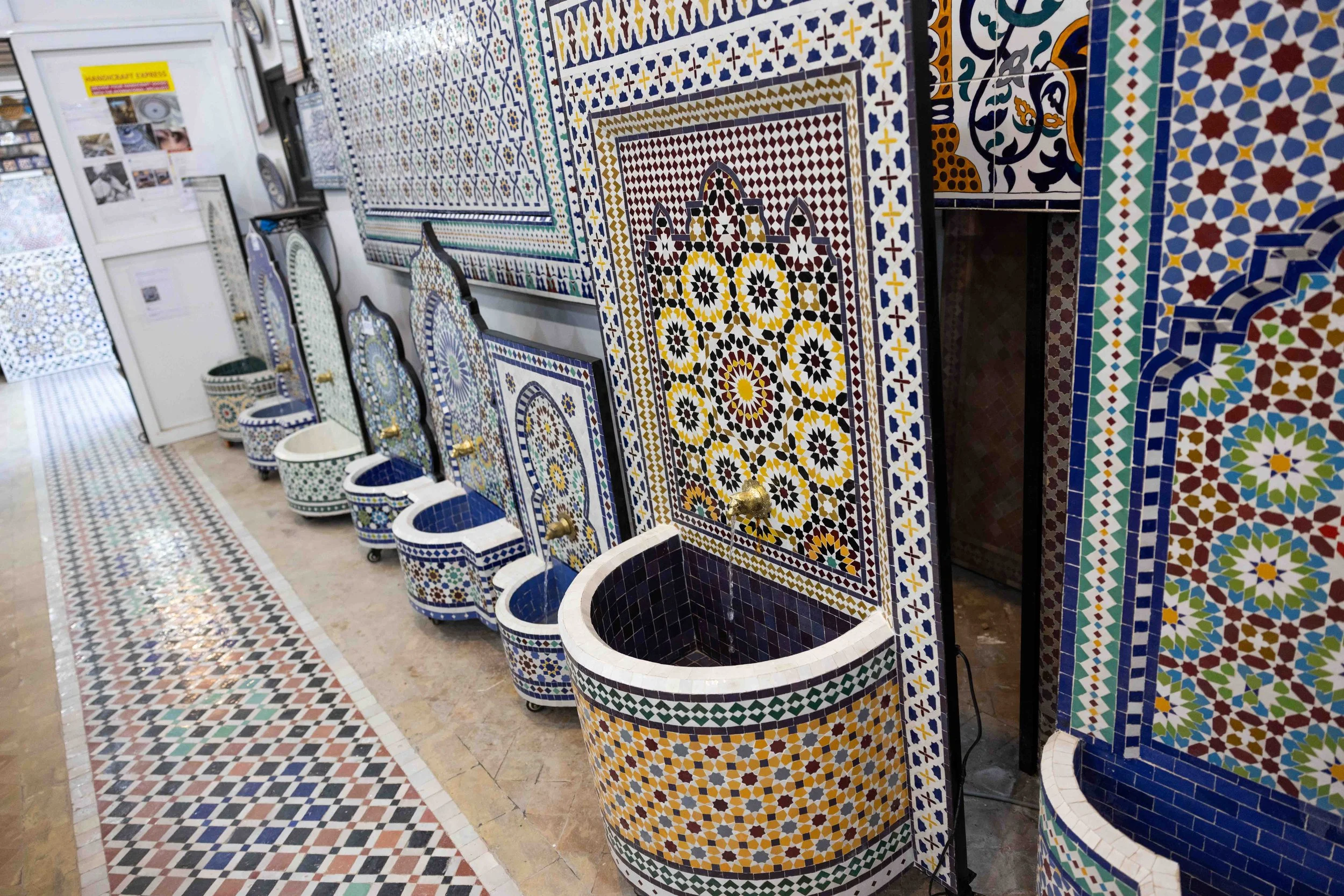
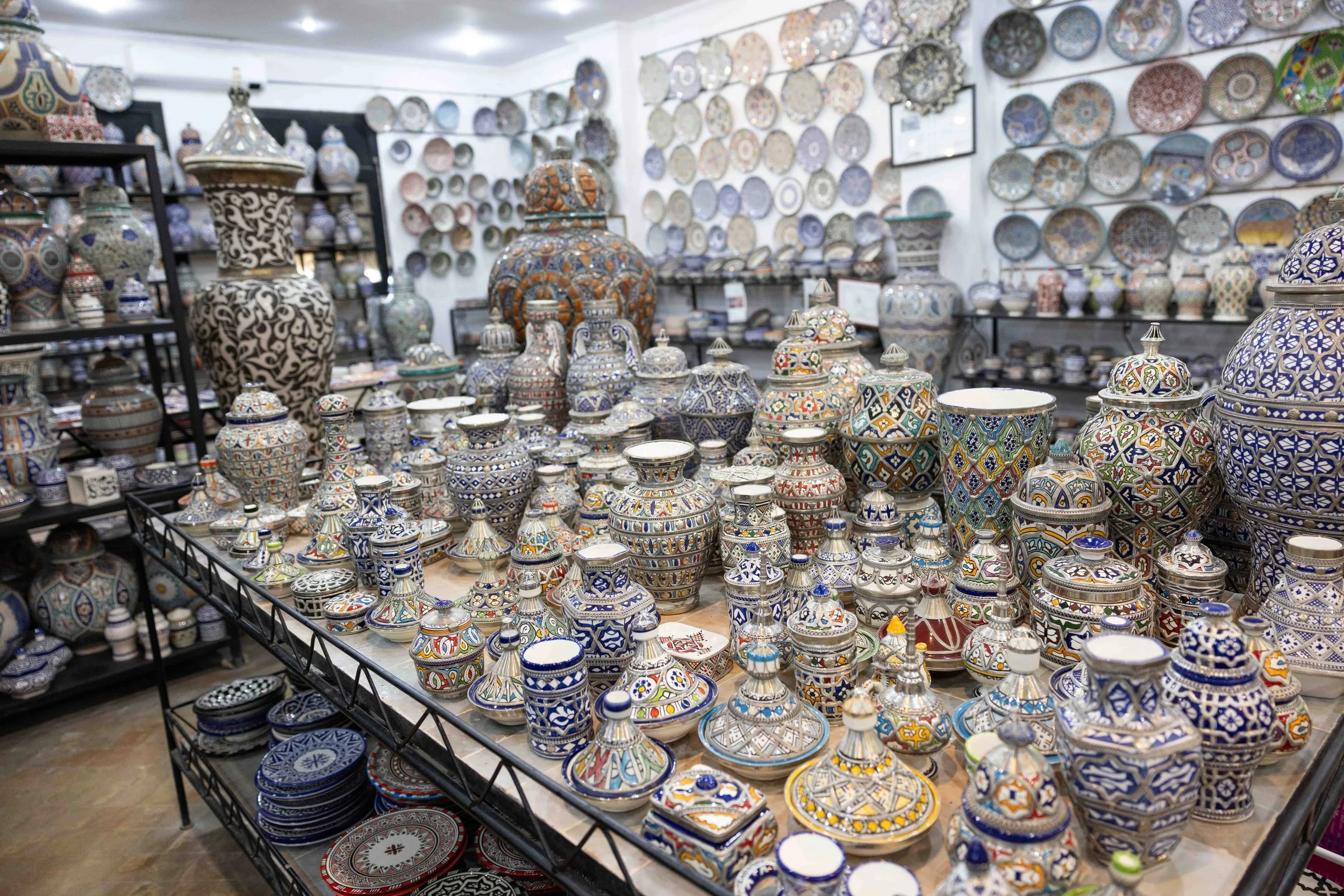
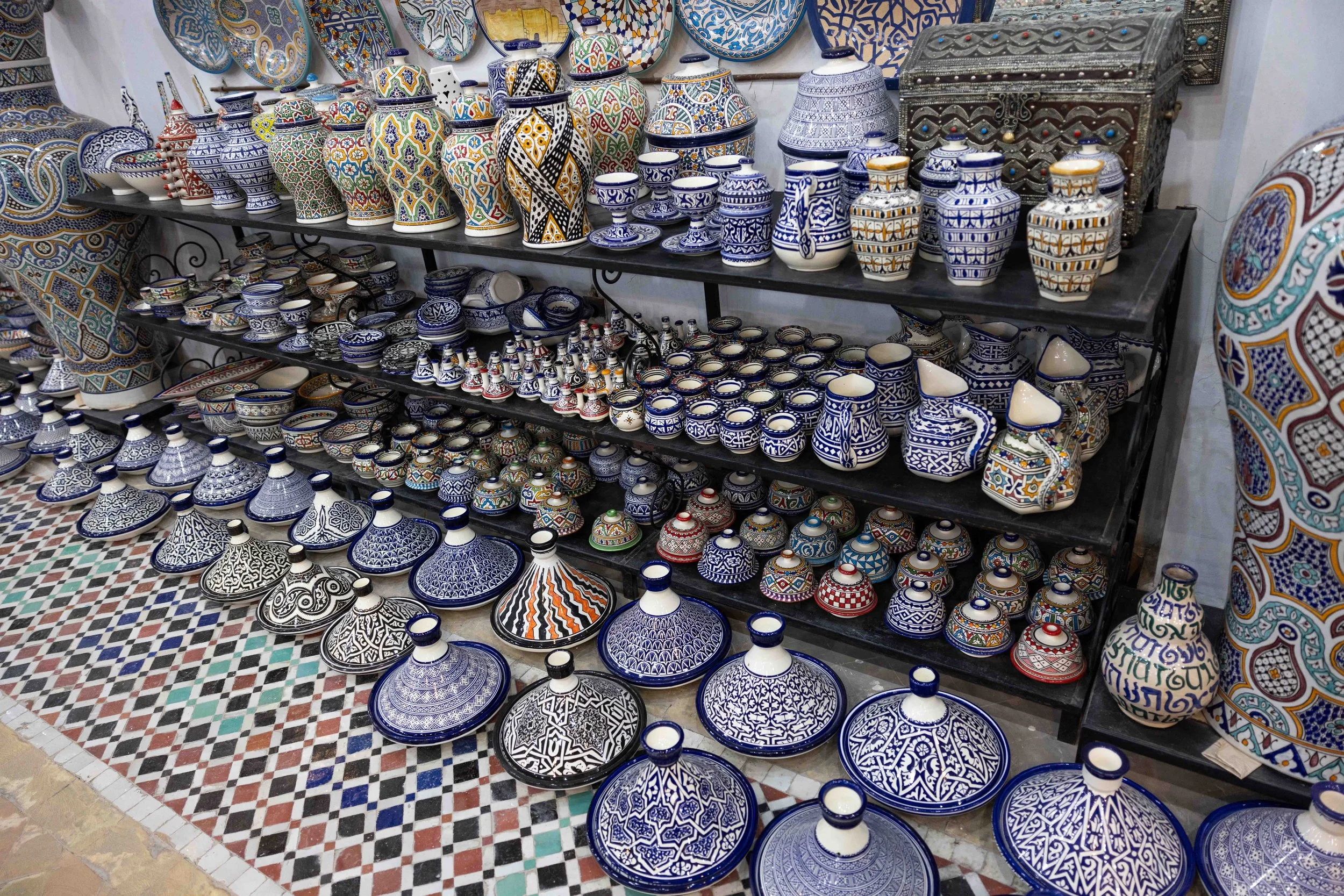
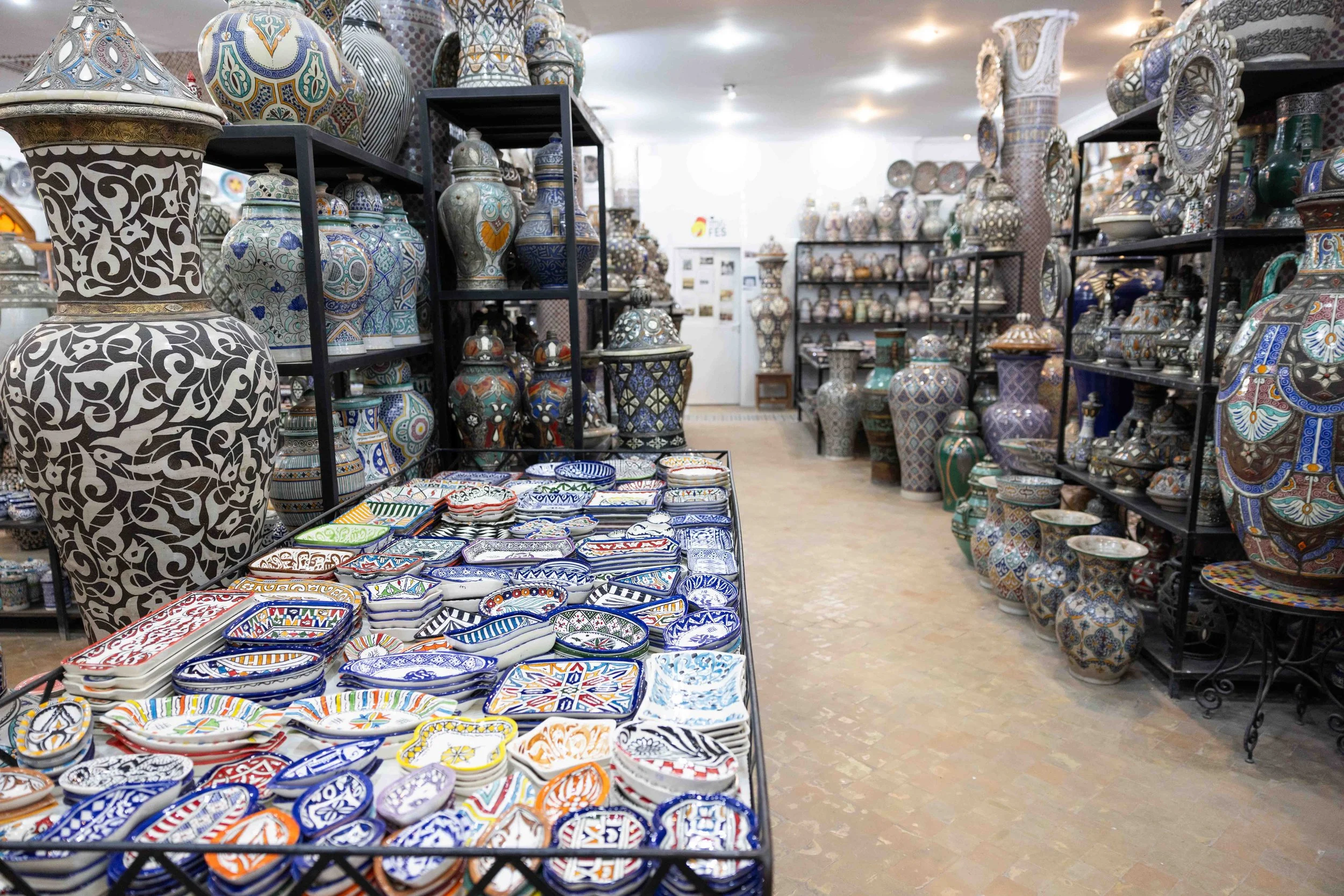
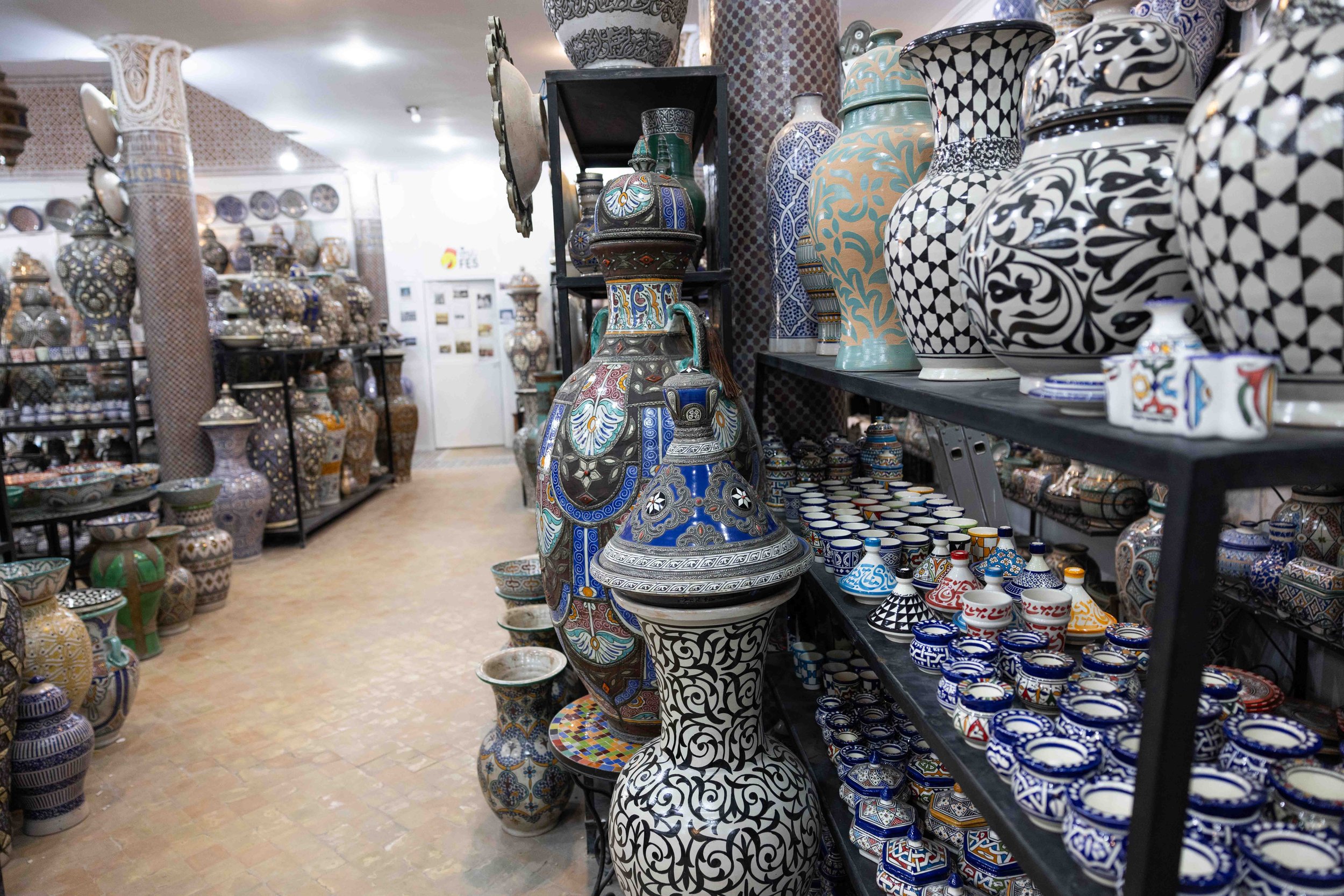
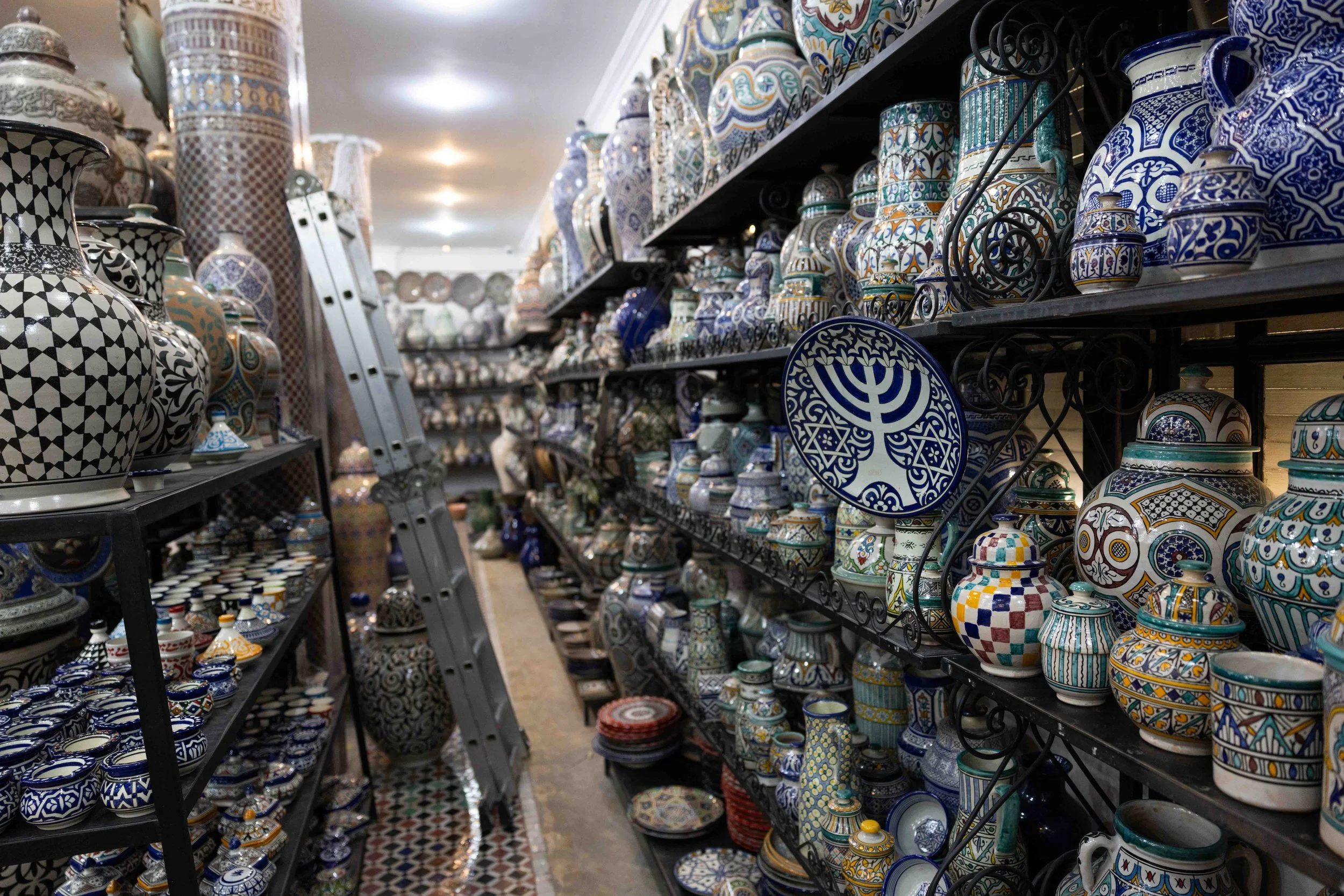
The artistry of Fes came alive at a traditional pottery cooperative. Here, we watched artisans shape clay and assemble intricate mosaics by hand, creating the famed Moroccan zellige. Each tile, individually chiseled, contributes to patterns that feel both mathematical and poetic. It’s painstaking work—timeless, meditative, and deeply rooted in heritage.
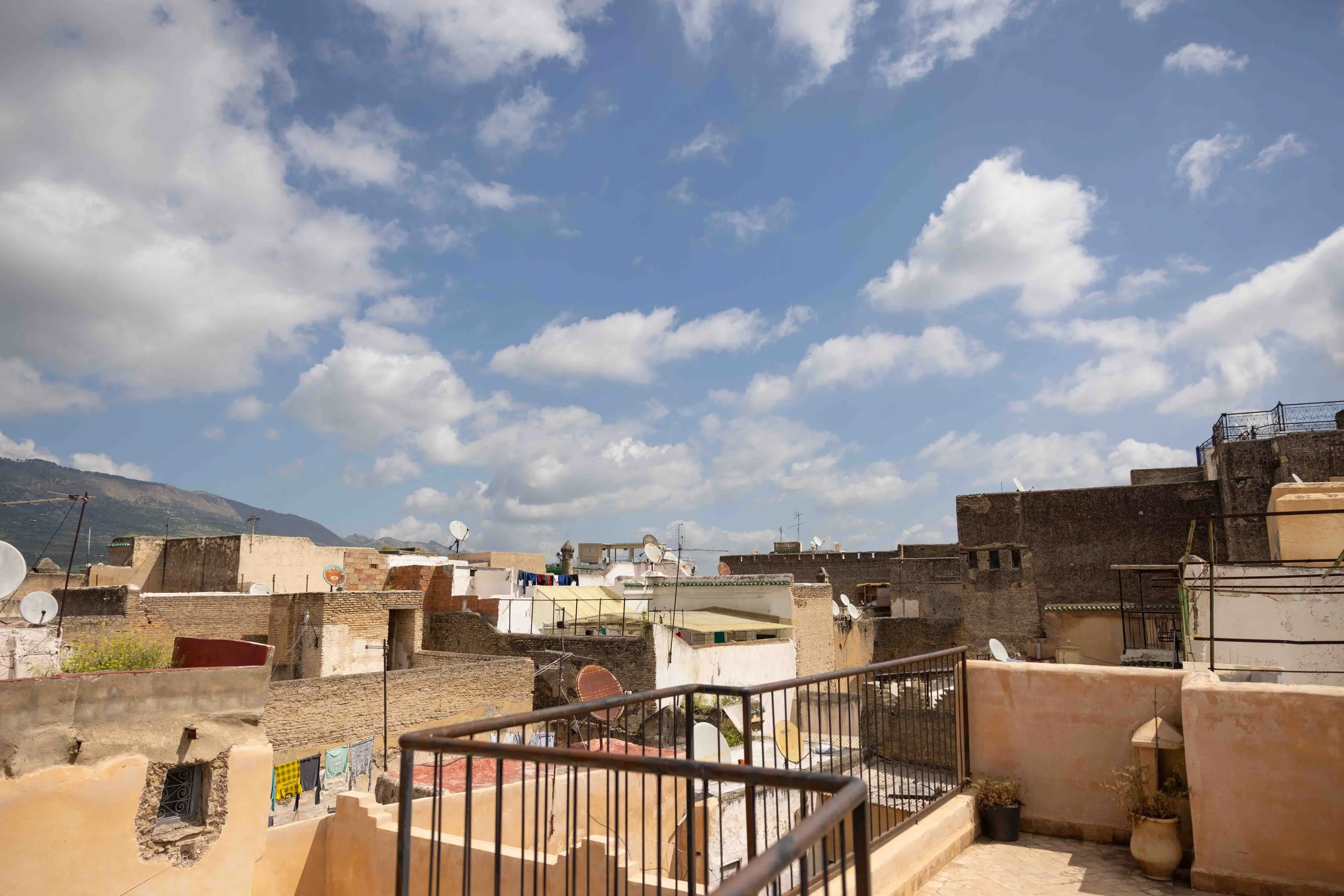
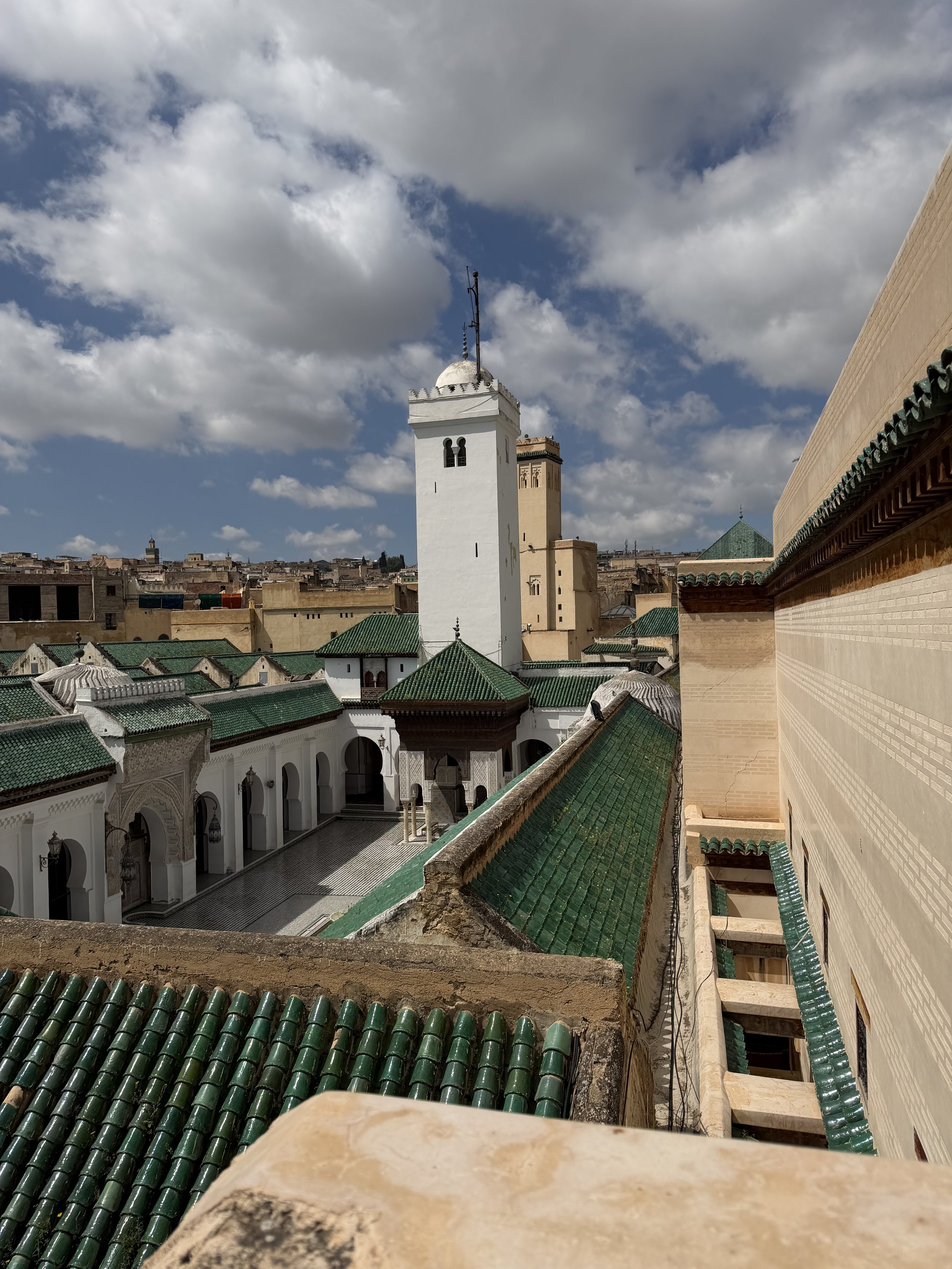
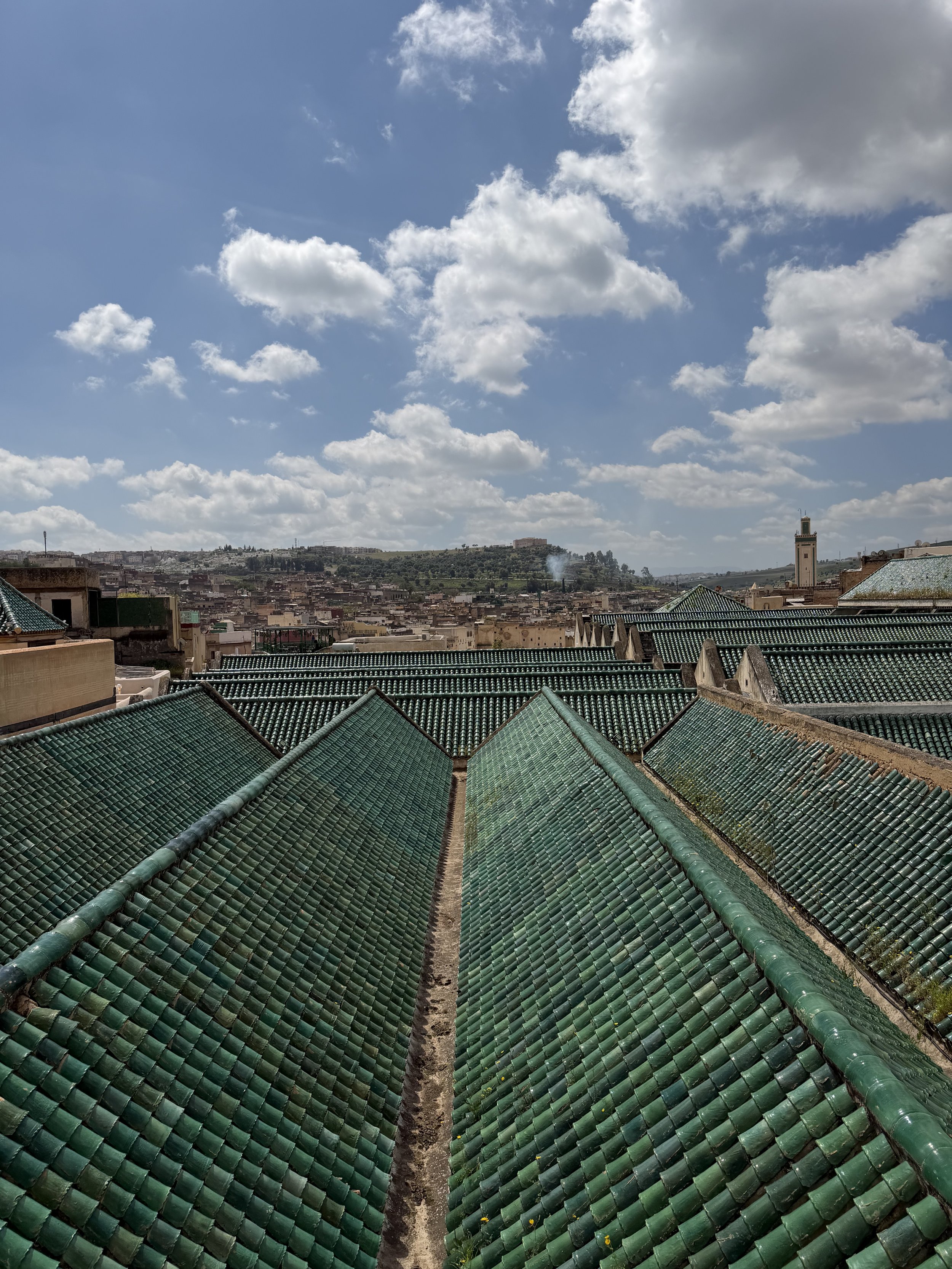
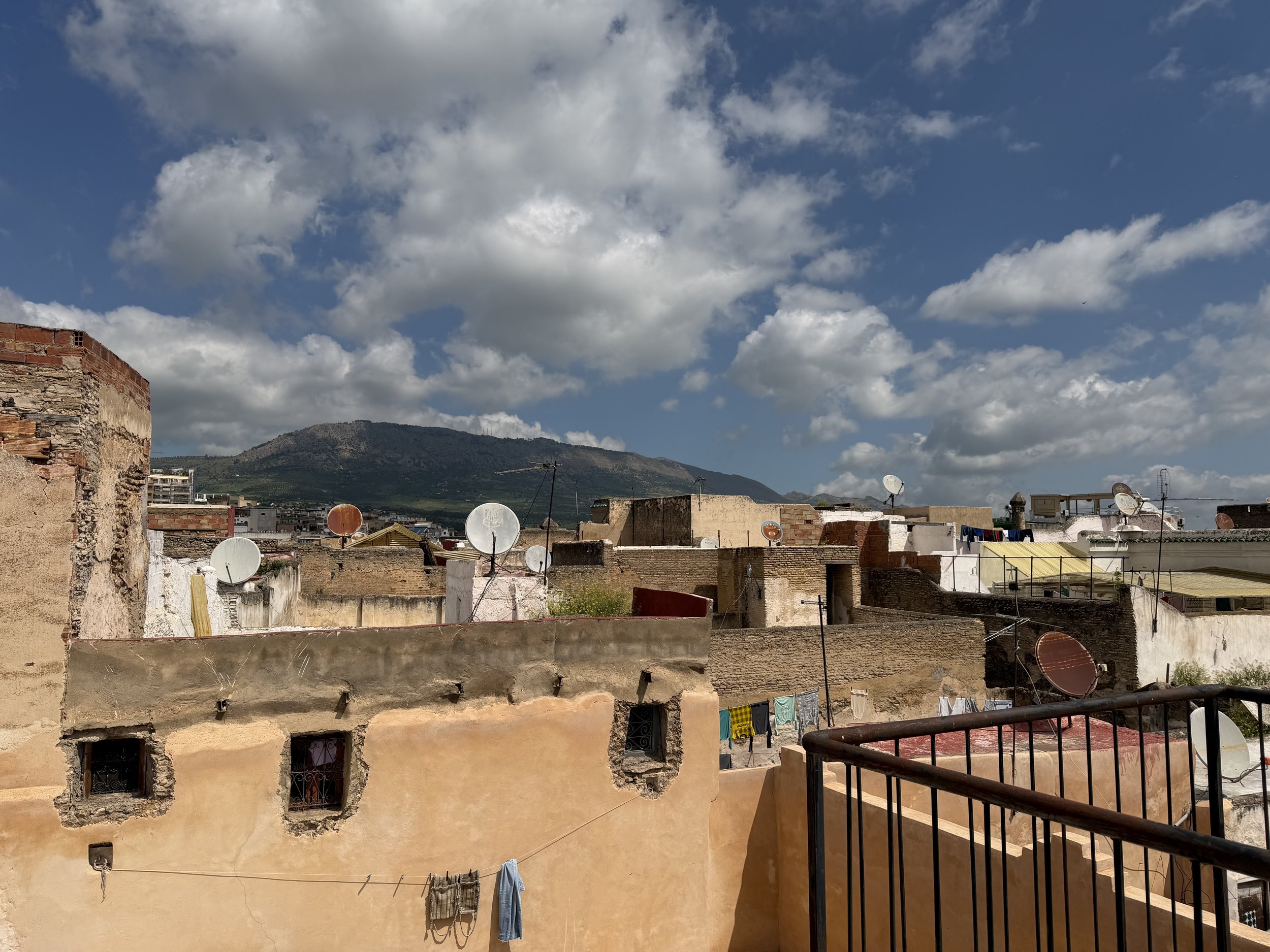
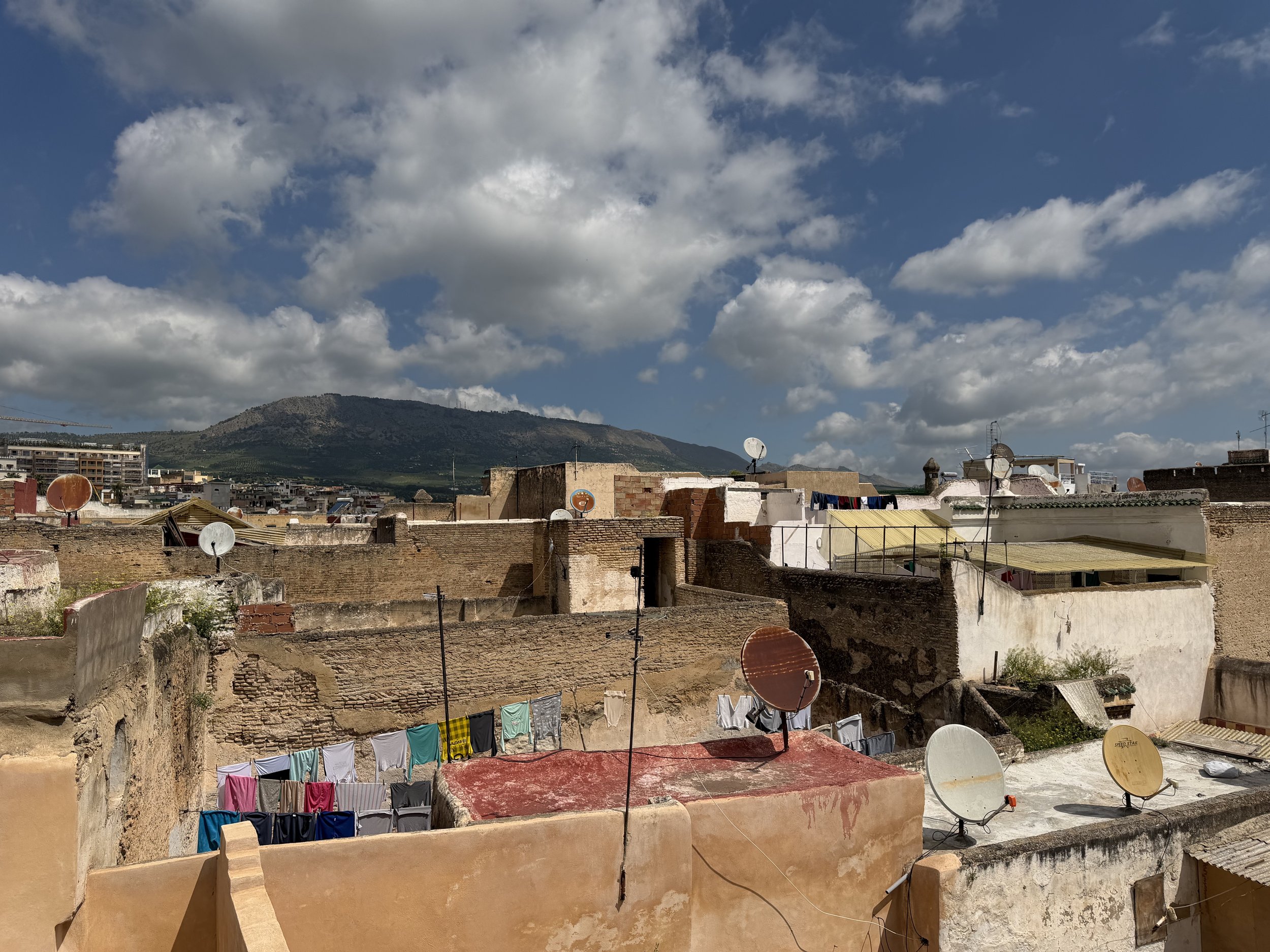
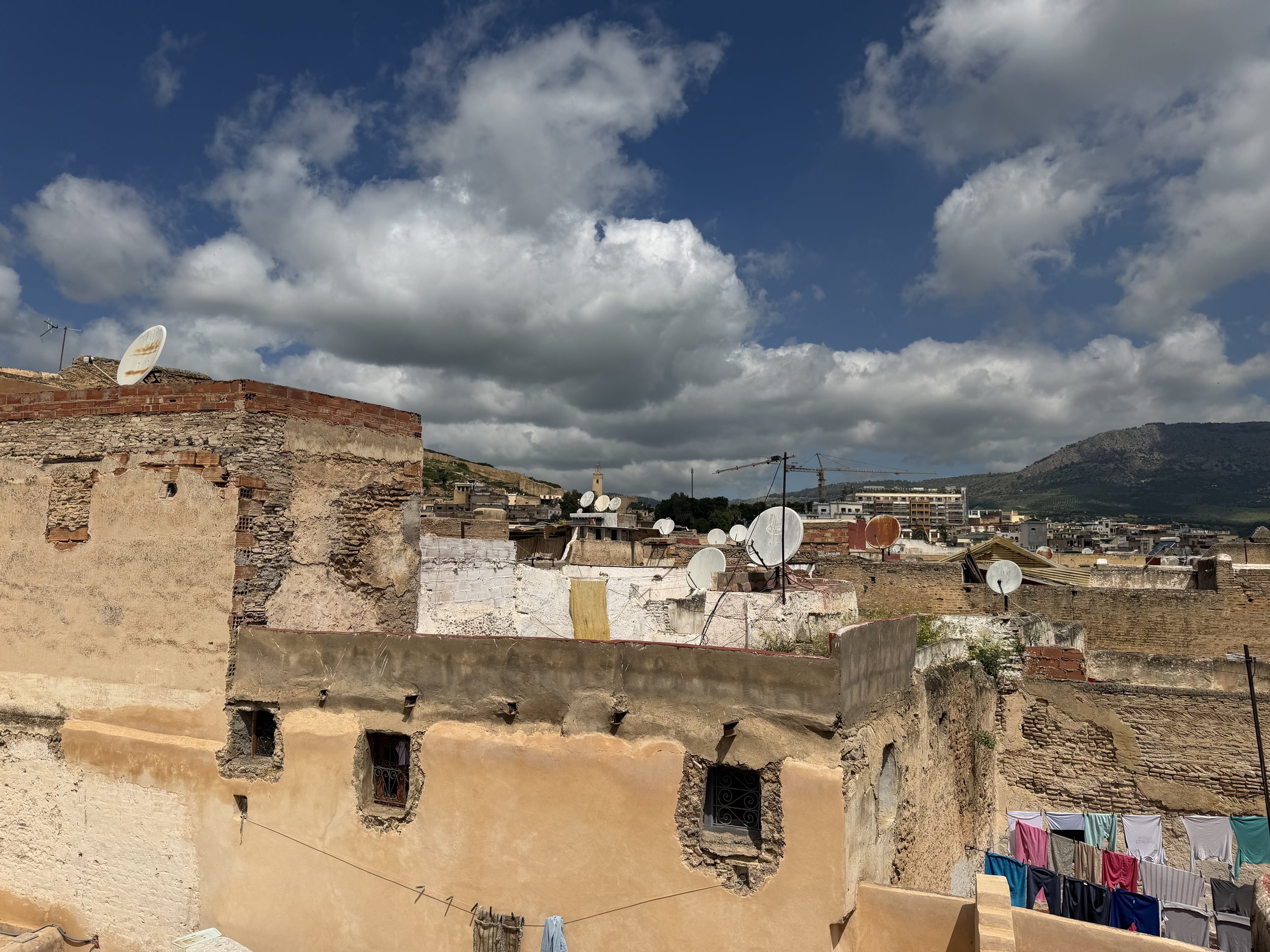
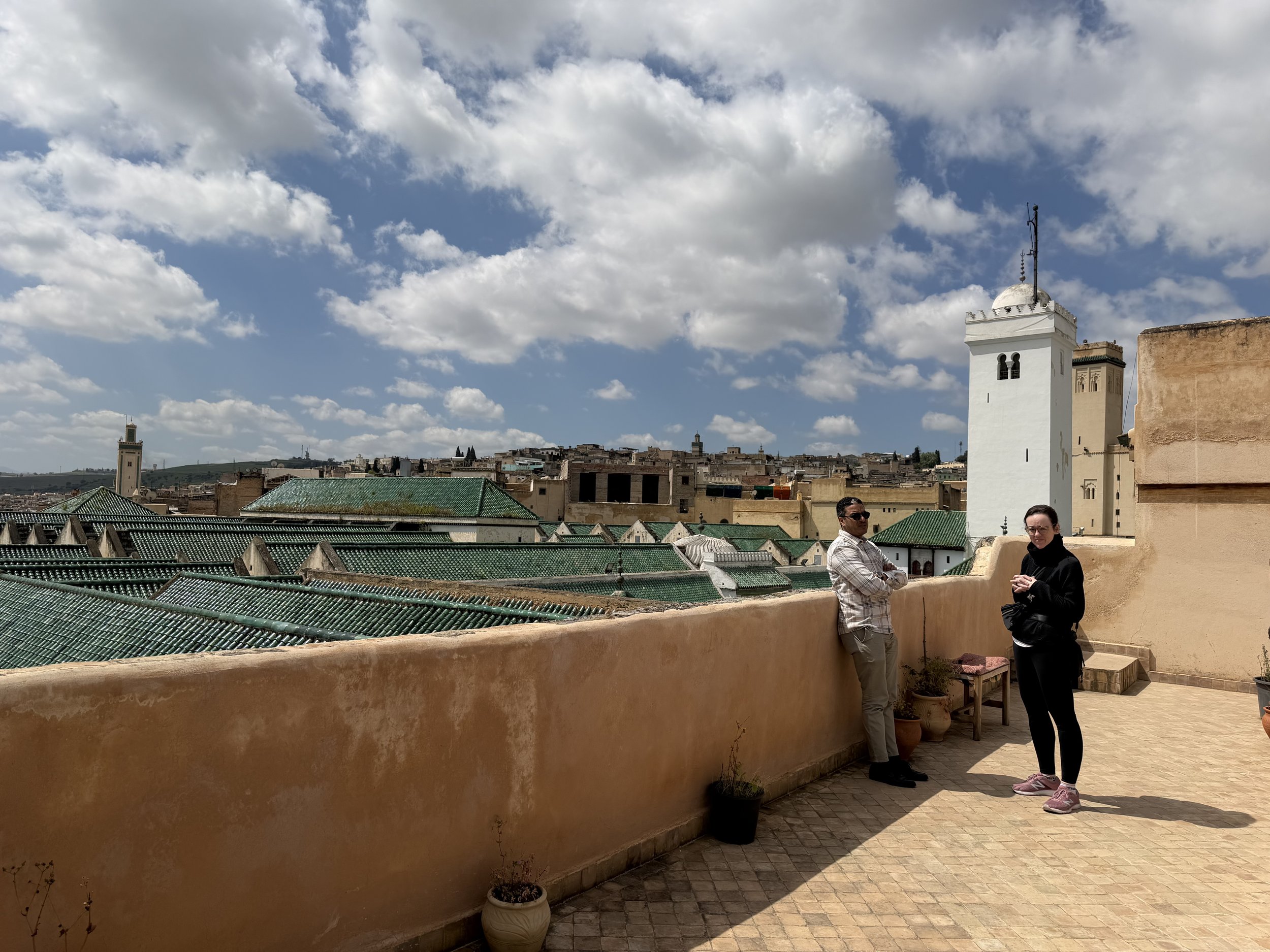
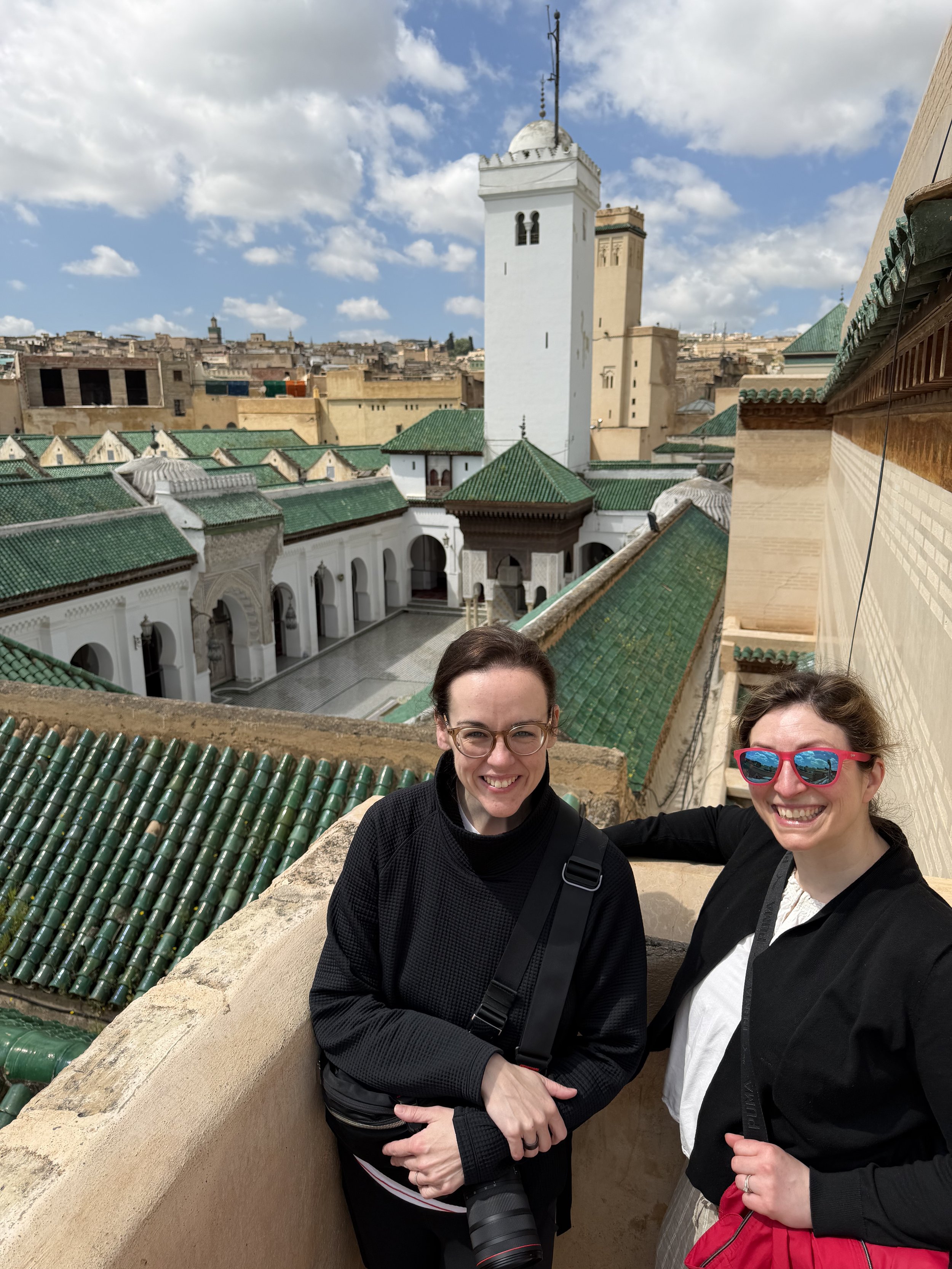
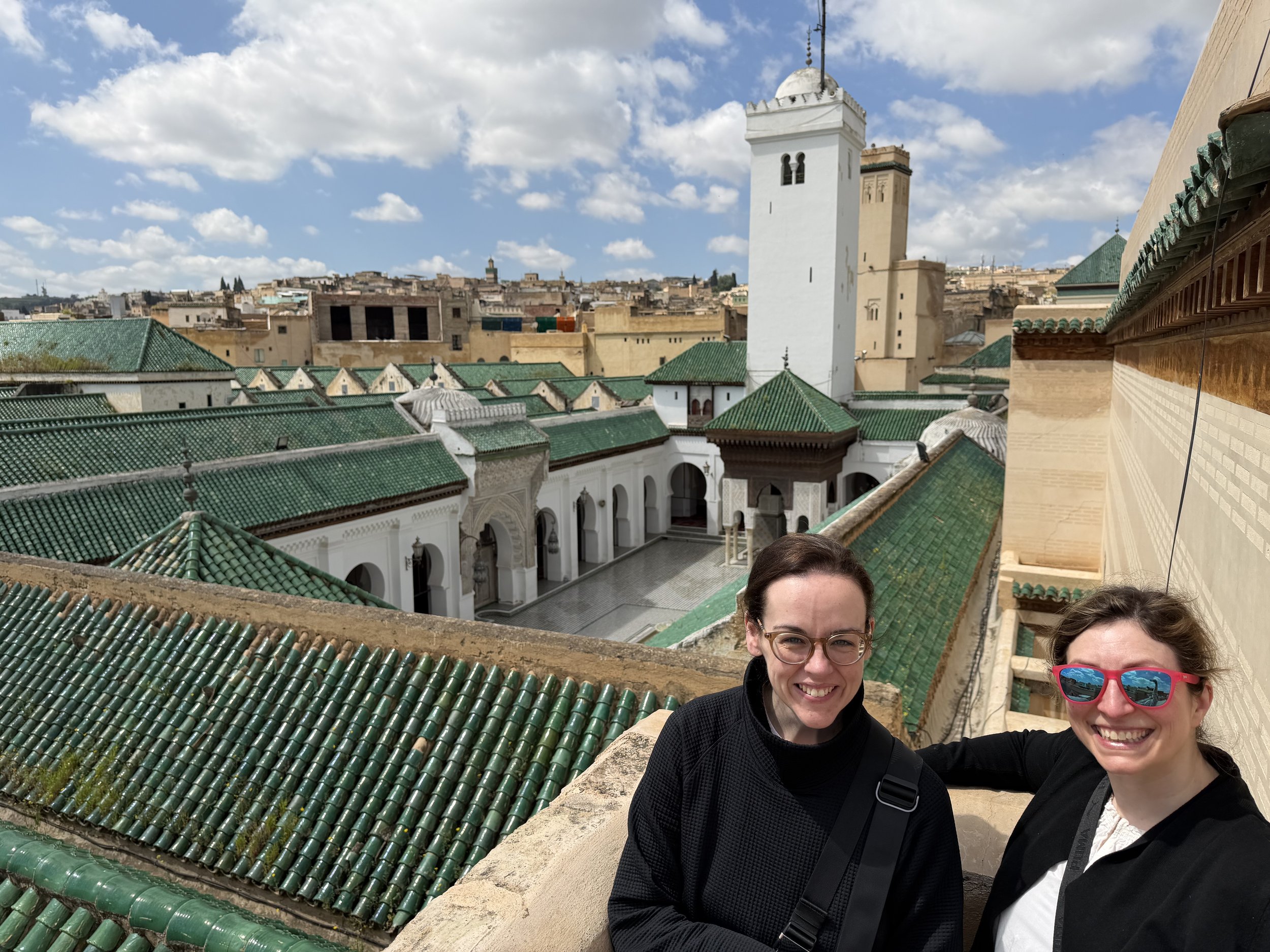
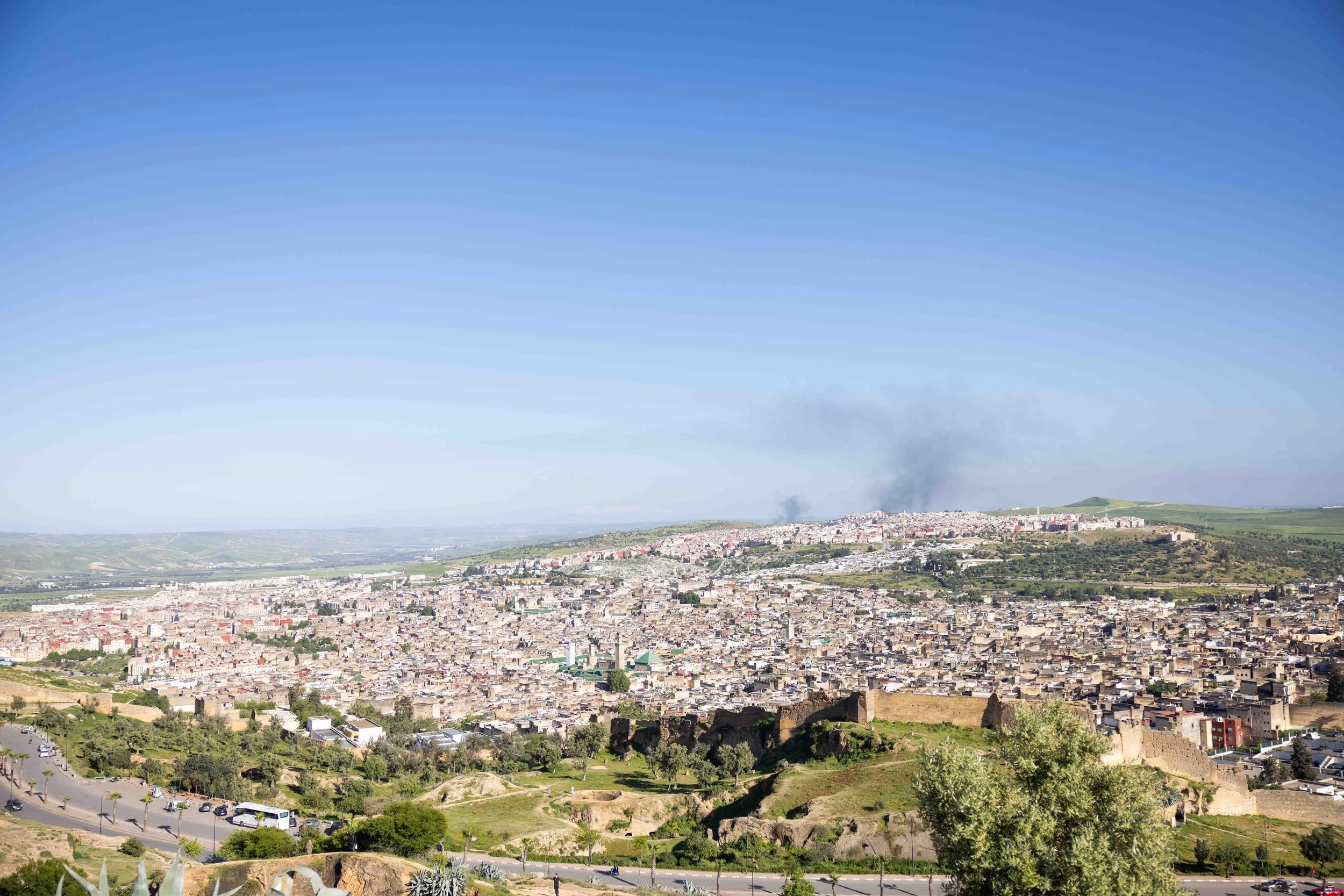
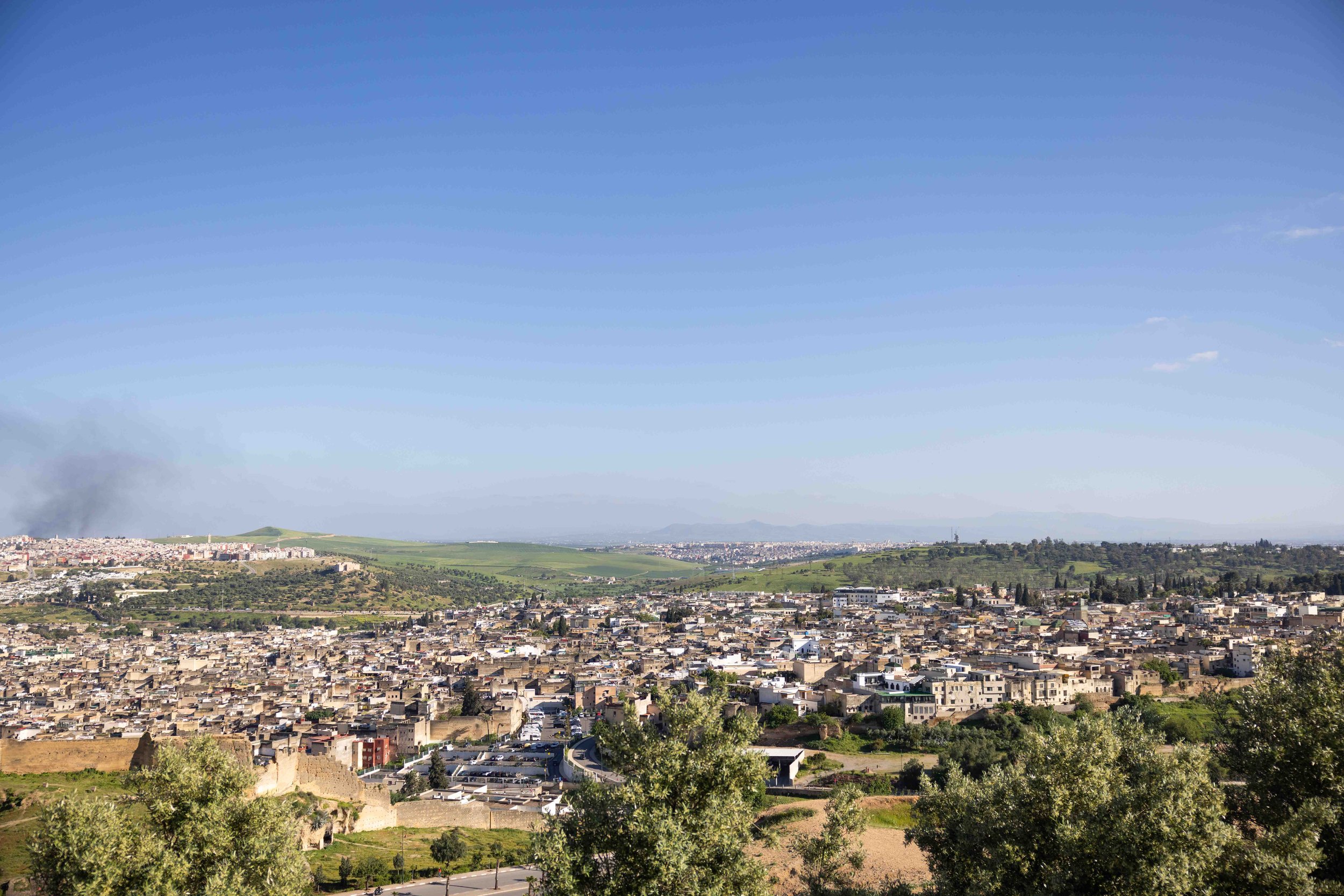
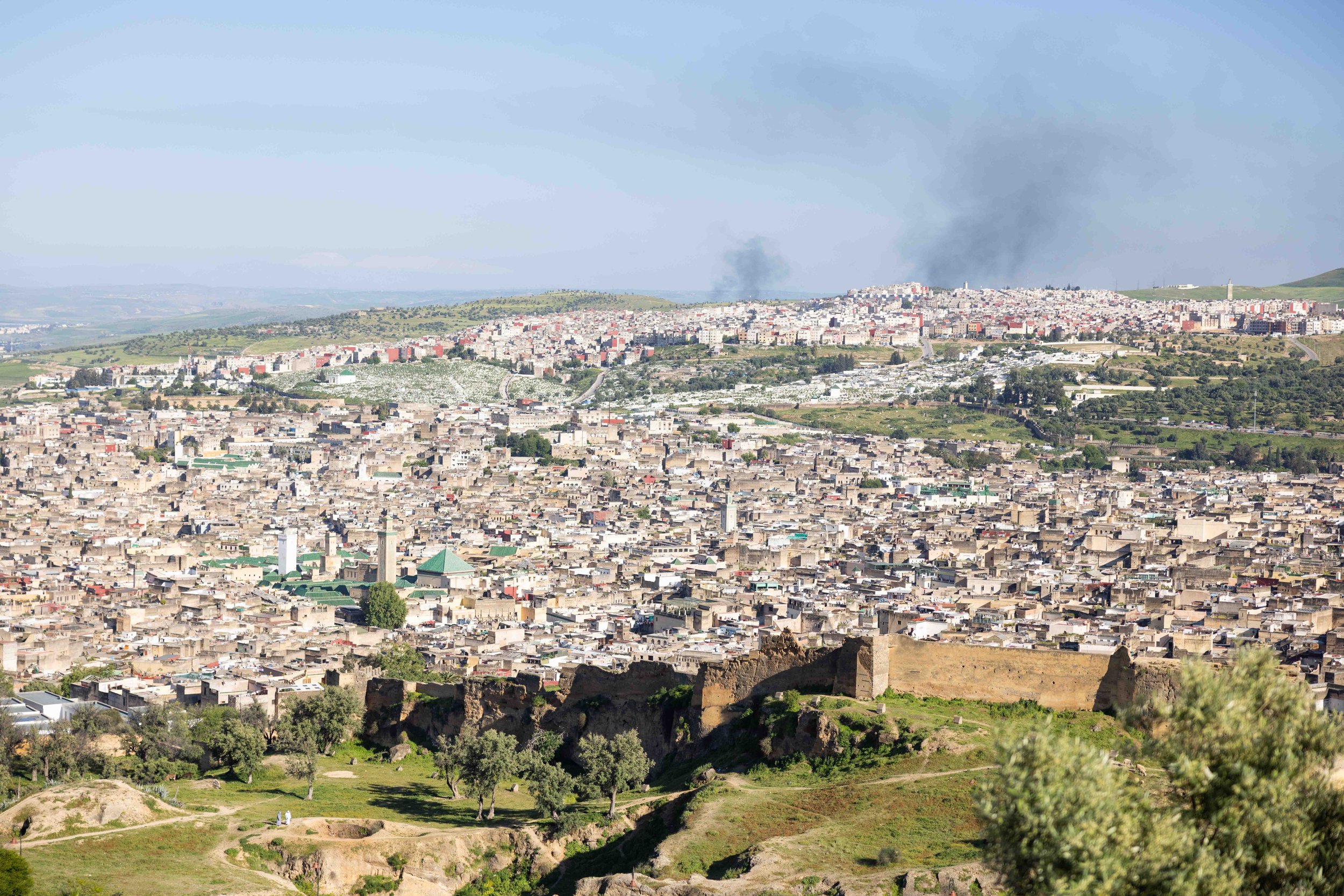
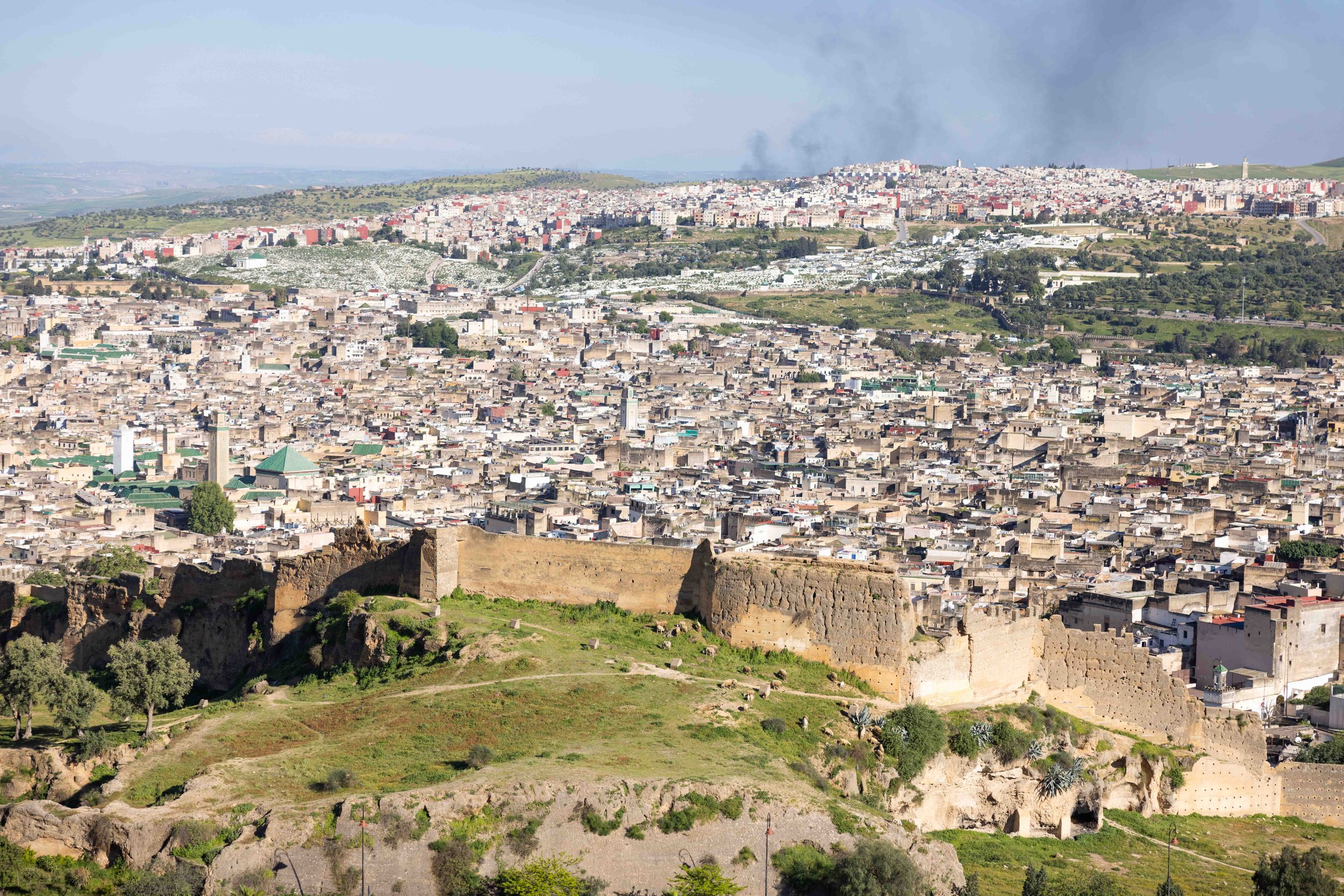
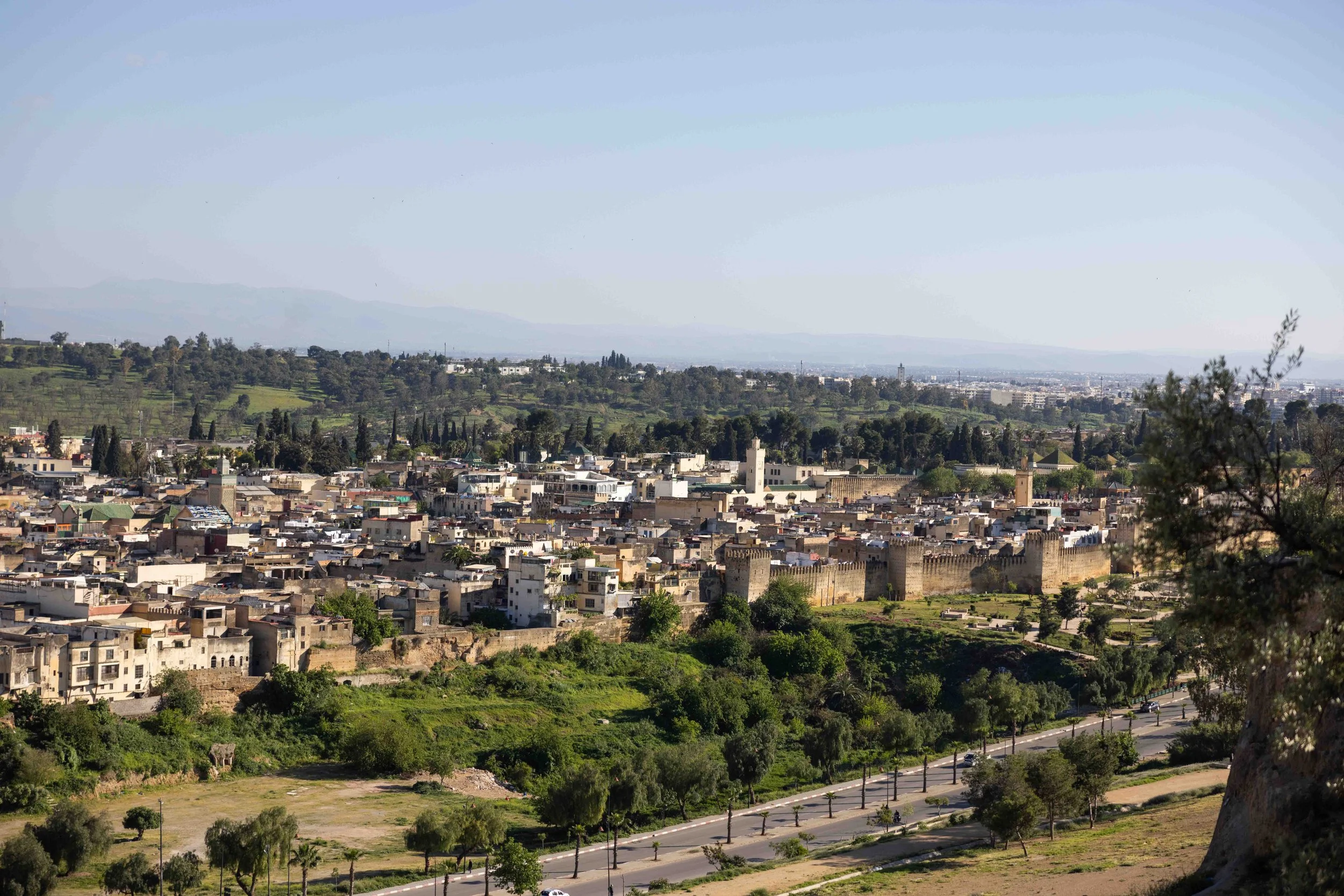
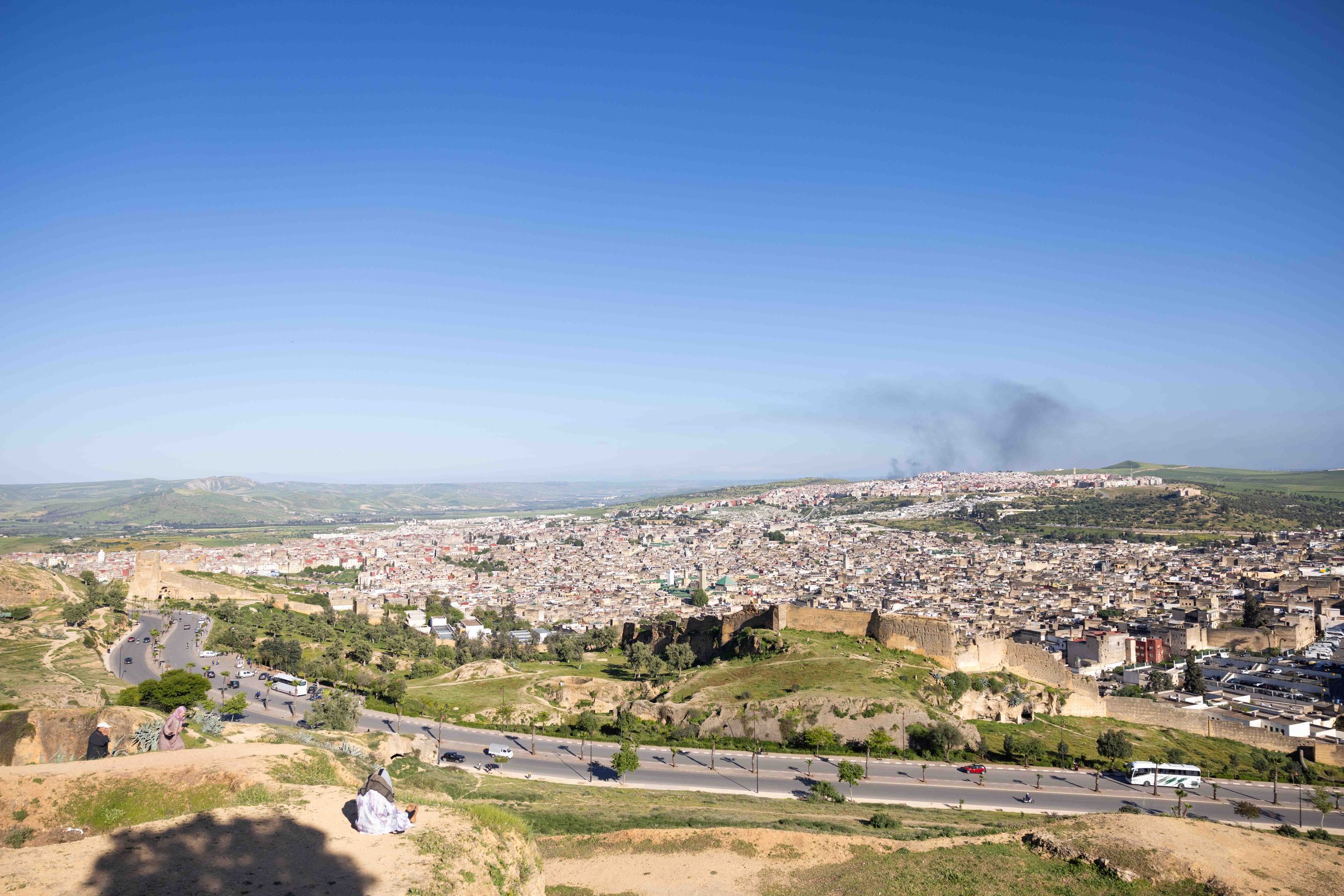
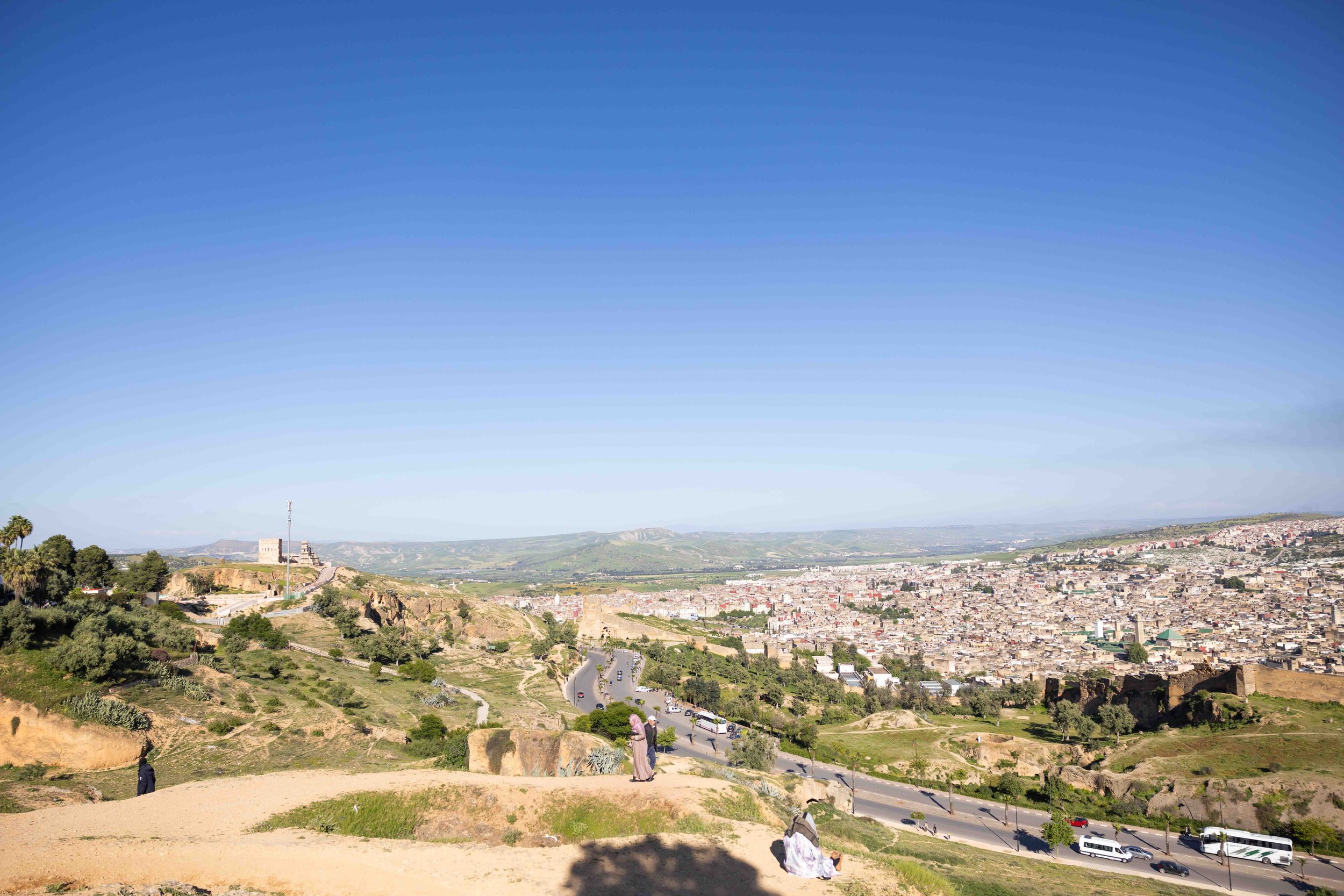
As the day drew to a close, Noreddine and Youssef brought us to a higher vantage point for a panoramic view of the city. From here, the entire medina stretched out before us in a sea of walls and minarets, now glowing in the warm light of late afternoon. After navigating the city’s narrow arteries, seeing it from above brought a sense of calm.
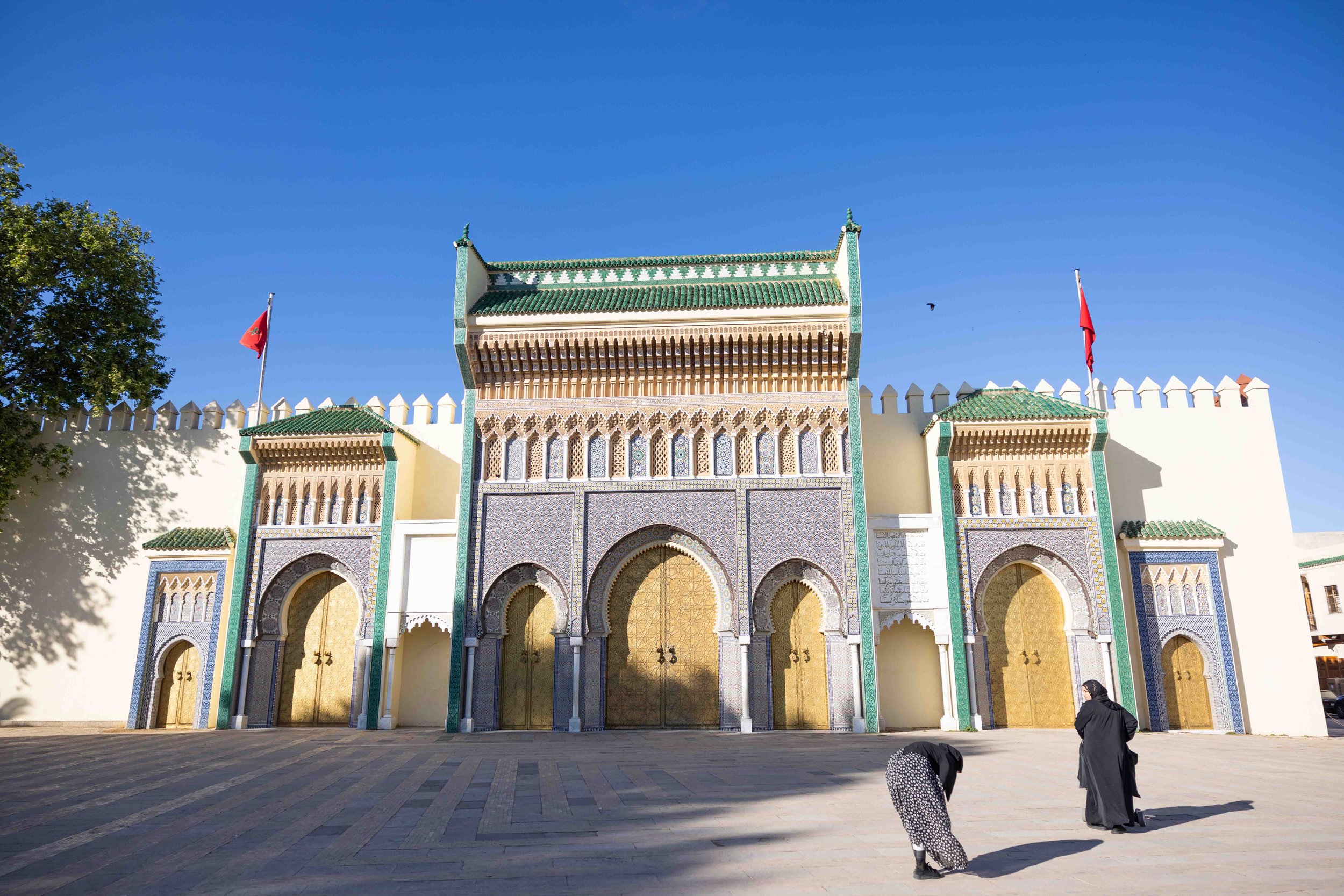
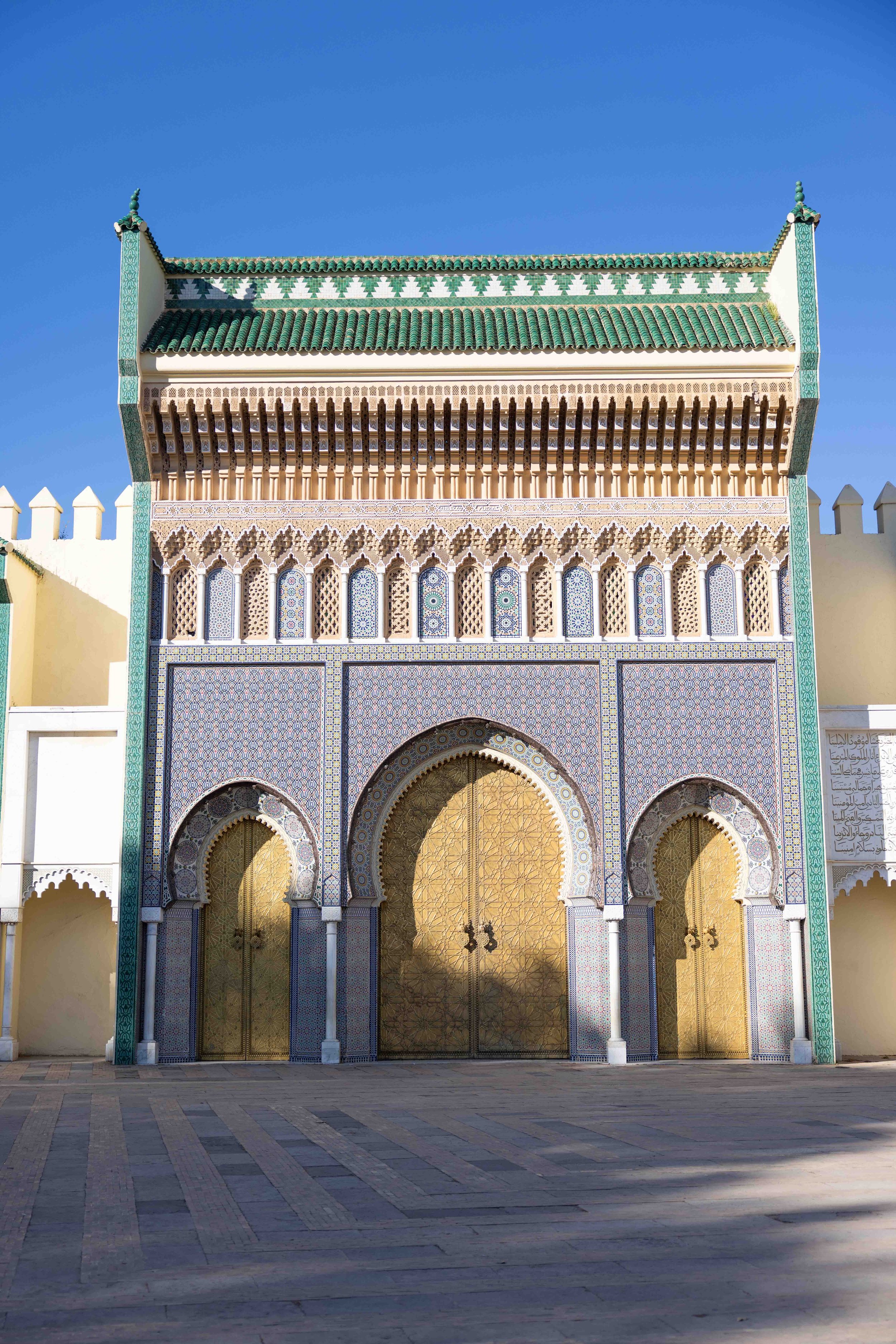
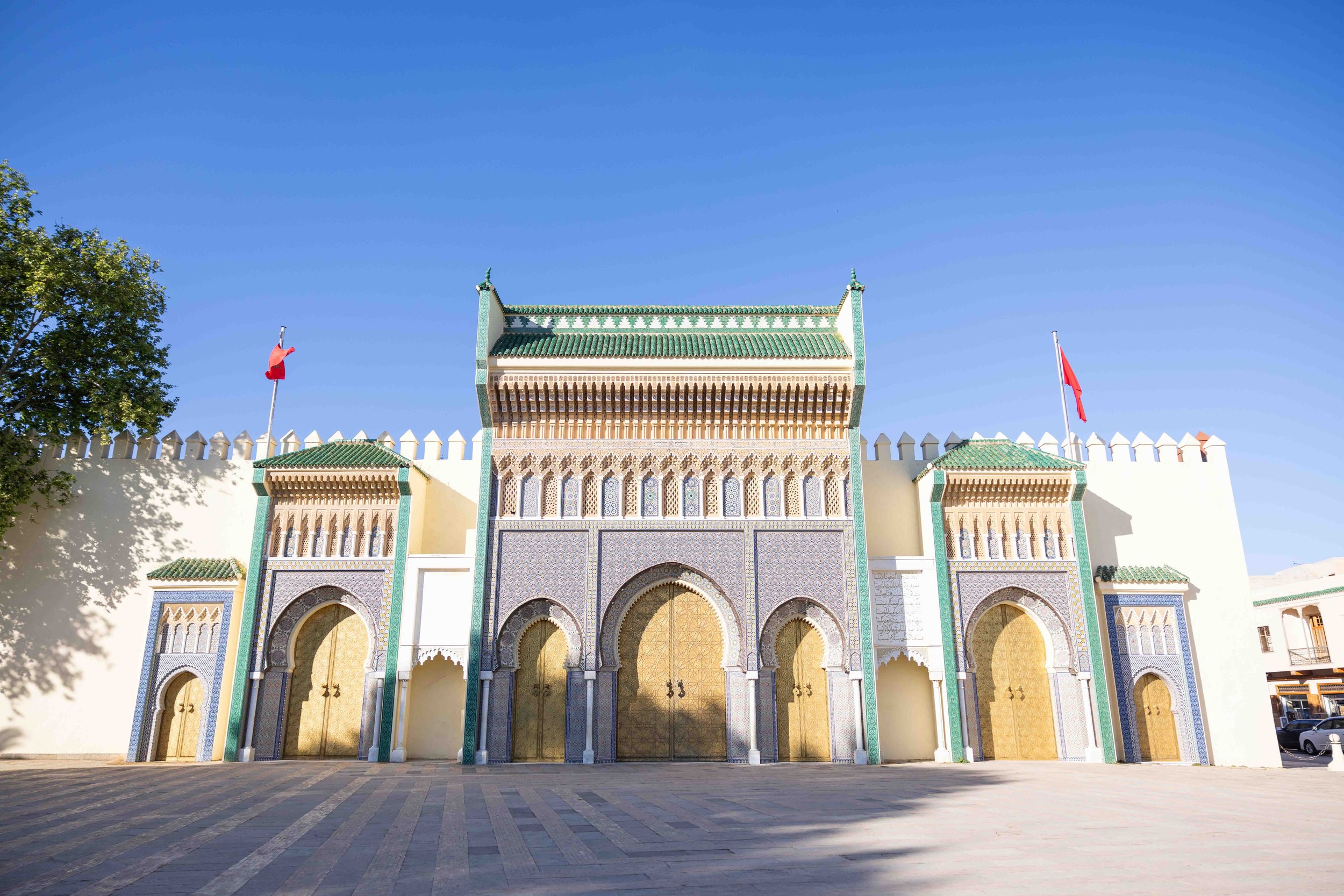
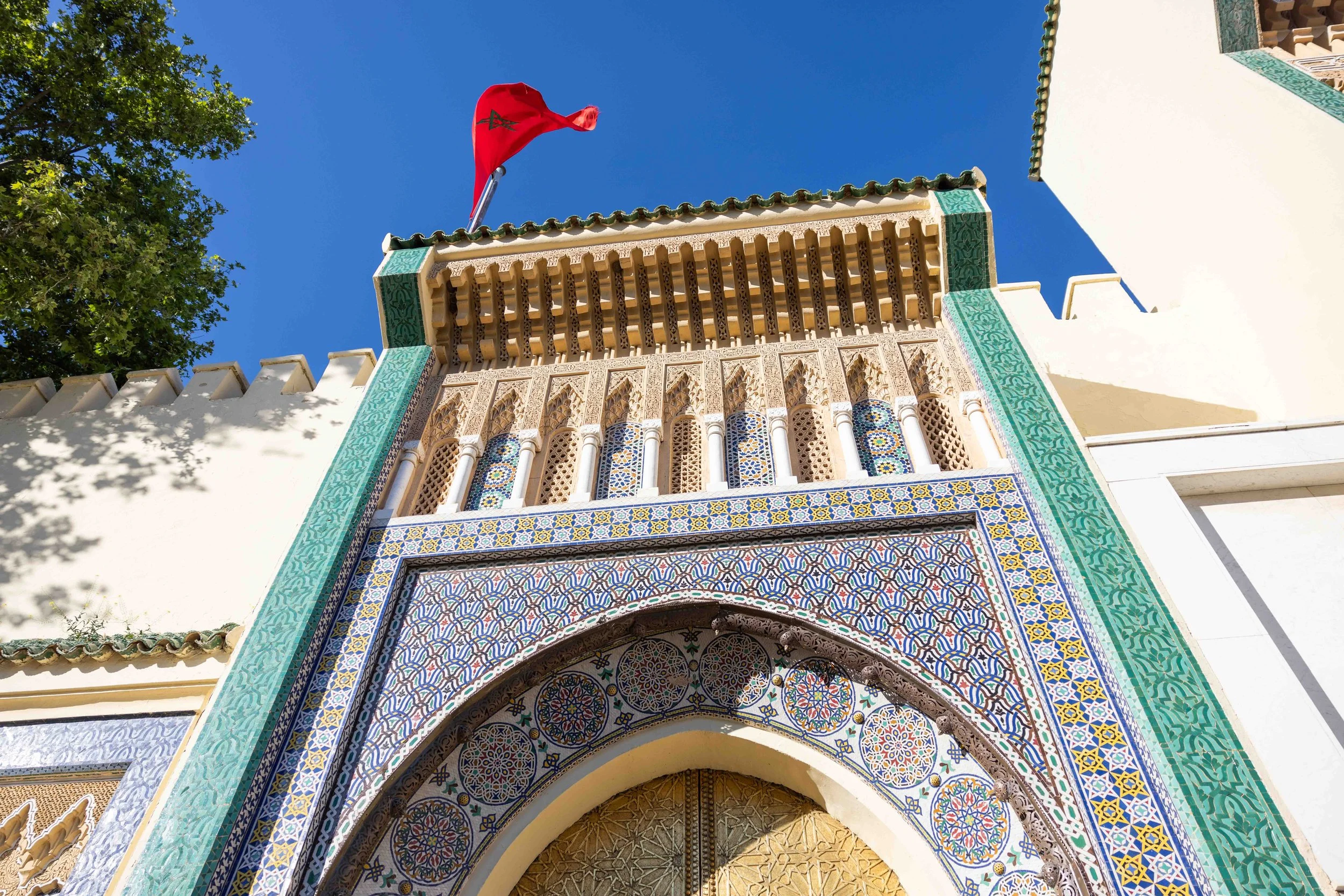
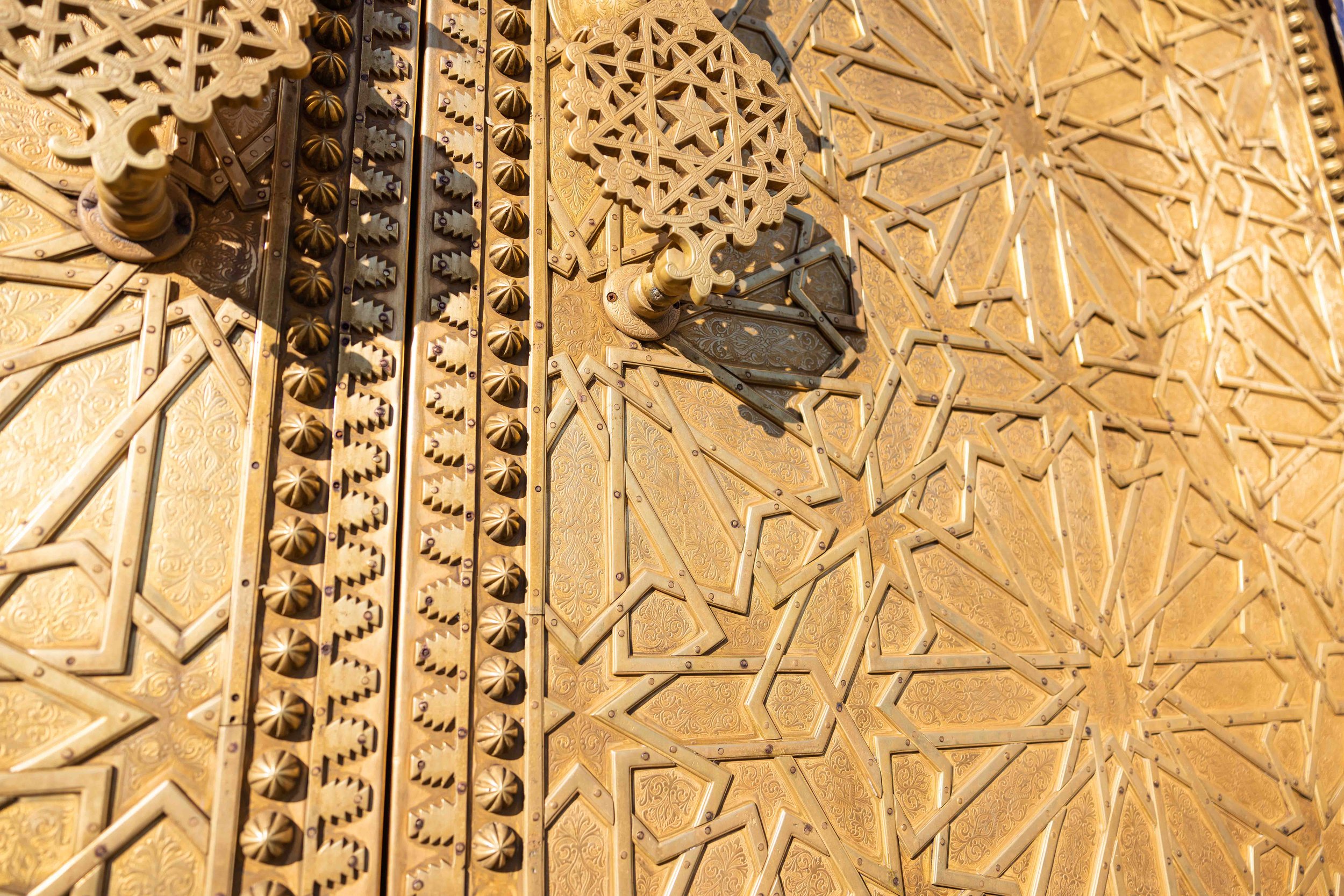
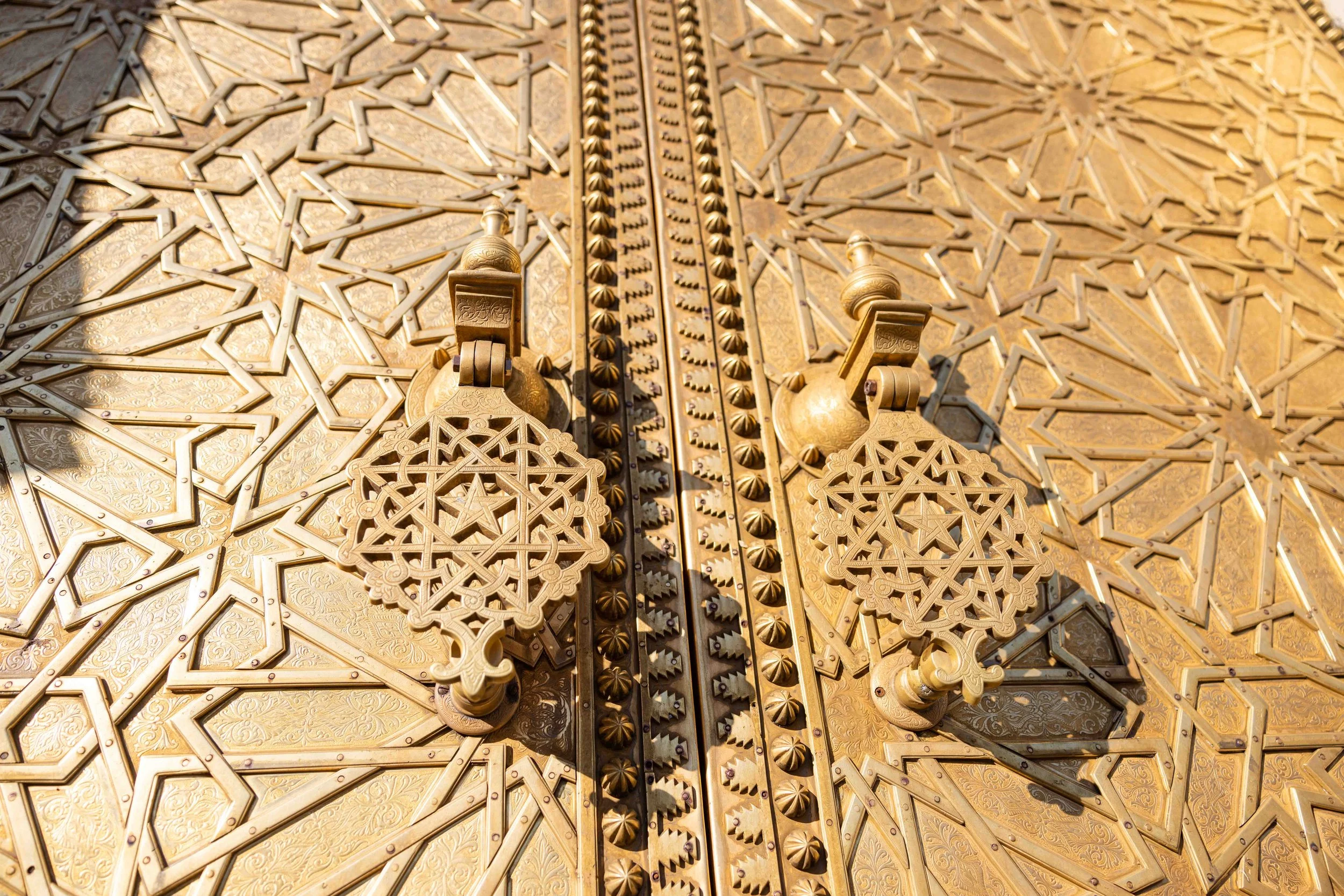
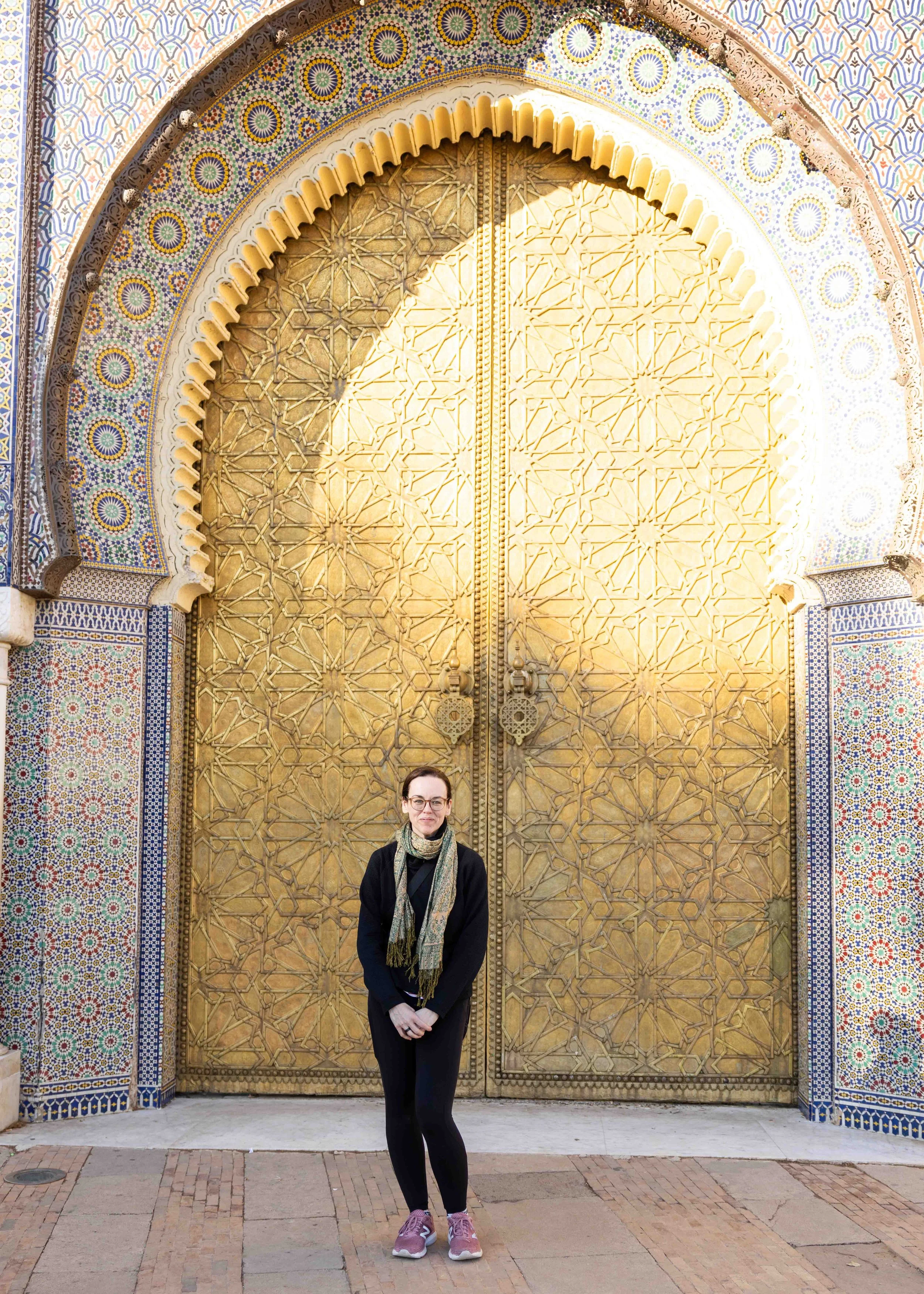
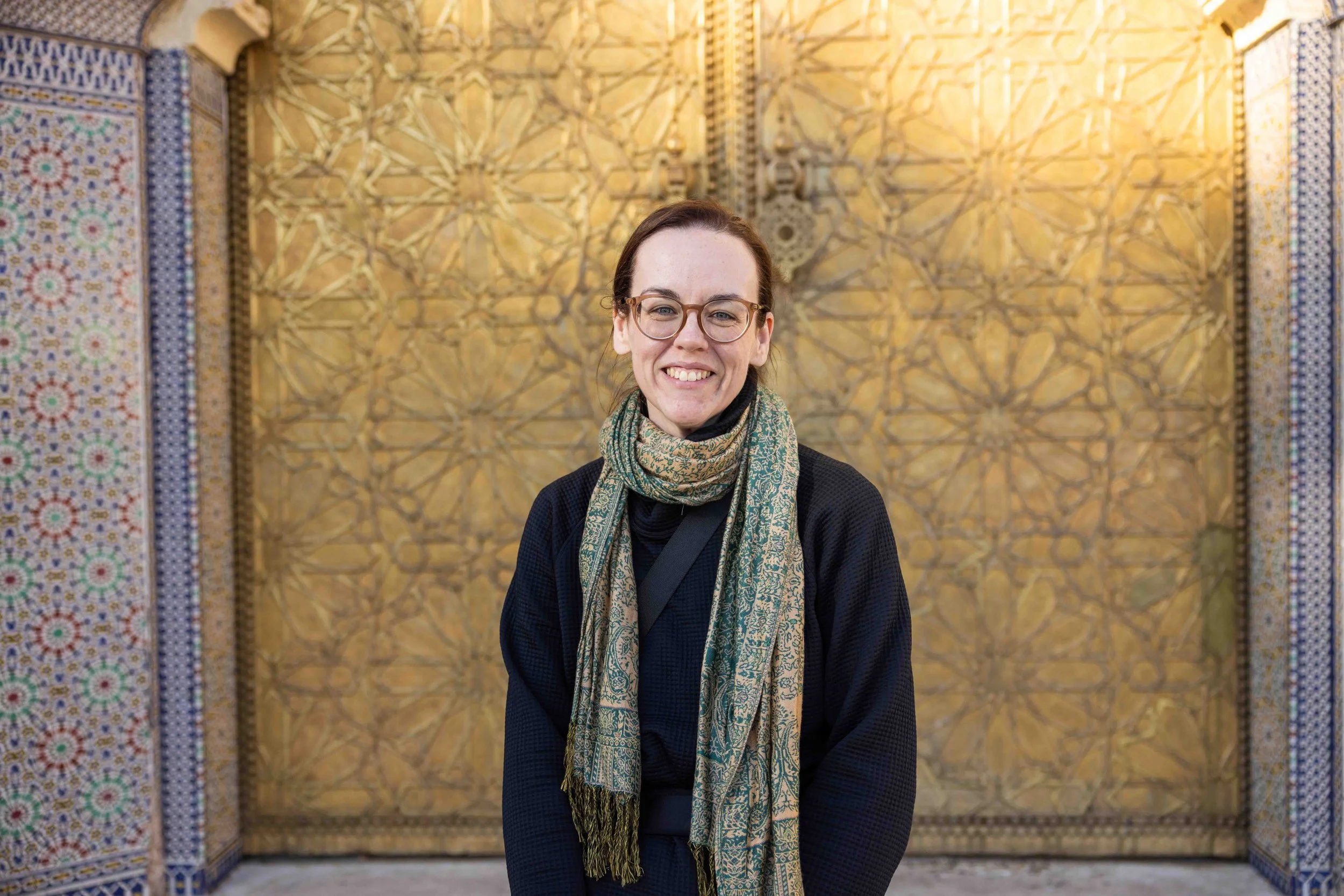
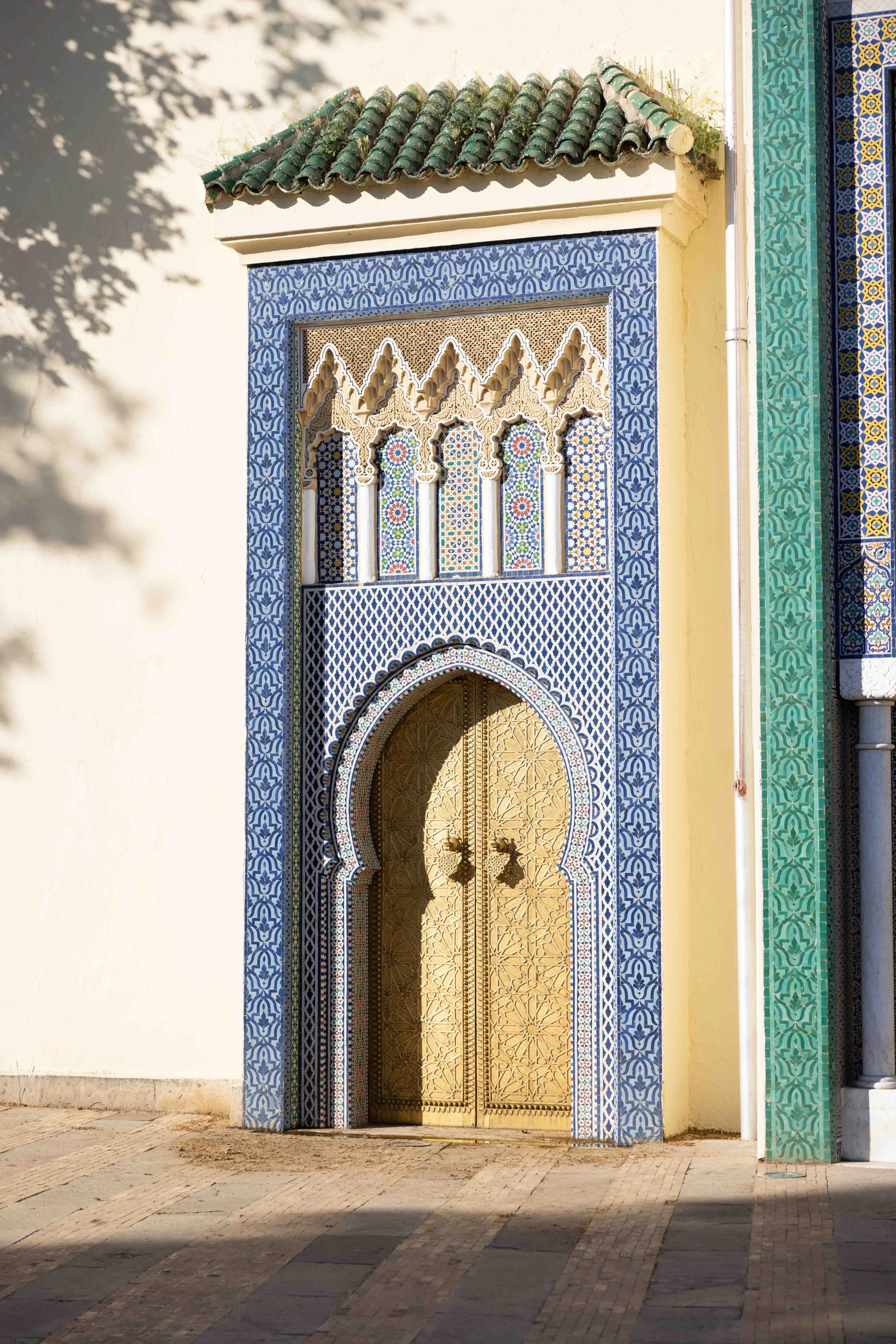
Finally we visited the grand gates of the Royal Palace of Fes. Its massive golden doors gleamed against intricate zellige tilework reflective of the craftsmanship we had seen throughout the day but on a much larger scale. Though the palace itself remains closed to visitors, its exterior alone offers a striking study in symmetry and detail.
At the end of the day, we returned to the tranquil oasis of Riad Dar Bensouda, where carved cedar and cool courtyards offered a welcome contrast to the day’s energy.
Fes is not a city you simply visit—it’s one you experience with all your senses. And even then, it leaves you knowing there’s more waiting just around the next corner.
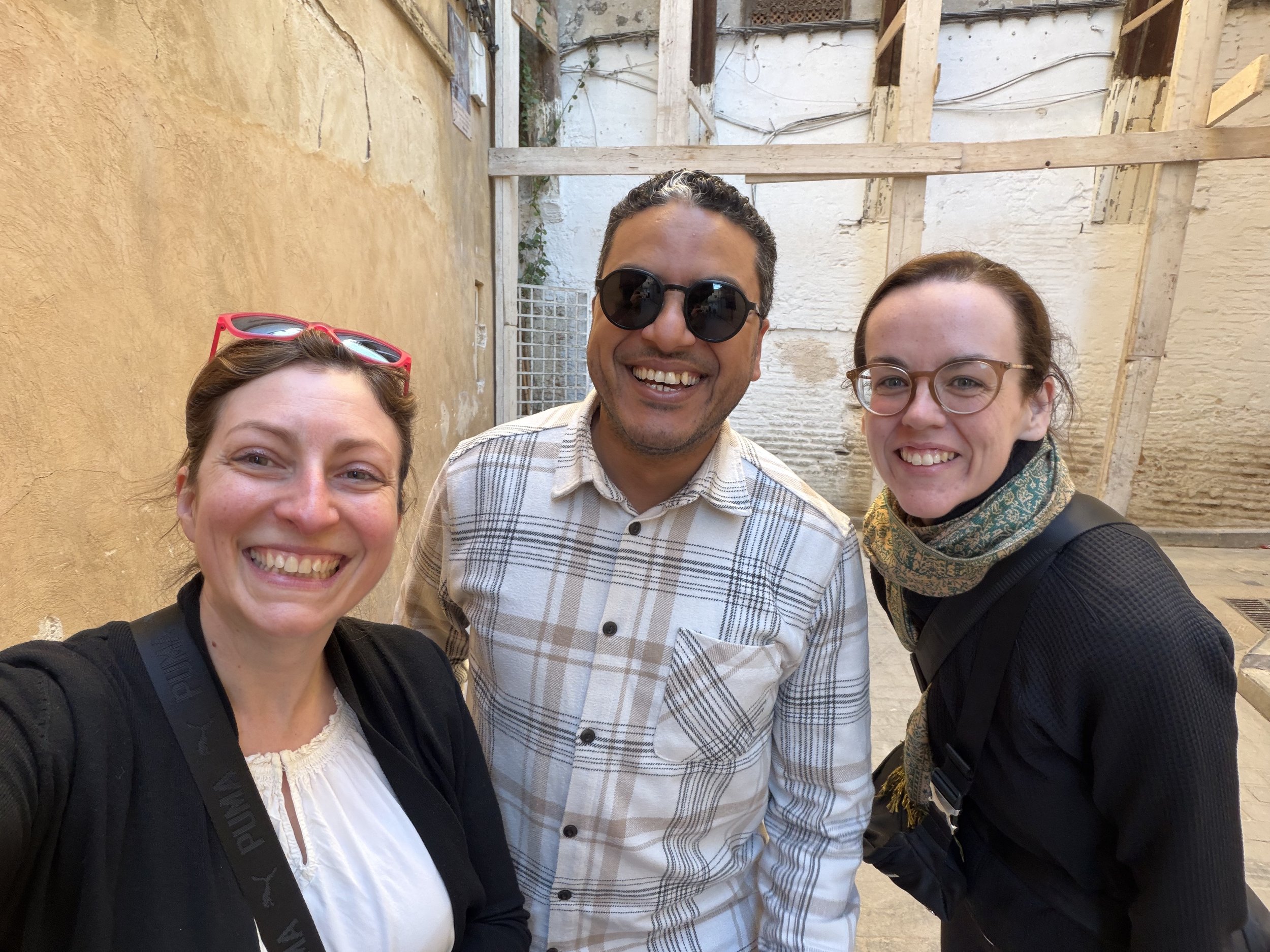
Many thanks again to our guide Noureddine for the excellent tour of Fes. We hope to see you again!